Malwarebytes is a antimalware application for home and small businesses, which blocks viruses, malware, hackers, viruses, and malicious websites.
$119.99
per year 3 devices
Microsoft Defender for Endpoint
Score 8.7 out of 10
N/A
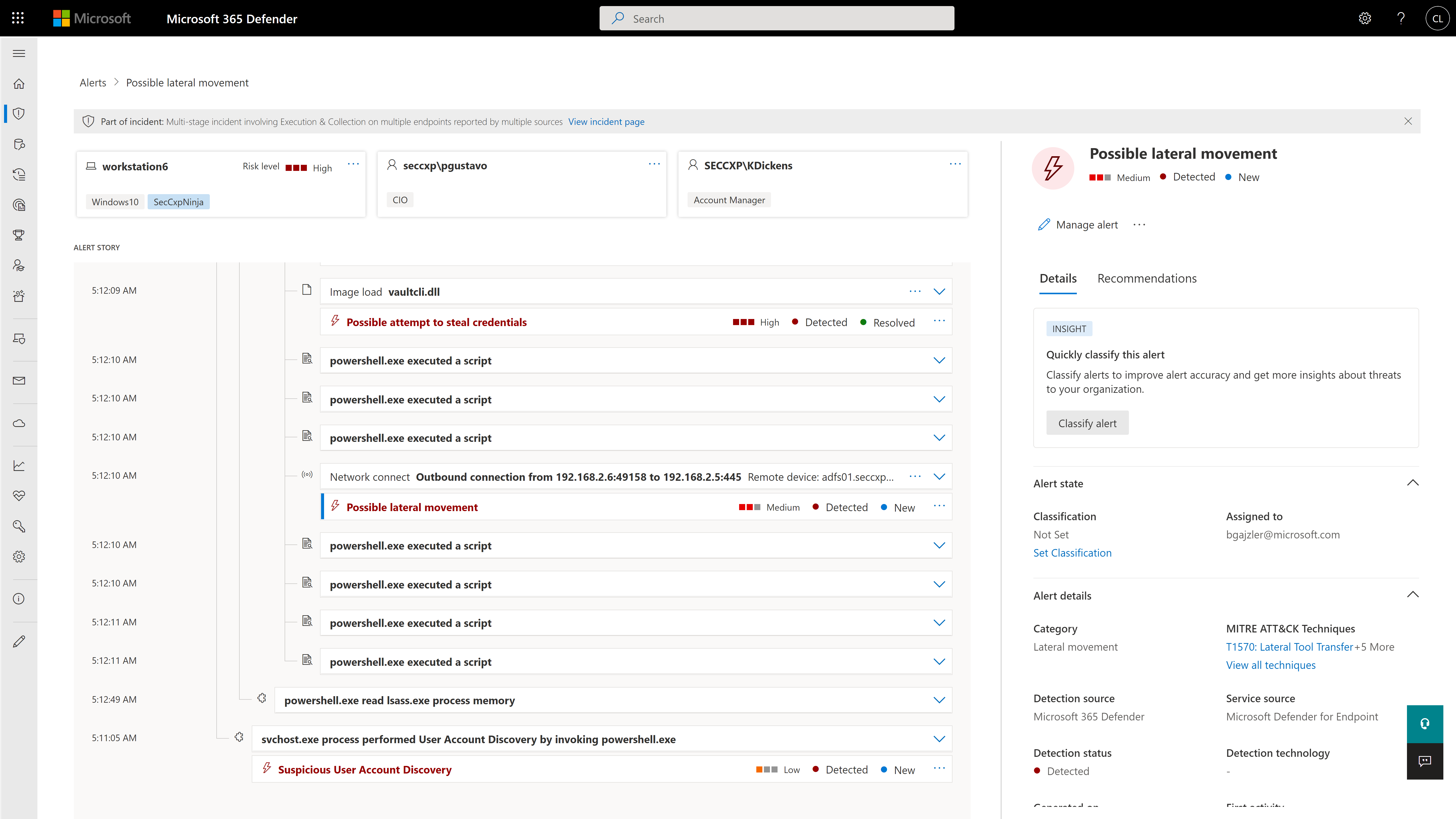
Microsoft Defender for Endpoint (formerly Microsoft Defender ATP) is a holistic, cloud delivered endpoint security solution that includes risk-based vulnerability management and assessment, attack surface reduction, behavioral based and cloud-powered next generation protection, endpoint detection and response (EDR), automatic investigation and remediation, managed hunting services, rich APIs, and unified security management.
$2.50
per user/per month
Pricing
Malwarebytes
Microsoft Defender for Endpoint
Editions & Modules
Teams - Sole proprietor
$119.99
per year 3 devices
Teams - Boutique business
$399.99
per year 10 devices
Teams - Small office
$799.99
per year 20 devices
Academic
$2.50
per user/per month
Standalone
$5.20
per user/per month
Offerings
Pricing Offerings
Malwarebytes
Microsoft Defender for Endpoint
Free Trial
No
Yes
Free/Freemium Version
No
No
Premium Consulting/Integration Services
No
No
Entry-level Setup Fee
No setup fee
No setup fee
Additional Details
All plans include a 60-day money back guarantee. 1st year discount available for the Small office plan.
Proven to be one of the best in detecting malware that is otherwise undetected by other solutions. When a user gets hit by certain malware, many other tools do not even detect them as malware, while with Malwarebytes, you can rest assured that if it states that a computer is …
It is also a very good option to consider as an antivirus system. But, it is not effective against the rootkits; that's why I selected Malwarebytes over it. Malware bytes has a more powerful and effective scanning mechanism than Norton. If I compare the free versions of the …
Now, I gave it that rating because it's a handy tool for diagnosing issues. Quarantining them, and most of the time, it does fix the problem. Though with rootkits, it's been hit or miss, and sometimes perfectly valid software gets flagged erroneously. However, once you've run it, it tends to run continuously, consuming far too many resources and being a real pain to uninstall, sometimes even causing issues.
Because of its integration with Windows, it is very easy to deploy and manage. Any IT department should be able to leverage the software and interface. The admin portal provides weighted recommendations that comprise the Secure Store, offering admins, security teams, and business owners valuable insights into their security footprint without requiring a strong security background. The software would be ideal for small and mid-sized businesses that cannot dedicate resources to security. Larger enterprises would also benefit, but may require the enhanced license.
The software is very good at working in the background without interfering with the end user in any way, there has never been a complaint of slowness on the machines or any excessive scan times because the users are unaware of it.
Malwarebytes management console is a very nice interface that tracks all of the machines on the network and shows which one is online, offline, up to date, out of date etc. I can also push installation packages to new machines without end user interaction.
Malwarebytes does extremely well what it is made to do, and that is to stop malware. Never once has any infection made it past malwarebytes to harm an end user machine.
Malwarebytes is always up to date, definitions are downloaded on a daily basis, you can trust that your software is current and you are being protected from the latest threats out there.
One, it's crazy lightweight, so compared to some of the competitors that we also have used with our security services, it's really lightweight and so I don't have a lot of overhead on the system that it's running on.
As of 2021 Q1, I have had issues with upgrading Malwarebytes installs on endpoints from the admin console. On about 30%-50% of the endpoints, I have to manually uninstall them, reboot, and reinstall Malwarebytes. This is a relatively new feature over the last year that Malwarebytes has done that let's you control updating the endpoint agent.
So the fact that Defender for Endpoint still works with signatures is actually, I don't know, a little difficult for us because, I mean, since Microsoft trusts those signatures, you can easily inject code. And we've done it many times. To show that you can inject code through vulnerabilities like CV 2013, 99, and 33 but still keep the signature. So because of the trust of those signatures, the malware just kind of slides into the environment without Defender knowing. That's the first part. The second part is that the behavioral analysis is not precisely its Prime. It's not Defender's best capability for endpoints. So, Defender does not identify all behaviors considered by other EDRs in the market.
The last time we renewed Malwarebytes, we renewed for a 3 year renewal. That should describe the confidence we have in the product. Plus the cost savings impact year after year.
Microsoft Defender is closely catching -up in market with existing competitors they have added DLP endpoint & DLP Network and Cloud DLP solution last year with OCR capabilities. I would say Microsoft Defender is not legacy Vendor in end point security, the need to learn from other vendors in market and focus on new XDR technologies, which is going to be new battle for all vendors
Usability-wise, it's pretty good, and it gets the job done. But once that's finished, the nags, the pop-ups, and the fact that it slows older systems down recklessly really cost it rating points. It becomes a clutter, and one of the first things we check when we receive reports that a PC is slow is whether it's running malware. Once we uninstall it, the PC is usually easily 40-50% faster. That's too much in the way of resources for something that wants to always run in the background.
Because in terms of the usability is easy to understand, it's easy to manage, obviously you need to have specific skills to do that, but I would say that even the console and the product is walking through the flow that you are looking for on this console.
Microsoft Defender for Endpoint chugs along just fine no matter what we throw at it and what systems it's running on. It doesn't take up a lot of resources either, so that's welcomed.
I honestly haven't needed support for Malwarebytes because I haven't had any problems with it, whatsoever. I am giving it a 9 rating because I haven't actually had an encounter or experience with customer service or support, so it's hard to rate the actual support team since I've never had the privilege of coming into contact with them.
Overall support is really good for this product. Since it's a Microsoft product, you will get good support from a number of different resources, including knowledgebase articles on the web, support from Microsoft technicians, and documentation (which tends to very thorough). Also, there is a vast user support community for this product, so user support forums would also be another valuable channel to get help if needed. I don't envision too many people will have issues/problems with the product, as it tends to run good overall.
Deployment was handled by our team here and everything went pretty smoothly. We did have a few hiccups in our test group, but that only took a bit to get ironed out.
Malwarebytes seems to lead the industry in customer focus. Their support team is superior. The breadth of services they offer is a major factor along with their roadmap for the future. I believe the update process is one of the easiest I've experienced with major software platforms. You may be able to receive a discount if you purchase through a reseller / IT vendor.
Microsoft Defender for Endpoint offers strong integration with Microsoft 365 and Azure services, which provide a unified security experience. While McAfee Trellix is known for solid antivirus, Microsoft Defender excels in integration in the ecosystem.