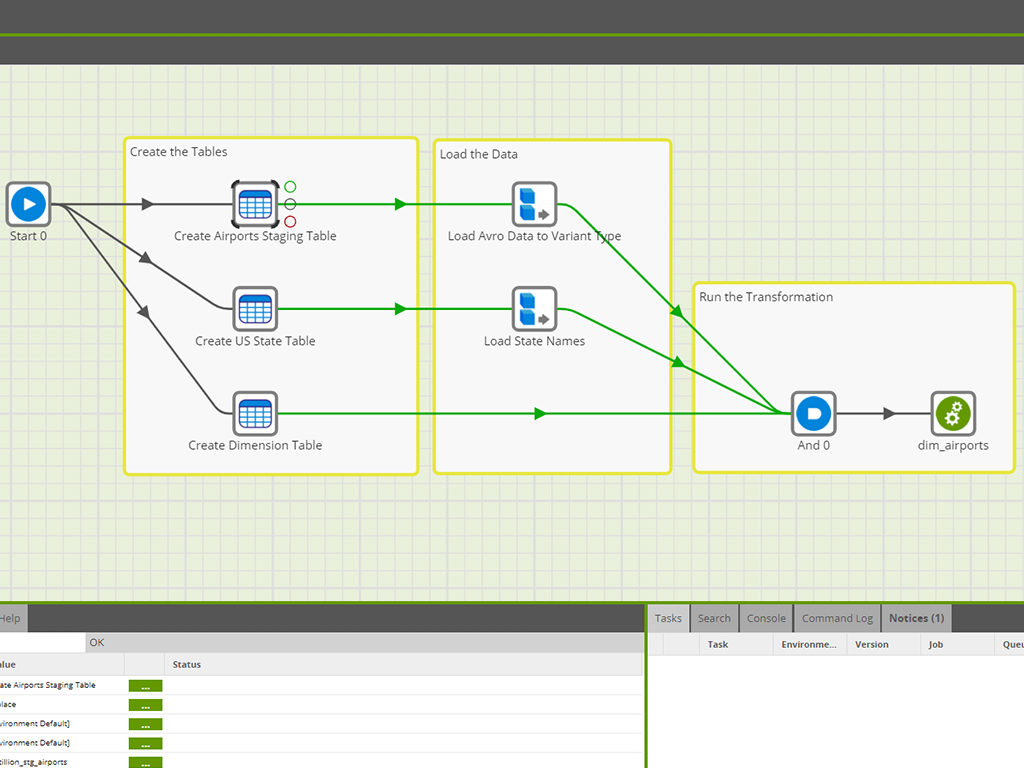
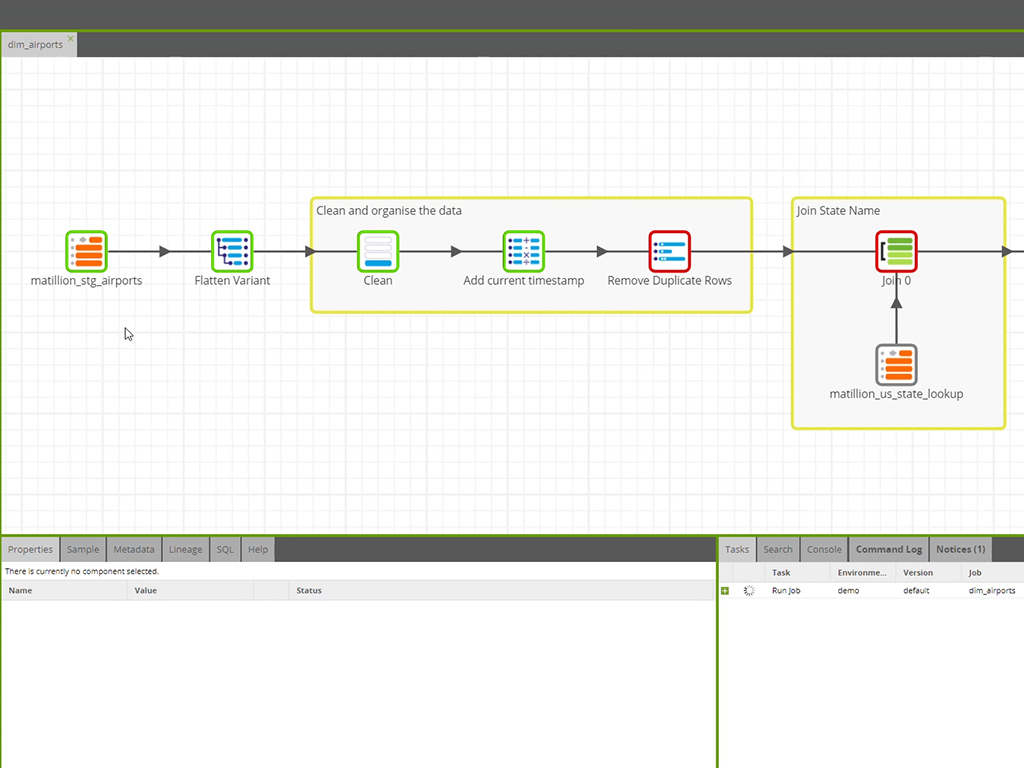
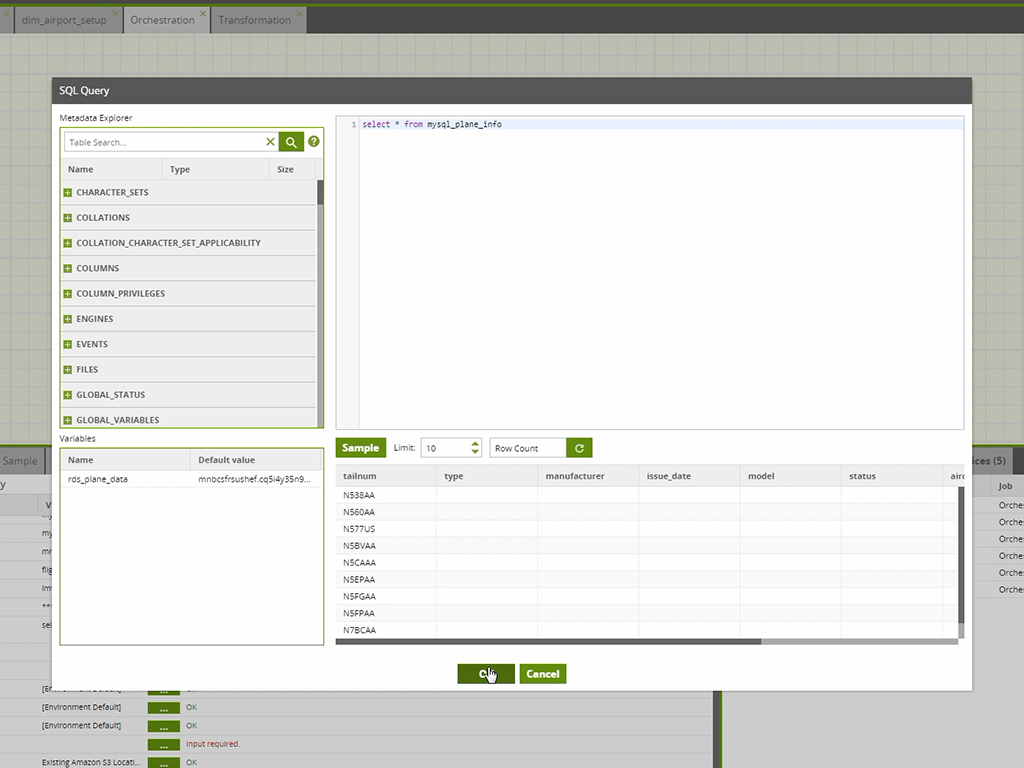
Matillion is a data pipeline platform used to build and manage pipelines. Matillion empowers data teams with no-code and AI capabilities to be more productive, integrating data wherever it lives and delivering data that’s ready for AI and analytics.
$2.50
Pay as you go per user
SAP Integration Suite
Score 8.5 out of 10
N/A
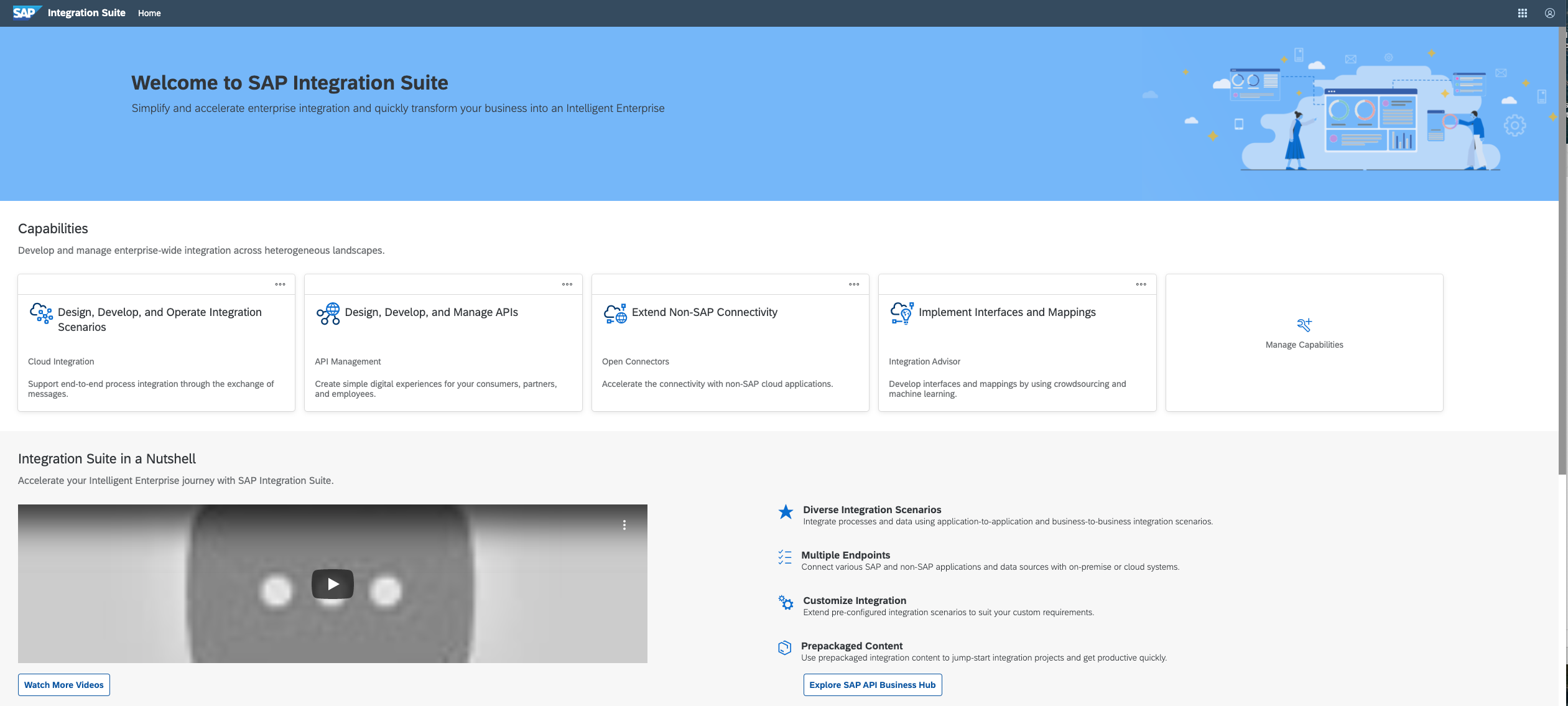
SAP Integration Suite is an integration platform-as-a-service (iPaaS) that helps quickly integrate on-premises and cloud-based processes, services, applications, events, and data. It is used to accelerate innovation, automate more processes, and realize a faster time to value.
N/A
Pricing
Matillion
SAP Integration Suite
Editions & Modules
Developer: For Individuals
$2.50/credit
Pay as you go per user
Basic
$1000
per month 500 prepaid credits (additional credits: $2.18/credit)
Advanced
$2000
per month 750 prepaid credits (additional credits: $2.73/credit)
Enterprise
Request a Quote
No answers on this topic
Offerings
Pricing Offerings
Matillion
SAP Integration Suite
Free Trial
Yes
Yes
Free/Freemium Version
No
No
Premium Consulting/Integration Services
No
No
Entry-level Setup Fee
No setup fee
No setup fee
Additional Details
Billed directly via cloud marketplace on an hourly basis, with annual subscriptions available depending on the customer's cloud data warehouse provider.
Access to free tier services does not expire while there is an active Pay-As-You-Go or CPEA account with SAP. Once a free tier service limit has been reached users have the option to update from a free to a paid service plan in the same account.
Matillion is cheaper and we really like the customer support of Matillion as well as lerning materials provided by Matillion were far better. They also made connectors for us for free while others were charging us for it.
Matillion gives great ability to connect to variety of sources and bring data into cloud data warehouse using connector based approach with which we can build complex transformation jobs which can do automated data fetches from your sources.
Matillion has better capabilities and better built-in elements that saves your time and efforts. also the connectivity across multiple data warehousing tool is better in Matillion. even the performance of the pipeline and the time required to create a particular pipeline is …
My manager selected Million based on his previous work experience. He believes it is easy to use and maintain, cheaper than competitors, and suitable for our use case.
The only other ETL tool I've used was SSIS. At first I thought Matillion seemed "kiddish" after using the polished Microsoft tool but now I think Matillion is easier and can do much more as it has so many built-in connectors etc. We selected Matillion at our job because of …
n/a -- joined the team after they already were established in Matillion. Have had brief looks at other ETL products but found nothing compelling enough to suggest a change.
We selected Matillion primarily because of it's ability to connect to numerous data sources and easily create transformation jobs. While FiveTran does a better job managing and examining deltas, it is not easy to use and is very non user friendly. SSIS was not a good fit for …
Fivetran offers a managed service and pre-configured schemas/models for data loading, which means much less administrative work for initial setup and ongoing maintenance. But it comes at a much higher price tag. So, knowing where your sweet spot is in the build vs. buy spectrum …
We decided to move forward with Matillion because it was the best tool among tools that support both ingesting data from a source system to a target database and running transformation workflows on it afterwards. Fivetran and Airbyte only support data ingestion and we had our …
Cost and ease of use were better for our purposes. Matillion distinguishes itself from Fivetran and Snaplogic through its user-friendly design, no-code interface, in-depth transformation capabilities, allowing for complex data manipulations directly within the platform, …
The Matillion selection was not my decision. But I think it's a good enough choice. It is especially valuable that the team can learn Matillion easily and that the project can be understood by the entire team with the visual environment instead of complex ETLs.
Both the Databricks platform and Dbt Cloud are more powerful from the point of view of the development lifecycle and data use cases covered. They are also more complex and require specialized data engineering skills to be used. Matillion has a lower barrier of entry for small …
Removes most of the complexity around setting up and preparing things. If you could describe with words what needs to be done to move data from A to B, the implementation in Matillion would probably be the most similar in terms of simplicity of understanding what you are doing …
Matillion is a good tool for integrating multiple clouds. Informatica has been a market standard for many years, it provides multiple capabilities for data governance, data quality, etc. However, Informatica is pretty expensive compared to Matillion. Also, Matillion is more …
Before deploying SAP Integration Suite, we assessed Oracle Financial Services Analytics and IBM Risk Analytics. While Oracle had proved its mettle in the exceptional database support and IBM in presenting risk model tools, SAP Integration Suite overwhelmed others by being …
SAP Integration Suite competes with several prominent integration platforms, including MuleSoft, Dell Boomi, Microsoft Azure Logic Apps, and Oracle Integration Cloud. Here’s a comparison highlighting key factors that influenced the companies decision: Seamless Integration with …
I have experience with Apache Service Mix which is a bundle of 4 Apache components: ActiveMQ, Camel, Karaf, CXF. With SAP Integration Suite you have a more friendly developer experience because everything is integrated in one product and it offers much more functionalities …
SAP Integration Suite is Good tool to integration alls SAP applications and it gives us much flexibility to connect to SAP processes more than simply AWS. Integration capabilities enabling cloud on on premises application, device, and data integration.
The best thing about SAP Integration Suite is the prepackaged content and ready-made adapters—they make setup so much quicker and cut down on custom work. Plus, since our team already knows SAP inside out, it’s a natural fit. We can jump right in and get integrations up and …
Great: Need to query simpler APIs, or utilize well known services such as GSheets etc.? Matillion has got some of the best and easiest to use connectors out there. Not so great: Do you need have a competent CI/CD flow that you will be able to update / compare from Matillion as well as other sources at the same time? Good luck, you will need to be extra careful, as you might have to have a deeper dive into your servers Terminal each time you have a git conflict.
The case of the SAP Integration Suite shows outstanding capability in handling huge data, and especially when handling corporate portfolio data with multiple owners. But we have noticed that in the cases of moving data from the older banking system, it is necessary to further refine the system. It does an excellent job of the current credit scoring.
Broad Connectivity: SAP Integration Suite excels in connecting diverse systems, including SAP and non-SAP applications, databases, and third-party services.
Pre-built Integrations and Templates:The suite provides a library of pre-built integrations and templates for common business scenarios.
Static and monolithic, it will show its limits when running multiple concurrent jobs.
Github and versioning implementation is messy and broken. Don't use it.
There's not way to see/query the system resources, just wait for a server to crash due to out of memory. An admin panel would be appreciated + some env variables with updated info.
API implementation is cumbersome and limited.
There's no concept of hub and worker engine, everything happens of the same server (designing workflows and executing them). Having separate light ETL engines to run job could be better. (sort of docker/kubernetes/lambda functions).
Handling of variables is limited especially for returned values from sub components.
Some components could return more metadata at the end of their execution instead of the standard one.
Billing is badly designed not taking into account that the server is hosted by the client. Expensive.
We had several issue with migration where starting a new instance was required and then migrating the content. It was painful and time consuming also have to deal with support and engineering team on Matillion side.
CDC doesn't work as expected or it is not a mature product yet.
Matillion is easy to use and flexible to debug. Performance are good and support is giving us a good service level. There are still some technical points to be developed more (such as SAP extraction). but easy flows are really fast to be developed. We are also using a tool for migration from other tools, and it is useful as Matillion is producing XML code.
SAP Integration Suite is very helpful to us in many ways to manage purchase procedures, stocks, and data of vendors and suppliers. Also, it helps to manage data for service providers. SAP Integration Suite has the tool to conduct training and evaluation. Unique features like the cloud can provide access from any place and by any device is very helpful.
Easy tasks are really easy, and complex tasks are still possible. With prior knowledge of general data warehousing principles and experience with other data transformation tools, it's straightforward to get familiar with and use Matillion. I initially used minimal external support from a partner for some more complex tasks but very soon could work entirely independently with Matillion.
Overall, I've found Matillion to be responsive and considerate. I feel like they value us as a customer even when I know they have customers who spend more on the product than we do. That speaks to a motive higher than money. They want to make a good product and a good experience for their customers. If I have any complaint, it's that support sometimes feels community-oriented. It isn't always immediately clear to me that my support requests are going to a support engineer and not to the community at large. Usually, though, after a bit of conversation, it's clear that Matillion is watching and responding. And responses are generally quick in coming.
We selected Matillion primarily because of it's ability to connect to numerous data sources and easily create transformation jobs. While Fivetran does a better job managing and examining deltas, it is not easy to use and is very non user friendly. SSIS was not a good fit for our team and required a significant amount of attention and server management that we did not want to invest in.
We used to have a in house application in Camel and Karaf as a middleware, and after we migrate to S4HANNA we decide to give a try and move to the cloud with SAP Integration Suite, knowing the capabilities and the needs that we have in the company and the projects that were running on premise in our middleware.
We're using Matillion on EC2 instances, and we have about 20 projects for our clients in the same instance. Sometimes, we're struggling to manage schedules for all projects because thread management is not visible, and we can't see the process at the instance level.
Time savings -- we could custom code nearly everything Matillion does, but it would take days/weeks instead of minutes/hours.
There's a bit of a learning curve to truly unlock Matillion's potential, and that can be frustrating for some new users, but once you get over that curve, the possibilities are endless.
It allows us to centralize the hundreds of way to bring data in, so that even if you have to troubleshoot what someone else wrote, it's easy to jump in and understand what is happening.