Chose Metadata.io
Metadata is way more cleaner in UI. Especially the UI of Facebook ad management is truly a horror show, glad to reduce my time spent in there.

| Product | Rating | Most Used By | Product Summary | Starting Price |
|---|---|---|---|---|
 Metadata.io | N/A | Based in San Francisco, Metadata.io is a Demand Generation and ABM platform designed to execute thousands of B2B campaigns in a matter of hours, automatically optimizing campaigns for pipeline impact at a high velocity. | $295 per month per installation | |
 StackAdapt | N/A | StackAdapt, headquartered in Toronto offers their native advertising specialized DSP, supporting programmatic advertising with audience discovery, B2B targeting, and engagement analytics among other features. | N/A |
| Metadata.io | StackAdapt | |||||||||||||||
|---|---|---|---|---|---|---|---|---|---|---|---|---|---|---|---|---|
| Editions & Modules |
| No answers on this topic | ||||||||||||||
| Offerings |
| |||||||||||||||
| Entry-level Setup Fee | $2,500 one-time fee per installation | No setup fee | ||||||||||||||
| Additional Details | — | — | ||||||||||||||
| More Pricing Information | ||||||||||||||||
| Metadata.io | StackAdapt | |
|---|---|---|
| Considered Both Products |  Metadata.io  Ali Yildirim Manager Chose Metadata.io Pricing. You can't beat metadata's metamatch audience package. Clearbit charges on a CPM basis on the amount of spend used on a certain audience while metadata is a flat fee  Dorottya Kiss PPC Team Leader Chose Metadata.io We choose Metadata.io because their solution would bring B2B targeting on all platforms. Other providers only offer this feature only on Facebook. Metadata.io also works as a campaign management platform, meanwhile, other providers only create audiences that are pushed to the …  Ray Huang Head of Marketing Chose Metadata.io These aren't apples-to-apples comparisons: I used Triblio at a previous company. Triblio is primarily for ABM display and you can have smaller audience pools (to the company level). Metadata has a display ad component that I am not currently licensed for. Triblio has added ABM …  Michal Wachstock Head of Global Marketing Chose Metadata.io We chose [Metadata.io] because it was a smaller company and could get more personalized attention. The price was better and they seemed more eager to support us. The feature set was what we were looking for and not more - it was exactly as robust as we needed it to be. Didn't …  Andrew Racine Senior Director, Demand Generation and Digital Marketing Chose Metadata.io Metadata made it much easier and quicker for us to experiment and test our different campaigns and audiences as well as drive valuable results. | StackAdapt  Bailey Witt, MBA Senior Digital Marketing Strategist Chose StackAdapt We have evaluated Criteo because we have many eCommerce clients. But we decided against it because StackAdapt seems to have much better and complete targeting options and ways to optimize campaigns post-launch, whereas Criteo feels more like a "spray & pray" approach. …  Tegan Jenner Senior Data Analyst Chose StackAdapt Even though we find the StackAdapt UI clunky and not intuitive, it's a huge step up from the Basis UI. We previously used Basis and ran all the media ourselves, and there were spend thresholds we had to hit with Basis that often made it a constraining platform to use. …  Brandon Mallory Sr. Programmatic Lead, Digital Marketing Chose StackAdapt I've worked with the Trade Desk for six years. When it comes to native inventory they've always been my go to.  Cameron Solu Director Of Digital Media Chose StackAdapt In terms of Native advertising, StackAdapt blows Outbrain and Taboola out of the water. The ability to drive impressions is similar between all three, but we have seen a large improvement in the quality of these impressions from StackAdapt. Clicks, engagement, and sales are all …  Marina Grindle Content Strategist Chose StackAdapt I haven't used any other similar products.  Eric Figura Digital Media Planner/Buyer Chose StackAdapt StackAdapt's video capabilities perform in-line with what we have seen from Sharethrough, but without any minimums attached to their campaigns. As far as Nativo, their traffic was lower, but the quality of those sessions was better. As far as re-targeting capabilities, we have …  Christopher Penn Co-Founder and Chief Innovator Chose StackAdapt StackAdapt has better support, better integration, is easier to work with, and listens to customers. Other platforms serve up a take-it-or-leave-it attitude to all but the largest customers.  Kristy Mihill Senior Media Planner/Buyer Chose StackAdapt We've run native campaigns in other platforms and they just don't measure up to the performance we see coming from StackAdapt. |
| Metadata.io | StackAdapt | |
|---|---|---|
| Small Businesses |  Sitecore Send Score 10.0 out of 10 |  Adobe Advertising Cloud Score 8.6 out of 10 |
| Medium-sized Companies |  TechTarget Priority Engine Score 9.9 out of 10 |  The Trade Desk Score 9.0 out of 10 |
| Enterprises | TechTarget Priority Engine Score 9.9 out of 10 | Adobe Advertising Cloud Score 8.6 out of 10 |
| All Alternatives | View all alternatives | View all alternatives |
| Metadata.io | StackAdapt | |
|---|---|---|
| Likelihood to Recommend | 7.8 (0 ratings) | 8.2 (0 ratings) |
| Likelihood to Renew | - (0 ratings) | 10.0 (0 ratings) |
| Usability | - (0 ratings) | 8.2 (0 ratings) |
| Support Rating | 10.0 (0 ratings) | 9.5 (0 ratings) |
| Ease of integration | 7.8 (0 ratings) | - (0 ratings) |
| Metadata.io | StackAdapt | |
|---|---|---|
| Likelihood to Recommend |
|
|
| Pros |
 Andrew Harder Senior Paid Media Manager |
|
| Cons |
|
Tegan Jenner Senior Data Analyst |
| Likelihood to Renew | No answers on this topic |
Eric Figura Digital Media Planner/Buyer |
| Usability | No answers on this topic |
|
| Support Rating |
Andrew Racine Senior Director, Demand Generation and Digital Marketing |
|
| Alternatives Considered |
Ray Huang Head of Marketing |
|
| Return on Investment |
|
Bailey Witt, MBA Senior Digital Marketing Strategist |
| ScreenShots | Metadata.io Screenshots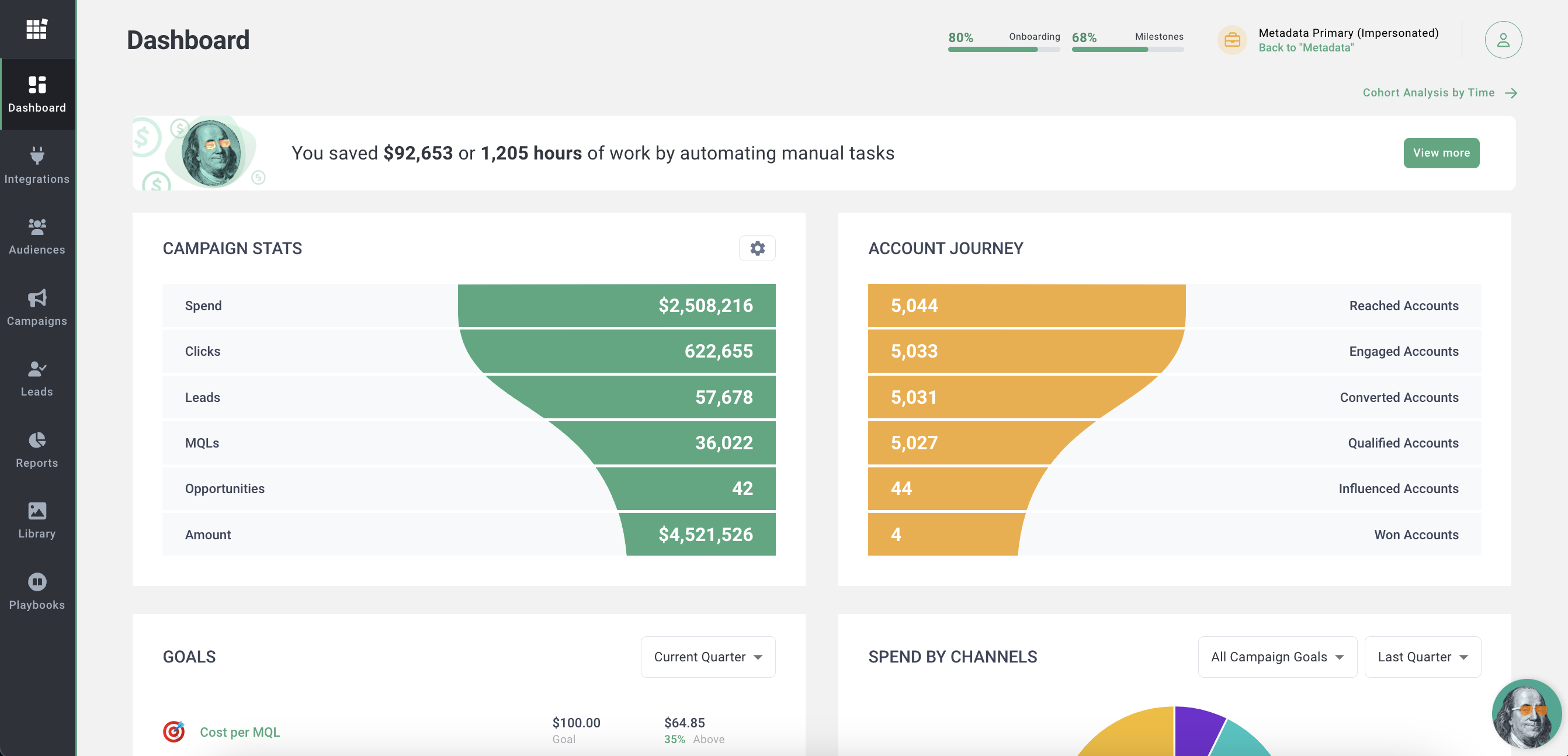   |