Chose Metadata.io
Metadata is way more cleaner in UI. Especially the UI of Facebook ad management is truly a horror show, glad to reduce my time spent in there.

| Product | Rating | Most Used By | Product Summary | Starting Price |
|---|---|---|---|---|
 Metadata.io | N/A | Based in San Francisco, Metadata.io is a Demand Generation and ABM platform designed to execute thousands of B2B campaigns in a matter of hours, automatically optimizing campaigns for pipeline impact at a high velocity. | $295 per month per installation | |
 TechTarget Priority Engine | N/A | Priority Engine is TechTarget's primary intent data offering. The vendor aims to enable marketing and sales teams by providing behavior insights for high priority accounts and leads. | N/A |
| Metadata.io | TechTarget Priority Engine | |||||||||||||||
|---|---|---|---|---|---|---|---|---|---|---|---|---|---|---|---|---|
| Editions & Modules |
| No answers on this topic | ||||||||||||||
| Offerings |
| |||||||||||||||
| Entry-level Setup Fee | $2,500 one-time fee per installation | No setup fee | ||||||||||||||
| Additional Details | — | — | ||||||||||||||
| More Pricing Information | ||||||||||||||||
| Metadata.io | TechTarget Priority Engine | |
|---|---|---|
| Considered Both Products |  Metadata.io  Ali Yildirim Manager Chose Metadata.io Pricing. You can't beat metadata's metamatch audience package. Clearbit charges on a CPM basis on the amount of spend used on a certain audience while metadata is a flat fee  Dorottya Kiss PPC Team Leader Chose Metadata.io We choose Metadata.io because their solution would bring B2B targeting on all platforms. Other providers only offer this feature only on Facebook. Metadata.io also works as a campaign management platform, meanwhile, other providers only create audiences that are pushed to the …  Ray Huang Head of Marketing Chose Metadata.io These aren't apples-to-apples comparisons: I used Triblio at a previous company. Triblio is primarily for ABM display and you can have smaller audience pools (to the company level). Metadata has a display ad component that I am not currently licensed for. Triblio has added ABM …  Michal Wachstock Head of Global Marketing Chose Metadata.io We chose [Metadata.io] because it was a smaller company and could get more personalized attention. The price was better and they seemed more eager to support us. The feature set was what we were looking for and not more - it was exactly as robust as we needed it to be. Didn't …  Andrew Racine Senior Director, Demand Generation and Digital Marketing Chose Metadata.io Metadata made it much easier and quicker for us to experiment and test our different campaigns and audiences as well as drive valuable results. | TechTarget Priority Engine  John Bachner Senior Account Executive Chose TechTarget Priority Engine Each has its perks. Using them in conjunction with each other will deliver the best results. TechTarget Priority Engine gives info on items accounts are searching for and what is relevant to them today. It provides specific conversation tracks to create opportunities (current … |
| Metadata.io | TechTarget Priority Engine | ||||||||||||||||||||||||||||||
|---|---|---|---|---|---|---|---|---|---|---|---|---|---|---|---|---|---|---|---|---|---|---|---|---|---|---|---|---|---|---|---|
| Sales Intelligence Data Standards |
| ||||||||||||||||||||||||||||||
| Intent Data |
|
| Metadata.io | TechTarget Priority Engine | |
|---|---|---|
| Small Businesses |  Sitecore Send Score 10.0 out of 10 |  Lusha Score 8.1 out of 10 |
| Medium-sized Companies | TechTarget Priority Engine Score 9.8 out of 10 |  6sense Score 8.7 out of 10 |
| Enterprises | TechTarget Priority Engine Score 9.8 out of 10 | 6sense Score 8.7 out of 10 |
| All Alternatives | View all alternatives | View all alternatives |
| Metadata.io | TechTarget Priority Engine | |
|---|---|---|
| Likelihood to Recommend | 7.8 (0 ratings) | 7.7 (0 ratings) |
| Support Rating | 10.0 (0 ratings) | 7.7 (0 ratings) |
| Ease of integration | 7.8 (0 ratings) | - (0 ratings) |
| Metadata.io | TechTarget Priority Engine | |
|---|---|---|
| Likelihood to Recommend |
|
|
| Pros |
 Andrew Harder Senior Paid Media Manager |
|
| Cons |
|
|
| Usability | No answers on this topic |
|
| Support Rating |
Andrew Racine Senior Director, Demand Generation and Digital Marketing |
 Kyle Scagnelli Enterprise Sales Development Representative |
| Alternatives Considered |
Ray Huang Head of Marketing |
|
| Return on Investment |
|
|
| ScreenShots | Metadata.io Screenshots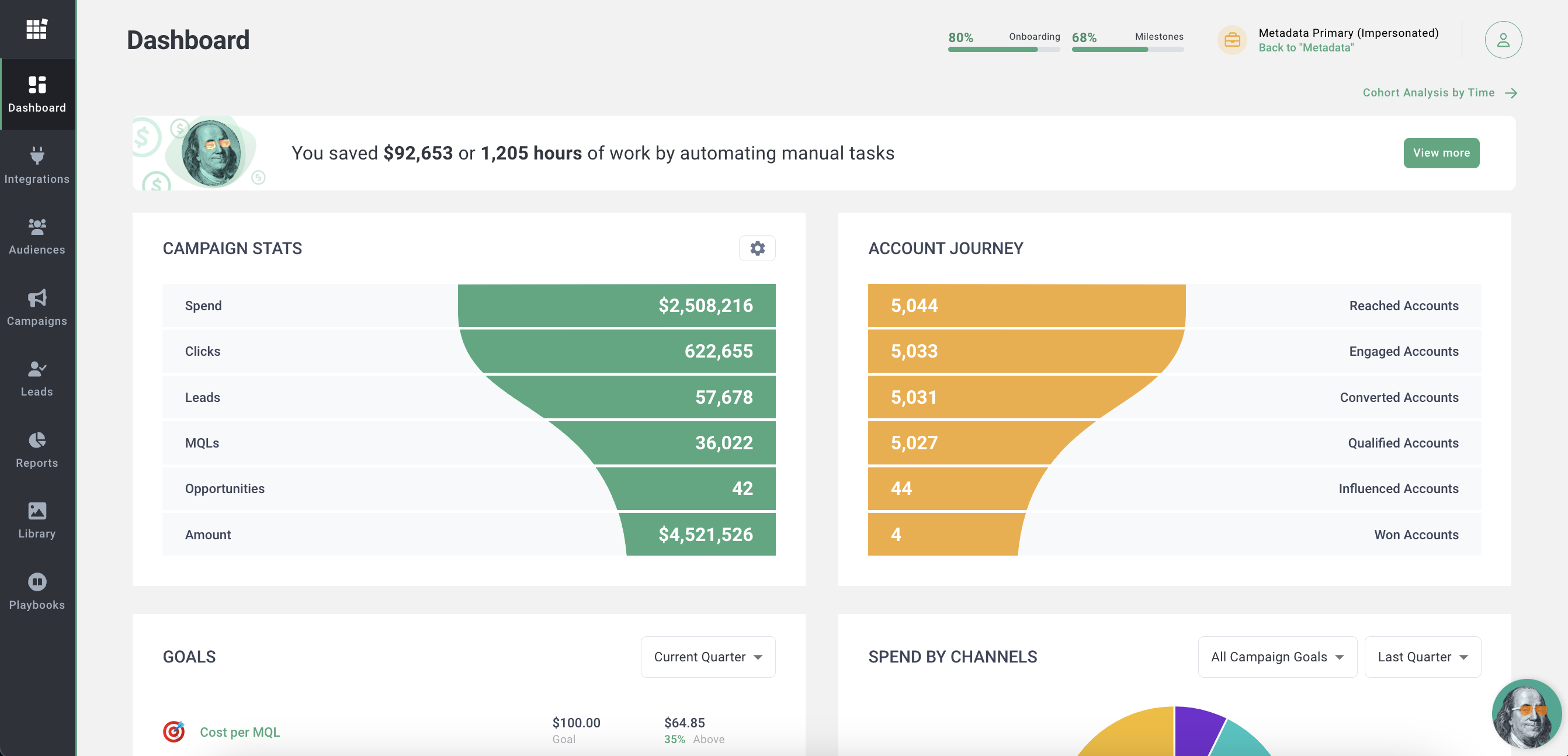   |