Microsoft Defender for Endpoint vs. Microsoft Intune

Overview
ProductRatingMost Used ByProduct SummaryStarting Price
Microsoft Defender for Endpoint
Score 8.7 out of 10
N/A
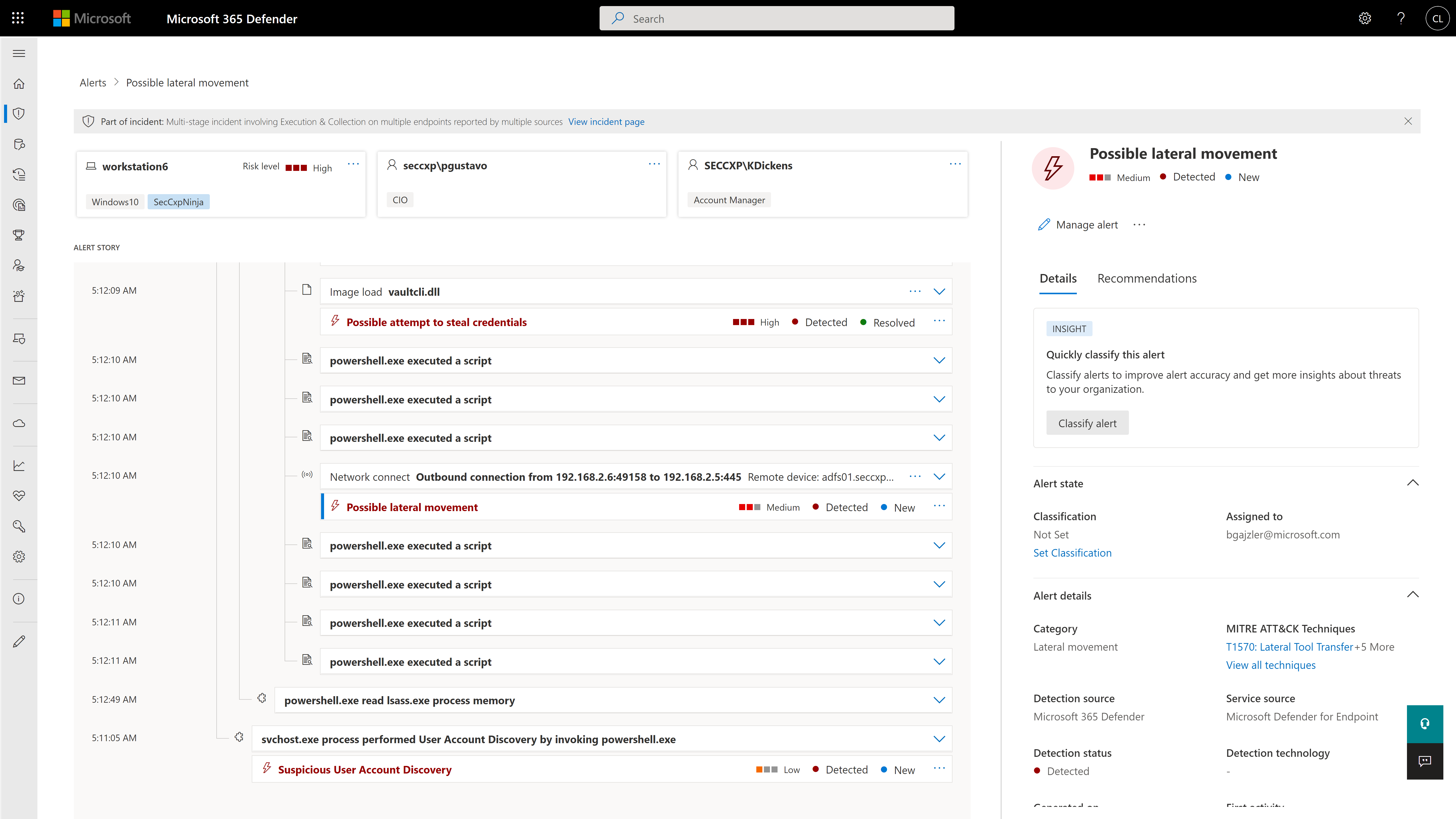
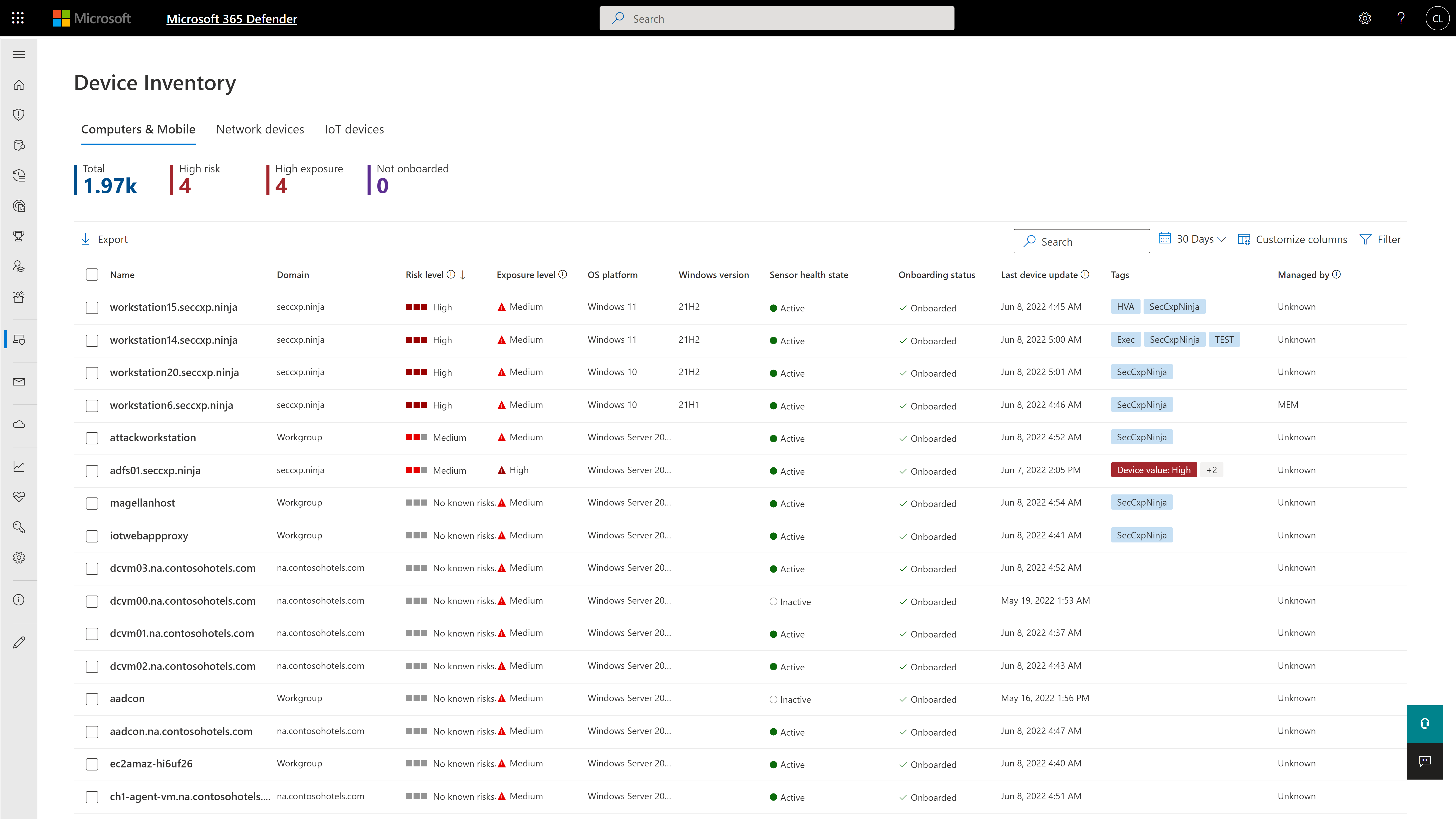
Microsoft Defender for Endpoint (formerly Microsoft Defender ATP) is a holistic, cloud delivered endpoint security solution that includes risk-based vulnerability management and assessment, attack surface reduction, behavioral based and cloud-powered next generation protection, endpoint detection and response (EDR), automatic investigation and remediation, managed hunting services, rich APIs, and unified security management.
$2.50
per user/per month
Microsoft Intune
Score 8.4 out of 10
N/A
Microsoft Intune (formerly Microsoft Endpoint Manager), combining the capabilities of the former Microsoft System Center Configuration Manager, SCCM or ConfigMgr, is presented as a unified endpoint management option. Microsoft Intune is an endpoint management solution for mobile devices, an MDM solution that allows the user to securely manage iOS, Android, Windows, and macOS devices with a single endpoint management solution. The component Endpoint Configuration Manager (the…
$5
per user/per month
Pricing
Microsoft Defender for EndpointMicrosoft Intune
Editions & Modules
Academic
$2.50
per user/per month
Standalone
$5.20
per user/per month
Microsoft 365 Business Basic
$5
per user/per month
Microsoft 365 For Individuals
$6.99
per month
Microsoft 365 Apps
$8.25
per user/per month
Microsoft 365 For Families
$9.99
per month
Microsoft 365 Business Standard
$12.50
per user/per month
Microsoft 365 Business Premium
$15
per user/per month
Offerings
Pricing Offerings
Microsoft Defender for EndpointMicrosoft Intune
Free Trial
YesNo
Free/Freemium Version
NoNo
Premium Consulting/Integration Services
NoNo
Entry-level Setup FeeNo setup feeNo setup fee
Additional Details
More Pricing Information
Community Pulse
Microsoft Defender for EndpointMicrosoft Intune
Considered Both Products
Microsoft Defender for Endpoint
Chose Microsoft Defender for Endpoint
It's very convenient and very well integrated with our environment.
Chose Microsoft Defender for Endpoint
Majorly because our suite is Microsoft, so make totally sense to have this in the company and the price. It is Microsoft is better than CrowdStrike.
Chose Microsoft Defender for Endpoint
Sophos. Because of the integration with Microsoft ecosystem, we selected Defender.
Chose Microsoft Defender for Endpoint
We have not used anything else other than Microsoft Defender for Endpoint. Maybe we've used other antivirus software like Sophos and things like that. They're just not all encompassing and that's why we moved to use this product.
Chose Microsoft Defender for Endpoint
I have been working with customers that they are transitioning from Sentinel One, CrowdStrike to Defender for Endpoint, right? So I think it's because they see the value in the product and also they see how much they can save in terms of the cost for companies because they …
Chose Microsoft Defender for Endpoint
We previously used CrowdStrike on our servers. However, the seamless integration of Microsoft Defender (MD) with XDR and the entire Microsoft ecosystem led us to choose Microsoft Defender for Endpoint (MDE).
Chose Microsoft Defender for Endpoint
What we love more about this product is the way this pro gets integrated into the other family of solutions, especially Defender for Identity or the XDR solutions. We think that the market, the customers are full of unattended consults coming out from different vendors and that …
Chose Microsoft Defender for Endpoint
The technical features, usability and the support was nice as compared to the other products.
Chose Microsoft Defender for Endpoint
Microsoft Defender for Endpoint is more advantageous in our windows heavy infrastructure and it was unparalled in the ease of integration with windows endpoints. Security breaches, system crashes and outages with other competitors like Crowdstrike made it easier for us to go …
Chose Microsoft Defender for Endpoint
Norton is much much more expensive and difficult to use. Microsoft Defender for Endpoint is easy to use and can be operated by a new joiner as well.
Chose Microsoft Defender for Endpoint
CrowdStrike Falcon is also a good solution for endpoint protection which offer EDR Soultion, threat hunting and AI driven threat protection. Sophos Intercept X combines next-gen antivirus with advanced EDR capabilities with its deep learning technology, exploit prevention, and …
Chose Microsoft Defender for Endpoint
Microsoft Defender for Endpoint is unique for its effortless deployment into the Microsoft ecosystem, where it taps the broadest set of threat intelligence from more than 1.5 billion endpoints. Its state-of-the-art AI-powered automated investigation and remediation minimize …
Chose Microsoft Defender for Endpoint
We started onboarding macOS devices on jamf and started managing it. Because Defender for Endpoint is not working as expected for and compared to price and functionality we are switching from it.
Chose Microsoft Defender for Endpoint
CrowdStrike and SentinelOne. CrowdStrike, you have to deploy it, but it's the defender, it's already baked into the operating system. Same thing with SentinelOne.
Chose Microsoft Defender for Endpoint
Easier to integrate, less hidden fees, easier to maintain, and easier to update. Support is much better on the Microsoft side than CrowdStrike.
Chose Microsoft Defender for Endpoint
I don't think, it's not really something that we were just using Microsoft and it was just an easy thing to do.
Chose Microsoft Defender for Endpoint
I'm not familiar. It's just been one year plus that I started using, so I've just started using Defender, so I really don't know how to compare it with others.
Chose Microsoft Defender for Endpoint
I would say at the end all they are doing the same, but with the benefit that we don't need to install anything. So it's just kind of enabling and then the functionality is available, so other products need to be installed, which is not necessary with the defend
Chose Microsoft Defender for Endpoint
We use Defender in the cloud. We are currently using Defender in the cloud and also evaluating the XDR solution for programmatic. It's just arguments, the defense in depth. You have Defender Endpoint and then you have what you have in the cloud as well, so it's just augmenting …
Chose Microsoft Defender for Endpoint
Before using Defender for Endpoint, we basically had the starter version of the Microsoft product, which comes prebuilt into the system. We had them using in the initial run, but then what usually happened was the employees started disabling it, and that usually made, we guys …
Chose Microsoft Defender for Endpoint
I am a big fan of Tanium actually, so I think it is good. Tanium seemed like it was maybe a little bit easier, but maybe the capability was lacking. Maybe that's the reason why it seems like Defender for Endpoint might be a little harder to understand. There might just be more …
Chose Microsoft Defender for Endpoint
CrowdStrike Falcon, and Sentinel One are other big ones that we use a bit. Cisco Secure Endpoint we've evaluated as well. Cisco Secure endpoint capability-wise doesn't match up to Defender, SentinelOne, and CrowdStrike both do, but the cost profiles are a bit higher. So most of …
Chose Microsoft Defender for Endpoint
I would say not to name specific company names, because I'm a partner with one of them and that's the account that I work with. But I use some competing solutions that I would say are pretty heavy from an overhead perspective with the agent that has to be installed in the …
Chose Microsoft Defender for Endpoint
Because this product is easier to use and has a lot of development and Microsoft's behind it.
Microsoft Intune
Chose Microsoft Intune
Microsoft Intune fits seamlessly with the other Microsoft products that are installed at our customers. Furthermore, Microsoft Intune has a lot of possibilities and can be used very flexibly. In terms of management, maintenance and rollout, it fits the wishes of our …
Chose Microsoft Intune
Microsoft Intune is more robust as far as fine-tuning security controls. It also allows for software installs, folder access controls, updating PCs, and other features simply not found in previous products we have used. Because it is rolled into MS 365 it's very cost …
Chose Microsoft Intune
We migrated from Skybox to Microsoft Intune because we already owned Intune licensing through our existing Microsoft subscription. Overall, this has reduced costs, increased operating efficiencies, and lead to more streamlined system and process management. It was really a …
Chose Microsoft Intune
A few of our apps get deployed during enrollment, the important ones that are required. For other apps, PDQ makes things a bit quicker as you can hit deploy and it happens instantly. So we use a mix of the two products. If you have a lot of macOS devices, another tool to …
Chose Microsoft Intune
I prefer to go with what is already available from Microsoft to manage my IT infrastructure. My preference is to reduce the number of vendors I have to work with.
Chose Microsoft Intune
Symantec Ghost Solutions only covered only 2 parts, creating and imaging, of what Microsoft Endpoint Protection provided us. Price point wise it was a no brainer for us to switch to it as it covered many other things we were looking for and become an almost all in one solution
Chose Microsoft Intune
We did not evaluate or use other products like Microsoft Endpoint Manager (Microsoft Intune + SCCM). The main reason we did not evaluate or use other products is because Microsoft Endpoint Manager (Microsoft Intune + SCCM) integrates seamlessly with Microsoft 365 and Windows …
Chose Microsoft Intune
Due to work put into getting SCCM up and running, moving to Endpoint Manager was the logical step, without needing to compare to other products and start that development cycle over again. Staying within the Microsoft ecosystem allows our organization to have better-defined …
Chose Microsoft Intune
Not having to invest in Intune and having all the important features its competitors had the choice was very easy to make in favor of Microsoft's product.
Chose Microsoft Intune
[Microsoft Endpoint Manager (Microsoft Intune + SCCM)] was already in our environment when I was hired. We haven't really evaluated the need to use another application because SCCM has been working well for us. Additionally, Microsoft SCCM is the industry-standard when it comes …
Chose Microsoft Intune
SCCM's bread and butter has been imaging, and that still can't be beat. With cloud computing becoming more normal, however, we are seeing fewer instances where we are flat out imaging devices as they come in. However, [Microsoft] Endpoint Manager still [excels] in this area. …
Chose Microsoft Intune
Group policy, the predecessor of Microsoft Endpoint Manager was a great, easy to use tool. It is dated and stuck as an on-prem solution but still very good and served a purpose. We are still using this in conjunction with Microsoft Endpoint Manager whilst we complete our …
Chose Microsoft Intune
We tired other solution which less suite for our needs.
Currently we mostly use MS applications and services so, MS Intune ans SCCM close match our expectation and needs.
We require easy access and top reliability with support for all of our IT platforms.
Chose Microsoft Intune
I haven't used any of the above-mentioned endpoint management solutions but heard about them. I hope they also provide similar functionalities as provided by Intune.
Chose Microsoft Intune
Dell Kace K1000 does a great job of system patching of Applications, Office, and Windows. It does a great job of software deployment. It even has great software for asset and inventory management. It is also a ServiceDesk platform, and if you're not using that function, it can …
Chose Microsoft Intune
Most companies with Office 365 already own Intune. It also heavily integrated with Office 365. Other product users had more issues and limitations. Security features did not work with other vendors, and we spent more time dealing with issues.
Chose Microsoft Intune
SCCM is probably used across the industry more so than most other Systems Management solutions, and the reasoning behind this is most likely because it is a Microsoft product, which integrates well with the Windows Server platform, and also with clients/endpoints that are on …
Chose Microsoft Intune
We selected Microsoft Intune for the ease of use and its integration with the entire Office 365 ecosystem, which allows us to have an end-to-end of the collaborator.
Chose Microsoft Intune
GFI Lan Guard system is not user-friendly. GFI Lan Guard does not produce laptop/computer images in one place and its asset management is not very good. System Center Configuration Manager was built for asset management and therefore able to provide robust inventory management.
S…
Chose Microsoft Intune
Microsoft System Center Configuration Manager is kind of the only option for PC management on a large scale. There are open-source alternatives like Chocolatey, but that only works for very small scale shops. Microsoft kind of monopolizes on this front for enterprise …
Chose Microsoft Intune
We use AD GPO to deploy software, WDS for OS deployment, and Spiceworks for inventory. This solution has significantly reduced feature set compared to SCCM but much easier to troubleshoot and configure. Currently, we are looking into ManageEngine Desktop Central and SmartDeploy …
Chose Microsoft Intune
We were a ZENworks shop previously. With our strong tie to Novell that made sense, but as we left Netware and its enterprise directory it made sense to leave Zenworks. At the time, I would have said that ZENworks was a more mature tool and I haven't kept up with their feature …
Chose Microsoft Intune
I didn't evaluate any other product when we started using SCCM. Because we were under an MS Enterprise agreement, it was easy to decide.
Chose Microsoft Intune
I inherited an already existing environment system center. My previous experience was using WSUS. Microsoft System Center Configuration Manager does still use WSUS but it is a far more robust and complete solution for managing and reporting on all your PCs. Our Microsoft …
Features
Microsoft Defender for EndpointMicrosoft Intune
Endpoint Security
Comparison of Endpoint Security features of Product A and Product B
Microsoft Defender for Endpoint
8.4
Ratings
2% below category average
Microsoft Intune
-
Ratings
Anti-Exploit Technology7.80 Ratings00 Ratings
Endpoint Detection and Response (EDR)9.10 Ratings00 Ratings
Centralized Management8.90 Ratings00 Ratings
Hybrid Deployment Support7.20 Ratings00 Ratings
Infection Remediation9.30 Ratings00 Ratings
Vulnerability Management7.40 Ratings00 Ratings
Malware Detection8.80 Ratings00 Ratings
Best Alternatives
Microsoft Defender for EndpointMicrosoft Intune
Small Businesses
ThreatLocker
ThreatLocker
Score 9.5 out of 10
Avast CloudCare
Avast CloudCare
Score 10.0 out of 10
Medium-sized Companies
BlackBerry Protect (CylancePROTECT)
Score 9.1 out of 10
KACE Systems Management Appliance
Score 10.0 out of 10
Enterprises
BeyondTrust Endpoint Privilege Management
Score 9.8 out of 10
KACE Systems Management Appliance
Score 10.0 out of 10
All AlternativesView all alternativesView all alternatives
User Ratings
Microsoft Defender for EndpointMicrosoft Intune
Likelihood to Recommend
8.4
(0 ratings)
9.4
(0 ratings)
Likelihood to Renew
8.4
(0 ratings)
9.9
(0 ratings)
Usability
-
(0 ratings)
7.5
(0 ratings)
Performance
-
(0 ratings)
6.9
(0 ratings)
Support Rating
9.0
(0 ratings)
10.0
(0 ratings)
Implementation Rating
-
(0 ratings)
8.9
(0 ratings)
Ease of integration
-
(0 ratings)
7.6
(0 ratings)
User Testimonials
Microsoft Defender for EndpointMicrosoft Intune
Likelihood to Recommend
Because of its integration with Windows, it is very easy to deploy and manage. Any IT department should be able to leverage the software and interface. The admin portal provides weighted recommendations that comprise the Secure Store, offering admins, security teams, and business owners valuable insights into their security footprint without requiring a strong security background. The software would be ideal for small and mid-sized businesses that cannot dedicate resources to security. Larger enterprises would also benefit, but may require the enhanced license.
Read full review
Windows Autopilot makes provisioning user Windows PC laptops a breeze. A user only needs to turn on the laptop, join it to their local WiFi, login with their O365 account then sit back and let Windows Autopilot handle the app installations required for work, configure the laptop settings to meet my organization requirements. I have seen this all completed in less than 30 minutes depending on how fast the internet connection is. Where Microsoft Intune needs to improve I think is the part where it can push out software updates to 3rd party apps. Right now I have to use Automox to fill in this gap.
Read full review
Pros
  • One, it's crazy lightweight, so compared to some of the competitors that we also have used with our security services, it's really lightweight and so I don't have a lot of overhead on the system that it's running on.
  • It does really fantastic PowerShell integration.
Read full review
  • [Microsoft Endpoint Manager (Microsoft Intune + SCCM)] helps to speed up the deployment of patches/software throughout our environment. I can easily build a package and then deploy across all endpoints.
  • The ability to supercede software is also quite handy. This automates the removal of old versions and replacing them with newer versions.
  • The Intune Autopilot option is very useful if you want to deploy software to devices straight out of the box. You can configure them to download software when a user opens a new PC and turns it on for the first time.
Read full review
Cons
  • So the fact that Defender for Endpoint still works with signatures is actually, I don't know, a little difficult for us because, I mean, since Microsoft trusts those signatures, you can easily inject code. And we've done it many times. To show that you can inject code through vulnerabilities like CV 2013, 99, and 33 but still keep the signature. So because of the trust of those signatures, the malware just kind of slides into the environment without Defender knowing. That's the first part. The second part is that the behavioral analysis is not precisely its Prime. It's not Defender's best capability for endpoints. So, Defender does not identify all behaviors considered by other EDRs in the market.
Read full review
  • Installation is very laborious and complicated. The number of things to manually configure during the installation is incredible.
  • OS deployment is hard to configure and troubleshoot. The Microsoft article on deploying Windows 10 via System Center Configuration Manager in a test environment takes 44 minutes to read (Microsoft's estimate, not mine -- check here: https://docs.microsoft.com/en-us/windows/deployment/windows-10-poc-sc-config-mgr). If something goes wrong, there are multiple log locations to check on both the server and client, making troubleshooting difficult.
  • The management console looks old, and its performance isn't great. It is often hard to find settings in the console, and it refreshes slowly. The old name for System Center Configuration Manager, SMS, comes to mind often. "Slowly Moving Software."
Read full review
Likelihood to Renew
Microsoft Defender is closely catching -up in market with existing competitors they have added DLP endpoint & DLP Network and Cloud DLP solution last year with OCR capabilities. I would say Microsoft Defender is not legacy Vendor in end point security, the need to learn from other vendors in market and focus on new XDR technologies, which is going to be new battle for all vendors
Read full review
Mascom Wireless is a Microsoft shop and SCCM has proved to be helpful in keeping our Microsoft products up to date every month without fail. We also have a Microsoft Enterprise Agreement which we renewed for three years ending 2022. The remote access utility works wonders for the organisation and have saved travel bills including subsistance allowance. We have been able to fulfill security audits both internal and external. We have been able to keep a robust inventory of our computer assets and nothing falls of the cracks
Read full review
Usability
Because in terms of the usability is easy to understand, it's easy to manage, obviously you need to have specific skills to do that, but I would say that even the console and the product is walking through the flow that you are looking for on this console.
Read full review
Overall, Microsoft Intune is very usable. While help documentation can be lacking, once setup and configured, Intune does all the work that used to be manual. There is a lot of automation and advanced features and manufacturer integrations you don't get anywhere else. These are absolutely game changers when managing IT workloads.
Read full review
Reliability and Availability
Microsoft Defender for Endpoint chugs along just fine no matter what we throw at it and what systems it's running on. It doesn't take up a lot of resources either, so that's welcomed.
Read full review
No answers on this topic
Performance
Microsoft Defender for Endpoint is easy on memory and resources on clients.
Read full review
It's a 'heavy' system, which demands a lot of resources form the datacenter perspective. So, make sure you followed the requirements to avoid frustration in the future. From the 'client' perspective, it's fine. I've never had any issue with that.
Read full review
Support Rating
Overall support is really good for this product. Since it's a Microsoft product, you will get good support from a number of different resources, including knowledgebase articles on the web, support from Microsoft technicians, and documentation (which tends to very thorough). Also, there is a vast user support community for this product, so user support forums would also be another valuable channel to get help if needed. I don't envision too many people will have issues/problems with the product, as it tends to run good overall.
Read full review
Being a Microsoft product, support was good. Out interaction was limited to our in-house IT team which was installing the Intune app in our mobile device. The installation was smooth and we haven't faced any difficulties with the app while using it. Provides a smooth and secure access to all Office 365 apps in mobile while separating the personal and professional data.
Read full review
Implementation Rating
Deployment was handled by our team here and everything went pretty smoothly. We did have a few hiccups in our test group, but that only took a bit to get ironed out.
Read full review
Work with a "test group" of users who you have a good relationship with so that when things don't work properly they understand! Work with your partner nicely without forcing things especially timelines as you are bound to make mistakes and create oversights in the project Management can also interfere with the implementation (which can cause delays) if you make too many mistakes which takes me back to having a "test group" where you have good relations
Read full review
Alternatives Considered
Microsoft Defender for Endpoint offers strong integration with Microsoft 365 and Azure services, which provide a unified security experience. While McAfee Trellix is known for solid antivirus, Microsoft Defender excels in integration in the ecosystem.
Read full review
Microsoft Intune is more robust as far as fine-tuning security controls. It also allows for software installs, folder access controls, updating PCs, and other features simply not found in previous products we have used. Because it is rolled into MS 365 it's very cost effective. It's also a single pane of glass for managing user PCs and personal devices
Read full review
Scalability
Microsoft Defender for Endpoint is easily scaled from small orgs to giant enterprises.
Read full review
No answers on this topic
Return on Investment
  • Reduced incidents of security breaches lead to lower remediation costs and avoid potential financial losses and reputational damage.
  • Reduces the need for additional third-party security solutions and training, thereby lowering overall security management costs.
  • Increased efficiency and productivity of IT staff lead to better allocation of resources and cost savings.
  • Reduces the risk of fines and sanctions associated with non-compliance, ensuring business continuity and protecting revenue.
Read full review
  • The positive impact it's had was it has been really beneficial in having an all-in-one Systems Management solution to be able to manage all endpoints across the organization. This has saved both time and costs from having to search/setup/manage other System Management applications and also have saved money from having to purchase a license for other commercial products.
  • Another positive impact it has had was in being able to easily remote into computers/endpoints, and also being able to provide remote assistance to end-users.
  • The negative impact has been it is not being fully utilized by most of the IT staff, as it is a more complicated platform to learn/master. This would require funding for IT staff to take training in learning the product, or require time to consult the documentation in the use of the product. As a result, this may hurt productivity in being able to have to work on other things.
Read full review
ScreenShots

Microsoft Defender for Endpoint Screenshots

Screenshot of blocked activitiesScreenshot of Detects & respondsScreenshot of discovers vulnerabilityScreenshot of Eliminates blind spotsScreenshot of Risk management