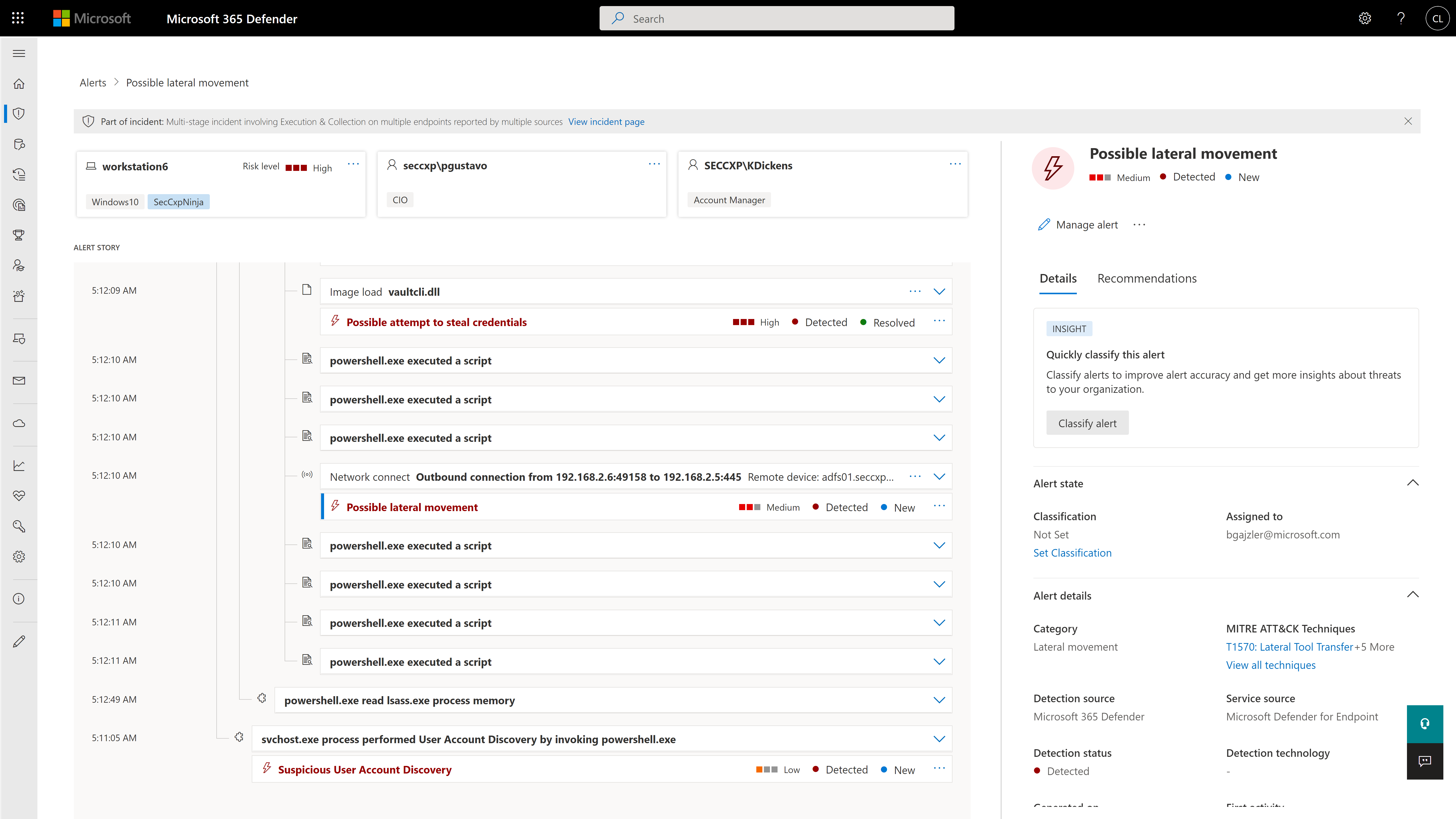
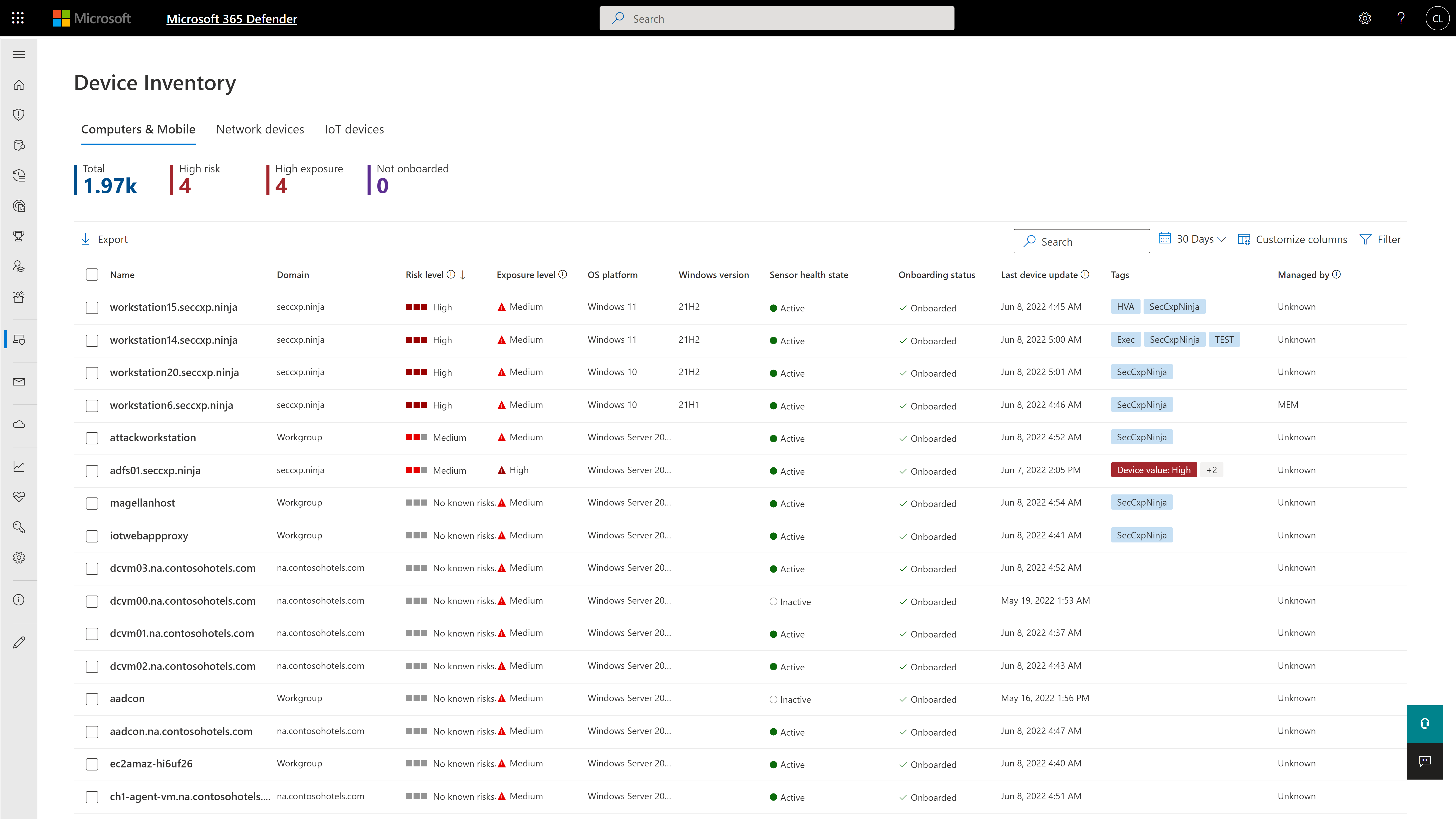
Microsoft Defender for Endpoint (formerly Microsoft Defender ATP) is a holistic, cloud delivered endpoint security solution that includes risk-based vulnerability management and assessment, attack surface reduction, behavioral based and cloud-powered next generation protection, endpoint detection and response (EDR), automatic investigation and remediation, managed hunting services, rich APIs, and unified security management.
$2.50
per user/per month
Sophos Email
Score 7.5 out of 10
N/A
Sophos Email is presented as Predictive Cloud Email Security Powered by Artificial Intelligence designed to block spam and malware, as well as protect employees and block phishing attempts.
We have not used anything else other than Microsoft Defender for Endpoint. Maybe we've used other antivirus software like Sophos and things like that. They're just not all encompassing and that's why we moved to use this product.
I have been working with customers that they are transitioning from Sentinel One, CrowdStrike to Defender for Endpoint, right? So I think it's because they see the value in the product and also they see how much they can save in terms of the cost for companies because they …
We previously used CrowdStrike on our servers. However, the seamless integration of Microsoft Defender (MD) with XDR and the entire Microsoft ecosystem led us to choose Microsoft Defender for Endpoint (MDE).
What we love more about this product is the way this pro gets integrated into the other family of solutions, especially Defender for Identity or the XDR solutions. We think that the market, the customers are full of unattended consults coming out from different vendors and that …
Microsoft Defender for Endpoint is more advantageous in our windows heavy infrastructure and it was unparalled in the ease of integration with windows endpoints. Security breaches, system crashes and outages with other competitors like Crowdstrike made it easier for us to go …
CrowdStrike Falcon is also a good solution for endpoint protection which offer EDR Soultion, threat hunting and AI driven threat protection. Sophos Intercept X combines next-gen antivirus with advanced EDR capabilities with its deep learning technology, exploit prevention, and …
Microsoft Defender for Endpoint is unique for its effortless deployment into the Microsoft ecosystem, where it taps the broadest set of threat intelligence from more than 1.5 billion endpoints. Its state-of-the-art AI-powered automated investigation and remediation minimize …
We started onboarding macOS devices on jamf and started managing it. Because Defender for Endpoint is not working as expected for and compared to price and functionality we are switching from it.
CrowdStrike and SentinelOne. CrowdStrike, you have to deploy it, but it's the defender, it's already baked into the operating system. Same thing with SentinelOne.
I'm not familiar. It's just been one year plus that I started using, so I've just started using Defender, so I really don't know how to compare it with others.
I would say at the end all they are doing the same, but with the benefit that we don't need to install anything. So it's just kind of enabling and then the functionality is available, so other products need to be installed, which is not necessary with the defend
We use Defender in the cloud. We are currently using Defender in the cloud and also evaluating the XDR solution for programmatic. It's just arguments, the defense in depth. You have Defender Endpoint and then you have what you have in the cloud as well, so it's just augmenting …
Before using Defender for Endpoint, we basically had the starter version of the Microsoft product, which comes prebuilt into the system. We had them using in the initial run, but then what usually happened was the employees started disabling it, and that usually made, we guys …
I am a big fan of Tanium actually, so I think it is good. Tanium seemed like it was maybe a little bit easier, but maybe the capability was lacking. Maybe that's the reason why it seems like Defender for Endpoint might be a little harder to understand. There might just be more …
CrowdStrike Falcon, and Sentinel One are other big ones that we use a bit. Cisco Secure Endpoint we've evaluated as well. Cisco Secure endpoint capability-wise doesn't match up to Defender, SentinelOne, and CrowdStrike both do, but the cost profiles are a bit higher. So most of …
I would say not to name specific company names, because I'm a partner with one of them and that's the account that I work with. But I use some competing solutions that I would say are pretty heavy from an overhead perspective with the agent that has to be installed in the …
Many other solutions are a complicated setup and take a lot of time for the configuration. With Sophos email we were setup and seeing data/emails within an hour. As I have described the ease of use from a high-level for someone like me a Director just peeking into the system or …
I am not familiar with other products at this point. I came into the IT field using Sophos Reflexion and moved to the new Sophos Email Security once the option was available simply because of our experience with Reflexion. While using Reflexion, we encountered numerous examples …
I was not part of selecting Sophos for this organization. I would recommend a full POC before landing on this as your decision. Some things that you should test for are targeted credential harvesting sites, impersonation rules processing, and general consistency in the …
I have only tried Sophos Email, and I find it to be a very useful tool, as it protects against information leakage such as fraudulent emails, cloud sandboxing and quarantine, which are essential functions and the product works excellent.
We had tried Broadcom (formerly Message Labs). It lacks encryption, and the customer service and invoices were terrible. The console was outdated and not easy to navigate. We were limited to a few options and very basic options when it came to troubleshooting or managing users. …
My experience is mostly with Google's G-Suite spam filtering and, as an end user, a different spam filtering group (which I cannot remember at this time). Sophos Secure Email Gateways seems to be much better at keeping things out of my inbox than either of the other solutions. …
Sophos is not head and shoulders above any of these competitors, as it's a very closely knit race. Security and email transmission security are one of the highest priorities out there in technology. The world is slowly moving forward, and all of these vendors are leading the …
MS Exchange has the capabilities of out of the box workflow (as described previously), however, we managed to customize Sophos to do semi-manual workflow which is still acceptable. And more the encryption methods of Sophos has been proven by us to be more suitable. And the …
Deployment features, system stability and rate of threat protection are the main reasons I would go with Sophos Email Protection. Systems like Barracuda email protection seem nice, but the RBLs that they use could be stronger and perhaps use the "Cloud" information system more …
Because of its integration with Windows, it is very easy to deploy and manage. Any IT department should be able to leverage the software and interface. The admin portal provides weighted recommendations that comprise the Secure Store, offering admins, security teams, and business owners valuable insights into their security footprint without requiring a strong security background. The software would be ideal for small and mid-sized businesses that cannot dedicate resources to security. Larger enterprises would also benefit, but may require the enhanced license.
I strongly believe that if you are looking for a product that does what it says on the box and has the capacity to keep your company safe, you should look at Sophos. They have consistently been at the top of their game and continue to provide a product that meets the ever-changing needs of the threat landscape.
One, it's crazy lightweight, so compared to some of the competitors that we also have used with our security services, it's really lightweight and so I don't have a lot of overhead on the system that it's running on.
We could customize it to have a certain level of workflow. We manage to enforce certain email (based on key-phrases) to be quarantined before send it to the recipient. And the email needs to be approved (manually) before being released.
For certain type (using regex) of email, we will encrypt it if it's sent outside our organization domain.
So the fact that Defender for Endpoint still works with signatures is actually, I don't know, a little difficult for us because, I mean, since Microsoft trusts those signatures, you can easily inject code. And we've done it many times. To show that you can inject code through vulnerabilities like CV 2013, 99, and 33 but still keep the signature. So because of the trust of those signatures, the malware just kind of slides into the environment without Defender knowing. That's the first part. The second part is that the behavioral analysis is not precisely its Prime. It's not Defender's best capability for endpoints. So, Defender does not identify all behaviors considered by other EDRs in the market.
Microsoft Defender is closely catching -up in market with existing competitors they have added DLP endpoint & DLP Network and Cloud DLP solution last year with OCR capabilities. I would say Microsoft Defender is not legacy Vendor in end point security, the need to learn from other vendors in market and focus on new XDR technologies, which is going to be new battle for all vendors
It was easy to use and easy to implement. You don't need previous knowledge on the products, after we got this up and running, it took us hours to put everything together. The transition was easy and seamless.
Because in terms of the usability is easy to understand, it's easy to manage, obviously you need to have specific skills to do that, but I would say that even the console and the product is walking through the flow that you are looking for on this console.
The solution is very scalable, with a possibility to be customized; which means that Sophos Email can be configured depending on our own situation and context not on a general way. On the other hand, Sophos Email has a broad feature set; I mean, along with core spam and malware protection, Sophos offers advanced features such as real-time link following, threat isolation, spoof protection, etc.
Microsoft Defender for Endpoint chugs along just fine no matter what we throw at it and what systems it's running on. It doesn't take up a lot of resources either, so that's welcomed.
Overall support is really good for this product. Since it's a Microsoft product, you will get good support from a number of different resources, including knowledgebase articles on the web, support from Microsoft technicians, and documentation (which tends to very thorough). Also, there is a vast user support community for this product, so user support forums would also be another valuable channel to get help if needed. I don't envision too many people will have issues/problems with the product, as it tends to run good overall.
I have always found the answers I have needed in the documentation or online, and have not needed to contact Sophos Secure Email Gateways' support team. This, I think, bodes well for how their software is easy to use and has good documentation when you cannot find what you need in the basic interface.
Deployment was handled by our team here and everything went pretty smoothly. We did have a few hiccups in our test group, but that only took a bit to get ironed out.
Microsoft Defender for Endpoint offers strong integration with Microsoft 365 and Azure services, which provide a unified security experience. While McAfee Trellix is known for solid antivirus, Microsoft Defender excels in integration in the ecosystem.
Many other solutions are a complicated setup and take a lot of time for the configuration. With Sophos email we were setup and seeing data/emails within an hour. As I have described the ease of use from a high-level for someone like me a Director just peeking into the system or an analyst that can do a deep dive is one of the best users interfaces I have seen for any product.
We have prevented several cases of employees tried to steal organization's information; this has a great effect on the ROI not only in dollars but also in our reputation.
We have used it for more than 4 years, which is more than typical technology adoption we usually do; and this is the result of the above causes (prevention of internal fraud).
Need to have an expert of regex to accommodate more advanced DLP function/requirements