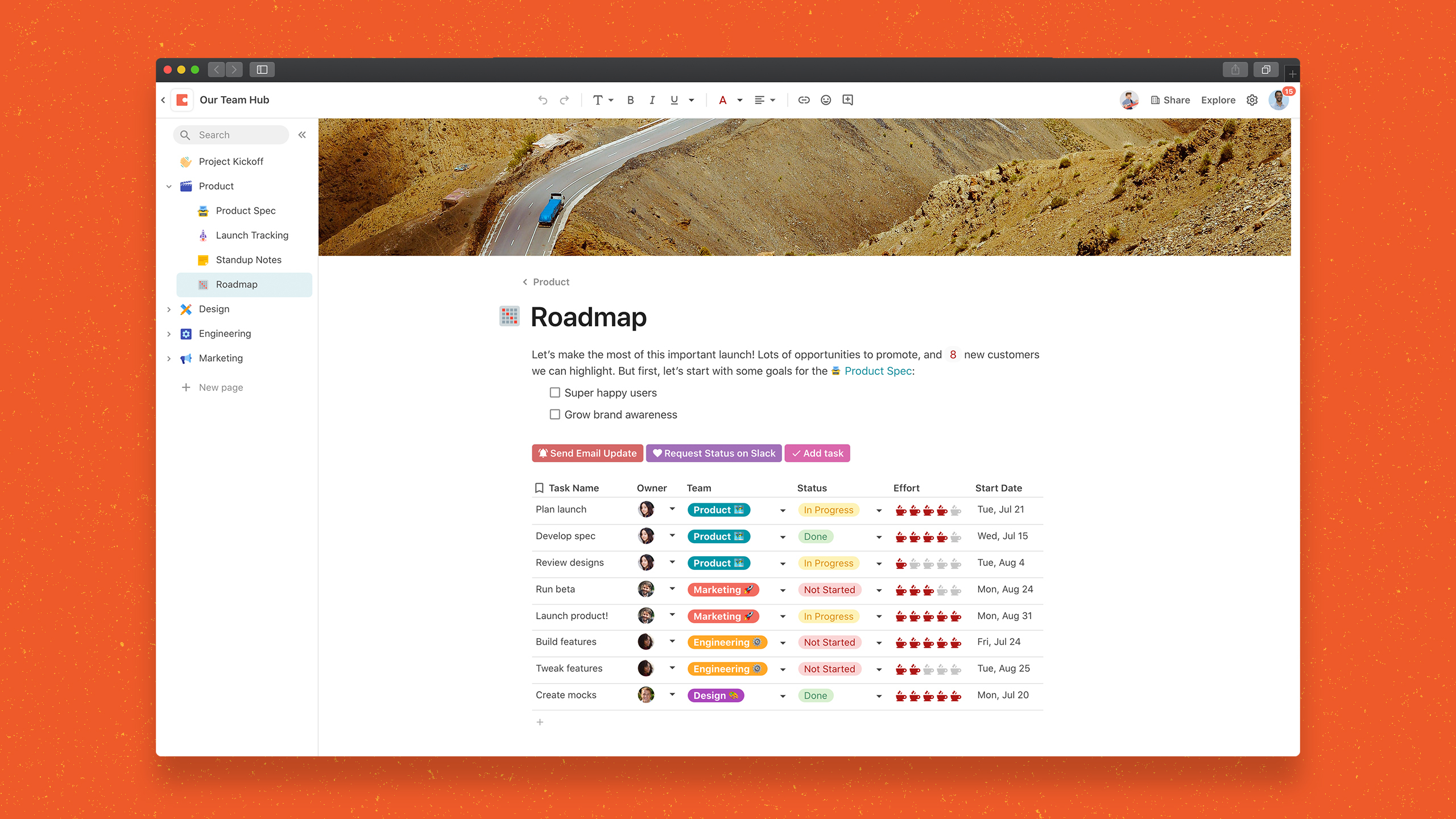
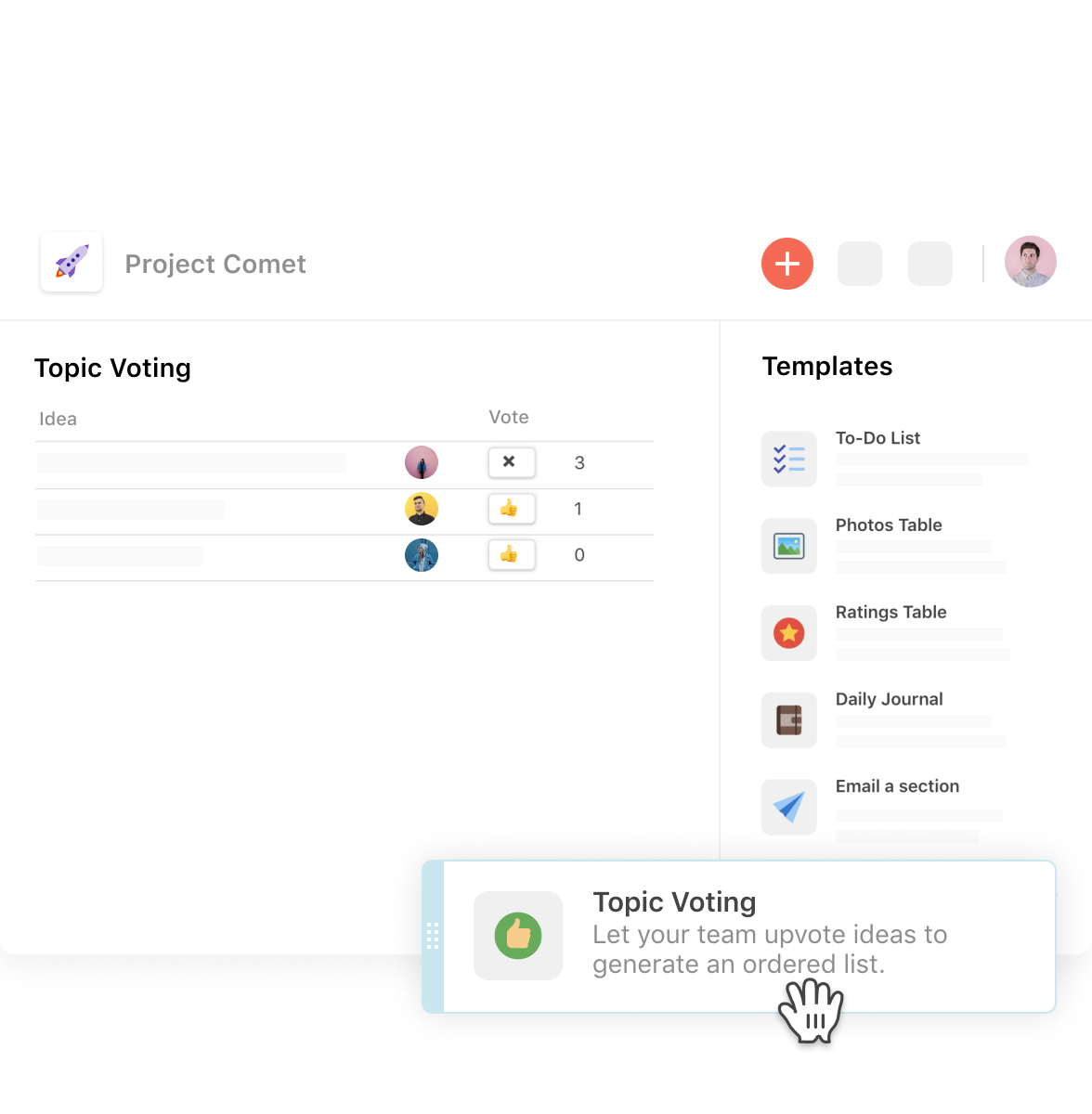
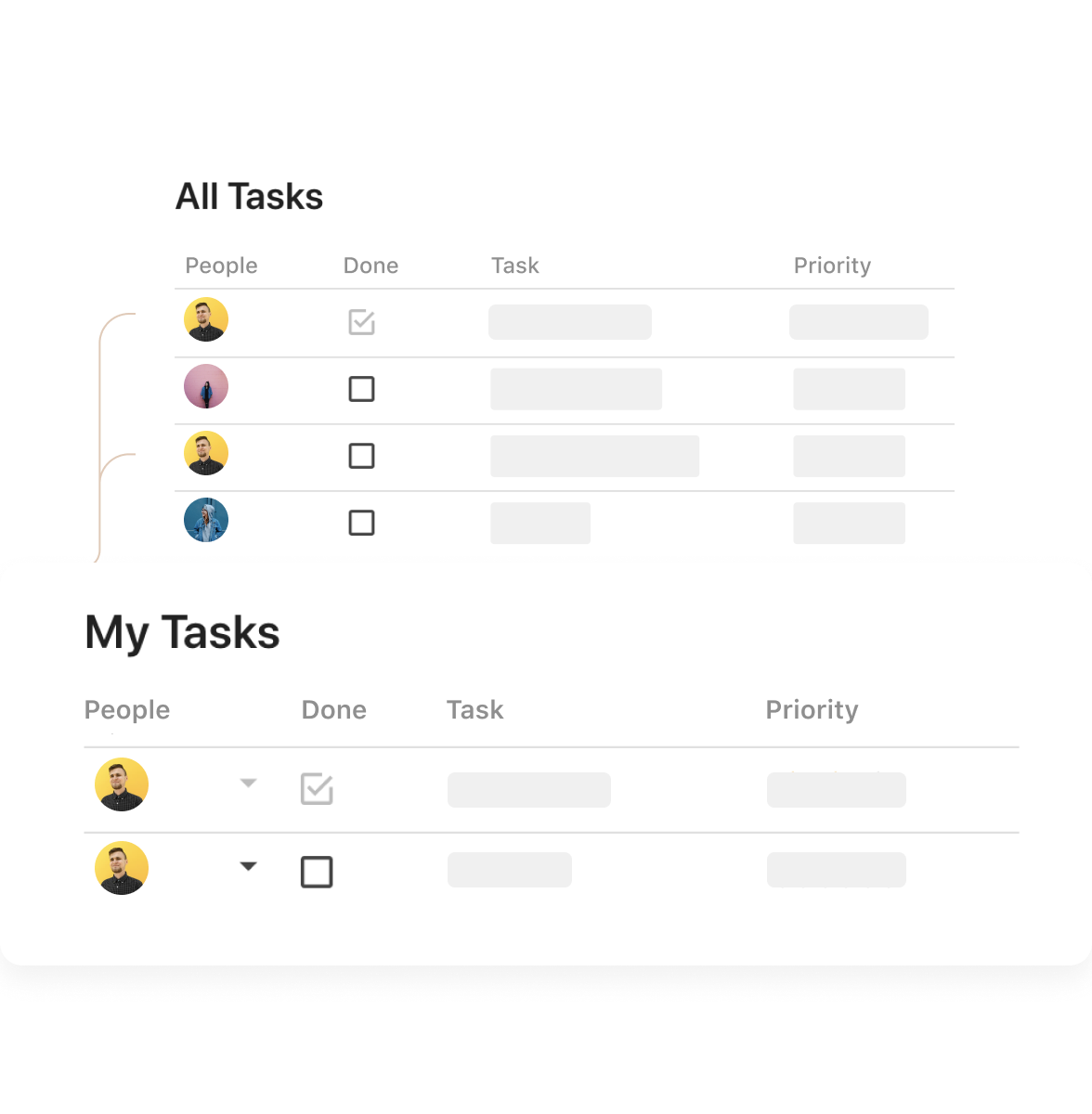
Coda, acquired by Grammarly in early 2025, is a template-based document creation and collaboration solution, supporting a variety of use cases.
$0
per month
monday.com
Score 8.6 out of 10
Mid-Size Companies (51-1,000 employees)
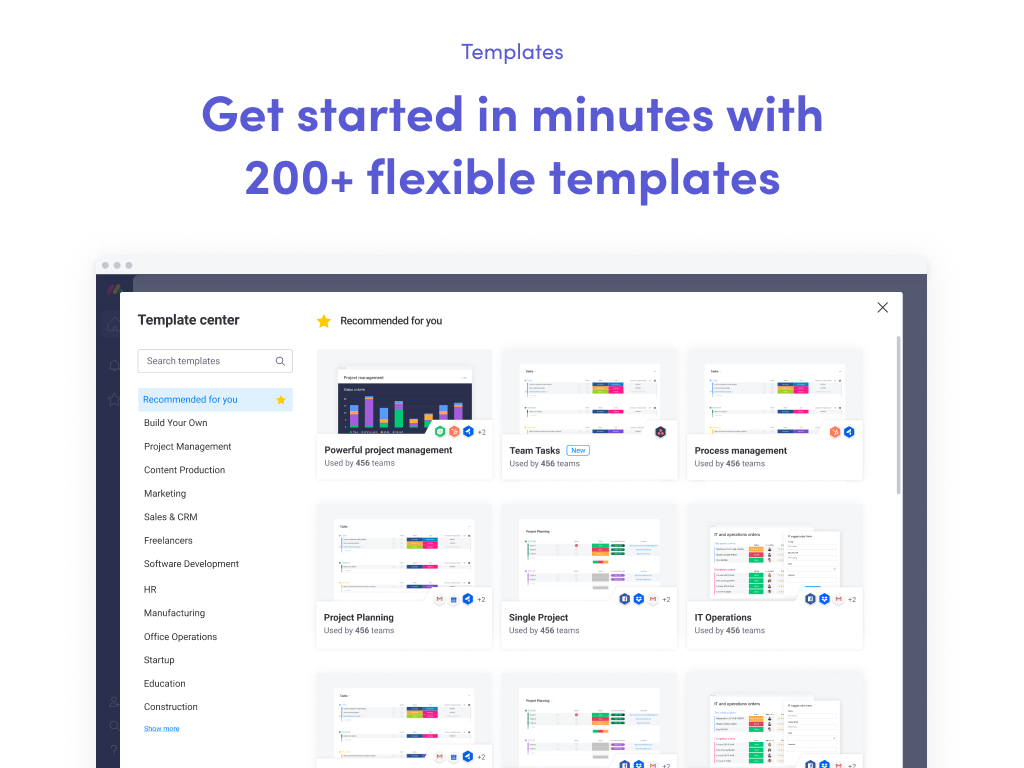
monday.com Work OS is an open platform designed so that anyone can create the tools they need to run all aspects of their work. It includes ready-made templates or the ability to customize any work solution ranging from sales pipelines to marketing campaigns, CRMs, and project tracking.
$12
per month per user
Pricing
Coda by Grammarly
monday.com
Editions & Modules
Free
$0.00
per month
Pro
$10.00
per month per doc maker; unlimited editors (paid annually)
Team
$30.00
per month per doc maker; unlimited editors (paid annually)
Enterprise
Custom Pricing
Basic
$12
per month per user
Standard
$14
per month per user
Pro
$24
per month per user
Enterprise
Contact Sales
Contact us
Offerings
Pricing Offerings
Coda by Grammarly
monday.com
Free Trial
Yes
Yes
Free/Freemium Version
Yes
Yes
Premium Consulting/Integration Services
No
No
Entry-level Setup Fee
No setup fee
No setup fee
Additional Details
With Coda, you only pay for Doc Makers.
Often one person creates a doc, others edit it, and some simply observe from afar. Instead of charging for everyone, we only charge for the people who create docs.
Interested in enterprise pricing? Visit coda.io/enterprise
Yearly plan: Save 18%
Monthly plan also available
More Pricing Information
Community Pulse
Coda by Grammarly
monday.com
Considered Both Products
Coda by Grammarly
Verified User
Anonymous
Chose Coda by Grammarly
Coda is a more complete package that is very robust and will meet the needs of almost any organization who wants to track project and meet desired timelines. By implementing project trackers the team can easily collaborate together and get the work done. Coda is much easier to …
We previously used airtable, and I'm not sure why we switched, but it seems like Coda has more flexibility and is a little more user friendly for generic users and not power users.
Coda is not as great as ClickUp or Notion in many ways, but it surely has a better user interface and pricing in my view and allows good collaboration. However, integrations work much better with other competitors as compared with Coda, and would prefer others if pricing was …
Trello seems to be more focused on IT oriented projects where as Coda has wide scale applications across all departments. Coda was selected because of the perception it was more dynamic and I believe it has proven to be more dynamic. Coda is a very easy to use and understand …
I don't know why leadership choose Coda over Google, but I do see the value in the organization as well as diversity of what you can do with pages designs and integrations
We used Airtable for a while and looked at Notion briefly. Airtable is good, yet a bit technical and doesn't come with rich text and formatting capabilities--so less suitable for publishing/sharing with the rest of the organization. We haven't used Notion for real; I did look …
Coda is very aesthetically appealing and fun to create docs. The benefit of Coda is that it makes a lot automated, but what is sacrificed is the flexibility that other tools can offer.
For general use cases, Google Docs or Airtable are often a better starting place. But if things get complex or you're constantly pairing the two together, consider graduating to Coda to save yourself long-term headaches.
Notion is great for personal use, but the powerful …
The tables within Coda are similar to lists in SharePoint or Google Tables, but the document portion of Coda is what sets it apart. Having the ability to summarize that table data in a document is unique to Coda.
Coda is the only tool with the ability to fully customize your views and the behavior within a given data table. They've put a LOT of thought into this and are miles above and beyond Smartsheet, Airtable, and Notion (I've evaluated all three extensively).
We were looking for many different things to improve our internal processes before we came across Coda. A large part of my work involves marketing, project management, service management and data analytics. For a company like ours, we find Coda the most cost-effective and …
I first tried Notion and, although it can be easier to work with for some simple tasks, when it comes to tables and linked data, Coda is more versatile and comprehensive.
For the use we needed in the company, Coda was a way easier and simpler solution. Jira and the Atlassian suite is more complete and structured, but it is was way too complicated.
Coda's automation and flexibility makes it much easier and more interactive than other tools like Airtable. With Airtable, we couldn't get as much traction or flexibility, so we stopped using it after a few months. Jira, on the other hand, has proven to be more helpful for task …
I primarily use Mavenlink for scheduling purposes but with Coda, I'm able to do that, plus have an open way to communicate with the rest of my team when we want to add certain artists to a specific job. Instead of using another software for communicating across all of our …
They are similar but I like that Coda has more templates that are suited for marketing (GTM timelines, pulse updates, etc). One pain point for us is getting the engineering team on Coda but they seem to prefer Jira and Aha!
While all of the products listed have great features and platforms, there was always one thing missing from them that I would need to get from another application. Coda was the first one we used that really combined some of the best parts of those products and allowed us to use …
The price point is most attractive, they have a dedicated team of support agents/doc makers that provide valuable templates, and it really was the best option to fit our current needs as a startup team who will be scaling and the product can scale with us in the long run.
It's been a while since trying Asana, so it's hard to say. I think they are very similar from what I remember, but maybe monday.com has more reporting and customization possibilities?
monday.com offer much of the standard tools and seems to be ever evolving. They seem to take feedback and constantly upgrade the tools. If all the tools are there, the differentiating factor might be the cost, any integrations you may need, and the visual "chemistry". To me, …
We chose to move from Zoho to monday.com when our company started growing exponentially. Overall, our team was thankful for the change because we were growing at far to fast of a speed for Zoho's tools to keep up with us. monday.com is a better, beefier platform with far better …
We decided to go with monday.com because they offered a free tier for nonprofits and because they are easier to use and offered additional features that we could not find on the other choices. Hands down, there was no better choice for us than monday.com.
When I arrived at my org, I was initially disappointed to hear that we used something other than Asana for project management. Fast forward just a few months, and I became a complete monday.com convert. While its organization is similar to Asana's, it's user interface, …
I would say this is one of my least favorite applications. I don't find it super user friendly due to the extreme amounts of customization. It feels like my information is in there somewhere, but I can never find it easily. I think that it looks a lot prettier than asana which …
monday.com seems to solve the issues and concerns for our marketing and graphics needs. I personally use Asana for my projects and tracking purposes and monday.com for my interations with Marketing and their needs.
monday.com is much easier to use and offers all the tools of google suite in one spot for task management. I use gsuite services still but in an entirely different way. If there is something that needs to be shared with the team or is important that I will need to refer back to …
Monday.com is the broadest scope work management software I have used. Its interface is basic and takes some getting used to, but the programming options are highly advanced and extremely effective.
I also use the other selected. But I prefer monday.com because it is more clear (visually and intuitively), and also because I have been using it for longer than the others. However, there is the price factor that must be taken into consideration
Monday.com is far more intuitive than Salesforce with it's automation features, lists are better and customizable and it makes things easier for everyone on the team.
Salesforces is a great CRM system but I feel as though it falls short as a collaborative project management …
As a developer, I have utilized the mentioned apps to integrate processes for clients, and I have found monday.com to be superior due to its abundance of features compared to others. Choosing monday.com provides enough capabilities for teams and managers to handle work in one …
monday.com is a much better tool for keeping track of tasks and assignments than MS Planner. In most situations where we used MS Planner we have switched to using monday.com instead.
monday.com is so much easier to use & project-tracking is not only easy to do, but the visuals are far from complicated & make it that much easier to keep track of everything.
I feel monday.com is easier to use than the others listed. Specifically, I used to use Trello in the past and I really liked it. I even recommended others to use it but since working in monday.com, I found it has so many more features that meet our teams needs and we have found …
monday.com has the only interface that is 100% customizable, can use public and private boards, can be shared with customers, produce Gantt charts, and has THE MOST integrations "in house". The professional relationships that monday.com has established to be "on board" with …
I searched for some other alternatives like monday.com, and I also tried them. For example, I have experience with Sloneek. But monday.com just feels different. I think it beats the competition in every way. You can also use monday's free version, and it is still a good task …
I chose monday.com because of its flexibility and ability to adapt to our needs. Throughout our work, I've seen how it helps us increase productivity and efficiency, which solidified my decision.
The easy of use and configuration is where monday.com has had an advantage. The ability for all our users to startup on the platform has helped to incorporate it into our enterprise environment quickly.
Actually, monday.com and Trello, although they are digital board systems, are both very different from each other. Trello is a simpler system that, although its function is also the organization of tasks, its visual system gradually overwhelms the user by "piling up" each post …
monday.com is simpler and easier to grasp, apply and navigate than Clickup, but the Clickup free version has so much more functionality available than the monday.com free / low-cost options (sorry, but it's true!). Google tasks is really simple and I shouldn't really compare …
Coda is great to build a place for your users to go to and see information. It is easy to navigate through and the variety of content creation is great. However, it is not always easy to create what you want and there is a lot of playing around and learning. Coda also sometimes misses some functionality which is expected. For example, downloading a list of users that have access to the platform. Being able to send push notifications when a new page has been created etc. Overall it is a good tool to use just be prepared to invest time!
Here, I will suggest that it is best to create employees, clients, or project reports. Easy to track with the dashboards. I did many integrations and developments. I can not list each of them here. I will say the best tool for management. I couldn't see criteria of unsuitable. But yes It will depend on the client's requirements. I will suggest it as very user-friendly tool for CEOs, CTOs, Managers, and company owners also for team.
One source of truth: It's incredibly easy to keep everything organized and easy to find.
Being able to show different views of the same information throughout your doc makes it really easy to customize the information.
In general, I love the "coding" aspect of it, and being able to do advanced functions has helped us create some really interesting automation and streamline our process.
Ensuring I have set up a Private board vs public board is not clear - it would be useful to have an additional alert when creating a board as I work with sensitive information. It will eventually be used in a team based environment but while I test the boards, they needs to be private.
Time tracking is clumsy, could be easier to record
Coda is definitely something that has been proven to drive positive impact in our organization. We have many divisions that can benefit from this that we have yet to explore. It would definitely be worth renewing.
Teams involved in content creation, such as marketing or editorial teams, could use monday.com to manage the entire content lifecycle. Boards might track content ideas, assignments, drafts, reviews, approvals, and publication schedules, helping teams collaborate and keep content production on track.
There is a little bit of a learning curve on where to point and click to add in different elements and make edits. But it is still very manageable once you get the hang of it. I do still have some issues with some of my connected pages updating each other when I don't want them to sync. So I'll end up editing one page, and it will make the same edits on another page.
It's straightforward to use and simple to understand. They have tutorials on different elements of the system that you can learn. The workflow there is very intuitive, drag and drop, which doesn't require a learning curve for most people. Templates that also make things more accessible can be found.
We haven't done any integrations - the initial part of our experience we found that for docs with complex formulas, the page tends to load slowly but in recent months, Coda has improved and optimized the loading times in general and we generally don't find any problems in terms of speed anymore.
Everything performs fairly well. Every now and then there are user errors where an employee will not click "ok" on a note they've created and simply exit out (I do wish that something was in place to prevent this, such as a pop "are you finished?")
Mainly due to timezone differences. I think Coda's support in general is well implemented and executed. They know their stuff and are helpful. But since I'm not in the same timezone, solution rates are slower for me, and that's not something I prefer. I work in customer service, too, and more often than not, time is important. Shortening the solution time would be a much greater experience.
monday.com only really care about accounts that have 20 seats or more. While this is great for monday.com, it pushes smaller organisations to evaluate alternatives. We rate monday.com highly in our organisation because key staff have already got good experience with the application and we know we will get to 20+ seats one day. But, till then the billing model and lack of permanent enterprise features is a dread.
To have someone walk you thru the features and capabilities of Monday.com is priceless. Someone also coming along later in the contract to see if you are maximizing the program to suit your company needs is beyond helpful. The staff that have provided this training are fun, creative and very patient.
I'm relatively inexperienced but this experience is meaningful. It would have been nice to have some guidance from Coda so that we understood more on Coda's purpose and potential.
We signed up for the accounts. Created the accounts. Ran the trial version and tested it live while we were running multiple projects and found that it was fitting our needs perfectly. When the trial ended and we were asked to purchase the full version, we did. We have found other ways to use it and it's a breeze.
For general use cases, Google Docs or Airtable are often a better starting place. But if things get complex or you're constantly pairing the two together, consider graduating to Coda to save yourself long-term headaches. Notion is great for personal use, but the powerful automation and collaboration features in Coda make it a better fit for teams in my experience so far.
We decided to go with monday.com because they offered a free tier for nonprofits and because they are easier to use and offered additional features that we could not find on the other choices. Hands down, there was no better choice for us than monday.com.
I think scalability is definitely good here since it's based on number of doc makers. Implementation into each dept becomes simpler. That being said, due to the nature of our work, we find it easier that we have a "super user" and then a team of other doc makers. This would make the doc creation and management more efficient.
For it to work across multiple departments and sites, I would like to see improvements made with integrations and automation. For this question, I am acknowledging not only the addition of internal triggers/automation, but also an expansion on external ones.
By using monday.com as an enablement tool for templated onboarding plans, we have been able to begin calculating the number of manager hours saved through our work (not defined yet).
monday.com's reporting tools also allow us to more easily report on the productivity and output of our team since we keep up with all projects and subitems in monday.com.