Chose NGINX
NGINX is more expensive than HA Proxy.

| Product | Rating | Most Used By | Product Summary | Starting Price |
|---|---|---|---|---|
 NGINX | Enterprise companies (1,001+ employees) | NGINX, a business unit of F5 Networks, powers over 65% of the world's busiest websites and web applications. NGINX started out as an open source web server and reverse proxy, built to be faster and more efficient than Apache. Over the years, NGINX has built a suite of infrastructure software products o tackle some of the biggest challenges in managing high-transaction applications. NGINX offers a suite of products to form the core of what organizations need to create… | N/A | |
 Sophos UTM | N/A | Sophos UTM provides core firewall features, plus sandboxing and AI threat detection for advanced network security. It has customizable deployment options. | N/A |
| NGINX | Sophos UTM | |||||||||||||||
|---|---|---|---|---|---|---|---|---|---|---|---|---|---|---|---|---|
| Editions & Modules | No answers on this topic | No answers on this topic | ||||||||||||||
| Offerings |
| |||||||||||||||
| Entry-level Setup Fee | Optional | No setup fee | ||||||||||||||
| Additional Details | — | t2.small - $0.123 - Total / hr m3.medium - $0.417 - Total / hr m3.large - $0.883 - Total / hr m3.xlarge - $1.366 - Total / hr m3.2xlarge- $1.982 - Total / hr c3.large - $0.555 - Total / hr c3.xlarge - $1.11 - Total / hr c3.2xlarge - $1.72 - Total / hr c3.4xlarge - $2.59 - Total / hr c3.8xlarge - $3.68 - Total / hr c4.large - $0.55 - Total / hr c4.xlarge - $1.099 - Total / hr c4.2xlarge - $1.698 - Total / hr c4.4xlarge - $2.546 - Total / hr c4.8xlarge - $3.841 - Total / hr m4.large - $0.868 - Total / hr m4.xlarge - $1.365 - Total / hr m4.2xlarge- $1.931 - Total / hr | ||||||||||||||
| More Pricing Information | ||||||||||||||||
| NGINX | Sophos UTM | |
|---|---|---|
| Considered Both Products |  NGINX  Rudolph Pereira Team Lead Chose NGINX NGINX is faster and easier to configure. It has better reverse proxy features which is much easy to configure.  Josh Stapp Sr. Software Engineer Chose NGINX I have found that [NGINX] seems to perform better throughout the years with less issues although I've used Apache more. I would definitely recommend [NGINX] for any high volume site and I've seen this to usually be the case from most provided web hosts who will pick [NGINX] …  Sandesh Singh FrontEnd Development Engineer Chose NGINX NGINX Stacks up at the top for me because it's fast, reliable, and secure and apache is also usable but not so good in comparison to NGINX and since I and my organization have switched to NGINX I also don't want to look back at apache as NGINX works the best for our use case …  John Reeve Principal, Lead developer, Lead designer Chose NGINX NGINX's footprint is much smaller than Apache, and it's great for serving up static content. The URL rewriting was not as familiar as Apache, but just as powerful once configured correctly. As a load balancer, it's much more affordable than Citrix ADC. We used the load …  Alan Matson, CCNA:S, MCP Sr. Network Security Engineer Chose NGINX NGINX has been more stable and customizable than we have had with APACHE.  Tom Erdman Network Systems Administrator Chose NGINX Nginx is way easier to configure and runs better than Microsoft’s offering, in my opinion, and I’ll take it over Apache for its simplicity. | Sophos UTM  Matt James Systems Administrator | POS Programming Specialist Chose Sophos UTM The Meraki firewalls are kind of like the little brother of the UTM devices. They work really well and integrate nicely, but it would be better suited for a business that using nothing but Meraki gear. pfSense is a great free tool, but not very business oriented nor is the …  Jon Shurtliff IT Director Chose Sophos UTM The high feature set of Sophos, along with the price point made it a perfect fit for our organization. Of course, we were promised many features and capabilities, and I'm happy to report that this tool delivered on all of those. On top of that, or resale partner recommended it …  Karim Kronfli Head of IT Chose Sophos UTM All firewalls take some learning to get used to the interface, but the Sophos UTM makes more sense than the Cisco ASA or the SonicWall interface. As an experienced engineer who has used dozens of different routers it was easy to figure out how to configure what I needed. Sophos …  Juan Carlos Sanchez Pignalosa CEO And Founder Chose Sophos UTM Sophos delivers great throughput, and great and simple WebGUI. There is no other honest (or even capable) high availability scenario for industries that needs 99% of uptime (almost everyone, since now everyone relies on the Internet). Robust hardware and in the software …  Jeffrey Gutter Senior Network Engineer Chose Sophos UTM I use it at home because it's better than just using a Wireless Router; has more features than most home users require and or know exists, such as the ability to use VPN to protect your connection if you're using public WIFI. |
| NGINX | Sophos UTM | |||||||||||||||||||||
|---|---|---|---|---|---|---|---|---|---|---|---|---|---|---|---|---|---|---|---|---|---|---|
| Application Servers |
|
| NGINX | Sophos UTM | |
|---|---|---|
| Small Businesses |  Apache HTTP Server Score 8.4 out of 10 |  pfSense Score 9.9 out of 10 |
| Medium-sized Companies |  Apache Tomcat Score 7.8 out of 10 |  Quantum Firewalls and Security Gateways Score 9.6 out of 10 |
| Enterprises | Apache Tomcat Score 7.8 out of 10 |  Palo Alto Networks Virtualized Next-Generation Firewalls - VM Series Score 10.0 out of 10 |
| All Alternatives | View all alternatives | View all alternatives |
| NGINX | Sophos UTM | |
|---|---|---|
| Likelihood to Recommend | 8.8 (0 ratings) | 9.0 (0 ratings) |
| Likelihood to Renew | 9.1 (0 ratings) | - (0 ratings) |
| Usability | 9.0 (0 ratings) | 10.0 (0 ratings) |
| Support Rating | 8.1 (0 ratings) | 7.9 (0 ratings) |
| NGINX | Sophos UTM | |
|---|---|---|
| Likelihood to Recommend |
 Gabriel Samaroo Senior Software Engineer |
|
| Pros |
 Tyler Johnson Senior Software Architect |
Matthew James Systems Administrator | POS Programming Specialist |
| Cons |
|
Juan Carlos Sanchez Pignalosa CEO And Founder |
| Likelihood to Renew |
| No answers on this topic |
| Usability |
|
|
| Support Rating |
John Reeve Principal, Lead developer, Lead designer |
|
| Alternatives Considered |
Josh Stapp Sr. Software Engineer |
|
| Return on Investment |
 L Matthew Blancett Senior DevOps Engineer |
|
| ScreenShots | NGINX Screenshots 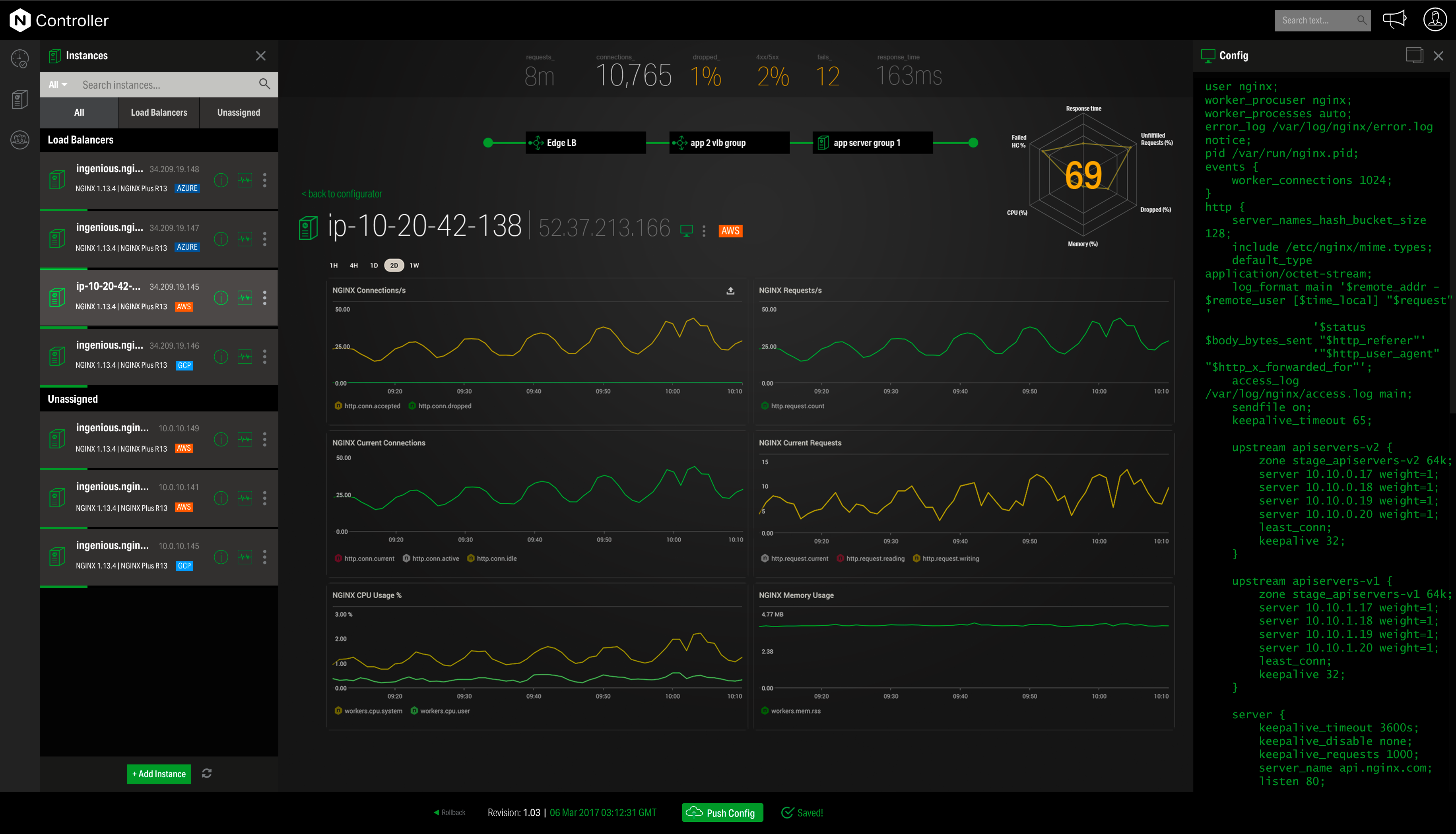  |