Microsoft's Azure Data Factory is a service built for all data integration needs and skill levels. It is designed to allow the user to easily construct ETL and ELT processes code-free within the intuitive visual environment, or write one's own code. Visually integrate data sources using more than 80 natively built and maintenance-free connectors at no added cost. Focus on data—the serverless integration service does the rest.
N/A
Oracle Data Integration Platform Cloud (discontinued)
Score 3.2 out of 10
N/A
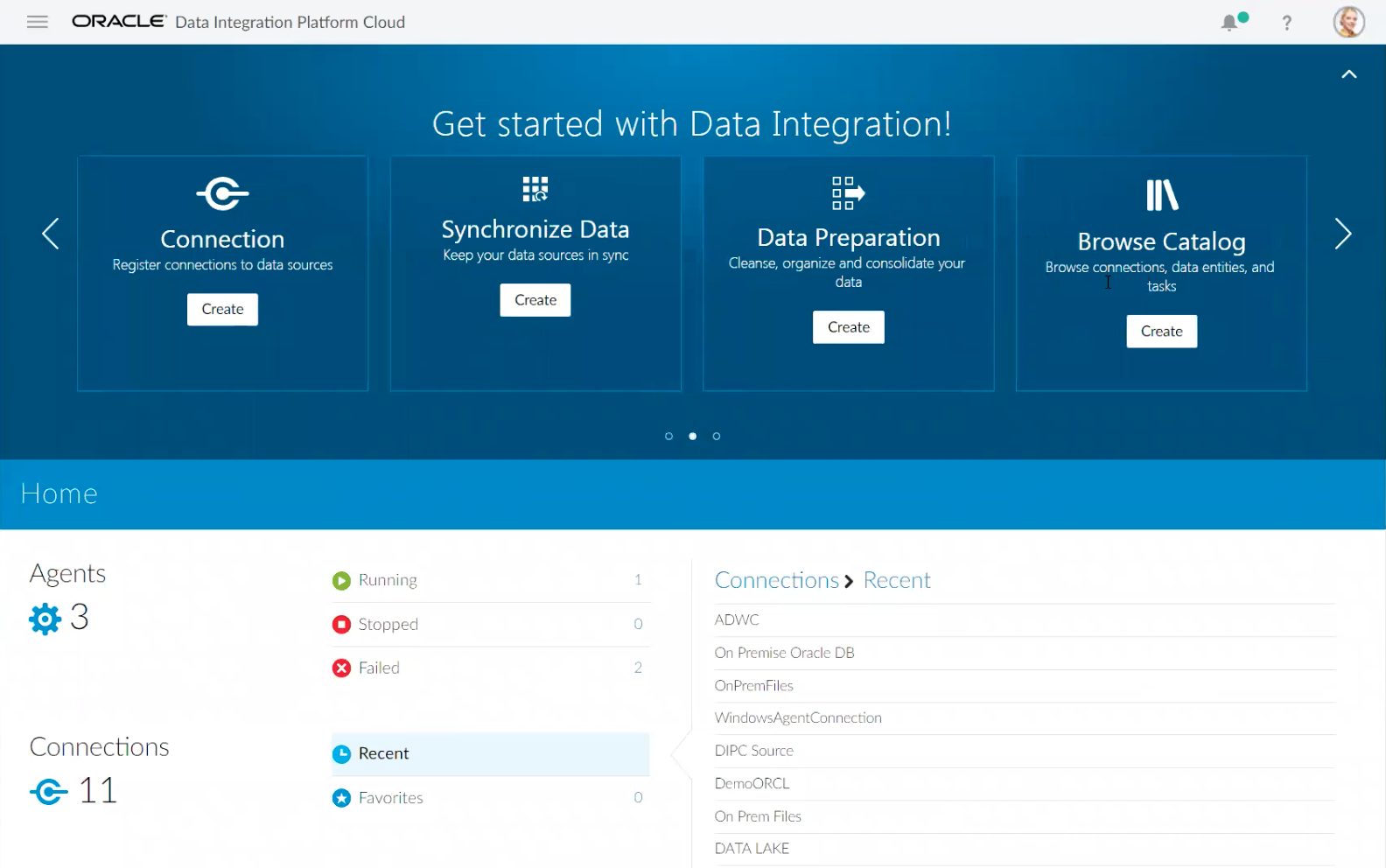
Oracle Data Integration Platform Cloud (DIPC) was a platform for real-time data replication, data transformation, data quality, and data governance. It was discontinued in 2024.
N/A
Pricing
Azure Data Factory
Oracle Data Integration Platform Cloud (discontinued)
Editions & Modules
No answers on this topic
No answers on this topic
Offerings
Pricing Offerings
Azure Data Factory
Oracle Data Integration Platform Cloud (discontinued)
Free Trial
No
Yes
Free/Freemium Version
No
No
Premium Consulting/Integration Services
No
No
Entry-level Setup Fee
No setup fee
No setup fee
Additional Details
—
—
More Pricing Information
Community Pulse
Azure Data Factory
Oracle Data Integration Platform Cloud (discontinued)
Considered Both Products
Azure Data Factory
Verified User
Anonymous
Chose Azure Data Factory
Azure Data Factory fits well into our overall systems architecture where we already utilize largely Azure services and also Microsoft based products in the on-premises environment. I think cost structure is also very competitive with Azure Data Factory. Most services provide a …
Azure Data Factory helps us automate to schedule jobs as per customer demands to make ETL triggers when the need arises. Anyone can define the workflow with the Azure Data Factory UI designer tool and easily test the systems. It helped us automate the same workflow with …
The easy integration with other Microsoft software as well as high processing speed, very flexible cost, and high level of security of Microsoft Azure products and services stack up against other similar products.
I'd chose data factory because its very easy to use, its UI is beautiful, it's library for .net is very useful and it lives within the microsoft ecosystem.
Azure Data Factory is a relatively new player in the space, and its feature set marks it as such. It does not have the full features of a more mature product set such as any of the above. However, it does allow for the creation of ETL/ELT flows/pipelines with minimal initial …
Oracle Data Integration Platform Cloud (discontinued)
Verified User
Anonymous
Chose Oracle Data Integration Platform Cloud (discontinued)
Oracle replace a popular integrated nationally used platform shared throughout multiple states. The system was responsive and stable, capable of growing with the business needs. Replacing it with Oracle Data Integration Platform has been a large improvement, adding the …
Oracle Data Integration Platform Cloud (discontinued)
Likelihood to Recommend
In a data pipeline, you will be able to add different kinds of activities for example connect from your on-premise SFTP and move CSV files to storage accounts. As well data factory has its own data flow if you are an ETL developer who experimented with maybe you have worked with SSIS, thus, you will start quickly with this new feature of the data factory.
I highly recommend the Oracle Data Integration Platform if you are using OBIEE as a reporting tool. ODI offers a large number of solutions. The on-premise product was expensive to implement and maintain. The cloud version is most suitable for small scale to large scale implementations.
So far product has performed as expected. We were noticing some performance issues, but they were largely Synapse related. This has led to a shift from Synapse to Databricks. Overall this has delayed our analytic platform. Once databricks becomes fully operational, Azure Data Factory will be critical to our environment and future success.
We have not had need to engage with Microsoft much on Azure Data Factory, but they have been responsive and helpful when needed. This being said, we have not had a major emergency or outage requiring their intervention. The score of seven is a representation that they have done well for now, but have not proved out their support for a significant issue
Azure Data Factory fits well into our overall systems architecture where we already utilize largely Azure services and also Microsoft based products in the on-premises environment. I think cost structure is also very competitive with Azure Data Factory. Most services provide a visual interface for designing ETL workflows, but our team found Azure Data Factory's interface more intuitive.
Oracle replace a popular integrated nationally used platform shared throughout multiple states. The system was responsive and stable, capable of growing with the business needs. Replacing it with Oracle Data Integration Platform has been a large improvement, adding the capability for better live monitoring, faster response times, better disaster recovery options, easier third party integration.