AgilePlace is a project management solution built around flexibility, data-driven analytics, and workflow automation. The software was acquired by Planview in December 2017 to expand that company's capabilities.
$19
per user, per month
Planview PPM Pro
Score 9.0 out of 10
Enterprise companies (1,001+ employees)
Planview PPM Pro™ centralizes the management of projects and resources, facilitating governance, and providing visibility for improved decision making. Whether users are just getting started or advancing PMO to the next level, Planview PPM Pro is designed to provide the ability to collect, prioritize, and execute projects, enabling PMOs to focus resources on the work that delivers the most value.
N/A
Pricing
Planview AgilePlace
Planview PPM Pro
Editions & Modules
Teams
$19
per user, per month
Scaled Teams
$29
per user, per month
Custom
Contact Sales for Quote
per user, per month
No answers on this topic
Offerings
Pricing Offerings
Planview AgilePlace
Planview PPM Pro
Free Trial
Yes
No
Free/Freemium Version
No
No
Premium Consulting/Integration Services
No
No
Entry-level Setup Fee
No setup fee
Optional
Additional Details
All editions include unlimited boards.
PPM Pro offers flexible pricing based on user types.
More Pricing Information
Community Pulse
Planview AgilePlace
Planview PPM Pro
Considered Both Products
Planview AgilePlace
Verified User
Anonymous
Chose Planview AgilePlace
AgilePlace is better than JIRA when it comes to ease of use and intuitiveness of the tool. Card based model and ability to customize/tailor the way you want makes AgilePlace is a great tool. Look and feel as well as colored cards, makes the board layout much more easier to …
All these tools are different and have different uses. Depending upon SDLC your organization uses, you would use any of these tools. They all have their plusses and minuses.
Originally, we had evaluated two other tools next to Planview LeanKit: Kanbantool and Kanbanflow. The latter was a close contestant for productive use, as it was also very customizable and a joy to work with and look at. It also had lower user fees and a mobile integration.
Front-End Web Developer, Office of Mediated Education
Chose Planview AgilePlace
I use Trello a bit for personal use. It's much less powerful than LeanKit, but it's also a better design and simpler to use. ServiceNow has some kanban board stuff built-in, but I wasn't super impressed with it. JIRA seemed to be even more complex than LeanKit for the short …
I think that LeanKit is very similar to Asana's Kanban feature and Trello, but is much less sleek looking than Asana. Asana's clean and sleek UI makes me enjoy project management much more than LeanKit. It might sound silly that the UI makes so much of a difference to me, but …
Our company uses LeanKit, Pivotal Tracker, and Trello. It all depends on what team you're on. There's even a team that just does KanBan on a whiteboard. In the end, I would tank LeanKit above Pivotal Tracker, but below Trello. The differences are relatively subtle between …
Both VersionOne and Trello are good products. VersionOne is for the real hardcore Agile shops who want to track and report on everything related to the Agile process. Trello is a tool that works for Agile, but really is just a simple list making/tracking tool. Both tools serve …
I have used Trello, which is not as robust for tracking and customizing workflows as LeanKit is. It does not scale well to big teams. JIRA is the standard project management software but does not support Kanban well.
Nearly all the other tools I evaluated against are free, so that's one area where LeanKit is not as competitive. LeanKit does allow the experience to be much more customizable, though.
Being from QA I prefer Spiratest and QC for the fact my team can do all our work in one program and it is linked. But the tech department as a whole prefers Leankit as it is the tool of choice based on ease of use and overall performance.
While LeanKit was not designed for project and task management, we selected it because of its collaborative nature as a project and task management platform for our marketing team. It was also selected because our engineering and product management teams were using Leankit. We …
PPM Pro is more robust than Trello or other Kanban-type software and more configurable than MS Project. However, it needs to work on making schedules from P6 and MS Project easier to import.
Microsoft Project does not integrate the data or provide meaningful dashboards. We needed a tool that could manage a portfolio of projects versus just a single project view. In addition we needed a tool to track financials and internal effort all integrated into one product. …
We have only used PPM PRO since we started Portfolio Management with Wake County back in 2015. The tool has served us well over the years and grown with us as we have expanded our strategic efforts. We recently implemented ProjectPlace and interfaced with PPM PRO to enhance …
I think the most winning features of Planview PPM Pro compared to other similar products is projects with strategic objectives, it can prioritize projects based on business value, helping to ensure that resources are being allocated to the most important initiatives. This can …
Planview PPM Pro integrates all of the PM features of other applications and then adds features on top of them. Other applications tend to offer a solution around as single "need", forcing users to "build their own solution".
Planview PPM Pro is a suite of multiple products which makes it different from other tools. PMO-related features are easy to use. Time tracking is much less cumbersome as compared to other tools. Also, the interface is clean but UI looks a bit old school. Navigation within the …
We selected based on many reasons. Product support, custom work intake, dashboard capabilities, and project financial tracking. The support model was solid.
Not involved in selection process at my company. I have worked with other PPM tools at past companies - including an older version of Planview (back in early 2000's)
In addition to [Planview PPM Pro (formerly Innotas)], I have also used a variety of homegrown/custom PPM systems and Microsoft Project, Microsoft Project Server, JIra (with Confluence), and some other systems whose names I cannot remember. PPM Pro, by far, is the best of all …
Project Place and Leankit -- Excited and happy to have access to both products. Integration is the key to both collaboration tools. Both very easy to use and leverage.
Planview PPM Pro works well for the project defined and captures time tracking and financial metrics however I was not part of the selection of the tool
PPM Pro is really the only portfolio management tool that I've used so it's hard to compare. MS Project doesn't really compare to the feature set that PPM Pro offers.
All have similar capabilities. The tool is only as good as the data you are putting into it. Make sure you have business buy-in and clear processes set.
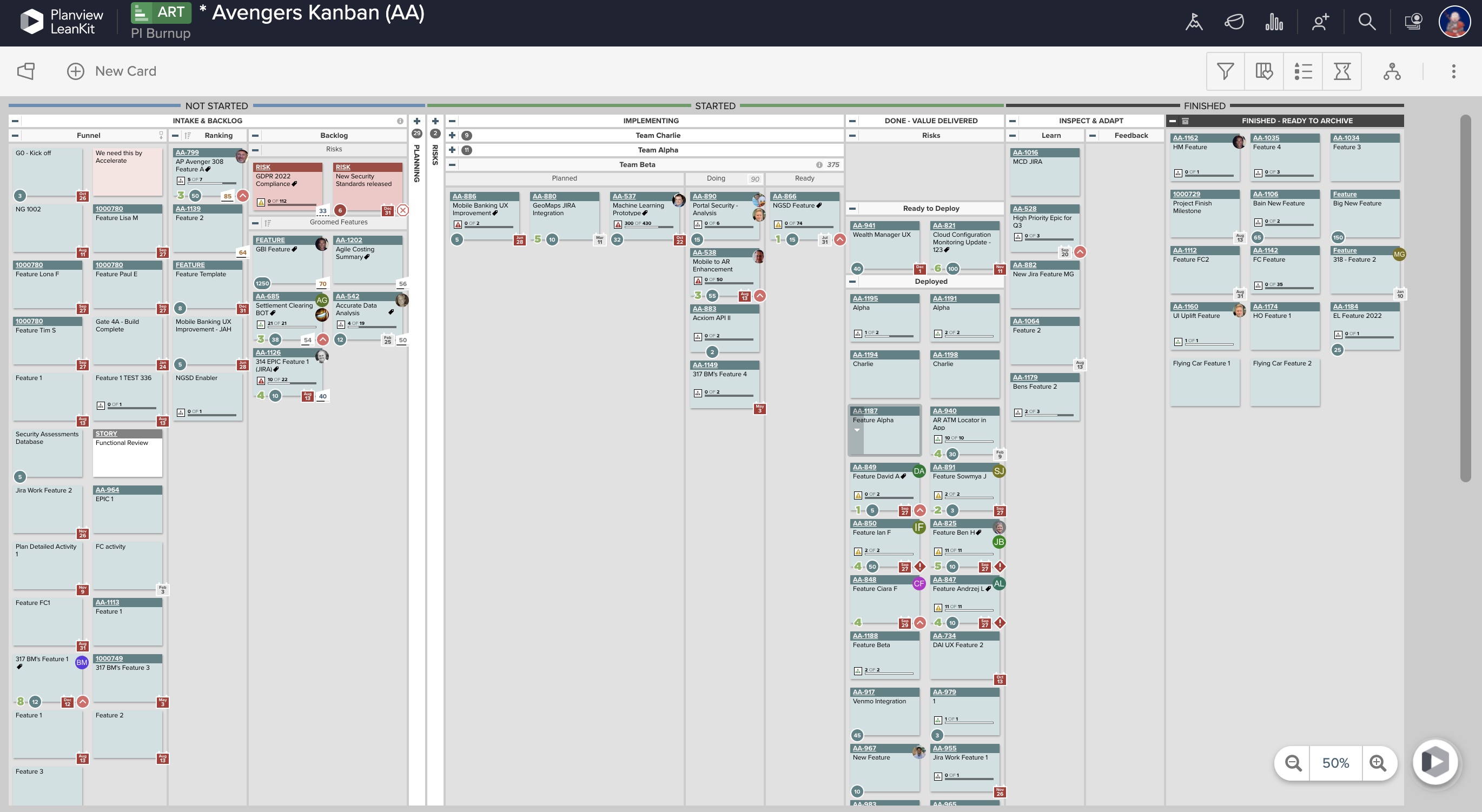
AgilePlace is a great way for teams, or individuals, to bring visibility to the work in process and in their backlog. The color coding and icon use helps to quickly analyze the type of work or status of the work. The product team is doing a good job at listening to their user's feedback and implementing improvements. Where it falls short is when reporting needs to occur.
PPMPro is well suited for tracking new product introduction projects, as well as process changes. It serves to reliably track ongoing action items, issues, resource allocations for projects. Areas where PPMPro is less appropriate for use: Project to project dependencies, automating action item notifications on multiple platforms, integrations of PPMPro into other platforms PMO typically uses (like MS Projects, Teams, ppt, etc)
Okta Integration: We love using SSO for all our SaaS apps, and as new team members join, they can be automatically joined to the appropriate LeanKit boards.
Filtering and viewing: Can filter and refine by several fields as well as custom fields. Assigned Users, Tagged, Card Type, Date, etc
Their analytics and reporting can be helpful for PMs, especially if they have several teams they oversee.
New request workflow/kanban board helps visualize where new requests are in the process of the quote to cash/request to completion
The time tracking tool is tied directly to project tasks for seamless integration of time tracking, estimates, and actuals
The reporting capabilities and ease of use has allowed us visibility to data that we never had before
The tool is easily configurable by Administrators. We can add fields, change reports, add new dashboards within hours vs. days of trying to track things manually
The base API is not a REST based interface and is difficult to use for integration with other systems in the enterprise.
The UI for the maintenance of the task schedule for projects can be a bit cumbersome , although the spreadsheet style editor helps somewhat. The Gantt view is not interactive.
The workflow engine is designed only for initial project intake, and does not allow for an integration of the work flow with the project from start to end, so it can't be used for routing artifacts like change requests, ancillary project approvals, etc.
As I previously stated I am no longer in the role where I acted as Innotas admin, but because our license has been twice renewed since initial deployment and since I am in the business and have used the IT request process I created and have not heard anything to the contrary
LeanKit isn't the best designed Kanban system I've seen, but overall it's pretty usable. The boards I've used are pretty complex, so it can be difficult to find things. I found that searching and filtering for specific cards was somewhat of a challenge. Dragging a card from one lane to another is kind of a fun way to get things done though.
PPM Pro has very effective process capabilities around Project, Demand, and Resource Management as well as Reporting/Dashboards. Very stable platform, never any downtime. We now also have PPM Pro Sandbox which we have leveraged for any new major developments such as Request Management.
No issues with overall response time and performance. There have been some occasions where a Report could take few minutes to render but this is vary rare. No integration issues...
Every time I have reached out to the AgilePlace support team I have received a timely response in addition to professional & personal feedback. Their consultants are knowledgeable and the management team is happy to jump in and help when needed.
Their ability to assist and answer questions when needed is incredible. They create innovative ways to share information and help customers trouble shoot. I didn't give it a ten because I believe they could do a better job of personally reaching out to customers and providing improvement guidance based on where the customer is at and their needs at the time
Originally, we had evaluated two other tools next to Planview LeanKit: Kanbantool and Kanbanflow. The latter was a close contestant for productive use, as it was also very customizable and a joy to work with and look at. It also had lower user fees and a mobile integration. In the end, we picked Planview LeanKit because of several reasons: Aesthetics: The look was much more clean and professional. Reporting: It was obvious from the start that we could use Planview LeanKit as a tool for improvement. API: We needed to integrate the Kanban into our central systems and Planview LeanKit API was (and still is) a way to do it. Card Headers: This sounds like a simple thing, but the headers above the titles fit our work perfectly and looked perfect, which helped the decision.
Microsoft Project does not integrate the data or provide meaningful dashboards. We needed a tool that could manage a portfolio of projects versus just a single project view. In addition we needed a tool to track financials and internal effort all integrated into one product. Planview PPM Pro addressed all of our needs
We have always used PPM Pro across multiple Business Units and Business Functions and have never encountered any scalability issues. PPM Pro offers flexibility in how the various Entities are configured across the Enterprise