AgilePlace is a project management solution built around flexibility, data-driven analytics, and workflow automation. The software was acquired by Planview in December 2017 to expand that company's capabilities.
$19
per user, per month
TickTick
Score 9.0 out of 10
N/A
TickTick from the company of the same name in San Francisco is presented by the vendor as a simple and effective to-do list and task manager that helps users make schedules, manage time, and organize all aspects of life.
$35.99
per year
Pricing
Planview AgilePlace
TickTick
Editions & Modules
Teams
$19
per user, per month
Scaled Teams
$29
per user, per month
Custom
Contact Sales for Quote
per user, per month
TickTick Premium
$35.99
per year
Offerings
Pricing Offerings
Planview AgilePlace
TickTick
Free Trial
Yes
No
Free/Freemium Version
No
No
Premium Consulting/Integration Services
No
No
Entry-level Setup Fee
No setup fee
No setup fee
Additional Details
All editions include unlimited boards.
—
More Pricing Information
Community Pulse
Planview AgilePlace
TickTick
Features
Planview AgilePlace
TickTick
Project Management
Comparison of Project Management features of Product A and Product B
Planview AgilePlace
7.4
Ratings
3% below category average
TickTick
7.2
Ratings
6% below category average
Task Management
10.00 Ratings
9.50 Ratings
Resource Management
9.90 Ratings
7.00 Ratings
Gantt Charts
10.00 Ratings
7.00 Ratings
Scheduling
9.90 Ratings
8.00 Ratings
Support for Agile Methodology
9.30 Ratings
7.00 Ratings
Support for Waterfall Methodology
4.00 Ratings
7.00 Ratings
Document Management
6.50 Ratings
6.00 Ratings
Email integration
7.30 Ratings
7.00 Ratings
Mobile Access
2.10 Ratings
9.00 Ratings
Timesheet Tracking
6.40 Ratings
5.00 Ratings
Change request and Case Management
7.20 Ratings
00 Ratings
Visual planning tools
7.30 Ratings
00 Ratings
Workflow Automation
00 Ratings
7.50 Ratings
Team Collaboration
00 Ratings
6.50 Ratings
Agile Development
Comparison of Agile Development features of Product A and Product B
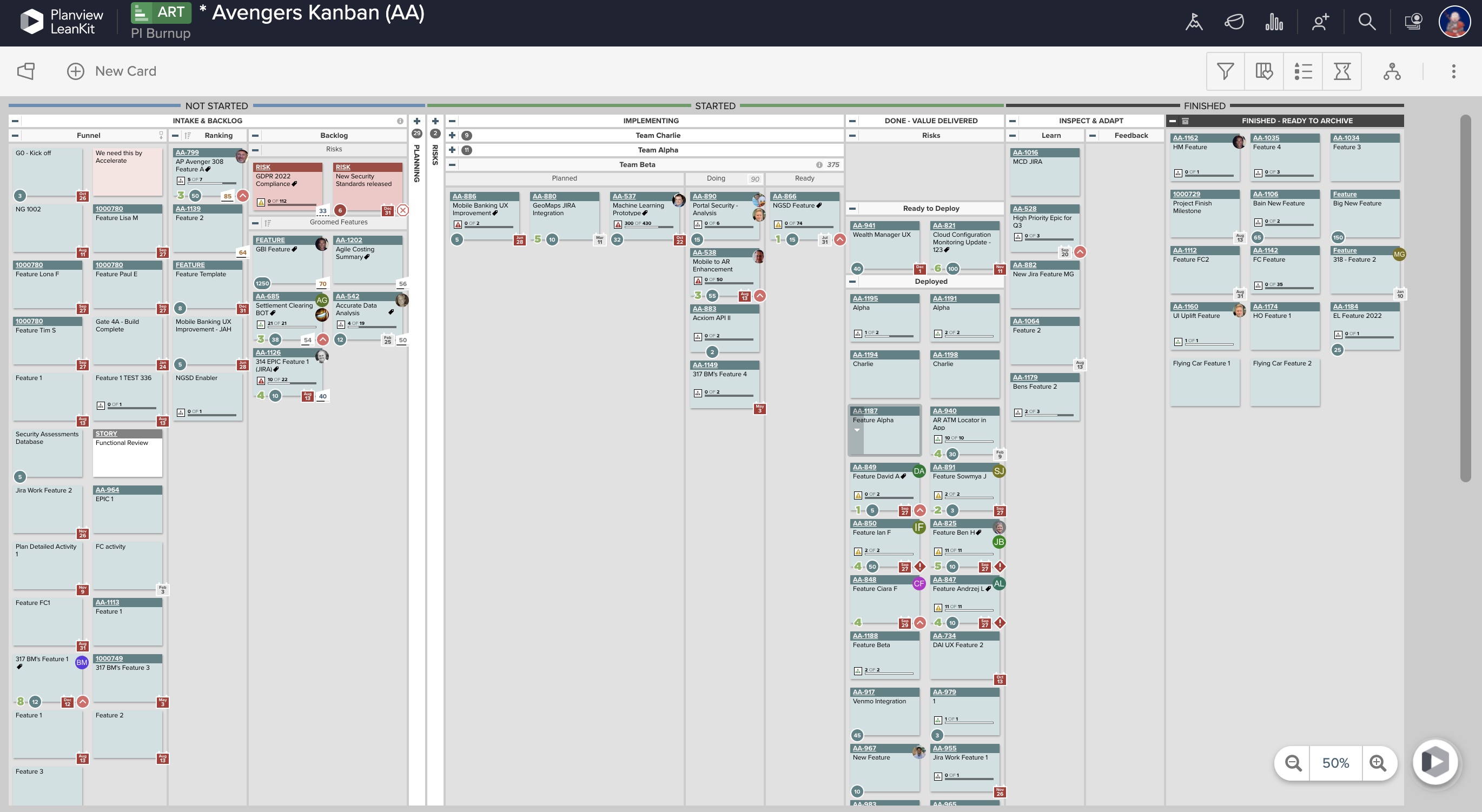
AgilePlace is a great way for teams, or individuals, to bring visibility to the work in process and in their backlog. The color coding and icon use helps to quickly analyze the type of work or status of the work. The product team is doing a good job at listening to their user's feedback and implementing improvements. Where it falls short is when reporting needs to occur.
TickTick works well for personal use - managing daily and/or recurring to do's through a variety of lists. These can be renamed as needed. This has contributed to an increase in the completion of projects for me. TickTick also works well for collaboration on a list by list basis. Say that I have a project at work that I need to work with a teammate on - I can create the list and share it with my teammate. From there we can tag-team the project. There is the option for adding to-do lists inside of a top-level list and areas for commenting by the collaborators. This allows us to bypass unneeded meetings or emails to remember what needs to be done next on the project. TickTick may be less suited for situations where photos or files need to be shared for a project or for more complex project management.
Okta Integration: We love using SSO for all our SaaS apps, and as new team members join, they can be automatically joined to the appropriate LeanKit boards.
Filtering and viewing: Can filter and refine by several fields as well as custom fields. Assigned Users, Tagged, Card Type, Date, etc
Their analytics and reporting can be helpful for PMs, especially if they have several teams they oversee.
So far it accomplishes everything I need it to without unnecessary complications. The only reason I can think that I wouldn't renew is if I was required to use something else.
LeanKit isn't the best designed Kanban system I've seen, but overall it's pretty usable. The boards I've used are pretty complex, so it can be difficult to find things. I found that searching and filtering for specific cards was somewhat of a challenge. Dragging a card from one lane to another is kind of a fun way to get things done though.
It is super simple in its set up and easy to learn to use. Many other apps are overly complicated which TickTick is not. It always depende on what features you are looking for but I did not even need to explain anything to those who struggle with newer technology
Every time I have reached out to the AgilePlace support team I have received a timely response in addition to professional & personal feedback. Their consultants are knowledgeable and the management team is happy to jump in and help when needed.
Originally, we had evaluated two other tools next to Planview LeanKit: Kanbantool and Kanbanflow. The latter was a close contestant for productive use, as it was also very customizable and a joy to work with and look at. It also had lower user fees and a mobile integration. In the end, we picked Planview LeanKit because of several reasons: Aesthetics: The look was much more clean and professional. Reporting: It was obvious from the start that we could use Planview LeanKit as a tool for improvement. API: We needed to integrate the Kanban into our central systems and Planview LeanKit API was (and still is) a way to do it. Card Headers: This sounds like a simple thing, but the headers above the titles fit our work perfectly and looked perfect, which helped the decision.
Todoist is almost equivalent to Ticktick; the only thing is that it is a bit more expensive. Todoist does have a few more fancy AI features, which I presume will be helpful moving forward. Google Tasks would have been great had it not been left undeveloped by Google. The fact that it has a great integration with Google Calendar is what I personally desire, but unfortunately, it falls massively short in all other things. The notion is great for overall knowledge management, unlike personal tasks, as it gets slower the more you load it up. Any.do is good, but it doesn't match up with Ticktick or Todoist and is more expensive.