Chose Redmine
Sysaid and Jira appear to be better alternatives, but they are expensive compared to Redmine, which is free. They are also not as easy to configure, compared to Redmine.

| Product | Rating | Most Used By | Product Summary | Starting Price |
|---|---|---|---|---|
 Redmine | N/A | Redmine is a project management web application written using the Ruby on Rails framework. It is cross-platform and cross-database, and free to download and use as an open source project available on the GNU 2.0 license. | N/A | |
 ZenTao | N/A | Product management: product, story, backlog, plan, release and roadmap Project management: project, Sprint, task, build and burndown chart Test management: bug, test case, test request and test result CI: Jenkins integration, automation testing, ZTF Document management: product document library, project document library and customized document library Work management: todo management and my task/ bug/ story/ project Company management:… | N/A |
| Redmine | ZenTao | |||||||||||||||
|---|---|---|---|---|---|---|---|---|---|---|---|---|---|---|---|---|
| Editions & Modules | No answers on this topic | No answers on this topic | ||||||||||||||
| Offerings |
| |||||||||||||||
| Entry-level Setup Fee | No setup fee | No setup fee | ||||||||||||||
| Additional Details | — | — | ||||||||||||||
| More Pricing Information | ||||||||||||||||
| Redmine | ZenTao | |
|---|---|---|
| Considered Both Products |  Redmine  Ye Yint Moe Functional Consultant Chose Redmine Jira is a great project management tool for software product life cycle management for an agile environment based on agile methodologies. Jira is an intuitive and modernized user interface design compared with Redmine but Redmine is a lightweight and affordable project …  Richard Davies Senior Web Application Developer Chose Redmine As we've moved to using agile-based methodologies, we've started using Jira more, which is better suited for agile development. Jira looks and feels like a more modern web application and has greater flexibility and more features. I used Basecamp a long time ago for some small …  João Almeida Researcher Chose Redmine Redmine has a lot of the same functionality but is much easier to use. The project tends to have functions that only the most advanced PM would even look at. JIRA is easier to deploy in a cloud/managed environment: it also has better "apps" support. However, Redmine benefits …  Ashley Lee Project Manager for Software Development Chose Redmine Basecamp was very busy and seemed more into the "wow" factor than into being an efficient tool. Redmine has none of the characters or kid-like appearance of Basecamp's model. I found Basecamp to be too cluttered in views and its interactions confusing, making it difficult to …  Iryna Orliuk Junior Business Analyst / Consultant Chose Redmine Redmine is a low-cost solution for companies that need Jira  Vinicius Lima Programador Chose Redmine Redmine stacks up to its competitors by being free and open-source. Additionally, it is an easy tool to install and maintain in any operating system, like Linux and Windows. Administrators will not have so many headaches when getting it running. You can customize the code and …  Jessica Martin Salesforce Consultant Chose Redmine Redmine has a lot of the same functionality, but is much easier to use. Project tends to have functions that only the most advanced PM would even look at.  Ilya Popovich QA Test Lead Chose Redmine It can beat other services only as free, open source solution. Right now we've moved to Jira, and Redmine only stays on as an archive and is used by our editor's department.  Ronald Melendez Desarrollador AngularJs - Front-End Developer Chose Redmine I think that although they are tools for managing equipment and tools for bugs tracking, Redmine has a great advantage since it can be integrated with many third-party tools and that is the only tool of this type with which I have been able to integrate and integrate systems. … |  ZenTao  Kayla Risher Analyst Chose ZenTao The features and the flexibility in Workfront were less and were not so sufficient for us as we needed something more. We were paying a high rate for almost nothing in the case of Workfront. So ZenTao is a perfect option when it comes to project management and we have witnessed … Chose ZenTao ZenTao defines bugs, tasks, and stories separately, not just an ISSUE. I can oversee the development from creating a Product Backlog to releasing the increment. I can also collect and record product feedback from the client and share with my team. |
| Redmine | ZenTao | |||||||||||||||||||||||||||||||||||||||||||||
|---|---|---|---|---|---|---|---|---|---|---|---|---|---|---|---|---|---|---|---|---|---|---|---|---|---|---|---|---|---|---|---|---|---|---|---|---|---|---|---|---|---|---|---|---|---|---|
| Project Management |
| |||||||||||||||||||||||||||||||||||||||||||||
| Professional Services Automation |
|
| Redmine | ZenTao | |
|---|---|---|
| Small Businesses |  Stackby Score 9.0 out of 10 | Stackby Score 9.0 out of 10 |
| Medium-sized Companies |  InEight Score 8.3 out of 10 | InEight Score 8.3 out of 10 |
| Enterprises | InEight Score 8.3 out of 10 | InEight Score 8.3 out of 10 |
| All Alternatives | View all alternatives | View all alternatives |
| Redmine | ZenTao | |
|---|---|---|
| Likelihood to Recommend | 9.0 (0 ratings) | 8.0 (0 ratings) |
| Usability | 8.0 (0 ratings) | - (0 ratings) |
| Support Rating | 6.5 (0 ratings) | - (0 ratings) |
| Redmine | ZenTao | |
|---|---|---|
| Likelihood to Recommend |
João Almeida Researcher |
|
| Pros |
Ashley Lee Project Manager for Software Development |
|
| Cons |
Richard Davies Senior Web Application Developer |
Kayla Risher Analyst |
| Usability |
João Almeida Researcher | No answers on this topic |
| Support Rating |
| No answers on this topic |
| Alternatives Considered |
|
Kayla Risher Analyst |
| Return on Investment |
|
|
| ScreenShots | ZenTao Screenshots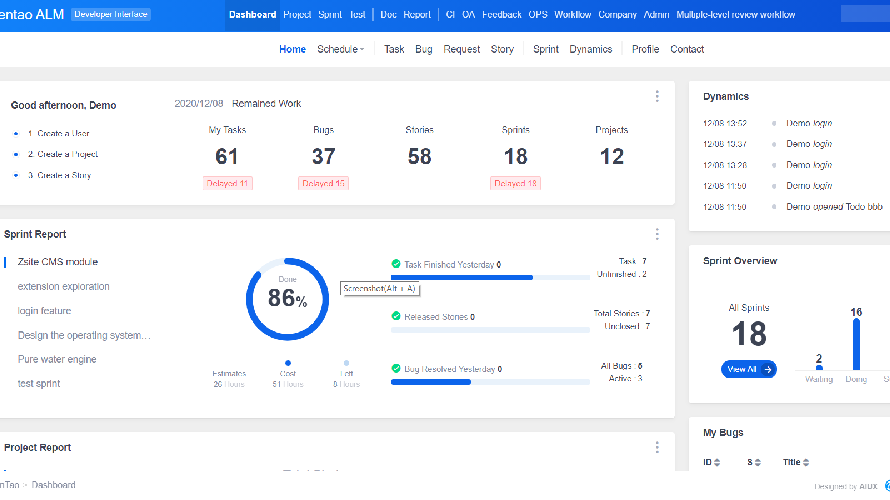  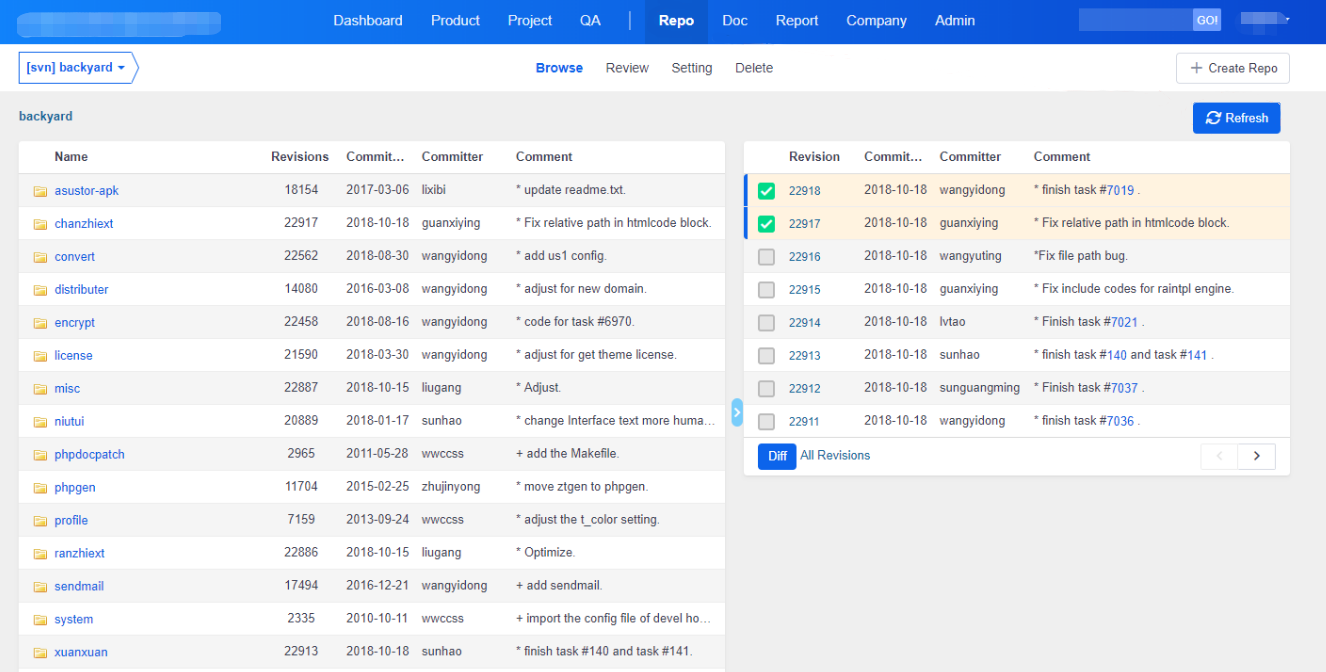  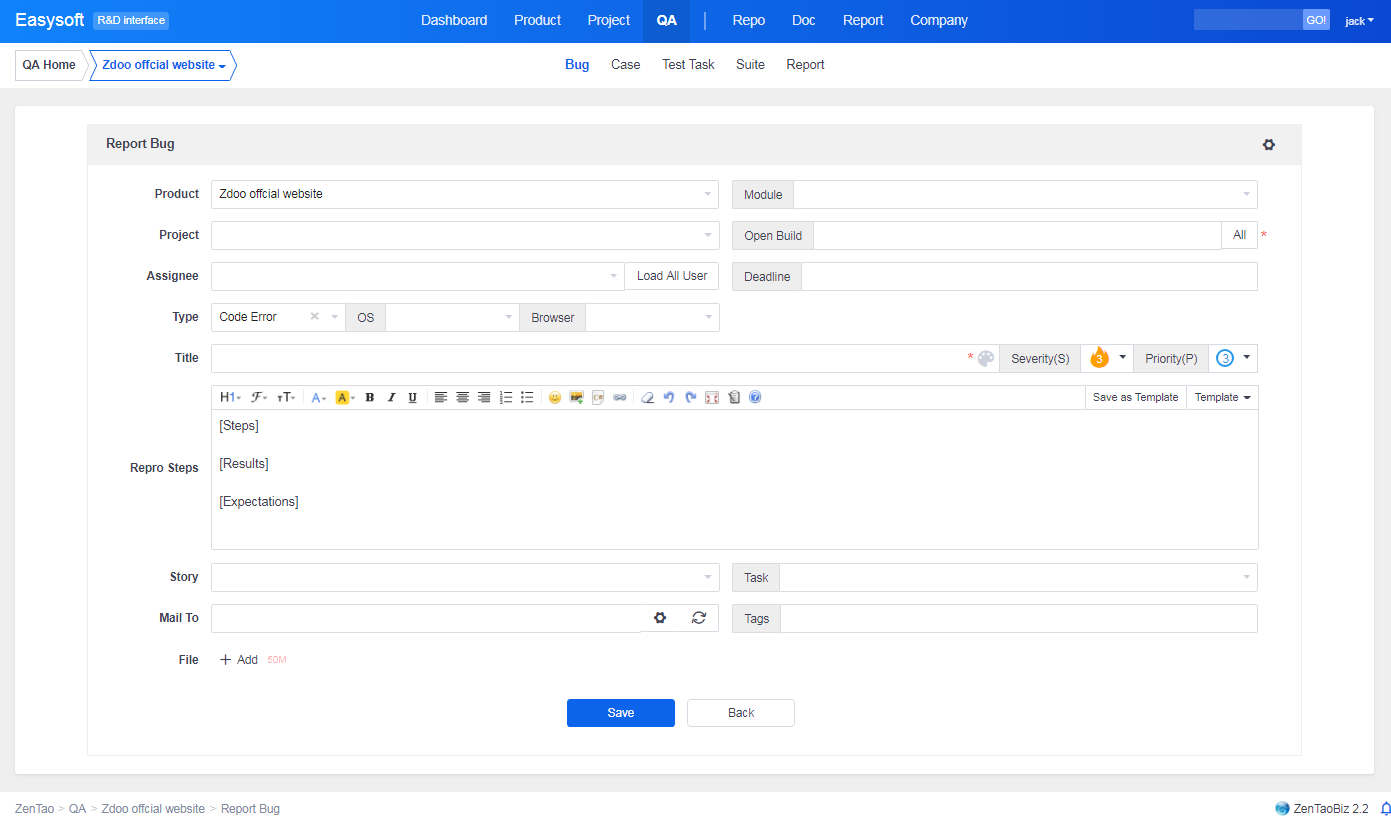  |
