Chose SAP Commerce Cloud
SAP Service Cloud and SAP Customer Data Solutions

| Product | Rating | Most Used By | Product Summary | Starting Price |
|---|---|---|---|---|
 SAP Commerce Cloud | N/A | SAP Commerce Cloud (formerly Hybris) is designed to help businesses sell more goods, services, and digital content through every touchpoint, channel, and device through their multichannel ecommerce and order management solution, available as a SaaS or on-premise. | N/A | |
 WooCommerce | N/A | WooCommerce is an eCommerce plugin for WordPress, developed by WooThemes (recently acquired by Automattic). Like WordPress, it is designed to be an extendable, adaptable, open-sourced platform. WooCommerce allows merchants to sell physical products, downloadables, or services. | N/A |
| SAP Commerce Cloud | WooCommerce | |||||||||||||||
|---|---|---|---|---|---|---|---|---|---|---|---|---|---|---|---|---|
| Editions & Modules | No answers on this topic |
| ||||||||||||||
| Offerings |
| |||||||||||||||
| Entry-level Setup Fee | No setup fee | No setup fee | ||||||||||||||
| Additional Details | — | WooCommerce is a free and open-source plugin for WordPress. Merchants can host their WooCommerce store on any private hosting service, or with Automattic directly via WordPress.com. Some added features or services from the WooCommerce Official Marketplace may have one time or subscription pricing. | ||||||||||||||
| More Pricing Information | ||||||||||||||||
| SAP Commerce Cloud | WooCommerce | |
|---|---|---|
| Considered Both Products |  SAP Commerce Cloud  Gonzalo Sanchez Head of Product Innovation Chose SAP Commerce Cloud I have worked with Salesforce Commerce Cloud and Adobe Commerce. As for the alternatives, SAP Commerce Cloud is much more adaptable with other SAP systems, as it becomes a part of a single data environment. The reason for selecting SAP Commerce Cloud was considered because of …  Durgesh Kumar Yadav SR. Manager IT Projects Chose SAP Commerce Cloud Axiom Sales Force Development  Dan McRitchie President Chose SAP Commerce Cloud SAP Cloud is much better than Godaddy. it was a smooth transition and every aspect of the program is easier. My scalability increased greatly from Godaddy to SAp Commerce Cloud and sales are now tracked easier and inventory is at the touch of a button, making sales much easier …  Oscar Alcalá Software Architect Chose SAP Commerce Cloud Against Odoo: SAP Commerce Cloud is primarily an e-commerce platform as we call it, a vertical solution. Odoo on the other hand is a Monolithic ERP with an E-commerce app not specifically designed for high performance on the web. Against Shopify: Shopify is more of an …  Micah Platt Commercial Account Executive Chose SAP Commerce Cloud Having worked with other SAP tools we knew the sales team and how they structure the product offerings. We also felt it was much more robust compared to the other newer or leaner offerings in the space. We couldn't have a downturn or an outage in the business. That wasn't an …  Charles Ahn Director Chose SAP Commerce Cloud SAP Commerce Cloud is best suited for companies that already have a SAP heavy back office.  Rajiv Thakur Sr. Manager IT Chose SAP Commerce Cloud SAP Concur, SAP ERP, SAP Enterprise Portal, SAP NetWeaver Application Server and SAP Supply Chain Management  Sandra Hazard Product Marketing Manager Chose SAP Commerce Cloud The SAP Commerce cloud solution is easy to connect with other SAP software that we already use in the organization, and I can state that it assists me in achieving the best implementations produced in various contexts without any trouble or failure, and we can track everything … |  WooCommerce  Calvin Hanson Marketing and Design Chose WooCommerce The level of customization and ease of integration with an existing WordPress website makes it a good choice. Snipcart is better for developers or small sites and Shopify is an amazing e-commerce-optimized platform but if you have an existing website on Wordpress, it is much …  Swadesh Padhi Marketing Ambassador Chose WooCommerce None  Jorge Edel Aguilar Avendaño CEO Veeme Media Chose WooCommerce WooCommerce is more complete.  Luke Hall Founder Chose WooCommerce WooCommerce is a good free version that's very customisable, but is not a smooth or polished platform. If you look at both dashboards between Shopify and WooCommerce you can see the difference is huge. WooCommerce seems to be built for websites that aren't focused entirely on …  Darian Rawson Senior Designer Developer Chose WooCommerce Shopify is better in almost every way, but does come with a premium.  Kejda Gjermani Digital Publisher Chose WooCommerce Platforms like Shopify are easier to set up and running and come with better default functionality. But if your business is successful you’ll quickly run into structural limitations: 1) can’t tweak the checkout flow 2) can’t make the site much faster or better for SEO 3) any …  Luis Escoffié Especialista en Marketing Digital y Comercio Electrónico Chose WooCommerce I like WooCommerce because it can be optimized, customized and adapted to every business needs. That's because it's WordPress core, it helps us customize stores in ways we can only imagine and also we can implement Google AMP and PWA easier and faster than with other platforms. …  Kaushik Somaiya Owner Chose WooCommerce Shopify is a premium e commerce platform tailored just for online shops. While WooCommerce is a plugin which has main platform as WordPress. Shopify is costly to have. Most of the basic shop functions that are offered in shopify can be achieved using WordPress + WooCommerce …  Felicia Betancourt Principal Chose WooCommerce WooCommerce and Shopify both permit essentially limitless customization. However, WooCommerce runs on PHP, a commonly used development language with a thriving community, whereas Shopify uses Liquid, a relatively obscure programming language, in its backend. I'm not I would …  Victoria Hoete-Dodd Content Specialist Chose WooCommerce I haven't used Shopify as much as WooCommerce so can't draw an accurate comparison. |
| SAP Commerce Cloud | WooCommerce | ||||||||||||||||||||||||||||||
|---|---|---|---|---|---|---|---|---|---|---|---|---|---|---|---|---|---|---|---|---|---|---|---|---|---|---|---|---|---|---|---|
| Online Storefront |
| ||||||||||||||||||||||||||||||
| Online Shopping Cart |
| ||||||||||||||||||||||||||||||
| Online Payment System |
| ||||||||||||||||||||||||||||||
| eCommerce Marketing |
| ||||||||||||||||||||||||||||||
| eCommerce Business Management |
|
| SAP Commerce Cloud | WooCommerce | |
|---|---|---|
| Small Businesses |  Ecwid by Lightspeed Score 10.0 out of 10 | Ecwid by Lightspeed Score 10.0 out of 10 |
| Medium-sized Companies |  Shopify Plus Score 9.0 out of 10 | Shopify Plus Score 9.0 out of 10 |
| Enterprises |  IBM Digital Commerce Score 9.0 out of 10 | IBM Digital Commerce Score 9.0 out of 10 |
| All Alternatives | View all alternatives | View all alternatives |
| SAP Commerce Cloud | WooCommerce | |
|---|---|---|
| Likelihood to Recommend | 8.3 (0 ratings) | 7.8 (0 ratings) |
| Likelihood to Renew | 10.0 (0 ratings) | 10.0 (0 ratings) |
| Usability | 8.1 (0 ratings) | 7.1 (0 ratings) |
| Support Rating | 10.0 (0 ratings) | 5.0 (0 ratings) |
| Implementation Rating | 9.1 (0 ratings) | - (0 ratings) |
| Ease of integration | 9.6 (0 ratings) | - (0 ratings) |
| Product Scalability | 9.6 (0 ratings) | - (0 ratings) |
| SAP Commerce Cloud | WooCommerce | |
|---|---|---|
| Likelihood to Recommend |
|
|
| Pros |
|
|
| Cons |
 Paul Visvardis CEO (Chief Executive Officer) |
Kaushik Somaiya Owner |
| Likelihood to Renew |
 Erin Riggers Presentation Layer Architect & Development Manager |
 Rick Fitzgerald Owner/CEO |
| Usability |
|
 Prashant Chaudhari Strategic Brand & Marketing Consultant |
| Support Rating |
 zahit bogus Business Intelligence & Database Consultant |
|
| Implementation Rating |
 Chetan Chopade SAP Cx Manager | No answers on this topic |
| Alternatives Considered |
|
|
| Scalability |
Dan McRitchie President | No answers on this topic |
| Return on Investment |
Sandra Hazard Product Marketing Manager |
|
| ScreenShots | SAP Commerce Cloud Screenshots 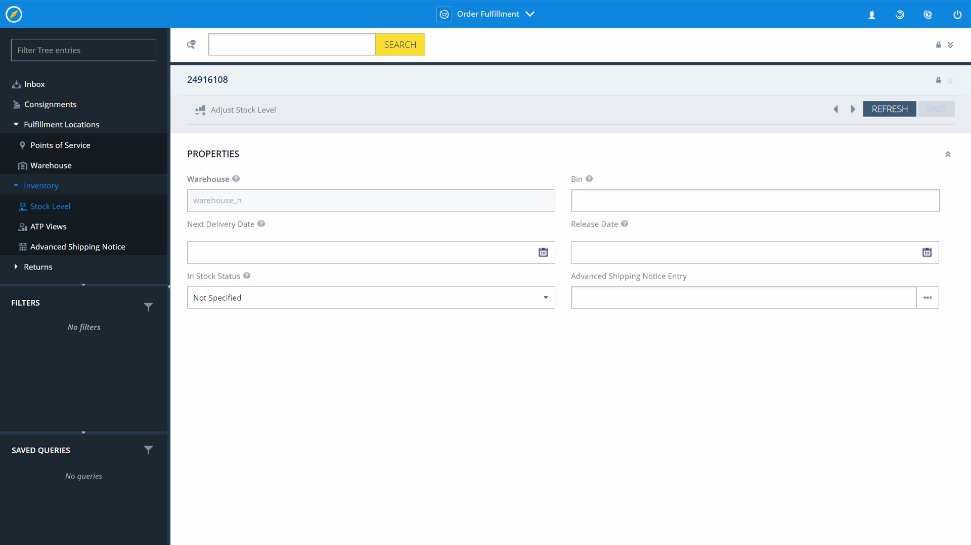     | WooCommerce Screenshots     |