Google App Engine is Google Cloud's platform-as-a-service offering. It features pay-per-use pricing and support for a broad array of programming languages.
$0.05
Per Hour Per Instance
SAP Integration Suite
Score 8.5 out of 10
N/A
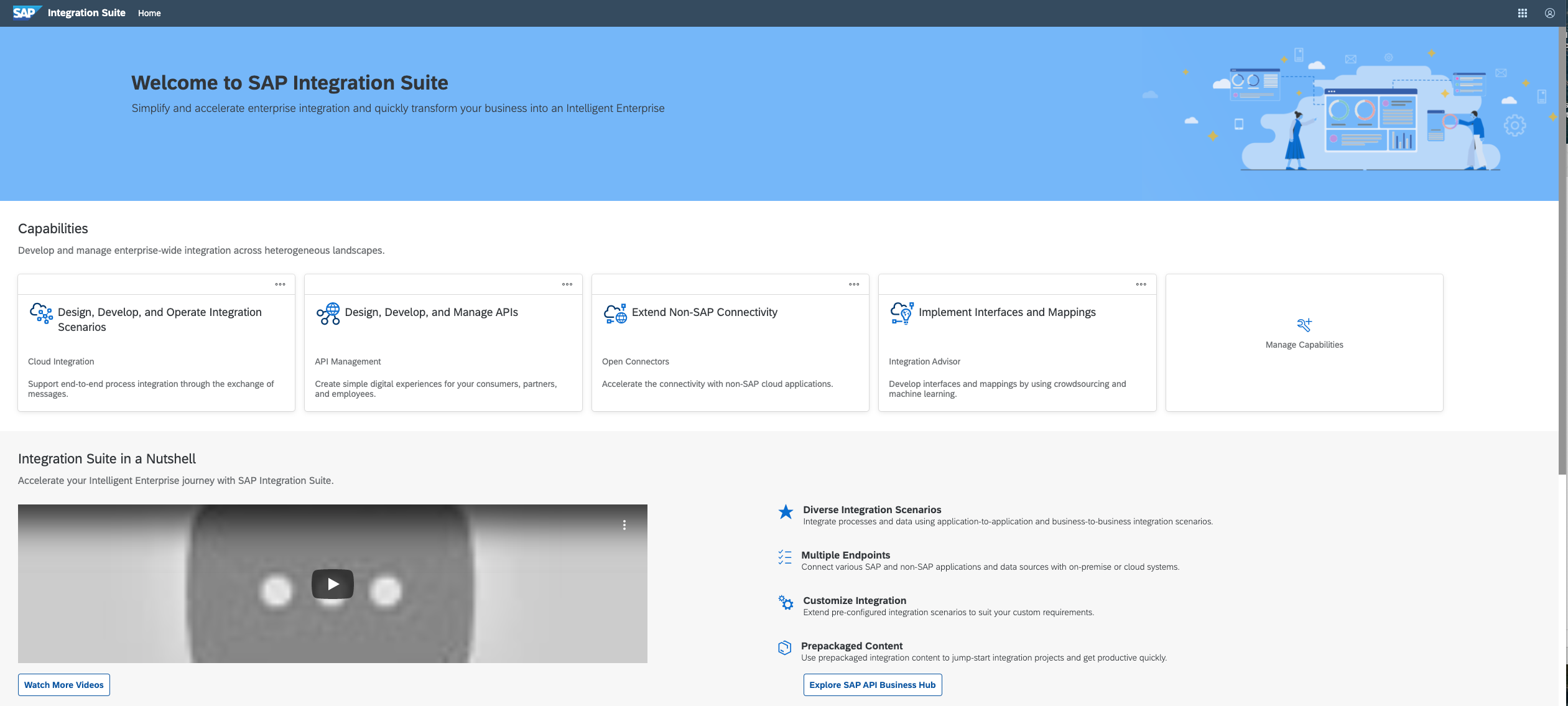
SAP Integration Suite is an integration platform-as-a-service (iPaaS) that helps quickly integrate on-premises and cloud-based processes, services, applications, events, and data. It is used to accelerate innovation, automate more processes, and realize a faster time to value.
N/A
Pricing
Google App Engine
SAP Integration Suite
Editions & Modules
Starting Price
$0.05
Per Hour Per Instance
Max Price
$0.30
Per Hour Per Instance
No answers on this topic
Offerings
Pricing Offerings
Google App Engine
SAP Integration Suite
Free Trial
No
Yes
Free/Freemium Version
Yes
No
Premium Consulting/Integration Services
No
No
Entry-level Setup Fee
No setup fee
No setup fee
Additional Details
—
Access to free tier services does not expire while there is an active Pay-As-You-Go or CPEA account with SAP. Once a free tier service limit has been reached users have the option to update from a free to a paid service plan in the same account.
More Pricing Information
Community Pulse
Google App Engine
SAP Integration Suite
Features
Google App Engine
SAP Integration Suite
Platform-as-a-Service
Comparison of Platform-as-a-Service features of Product A and Product B
Google App Engine
8.7
Ratings
9% above category average
SAP Integration Suite
-
Ratings
Ease of building user interfaces
9.00 Ratings
00 Ratings
Scalability
9.00 Ratings
00 Ratings
Platform management overhead
9.00 Ratings
00 Ratings
Workflow engine capability
9.00 Ratings
00 Ratings
Platform access control
9.00 Ratings
00 Ratings
Services-enabled integration
8.00 Ratings
00 Ratings
Development environment creation
9.00 Ratings
00 Ratings
Development environment replication
8.00 Ratings
00 Ratings
Issue monitoring and notification
9.00 Ratings
00 Ratings
Issue recovery
9.00 Ratings
00 Ratings
Upgrades and platform fixes
8.00 Ratings
00 Ratings
Cloud Data Integration
Comparison of Cloud Data Integration features of Product A and Product B
Google App Engine is especially well suited for situations where there is a variable workload during the day, e.g. inbound task processing with task queues. In this situation queues can be setup with parameters governing the process speed/scaling which allows you to easily balance performance with cost and meet a good balance.
The case of the SAP Integration Suite shows outstanding capability in handling huge data, and especially when handling corporate portfolio data with multiple owners. But we have noticed that in the cases of moving data from the older banking system, it is necessary to further refine the system. It does an excellent job of the current credit scoring.
Building an application that uses Google's Authentication, means users no longer need to remember an different user id and password. Once they are logged into to Google, they can seamlessly access your application hosted on Google App Engine.
Google App Engine automatically scales up and down. SO if your application receives a spike in user traffic, App Engine automatically launches additional instances of your application to cater for the increased traffic. Once App Engine detects that the spike is usage is over, it automatically scales down to handle the current traffic.
Google App Engine can be easily integrated with Google Cloud SQL, Google Compute Engine, Google Cloud Storage etc, so that you can build out a full application using one or more of Google's Cloud Platform products.
Broad Connectivity: SAP Integration Suite excels in connecting diverse systems, including SAP and non-SAP applications, databases, and third-party services.
Pre-built Integrations and Templates:The suite provides a library of pre-built integrations and templates for common business scenarios.
App Engine is a solid choice for deployments to Google Cloud Platform that do not want to move entirely to a Kubernetes-based container architecture using a different Google product. For rapid prototyping of new applications and fairly straightforward web application deployments, we'll continue to leverage the capabilities that App Engine affords us.
SAP Integration Suite is very helpful to us in many ways to manage purchase procedures, stocks, and data of vendors and suppliers. Also, it helps to manage data for service providers. SAP Integration Suite has the tool to conduct training and evaluation. Unique features like the cloud can provide access from any place and by any device is very helpful.
Google App Engine is very intuitive. It has the common programming language most would use. Google is a dependable name and I have not had issues with their servers being down....ever. You can safely use their service and store your data on their servers without worrying about downtime or loss of data.
Good amount of documentation available for Google App Engine and in general there is large developer community around Google App Engine and other products it interacts with. Lastly, Google support is great in general. No issues so far with them.
App Engine is a much more streamlined system than EC2. There is a fundamental difference between them, but they are used for basically the same thing as far a I could tell -- to serve applications EC2 is certainly more complicated, but if offers more machine-level control if that's what you need. It can tend to cost more as well. App Engine is far more straightforward but there are limitations if you need to change the environment. But even then, Google Compute Engine also compares to EC2 and stays within GCP.
We used to have a in house application in Camel and Karaf as a middleware, and after we migrate to S4HANNA we decide to give a try and move to the cloud with SAP Integration Suite, knowing the capabilities and the needs that we have in the company and the projects that were running on premise in our middleware.