Databricks Data Intelligence Platform vs. Shakudo Platform

Overview
ProductRatingMost Used ByProduct SummaryStarting Price
Databricks Data Intelligence Platform
Score 8.5 out of 10
N/A
Databricks in San Francisco offers the Databricks Lakehouse Platform (formerly the Unified Analytics Platform), a data science platform and Apache Spark cluster manager. The Databricks Unified Data Service aims to provide a reliable and scalable platform for data pipelines, data lakes, and data platforms. Users can manage full data journey, to ingest, process, store, and expose data throughout an organization. Its Data Science Workspace is a collaborative environment for practitioners to run…
$0.07
Per DBU
Shakudo Platform
Score 6.0 out of 10
N/A
The Shakudo platform ensures compatibility across data tools to allow companies to build the best data infrastructure for their needs. It supports over 60 popular data tools, and enables users to create the optimal data stack for any custom needs, and helps users to create a more reliable and performant stack. And it helps users to: Build a stack that works precisely for the company without worrying about maintenance costs or stability Using a single UI, let teams use and gain…N/A
Pricing
Databricks Data Intelligence PlatformShakudo Platform
Editions & Modules
Standard
$0.07
Per DBU
Premium
$0.10
Per DBU
Enterprise
$0.13
Per DBU
No answers on this topic
Offerings
Pricing Offerings
Databricks Data Intelligence PlatformShakudo Platform
Free Trial
NoNo
Free/Freemium Version
NoNo
Premium Consulting/Integration Services
NoNo
Entry-level Setup FeeNo setup feeNo setup fee
Additional Details
More Pricing Information
Community Pulse
Databricks Data Intelligence PlatformShakudo Platform
Best Alternatives
Databricks Data Intelligence PlatformShakudo Platform
Small Businesses

No answers on this topic

Jupyter Notebook
Jupyter Notebook
Score 9.4 out of 10
Medium-sized Companies
Snowflake
Snowflake
Score 8.9 out of 10
Posit
Posit
Score 10.0 out of 10
Enterprises
Snowflake
Snowflake
Score 8.9 out of 10
Posit
Posit
Score 10.0 out of 10
All AlternativesView all alternativesView all alternatives
User Ratings
Databricks Data Intelligence PlatformShakudo Platform
Likelihood to Recommend
10.0
(0 ratings)
-
(0 ratings)
Usability
10.0
(0 ratings)
-
(0 ratings)
Support Rating
8.7
(0 ratings)
-
(0 ratings)
User Testimonials
Databricks Data Intelligence PlatformShakudo Platform
Likelihood to Recommend
If you need a managed big data megastore, which has native integration with highly optimized Apache Spark Engine and native integration with MLflow, go for Databricks Lakehouse Platform. The Databricks Lakehouse Platform is a breeze to use and analytics capabilities are supported out of the box. You will find it a bit difficult to manage code in notebooks but you will get used to it soon.
Read full review
No answers on this topic
Pros
  • There is databricks community, which is a free version. It is available for beginners to have an easy start with a big data platform. It does not have every feature of the full version but is still adequate for extremely new coders.
  • There are many resourceful training elements that are available to developers, data scientists, data engineers and other IT professionals to learn Apache Spark.
Read full review
No answers on this topic
Cons
  • Connect my local code in Visual code to my Databricks Lakehouse Platform cluster so I can run the code on the cluster. The old databricks-connect approach has many bugs and is hard to set up. The new Databricks Lakehouse Platform extension on Visual Code, doesn't allow the developers to debug their code line by line (only we can run the code).
  • Maybe have a specific Databricks Lakehouse Platform IDE that can be used by Databricks Lakehouse Platform users to develop locally.
  • Visualization in MLFLOW experiment can be enhanced
Read full review
No answers on this topic
Usability
Because it is an amazing platform for designing experiments and delivering a deep dive analysis that requires execution of highly complex queries, as well as it allows to share the information and insights across the company with their shared workspaces, while keeping it secured.

in terms of graph generation and interaction it could improve their UI and UX
Read full review
No answers on this topic
Support Rating
One of the best customer and technology support that I have ever experienced in my career. You pay for what you get and you get the Rolls Royce. It reminds me of the customer support of SAS in the 2000s when the tools were reaching some limits and their engineer wanted to know more about what we were doing, long before "data science" was even a name. Databricks truly embraces the partnership with their customer and help them on any given challenge.
Read full review
No answers on this topic
Alternatives Considered
Databricks is a true all-in-one platform, and at the time of implementation, it had more features available to us, making it a clear choice over Snowflake. Moving our workloads from local computing to the servers in Databricks gave our start-up staff a great quality of life boost.
Read full review
No answers on this topic
Return on Investment
  • ROI for us has been tremendous. Time to market by processing raw data in our big data infrastructure has been pretty fast.
  • Non engineers can easily use Databricks, hence helping business customers.
  • Thousands of different data combinations can easily be joined and used by our data teams.
Read full review
No answers on this topic
ScreenShots

Shakudo Platform Screenshots

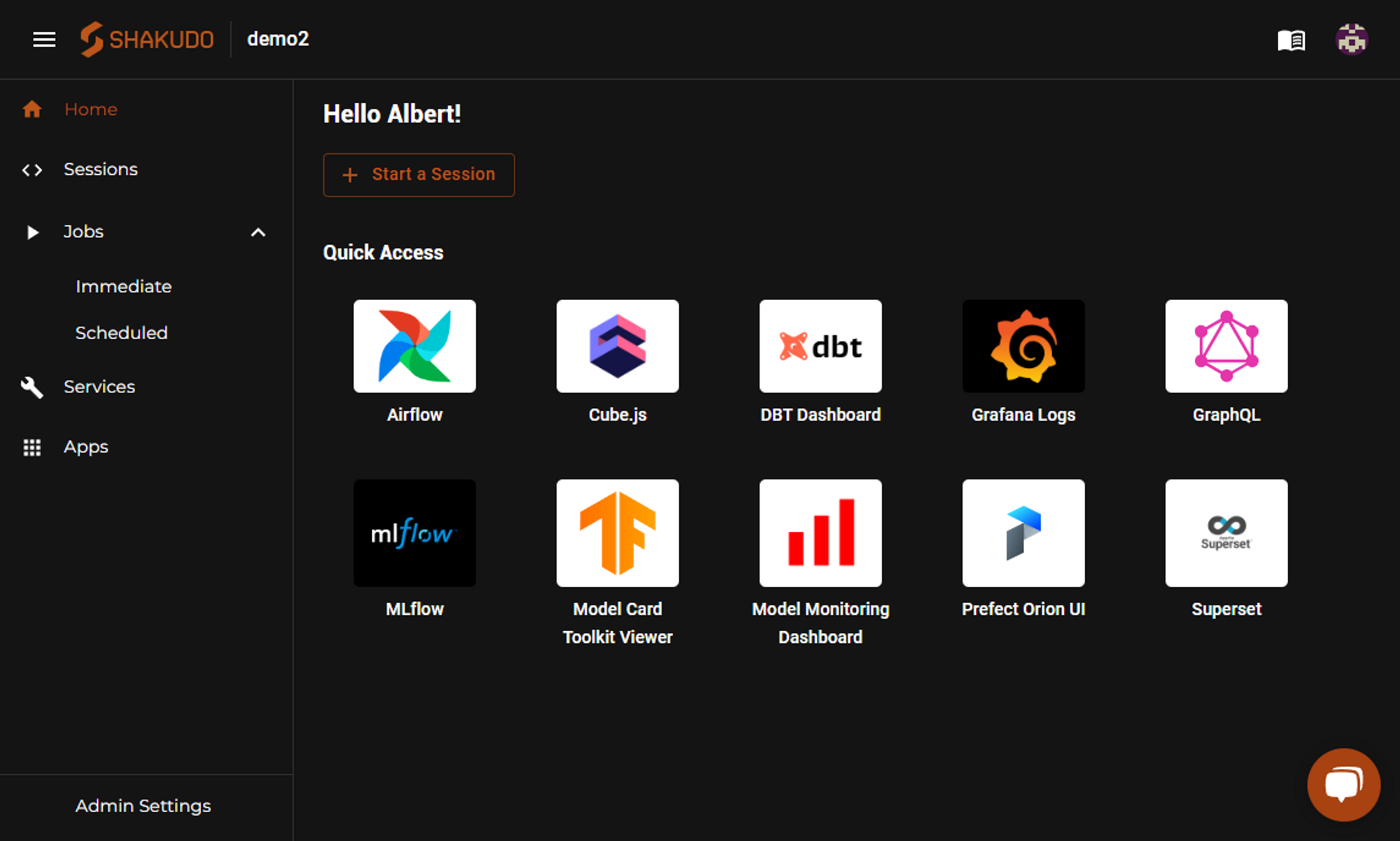
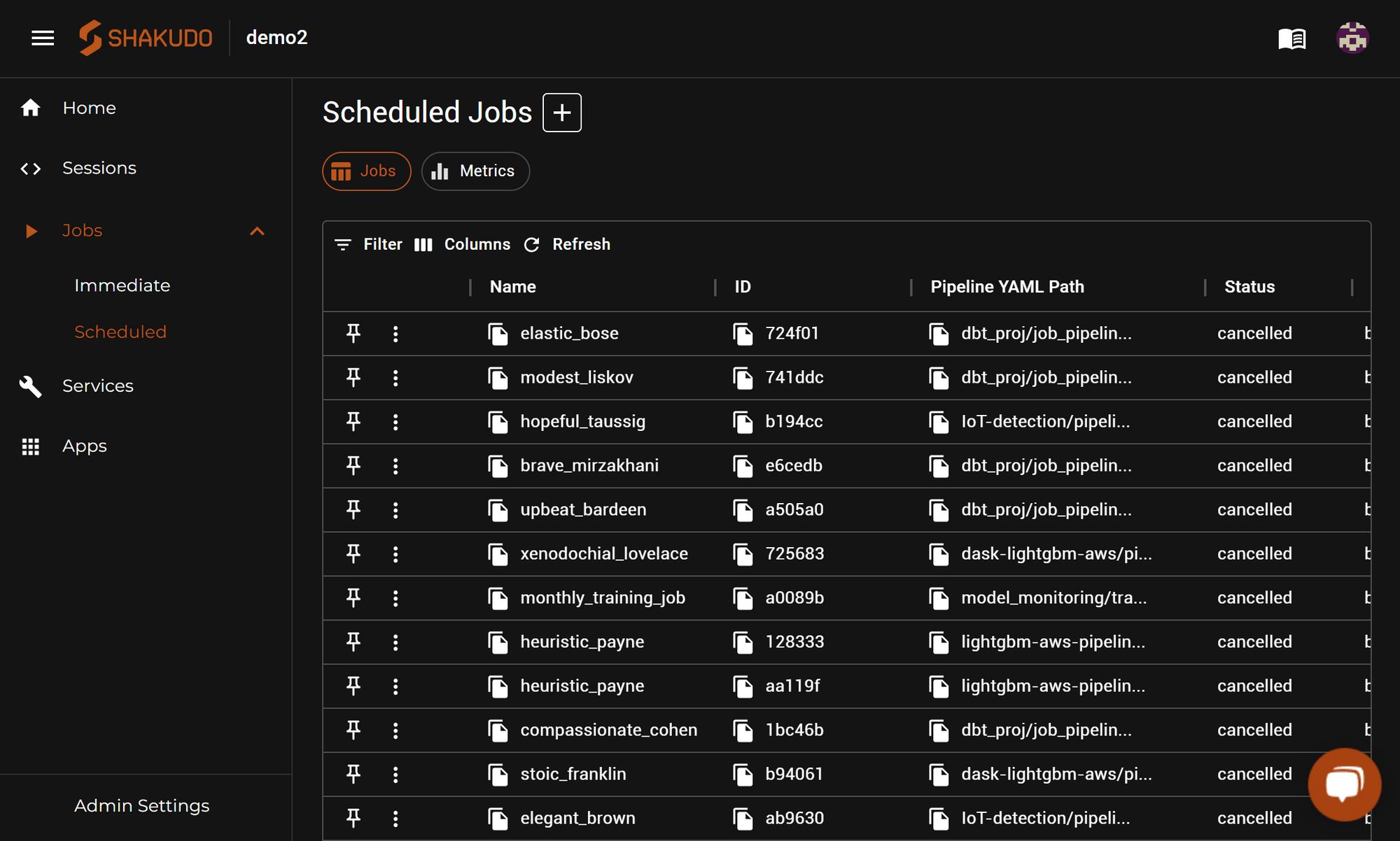
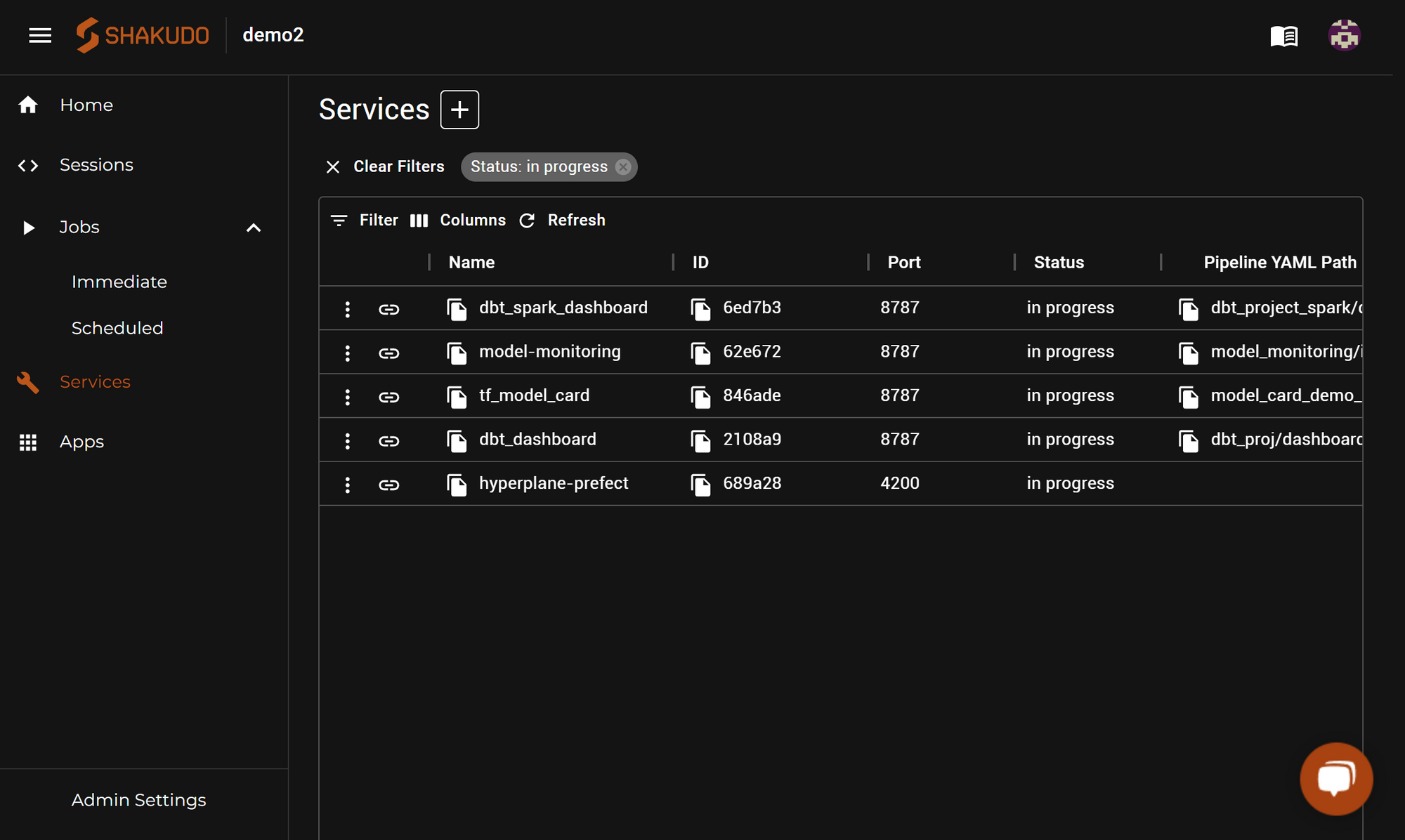
Screenshot of Shakudo Platform Dashboard UIScreenshot of Jobs use the same environment config as Sessions, so users can have the same dependencies and configurations available as they had during development. Jobs can be run on demand using Immediate jobs, or scheduled with a Cron expression using Scheduled Jobs. The integrated Job system can be used on its own, or it can be used to run code with tools like Airflow or Prefect.Screenshot of When deploying a project and publishing the results, Services help to deploy custom long-running programs like web servers to host results, or integrations can be used. From publishing processed data to S3 buckets, to hosting trained models on Nvidia Triton, to publishing dashboards in Apache Superset, it helps data scientists deploy their projects and their artifacts with minimal configuration or maintenance required