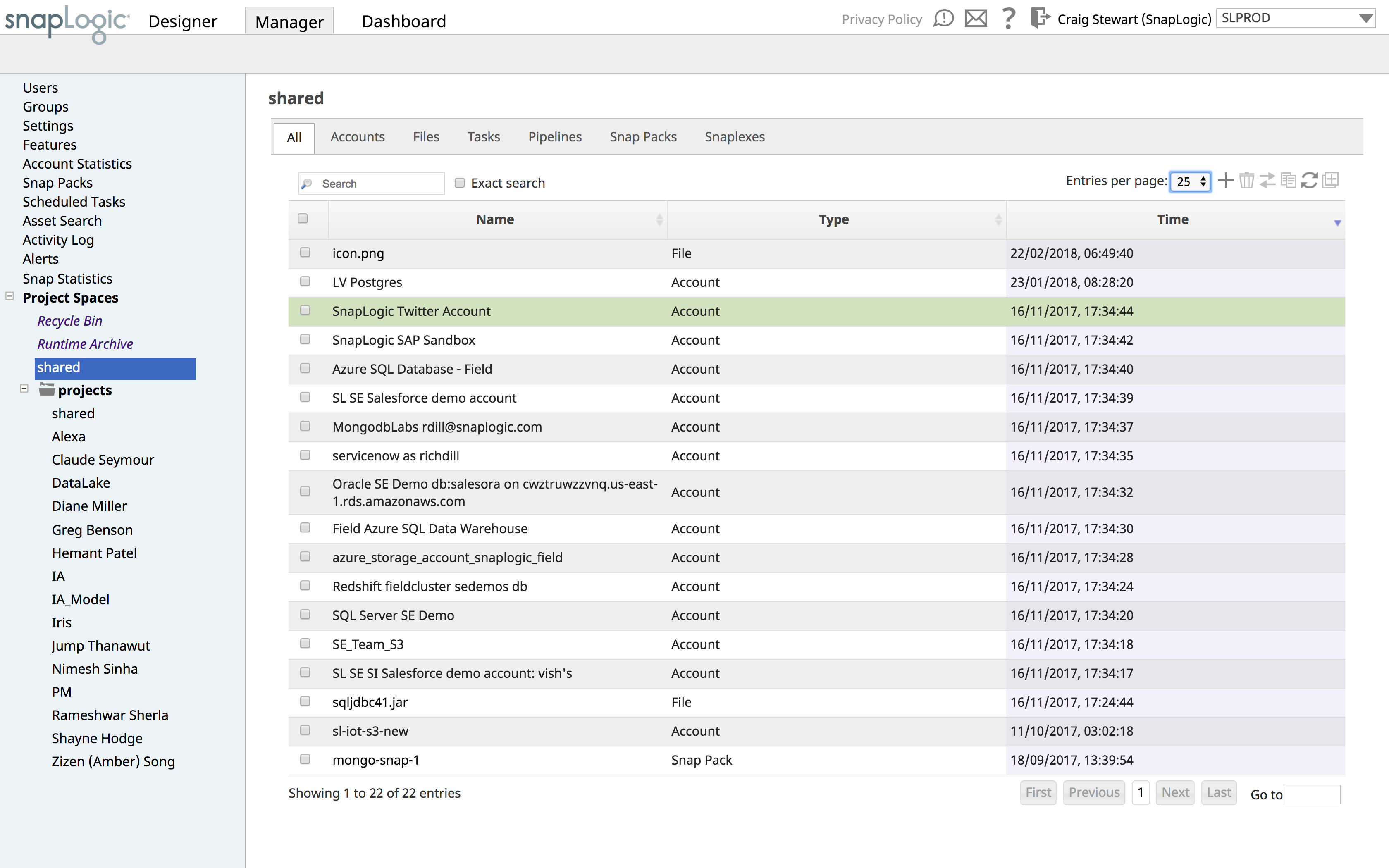
SnapLogic is a cloud integration platform with a self-service capacity supported by over 450 prebuilt modifiable connectors. SnapLogic also offers real-time and batch integration processes for interfacing with external data sources, a drag-and-drop interface, and use of the vendors’ Iris AI.
N/A
WSO2 API Manager
Score 9.4 out of 10
Enterprise companies (1,001+ employees)
WSO2 API Manager makes it possible for developers to both develop and manage APIs of different types. Unlike solutions which focus only on managing API proxies, WSO2 API Manager provides tools to develop APIs by integrating different systems as well. It supports a variety of API types from REST, SOAP, GraphQL, WebSockets, WebHooks, SSEs and gRPC APIs with specialized policies and governance for each different type. Being fully open source, its architecture and extensibility…
N/A
Pricing
SnapLogic
WSO2 API Manager
Editions & Modules
No answers on this topic
No answers on this topic
Offerings
Pricing Offerings
SnapLogic
WSO2 API Manager
Free Trial
No
No
Free/Freemium Version
No
Yes
Premium Consulting/Integration Services
No
No
Entry-level Setup Fee
Optional
No setup fee
Additional Details
—
—
More Pricing Information
Community Pulse
SnapLogic
WSO2 API Manager
Features
SnapLogic
WSO2 API Manager
Cloud Data Integration
Comparison of Cloud Data Integration features of Product A and Product B
SnapLogic
7.7
Ratings
4% below category average
WSO2 API Manager
-
Ratings
Pre-built connectors
8.20 Ratings
00 Ratings
Connector modification
6.90 Ratings
00 Ratings
Support for real-time and batch integration
7.40 Ratings
00 Ratings
Data quality services
7.70 Ratings
00 Ratings
Data security features
7.50 Ratings
00 Ratings
Monitoring console
8.10 Ratings
00 Ratings
API Management
Comparison of API Management features of Product A and Product B
Snaplogic is unique from other IPASS tools if you're very sensitive about data security as they have an on-premise option where your data never needs to leave your data center. And data pipelines can be quickly created if Snaplogic has the requisite connector to your data sources. On the downside, if you're transforming a large amount of data for example in training machine learning models, a tool with elastic compute capability is more appropriate.
WSO2 is a unique product that provides pre-integrated components like Gateway, Integrator, identity management, etc. Hence it is best suited when the requirement is not just only publish the APIs but also to secure and transform the APIs. WSO2 can be an overhead if only Gateway is required, as there are other very lightweight gateways available in the market.
Installation of this product is a hell. You need to be an expert to get this running together with WSO2 Analytics. It uses a really confusing method of "port + 1" to connect extra products. I guess this was meant to provide a handy way to add new WSO2 products. In reality you'll need to scroll through numerous config files to set this straight. If you use this out of the box, everything will work all right. But the moment you add SSL certificates, DNS names and you'll need special ports to configure your firewall, this product becomes unmaintainable.
The "Store" provides a nice way to group API's. However, the "Publisher" does not... if you have more than 30 API's searching for API's becomes really annoying.
The number of configs in this product is huge. As a developer myself, I've never seen (and definitely never created) a product that needed that much config files. Installation and maintenance of products should be stupidly simple, since no developer nor infrastructure person wants to learn something that "just" needs to be a tool.. opposed to being a whole new area of expertise. After using WSO2 API Manager for a while, we wanted to change the admin password... this should be simple enough, like just change the password in "Carbon." But nope. The whole WSO2 environment crashed. We just gave up. Too dangerous.
Why so many different "products"? Publisher, Store, Carbon, and numerous hidden interfaces. Analytics, ESB whatever... No wonder there are so many config files and port issues. Make it simple!!!
This has been hands down the BEST software company I have ever used and dealt with. I am a 25 year IT veteran at this college. They go above and beyond in soliciting our feedback/input and proactively follow up about bugs, issues, etc. I have given multiple potential clients my thoughts and after seeing the SL demo they all sign up. I appreciate their support model, it's REFRESHING!
They can be prompt but they have not been as useful as I've wanted. We had a bug that affected many of our customers through an API connection between SnapLogic and our platform. Eventually they were able to figure it out, but it took a long time of negotiating between our engineering team and theirs. Additionally, we installed the SnapLogic groundplex for our customers and we've run into a bunch of problems of connectivity. If SnapLogic offered to be on those calls with our clients to troubleshoot how to fix these problems, I would give them a better grade here.
Boomi was our runner-up product. The pricing model was much higher and cost-prohibitive. They were not as flexible with pricing on a non-profit higher education institution. We did love their integration code library shared across all clients. The user interface was on par with Snaplogic as well as the features that come included. Overall, seemed like a solid product just found something better for a lower price point.
Nevatech Sentinet: The easiest API Manager available. No knowledge of how the product works internally needed! It works with C# (not java... with all it's config files... really? Java developers?). Great way to categorize API's into groups (domains). All of which is drama in WSO2. But Sentinel is really expensive... Mulesoft: Nice and clean. Again, no expert knowledge needed of how the product works internally. Like using word... or any other application, except WSO2. Have java developers never heard of exposing configurations through a user inyterface?? Mulesoft, however is really expensive. Azure: Not cheap!! And a chaotic interface too. But it pays! If you have a Microsoft account already, this is your next step. We chose WSO2 4 years ago because it was free... but we're moving to azure now. And we're very happy with that decision.
We had a positive impact at our organization where handful of developers were able to integrate more than 50 systems in less than a year. It has helped us a lot by providing access to data that was previously not possible or unimaginable or get in such easy format.
The only place where it didn't have a positive impact was for a realtime application integration project requiring on the fly aggregations, wherein this tool claimed it could do it but wasn't able to.