Chose SolarWinds AppOptics
Prometheus and Amazon CloudWatch

| Product | Rating | Most Used By | Product Summary | Starting Price |
|---|---|---|---|---|
 SolarWinds AppOptics | N/A | SolarWinds AppOptics (formerly Librato) is an IT infrastructure monitoring service and APM, based on technology acquired by SolarWinds with Librato in 2015 to expand its cloud monitoring portfolio. | N/A | |
 Splunk AppDynamics | N/A | AppDynamics is an APM and Mobile APM program, with application mapping and predictive capabilities. These capacities enable automated remediation and code-level diagnostics in real time. It can be deployed on-premise or as a SaaS. | N/A |
| SolarWinds AppOptics | Splunk AppDynamics | |||||||||||||||
|---|---|---|---|---|---|---|---|---|---|---|---|---|---|---|---|---|
| Editions & Modules | No answers on this topic | No answers on this topic | ||||||||||||||
| Offerings |
| |||||||||||||||
| Entry-level Setup Fee | No setup fee | No setup fee | ||||||||||||||
| Additional Details | — | — | ||||||||||||||
| More Pricing Information | ||||||||||||||||
| SolarWinds AppOptics | Splunk AppDynamics | |
|---|---|---|
| Considered Both Products |  SolarWinds AppOptics  Nikhil Kumar Sharma Associate Consultant Chose SolarWinds AppOptics Everyone used to know the names of AppDynamics and Dynatrace when it comes to APM or Application Tracing Monitoring. Since these tools were the evolver of this particular technology, I still believe that these tools are the market player. But SolarWinds AppOptics is not less, …  Dave Costantino CTO (Chief Technical Officer) Chose SolarWinds AppOptics We felt the competitors were both more expensive and more difficult to configure and deploy. We selected SolarWinds AppOptics because it provided better value both in terms of cost and user experience. |  Splunk AppDynamics  Alazar Adefris Senior System Admin Chose Splunk AppDynamics Dynatrace is the first and AppDynamics second  Keshav Baisla Team Lead Chose Splunk AppDynamics Our organization prefers AppDynamics for its focus on user experience and business metrics which is quite useful for aligning IT performance with organization goal. it is also known for its AI driven insights and monitoring capabilities making it very effective as compares to …  Jeetu Kumar ERP Executive Chose Splunk AppDynamics New Relic and Dynatrace  Deepanshi Choudhary Dot net developer Chose Splunk AppDynamics AppDynamics is easy to use, very good monitoring and provides us with detailed information about the performance of the underlying infrastructure, including servers, database,and external services.  Peter Awortwe IT Asset and Configuration Analyst, Service Catalog Manager, Knowledge Manager Chose Splunk AppDynamics AppDynamics gives a better insight and query tuning compared to the others.  Libby Schee Human Resources Administrative Assistant Chose Splunk AppDynamics It differs from these programs because it integrates seamlessly with a wide range of technologies and platforms and has strong integration capabilities, a crucial factor in adapting to different technology stacks.  Michelle Ritson Sales And Marketing Specialist Chose Splunk AppDynamics It is distinguished from these programs because the platform provides visualizations of application processes, showing the interplay between various parts and services. Understanding the architecture of complicated apps and finding their weak spots is greatly aided by this.  Mary Smith Project Manager Chose Splunk AppDynamics AppDynamics excels at delivering extensive insights into the performance of apps at the code level. It enables developers to zero in on certain lines of code or modules that are causing performance difficulties, making it possible for more effective debugging and optimization. …  Tony Kiema Software Engineer Chose Splunk AppDynamics It's easy to customize alerts into easy notifications, view everything in a graphical manner, and it's easy to understand. AppDynamics helps us to understand and monitor our network and servers related issues before they cause an impact on our business processes or clients. …  Apeksha Jain Hopital Manager Chose Splunk AppDynamics I have used Splunk for a short period. It was difficult to connect with the server and it takes much time to connect with the central server but AppDynamics is quite fast in it. Plus the service handlers for Splunk were a little ignorant their response was usually late in …  Silviya (Vasileva) Marcu Busness development manager Chose Splunk AppDynamics AppDynamics falls under Cisco's Full Stack Observability and is now deeplyintegrated with Thousand Eyes, Secure App and Intersight covering addional monitoring layes that no other solution out there does well. |
| SolarWinds AppOptics | Splunk AppDynamics | |||||||||||||||||||||||||||||||||||||||
|---|---|---|---|---|---|---|---|---|---|---|---|---|---|---|---|---|---|---|---|---|---|---|---|---|---|---|---|---|---|---|---|---|---|---|---|---|---|---|---|---|
| Application Performance Management |
|
| SolarWinds AppOptics | Splunk AppDynamics | |
|---|---|---|
| Small Businesses |  GitLab Score 8.7 out of 10 | GitLab Score 8.7 out of 10 |
| Medium-sized Companies |  ManageEngine Site24x7 Score 9.8 out of 10 | ManageEngine Site24x7 Score 9.8 out of 10 |
| Enterprises | ManageEngine Site24x7 Score 9.8 out of 10 | ManageEngine Site24x7 Score 9.8 out of 10 |
| All Alternatives | View all alternatives | View all alternatives |
| SolarWinds AppOptics | Splunk AppDynamics | |
|---|---|---|
| Likelihood to Recommend | 7.8 (0 ratings) | 8.7 (0 ratings) |
| Likelihood to Renew | 9.1 (0 ratings) | 9.1 (0 ratings) |
| Usability | 9.6 (0 ratings) | 8.5 (0 ratings) |
| Support Rating | 9.0 (0 ratings) | 8.1 (0 ratings) |
| SolarWinds AppOptics | Splunk AppDynamics | |
|---|---|---|
| Likelihood to Recommend |
|
|
| Pros |
|
Libby Schee Human Resources Administrative Assistant |
| Cons |
|
Mary Smith Project Manager |
| Likelihood to Renew |
|
 William Guertin CloudOps Manager Infrastructure |
| Usability |
|
|
| Support Rating |
Nikhil Kumar Sharma Associate Consultant |
 Eduin Zuloaga IT Architecture Manager |
| Alternatives Considered |
|
Michelle Ritson Sales And Marketing Specialist |
| Return on Investment |
|
 Ayesha Tabassum Software Engineer |
| ScreenShots | SolarWinds AppOptics Screenshots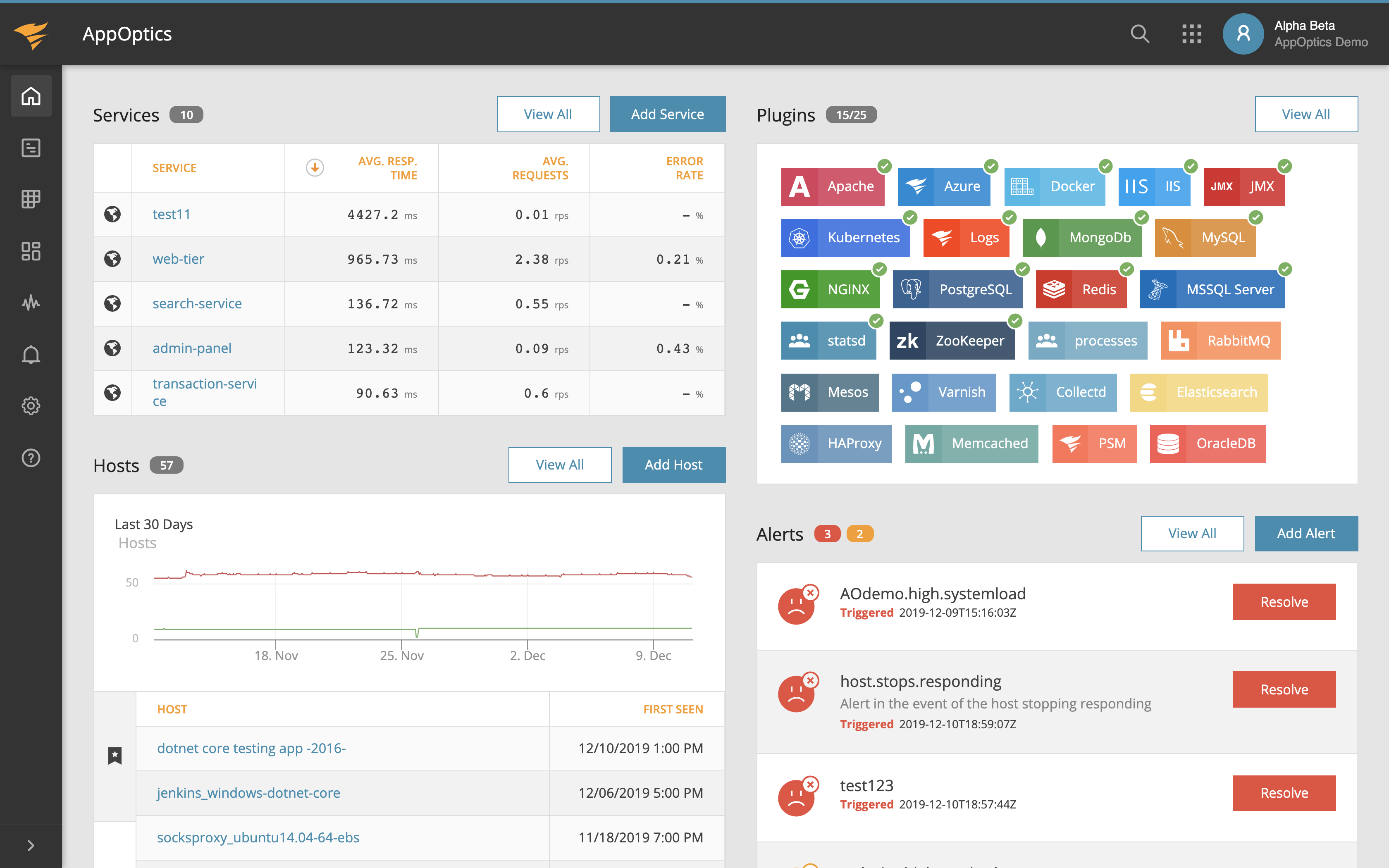   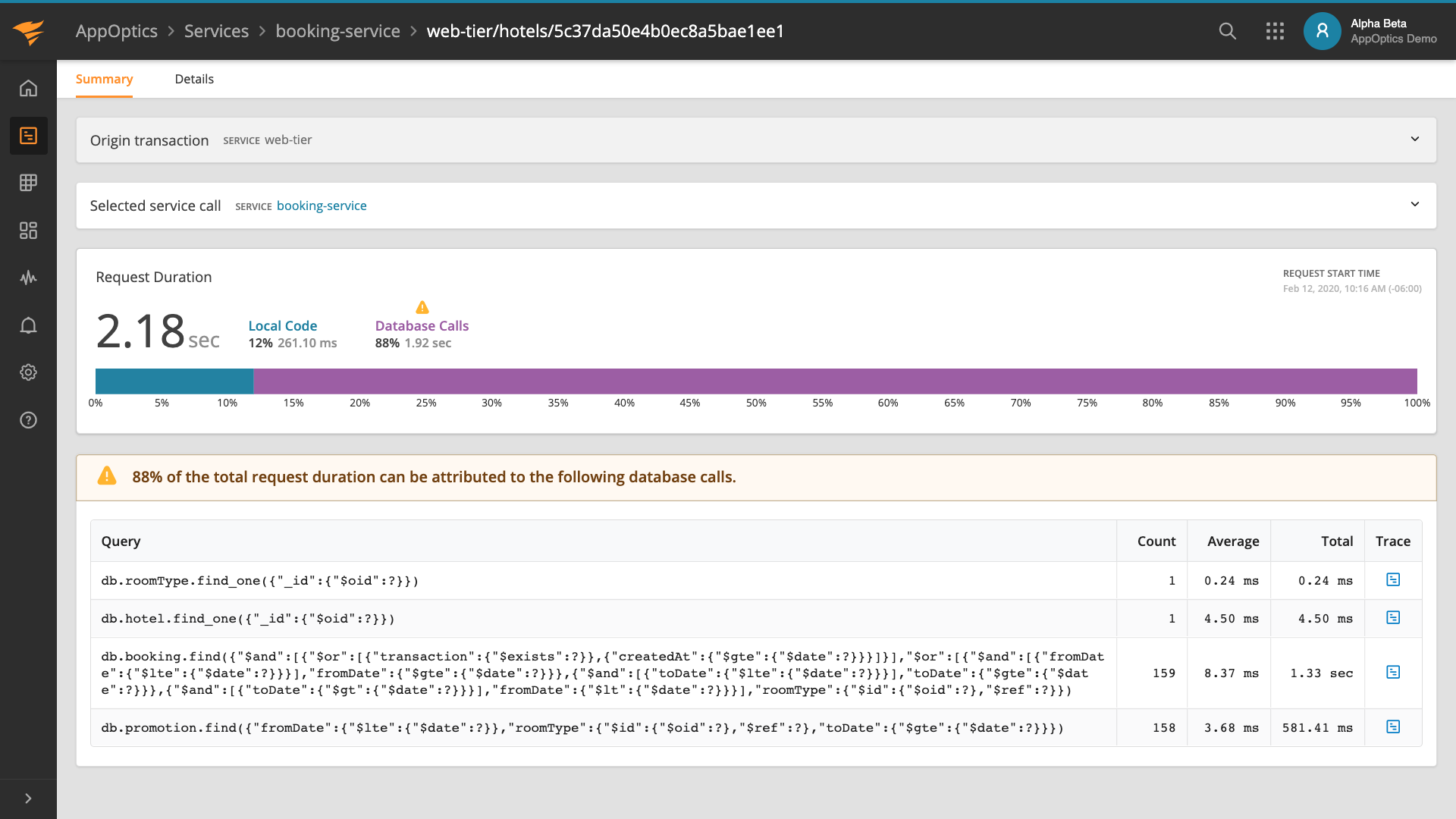   |