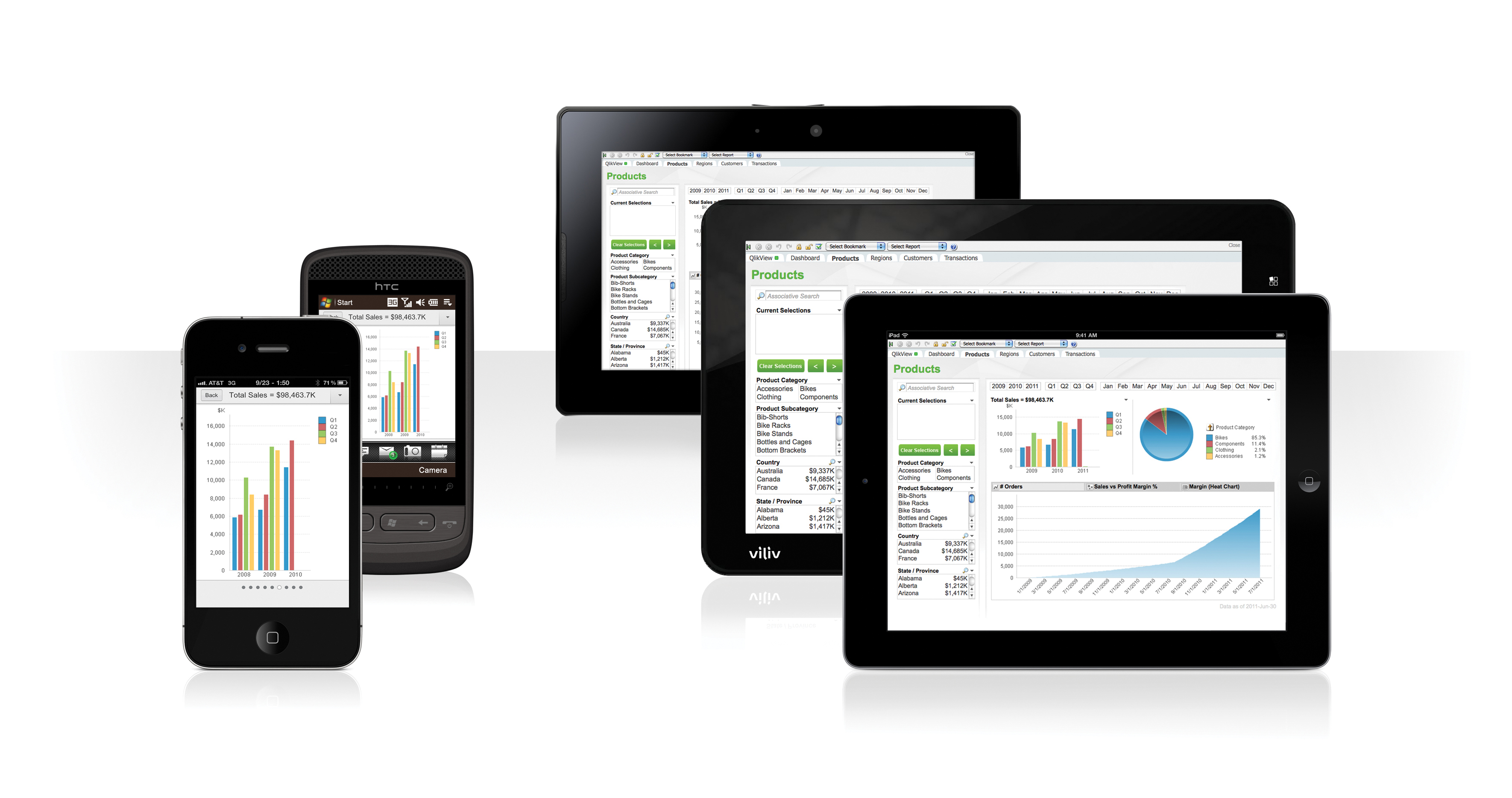
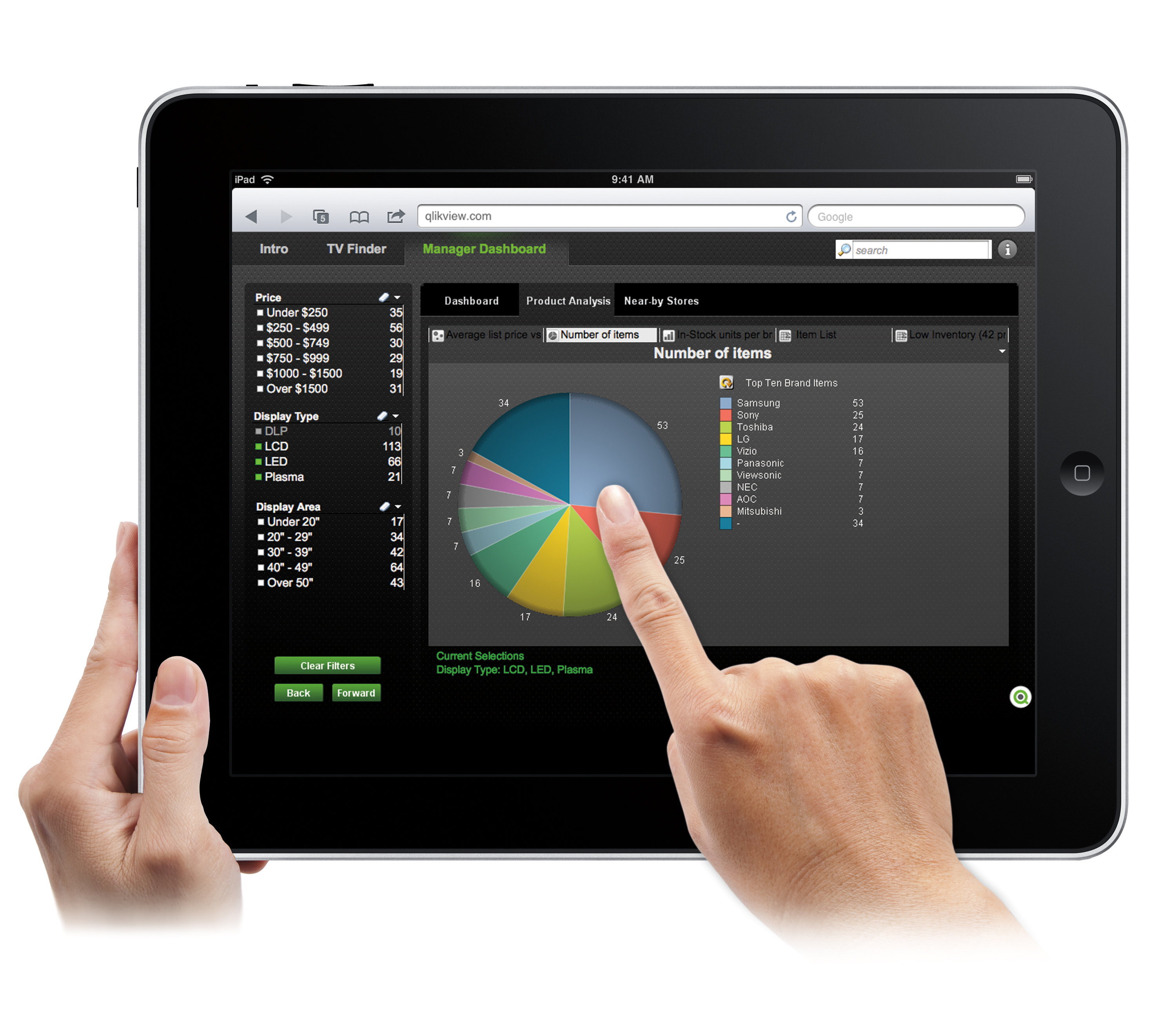
QlikView® is Qlik®’s original BI offering designed primarily for shared business intelligence reports and data visualizations. It offers guided exploration and discovery, collaborative analytics for sharing insight, and agile development and deployment.
N/A
Tableau Server
Score 7.6 out of 10
N/A
Tableau Server allows Tableau Desktop users to publish dashboards to a central server to be shared across their organizations. The product is designed to facilitate collaboration across the organization. It can be deployed on a server in the data center, or it can be deployed on a public cloud.
$12
Per User Per Month
Pricing
QlikView
Tableau Server
Editions & Modules
QlikView
Custom
per user
Viewer
$12.00
Per User Per Month
Explorer
$35.00
Per User Per Month
Creator
$70.00
Per User Per Month
Offerings
Pricing Offerings
QlikView
Tableau Server
Free Trial
Yes
Yes
Free/Freemium Version
No
No
Premium Consulting/Integration Services
No
No
Entry-level Setup Fee
Optional
No setup fee
Additional Details
On an perpetual license basis, based on server plus number of users.
Contact vendor for pricing.
QlikView can't connect to live data (in general) Licensing Costs of QlikView and Cognos are expensive. Cognos doesn't have excellent Graphics embedded within the tool
Because our big data project team wants to show highly customized visualization for their complex data and analyzed results, only Tableau Desktop can support this target. After we developed many, many dashboards and other views, we wanted to share it with different users. We …
Tableau by far has the most intuitive interface and best out of the box looks for presentation. The speed of development and ease of development is unbeatable.
I've personally have used a vast majority of the Business Intelligence products on the marketplace. I've used all of the Oracle products over the past few years. I've used all of the products in the Microsoft stack, along with Cognos, Qlikview, etc. Each are effective if your …
QlikView, Tibco Spotfire, SAS, and SAP. At the time, all cost more than Tableau for our (small) needs, SAS and SAP were in some ways overqualified in terms of breadth, and none of them had the ease of use of Tableau.
Features
QlikView
Tableau Server
BI Standard Reporting
Comparison of BI Standard Reporting features of Product A and Product B
QlikView
8.0
Ratings
2% below category average
Tableau Server
9.5
Ratings
15% above category average
Pixel Perfect reports
8.10 Ratings
9.10 Ratings
Customizable dashboards
8.00 Ratings
9.70 Ratings
Report Formatting Templates
8.00 Ratings
9.70 Ratings
Ad-hoc Reporting
Comparison of Ad-hoc Reporting features of Product A and Product B
QlikView
8.3
Ratings
3% above category average
Tableau Server
9.1
Ratings
12% above category average
Drill-down analysis
9.00 Ratings
8.90 Ratings
Formatting capabilities
7.00 Ratings
8.80 Ratings
Integration with R or other statistical packages
8.30 Ratings
9.00 Ratings
Report sharing and collaboration
9.00 Ratings
9.80 Ratings
Report Output and Scheduling
Comparison of Report Output and Scheduling features of Product A and Product B
QlikView
7.9
Ratings
5% below category average
Tableau Server
8.4
Ratings
1% above category average
Publish to Web
8.00 Ratings
9.80 Ratings
Publish to PDF
9.00 Ratings
9.70 Ratings
Report Versioning
7.50 Ratings
9.10 Ratings
Report Delivery Scheduling
7.30 Ratings
8.30 Ratings
Delivery to Remote Servers
00 Ratings
5.10 Ratings
Data Discovery and Visualization
Comparison of Data Discovery and Visualization features of Product A and Product B
Sales data validations have helped manage our justifications in the past, especially with regard to new product development and new business introduction. It has also been helpful in identifying trends with business impact and direction specific to quarter and monthly sales from ERP data as well as decisions to purchase equipment of staffing based on run rates and product demand.
One thing that can get out of hand is data output - if you aren't careful in your query, you may be overloaded with data dumps and drown in the amount of info you have to filter through. This is a user caution, not a comment on the software itself.
Tableau Server is well suited for a data warehouse build and handling big data. Tableau data aggregation, transformation, clustering capability is powerful and easy to implement. The choice of charts and visualisation tools is outstanding. Customisation and dynamic data visualisation capability is superb. The user interface takes some time getting used to.
It's good at doing what it is designed for: accessing visualizations without having to download and open a workbook in Tableau Desktop. The latter would be a very inefficient method for sharing our metrics, so I am glad that we have Tableau Server to serve this function.
Publishing to Tableau Server is quick and easy. Just a few clicks from Tableau Desktop and a few seconds of publishing through an average speed network, and the new visualizations are live!
Seeing details on who has viewed the visualization and when. This is something particularly useful to me for trying to drive adoption of some new pages, so I really appreciate the granularity provided in Tableau Server
We found that QlikView can be a bit slow in supporting some forms of encryption. It is web-based and we needed to upgrade all of our server to not support the older SSL and TLS 1 protocols, only support TLS 1.2 and TLS 1.3. However, QlikView could not run with TLS 1.2 and TLS 1.3. We had to wait over six months to get a version that would handle the newer TLS versions.
There are so many options with QlikView that you can get lost when developing a visualization. There are still items I have not yet figured out, such as labeling a graph with the name of a selected detail item.
QlikView works by pulling the data it is going to use for visualization into its database. I am a security reviewer and I need to make certain that PII and PHI is not pulled by QlikView for a visualization, otherwise this could become a reportable indecent.
While it took little time for our data analysts to crank out visualizations, it did take some time(longer than I expected) for our technology operations team to configure the server to share the sizes.
The server update process is rather cumbersome -- requires a full uninstall/re-install.
Again, while it took our data analysts next to no time to start creating, I've been in other organizations that have struggled with the feature-rich interface and complexity of the Tableau client. So, it requires the right personnel, with dedicated time, to fully leverage the tool.
Ease of use, ability to load from pretty much any data source. today I created an application that loaded time sheets from excel that are not in a table format. With Qlik's "enable transformation steps" I was able to automate loads of multiple spreadsheets and multiple tabs easily. Could not do that with any other tool.
It simply is used all the time by more and more people. Migrating to something else would involve lots of work and lots of training. The renewal fee being fair, it simply isn't worth migrating to a different tool for now.
I do think there is a steep learning curve to the program and that it requires a high level of experience or a data scientist background to fully take advantage and implement dashboards, and users will require ongoing training to maximize ROI, but it is absolutely worth it considering the impact it can make on an organization.
User experience is the most important factor to consider whenever considering capabilities for non-technical business users. If the learning curve is so steep business users must be advanced users to be productive, you hit the wall of diminishing returns, this is exceptionally true when it comes to analyzing data. Transforming data analysts into BI development experts shifts the focus of the analyst from analyzing data to mastering software. Tableau does a masterful job at minimizing the technology and maximizing the users understanding of their data.
Our instance of Tableau Server was hosted on premises (I believe all instances are) so if there were any outages it was normally due to scheduled maintenance on our end. If the Tableau server ever went down, a quick restart solved most issues
While there are definitely cases where a user can do things that will make a particular worksheet or dashboard run slowly, overall the performance is extremely fast. The user experience of exploratory analysis particularly shines, there's nothing out there with the polish of Tableau.
The documentation presented by QlikView is very clear and exact. This makes the process of implementation more easy. If any questions arise while creating the reports it is very easy to access the QlikView documents through the internet. QlikView also has a Qlik Community, full of different questions and answers. This helps a lot to resolve issues even without contacting the support team.
I think the folks that work in support are generally pretty good at what they do (when you get them on a WebEx). But the process of reporting issues to them and waiting for a response (via email only) is a hassle. I never understood why you can't just call them up and discuss the issues with them. It would take a handful of email exchanges before they would agree to a WebEx session. That was frustrating.
My team attended, but I cannot myself rate, but I think it was good as they've successfully launched a training program at our company themselves for users. It was 3-4 day training.
In our case, they hired a private third party consultant to train our dept. It was extremely boring and felt like it dragged on. Everything I learned was self taught so I was not really paying attention. But I do think that you can easily spend a week on the tool and go over every nook and cranny. We only had the consultant in for a day or two.
Training was as expected. The demo environments tend to be more fully featured that our own environment, but the training was clear and well delivered.
The sales consultants do an amazing job of introducing the tool and its capabilities. They are also helpful in explaining the layout of the desktop client and its different functionality. Keep in mind that they use a sample data source (MS Excel) with a very small amount of data to show off what it can do. What you have to remember is that you are buying the tool so that you can connect to large amounts of data (and possibly blend data together from different databases).
It has taken some time to get used to Qlikview and the backend team behind it. From understanding the new regulations on using less images and also pushing for more tools (such as full compatibility on desktop, laptop, ipad, phone). We were given training on this and have helpful tips to find analytics behind Qlikview but it is very much also a learn as you implement system.
Implementation was over the phone with the vendor, and did not go particularly well. Again, think this was our fault as our integration and IT oversight was poor, and we made errors. Would they have happened had a vendor been onsite? Not sure, probably not, but we probably wouldn't have paid for that either
With QlikView and Qlik Sense the users can answer their own questions more interactively. They also can build their own visualizations without waiting [for] someone from IT to create a new report. The users can navigate through the data finding out relevant information. Through QlikView color code, users can get aware of the relationship between the different data points.
Looker and Tableau are quite similar products. I think Tableau's ability to view data visually is more comprehensive. The different breakdowns in UTM level versus first touch and last touch are shown in a visual format, making it much easier to view and interpret the results. Tableau also has faster load times compared to Looker for larger datasets.
Speed to market is the really big thing. You can attach to multiple data sources quickly and build a consumable model for a dashboard. It doesn’t require IT talent to build. We have built more dashboards and added more users in the last year, then in our entire history. I was at a company of 30k+ employees before, and we didn't have near this level of BI adoption.
As a result, we are seeing benefits across business function. For example, within sales, our pipeline has much more visibility. It allows for much faster decisions on things like quotas. One of our biggest power users is in sales ops. She feels her dashboards load 10x faster than our previous tool and she can make changes on the fly.