Chose Sitecore Digital Experience Platform
The XM cloud technology stack is ahead of the platforms and its data structure is easier to learn.

| Product | Rating | Most Used By | Product Summary | Starting Price |
|---|---|---|---|---|
 Sitecore Digital Experience Platform | N/A | The Sitecore Experience Platform (Sitecore XP) is a digital experience platform used to build websites and create customer experiences online. The solution boasts fast content authoring, built-in personalization features, testing and other optimizations, as well as analytics and marketing features. | N/A | |
 Umbraco CMS | N/A | Umbraco is an open-source .NET Core CMS with over 700,000 active installs worldwide and with more than 200,000 active community members. It was first released on February 16th, 2005, and is still to this day an open-source project backed by a commercial company. To ensure Umbraco is always running the latest technology, the company has aligned with Microsoft's .NET release schedule to always have the Umbraco CMS… | $0 |
| Sitecore Digital Experience Platform | Umbraco CMS | |||||||||||||||
|---|---|---|---|---|---|---|---|---|---|---|---|---|---|---|---|---|
| Editions & Modules | No answers on this topic |
| ||||||||||||||
| Offerings |
| |||||||||||||||
| Entry-level Setup Fee | No setup fee | No setup fee | ||||||||||||||
| Additional Details | — | The Umbraco CMS and all of its core features are the same across all plans. | ||||||||||||||
| More Pricing Information | ||||||||||||||||
| Sitecore Digital Experience Platform | Umbraco CMS | |
|---|---|---|
| Considered Both Products |  Sitecore Digital Experience Platform  Vincent Lui Solutions Architect Chose Sitecore Digital Experience Platform Adobe Marketo Engage is a fantastic product for managing campaigns and audience segmentations syncing with Adobe Audience Manager. It also has OOTB connectivity to very popular CRM platforms. Adobe Analytics and Adobe Target are pretty similar to Sitecore CDP/Personalize. Any …  Vickie Bertini Solution Architect II Chose Sitecore Digital Experience Platform Really the only comparable product to Sitecore DXP is Adobe Experience Manager. Both are very well established and robust content management platforms. Products like Contentful and Contentstack are very lightweight and do not have as many built-in features like DXP, so it is …  Zaheer Tariq Web Tech Manager Chose Sitecore Digital Experience Platform Its is simply by far the most advanced system. Using other CMS you will soon be blocked with advanced customizations specially to their back office but Sitecore enables you to do whatever you want and hook into the pipelines and embed your own code/business logic.  adam wolf CTO (Chief Technical Officer) Chose Sitecore Digital Experience Platform Adobe Experience Manager, Acquia Digital Experience Platform, Optimizely Content Management System, WordPress and Kentico Xperience  Erica Marois Community Strategist Chose Sitecore Digital Experience Platform WordPress and Wix are great solutions for a small business or a solopreneur who's just looking to get a simple website up and running. For larger businesses with more robust content, I think Sitecore offers a bit more flexibility. Wix and Wordpress are both really simple to get …  Pooja Sawant UX Designer/Researcher Chose Sitecore Digital Experience Platform Wordpress is easier than Sitecore. Drupal has more functionality and more support. Joomla also has more support.  s c Customer Support Engineer Chose Sitecore Digital Experience Platform Launchrock, Webdam, eZ, crownpeak, SignalMind  Laxmi Srinivas Samayamantri Techical Project Manager; Digital Architect, Sitecore Architect Chose Sitecore Digital Experience Platform Based on my perspective these are the main reasons for choosing Sitecore over others.
 Alex Lada Tech Director Chose Sitecore Digital Experience Platform Of all the competitors listed above, Sitecore owned, by far, the best combination of power, easy-of-use, and extensibility. It easily outperformed the other paid-for CMS systems. Its power is especially noticeable in its ability to handle very complex workflows, security …  Nancy Martineau Art Director/Webmaster Chose Sitecore Digital Experience Platform Even though sitecore is not an open source program it's offering was valuable enough to make us choose it.  Laura Bruss Senior Production Coordinator Chose Sitecore Digital Experience Platform I have used an in-house CMS and the Amaxus CMS. Sitecore is a great balance of these two. The in-house CMS was VERY user friendly, for the least technical client. It showed the actual page you were editing and allowed you to basically edit the text on the page, no HTML …  David Drinnon Director of Information Technology & Assistant Pastor Chose Sitecore Digital Experience Platform For us, Sitecore was all about the integration possibilities and a CMS that empowered our staff to get their information published online in a timely fashion. At the time SiteFinity was still early in its development. Sitecore was a more mature product with many more features. |  Umbraco CMS  Lori Jerome Digital Content Manager Chose Umbraco CMS Someone else selected before I came on board but I was open-minded and willing to give it a try.  Janus Kamp Hansen Developer Chose Umbraco CMS Episerver CMS and Sitecore Web Content Management  Jakub Wilk President & Co-Founder Chose Umbraco CMS We chose Umbraco because of their technology, and it was better than our previous CMS, Orchard, which was too complicated even for programmers. Orchard was very good but to develop something it required a really strong knowledge of this framework. In Umbraco it seems to be …  Debbie Marshall Operations Manager Chose Umbraco CMS We previously used Wordpress, however this was not easy to use, it was a complicated system and was limited in what we could achieve, there was a big outlay in buying bolts on and ensuring the system was safe. We found we where spammed loads, we tried to make it work however …  Jason Kelly Data Manager Chose Umbraco CMS Both are comparable. We selected Umbraco CMS because it used .NET instead of PHP. I would recommend choosing the CMS that your staff and technical people will be the most comfortable with. Alex Lada Tech Director Chose Umbraco CMS Umbraco provides the best bang-for-the-buck CMS option on a .NET platform for those that cannot afford Sitecore. It is much friendlier to use than Ektron, is free to use, has commercial grade plugins that are not overly expensive, and provides the functionality that most …  Matthew Hardesty Founder Chose Umbraco CMS Umbraco vs WordPress Umbraco has more flexibility and customization options, but less features, reliability/stability, and community support. WordPress offers less customization for data and content, but it is immensely more stable, has better features /plugins, and includes an …  Filip Witkowski Web Developer Chose Umbraco CMS There is not really an alternative when it comes to CMS based on ASP.Net (MVC4 with Razor). There are a few frameworks, like Booststrap; however framework is not content management system. I will compare it to Drupal, because the second one is well known. Against Drupal, … |
| Sitecore Digital Experience Platform | Umbraco CMS | |||||||||||||||||||||||||||||||||
|---|---|---|---|---|---|---|---|---|---|---|---|---|---|---|---|---|---|---|---|---|---|---|---|---|---|---|---|---|---|---|---|---|---|---|
| Security |
| |||||||||||||||||||||||||||||||||
| Platform & Infrastructure |
| |||||||||||||||||||||||||||||||||
| Web Content Creation |
| |||||||||||||||||||||||||||||||||
| Web Content Management |
| |||||||||||||||||||||||||||||||||
| Results and Analysis |
| |||||||||||||||||||||||||||||||||
| Digital Experience Platform |
|
| Sitecore Digital Experience Platform | Umbraco CMS | |
|---|---|---|
| Small Businesses |  Bloomreach - The Agentic Platform for Personalization Score 8.5 out of 10 |  ManageWP Score 10.0 out of 10 |
| Medium-sized Companies |  RWS Tridion Sites Score 9.0 out of 10 | RWS Tridion Sites Score 9.0 out of 10 |
| Enterprises | RWS Tridion Sites Score 9.0 out of 10 | RWS Tridion Sites Score 9.0 out of 10 |
| All Alternatives | View all alternatives | View all alternatives |
| Sitecore Digital Experience Platform | Umbraco CMS | |
|---|---|---|
| Likelihood to Recommend | 9.4 (0 ratings) | 6.0 (0 ratings) |
| Likelihood to Renew | 9.0 (0 ratings) | - (0 ratings) |
| Usability | 9.1 (0 ratings) | 8.0 (0 ratings) |
| Availability | - (0 ratings) | 7.0 (0 ratings) |
| Performance | - (0 ratings) | 3.0 (0 ratings) |
| Support Rating | 9.0 (0 ratings) | 2.0 (0 ratings) |
| Online Training | 10.0 (0 ratings) | 3.0 (0 ratings) |
| Implementation Rating | 9.1 (0 ratings) | 7.0 (0 ratings) |
| Product Scalability | - (0 ratings) | 4.0 (0 ratings) |
| Sitecore Digital Experience Platform | Umbraco CMS | |
|---|---|---|
| Likelihood to Recommend |
|
Jason Kelly Data Manager |
| Pros |
|
Filip Witkowski Web Developer |
| Cons |
|
Alex Lada Tech Director |
| Likelihood to Renew |
| No answers on this topic |
| Usability |
Vickie Bertini Solution Architect II |
|
| Reliability and Availability | No answers on this topic |
Matthew Hardesty Founder |
| Performance | No answers on this topic |
Matthew Hardesty Founder |
| Support Rating |
|
Matthew Hardesty Founder |
| Online Training |
|
Matthew Hardesty Founder |
| Implementation Rating |
|
Matthew Hardesty Founder |
| Alternatives Considered |
Vincent Lui Solutions Architect |
Debbie Marshall Operations Manager |
| Scalability | No answers on this topic |
Matthew Hardesty Founder |
| Return on Investment |
Zaheer Tariq Web Tech Manager |
Filip Witkowski Web Developer |
| ScreenShots | Umbraco CMS Screenshots    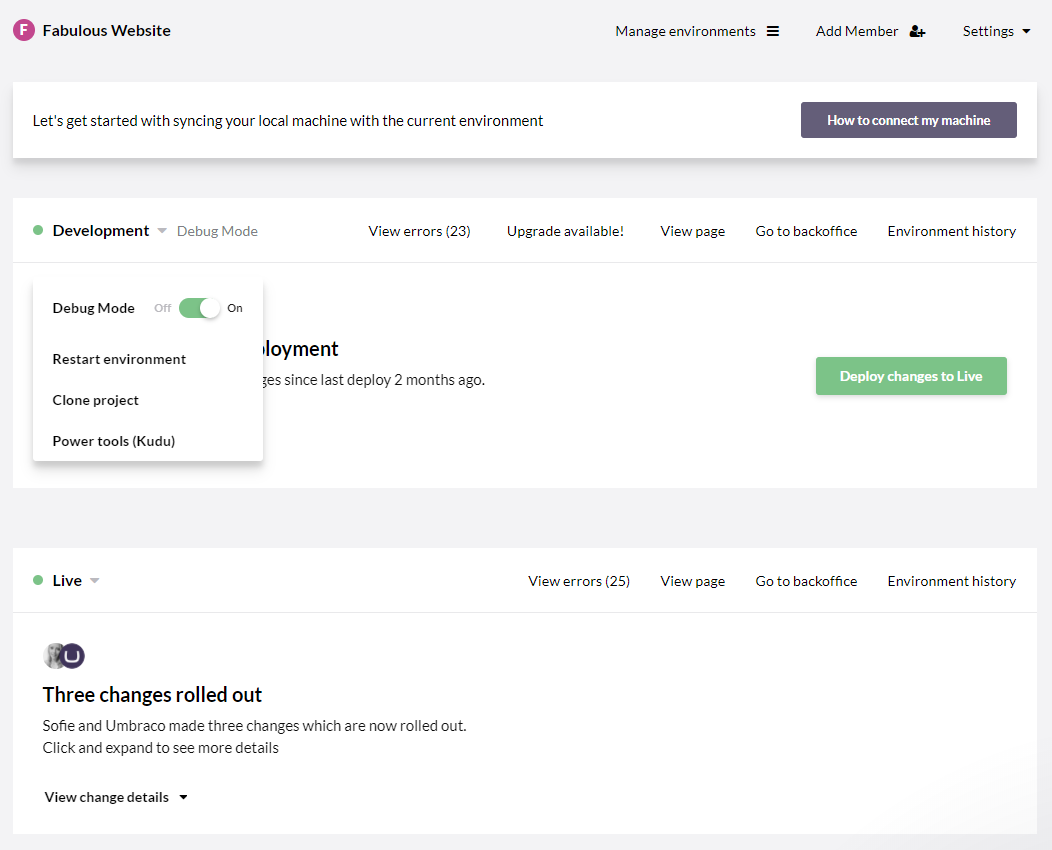 |