OneStream is an enterprise finance platform that unifies financial and operational data, embeds AI for better decisions and productivity, and can extend to meet the evolving needs of businesses without adding technical debt. Presented as an operating system for modern Finance, it unifies core financial functions and empowering the CFO to become a critical driver of business strategy, innovation, and growth. It is a cloud-based platform that modernizes the Office of the CFO. The…
$0
Workday Adaptive Planning
Score 7.8 out of 10
Mid-Size Companies (51-1,000 employees)
Workday Adaptive Planning streamlines planning workflows, using AI and real-time data integration to improve collaboration and provide predictive forecasts for better strategic analysis.
N/A
Pricing
OneStream
Workday Adaptive Planning
Editions & Modules
Free
$0
Basic
$12
per month billed annually
Basic
$15
per month
Standard
$32
per month billed annually
Professional
$39
per month billed annually
Standard
$39
per month
Professional
$49
per month
Enterprise
$83
per month billed annually
Enterprise
$99
per month
No answers on this topic
Offerings
Pricing Offerings
OneStream
Workday Adaptive Planning
Free Trial
No
Yes
Free/Freemium Version
Yes
No
Premium Consulting/Integration Services
No
No
Entry-level Setup Fee
Required
Optional
Additional Details
The solution is only for Enterprises. Pricing for software is based on number of total users and one user gets all software functionality. Implementation would be based on what business problem or problems the solution will be used to solve, such as financial consolidation and reporting or planning or account reconciliations, etc.
Specifically talking with OneStream is very useful and considering easy to access more standardized and help to easy to navigate. Most common is user friendly and best financial planning tool which I ever seen! Compare with other tools OneStream provide best excel integration …
OneStream appears to be the best-in-class solution. Still, SAP Analytics Cloud integrates so seamlessly with SAP that it's tough to justify going "out of the family" when you're already deeply integrated with SAP.
For me, the choice for OneStream is due to the amount that can be configured and pre-configured which allows us to create standard and reusable content. This speeds up our service delivery.
OneStream is much more robust, has functionality around creating financial statements in Common Currency which other systems we used could not handle. OneStream has a really good structure around it. We believe it's a much better fit for a Global company of our size. We're just …
Compared to some of the options we researched, OneStream is a much more modern product in the way it combines the different capabilities of intense calculations, highly customizable dashboards, great narrative reporting as well as the much loved Excel plug-in capability. We …
The performance gains with OneStream alone are a reason to switch from Oracle, but the versatility of the application is the icing on the cake. Versatility is added by the additional dimensions, the customizable dashboards where you can plan for Revenue and Expenses, People …
OneStream gave me my life back. Working in outdated Essbase for closing the books & Forecasting it would take us 10-12 days working 12 - 16 hour days. 2020 we went to OneStream. I have not worked a weekend since, closing and forecasting went to 5-7 days working 8-9 hours a …
IBM Analytics seemed quite competitive. OneStream was selected because it has the consolidation and planning functionalities in the same cube. Overall cost for implementation and use were lower. Lucanet and Anaplan seemed to have less flexibility to adapt the planning …
OneStream had a lot more capabilities as an all rounder tool that could leverage Actuals, forecast planning plus the other features like Tax and Transaction matching. OneStream also offer a Marketplace where a lot of bolt on modules are available for free with only some …
OneStream is the only one that seamlessly integrates close/consolidation with budget and planning in one tool. It integrates easily with ERPs and supports full financial statement AND management reporting
OneStream offers a comprehensive toolset to facilitate most modeling requirements. Our primary focus for selecting onestream was to facilitate a fast, robust and fully auditable consolidation tool that would meet our growing business requirements. OneStream has delivered on all …
OneStream is able to integrate faster and has a broader scope of newer technologies which makes it interact with other systems much more efficiently and seamlessly.
OneStream combines functionality that is normally spread over multiple solutions with other vendors, and provides an integration that previously could only be achieved via complicated technical structures to integrate and combine solutions for actual reporting and planning on …
OneStream single unified platform capabilities are outstanding. The flexibility around OneStream has allowed us to mold OneStream into our business model, whereas, I felt SAP forced us into their model. As an analyst, the reporting capabilities are my bread and butter and they …
I think HFM is very good at consolidation as well, but it is less flexible, not a platform, not as modern (look-and-feel), not as fast. In my opinion, OneStream stands out in the platform thinking. You have one licence which you can use for consolidation, tax, FP&A and even ESG …
OneStream is still being further developed and improved. Their marketplace provides some nice pre-built solutions. These are not as common with competitors. OneStream has a helpdesk that customers can reach out to instead of going through a middle man like consultants or …
OneStream is quite updated comparing with BPC. It has instant updates and it has more features like quick view, cubeview, dashboards, BI, Task scheduler. It's good for businesses to use it with a wide range of options to make their business decisions in short times. OneStream …
OneStream is the overall clear winner against HFM. There are a few things HFM does better (a couple things in Smart View), but it just doesn't have as much capability. The single, integrated platform that OneStream is provides a massive upgrade from HFM.
Hyperion HFM was a previous market leader in the EPM space but the OneStream FX platofrm far surpasses its offerings from Dashboarding, Workflow, Planning and forecasting all in one platform which under Hyperion was bundled in separate modules.
Workday Adaptive Planning is similar to payroll and workforce management by implementing constant and new changes to finances, workplace changes and the people changing in rolls and employment. Both tools are very useful and practical in a company setting and mainly in …
Like I said in a previous question, the fact that there was downtime that was needed to update all the data that was entered in a day was not ideal. This caused for hours lost on the data update and didn't allow our leaders to see the affects immediately like Workday Adaptive …
Overall being familiar with the Workday Adaptive Planning tool's flexibility and ease of use our finance and ops team saw this as the easiest and most robust tool that they could admin and maintain without outside IT resources.
In my opinion, Spreadsheet Server is not even in the same game as Workday Adaptive Planning. While it is flexible in Excel, it still requires a lot of back and forth for analysis.
Our previous platform was patchwork tools and unintegrated. We were clunky and poorly organized. The system was slow and
difficult to use, and it was either overhaul it or start over. We evaluated our
options holistically and went with Workday. It works better and faster, and …
Workday provides adaptive and intuitive planning that does not has disruptions when there is any change in system or migrations of servers, users or systems. Workday integrates with CRM, ERP and other database engines to source data and provides insights that can be exported to …
It doesn't have the same standard fulfillment modeling as the true workforce planning products, it equals the other core HCM systems and beats them on ease of use.
Workday Adaptive Planning is not as robust as SAP Ariba, but it is certainly better than BadgePass. The trouble with BadgePass is that it can be a but clunky in some modules that seem like clear bolt ons to the main product UI. Whereas, Ariba was clearly built to satisfy …
Workday became our choice because it is fully web-based and easily integrates with other systems. The learning curve for Workday was shorter than that of Dynamics. The reporting tools in Workday are more user-friendly than that of Dynamics. However Workday did not have Check …
From our initial findings, Workday Adaptive seemed like it was going to be easier to get up and running out of the box and fit the needs of our company more.
The main thing that sets [Workday] Adaptive [Planning] apart is the fact that it is a cloud based software, user friendly, and allows you to add to or change the model relatively easily. Hyperion is a good tool also but there is more flexibility with [Workday] Adaptive …
Workday is the only software system (outside of Excel) that has been used by Vera to do our planning and analysis. We have just opted to move to Workday Adaptive Planning for our accounting system, payroll, and supply chain with the hopes that it will make our planning that …
All of the systems have their own unique strengths and weaknesses. Workday Adaptive Planning as a system is further along in overall functionality and is a more user-friendly system compared to other EPM systems on the market.
We did some analysis of Anaplan, but it seemed they were built for much bigger companies. It did not seem like we could implement and maintain Anaplan without significant IT support, which was one of the main goals of the project. Anaplan did seem like it could have more …
OneStream is best suited for medium to large companies that find themselves doing a wide variety of manual processes during their financial close cycle will get the most benefit. That does mean a lot of change so there has to be very intentional communication around change management in order to get the buy in that is necessary for success.
In a previous company, I was hired based on my experience with Workday Adaptive Planning. After being hired and reviewing the company, I quickly determined they were not large of enough of a company to need the program. Instead, we made better Excel budget templates, utilized OneDrive and created a better experience without the cost. Left the job after 9 months because I worked my way out of the position. My next role I looked for bigger companies and had better success with implementation.
Consolidation engine is powerful, we have around 500 entities translating from multiple source currencies into a common currency at good speed.
We leverage the Flash and Quarterly forecast providing users with pre seeded data so they only need to make tweaks rather then filling in a lot of manual forms.
We use Transaction matching for processing a lot of intercompany matching invoices from the ERP systems which helps end users a lot. Data is fed in from source ERPS and TXM generates the auto matches based on criteria provided.
We have a custom Tax module which we use to pull in tax entries from the consolidation side and this gives the Tax teams starting position for their tax calculations and enables them to also do a quarterly forecast estimate.
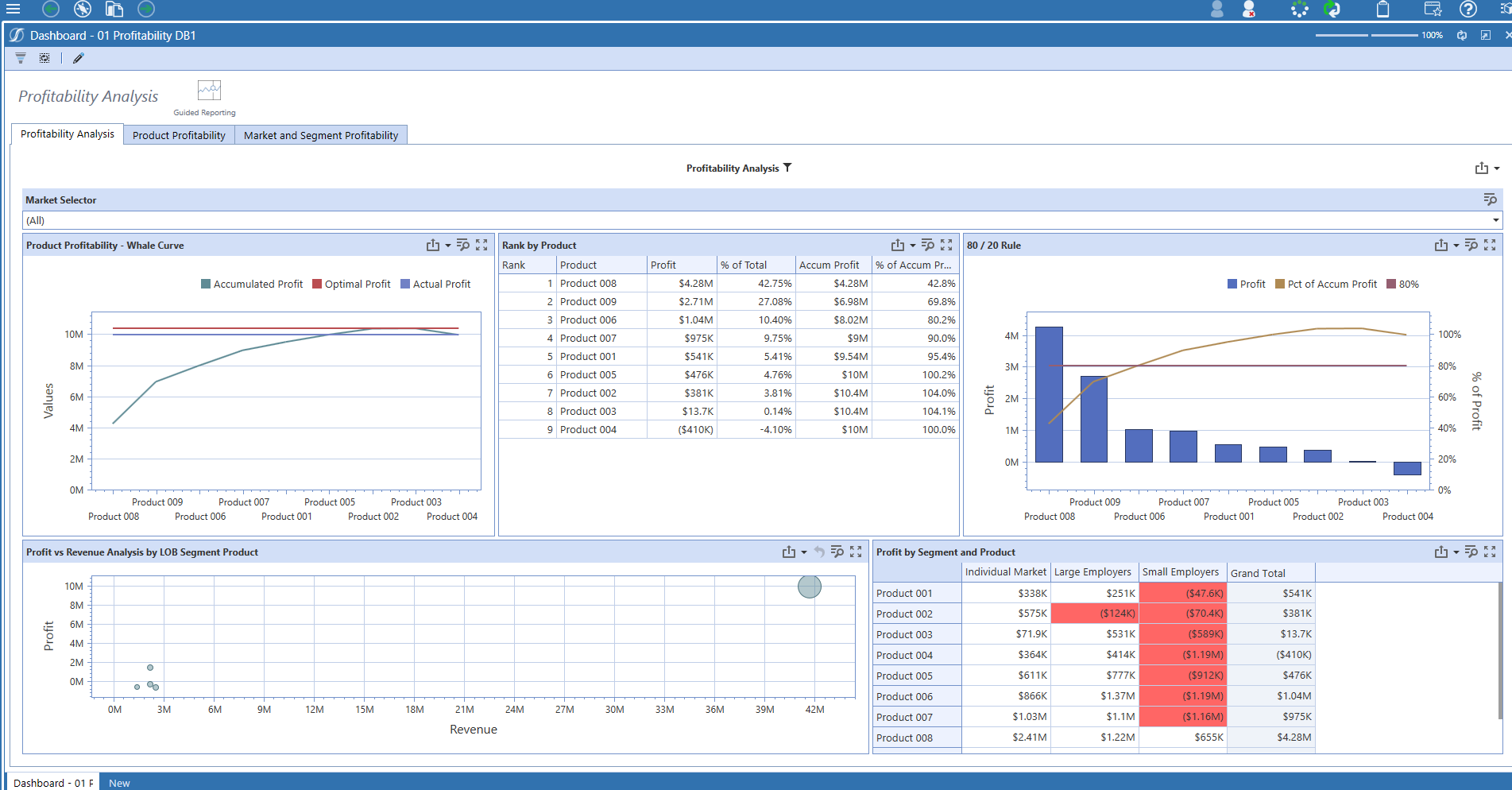
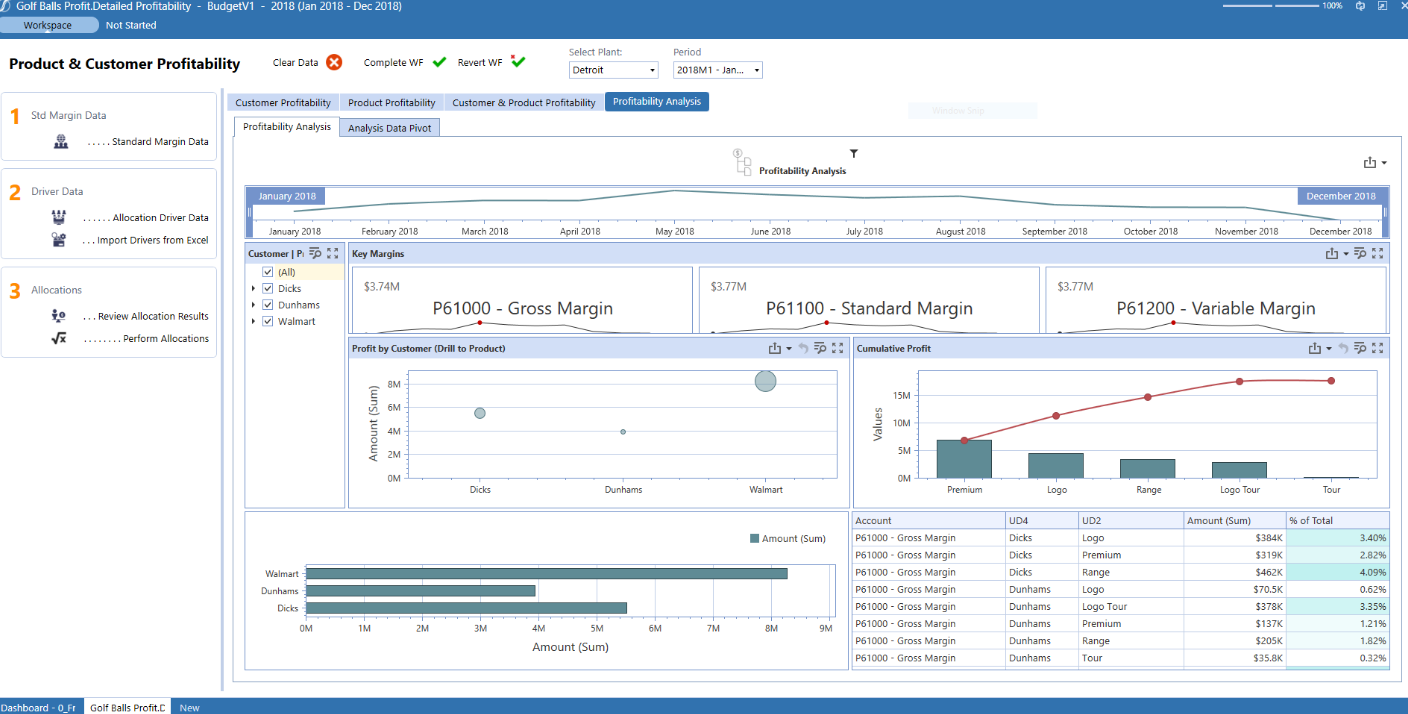
OneStream has great dashboarding capabilities for a whole range of use cases from charts and graphs, to drill-back data to running even steps that users can execute without having access to the source code/rules in the background!
Version Management. Adaptive lets us manage many versions/scenarios all in one platform with the robust ability to compare them to each other.
Processing Performance. With the Elastic Hypercube technology that was implemented a few years back, we can watch changes flow through a complex web of formulas and arrive at an answer within seconds.
Audit Trail. Our administrators love the ability to see and report on who made what changes when, which leads to real accountability within the organization.
Provide some more prebuilt dashboards that serve as reference examples for specific topics, to allow users to gain an idea of all that is possible
Provide some clear cut explanations to explain some of the standard concepts, to allow companies that start their implementation to gain a quick understanding of how things work
Web reports and sheets are not great for in-depth reporting, and require the use of the OfficeConnect for Excel plugin and, therefore, the use of Excel for extensive reporting capabilities.
It has limited formula functionality in some instances, requiring again the use of OfficeConnect for Excel for extensive calculations.
I would like to see new planning sheet types or upgrades to existing sheet types; functionality has been the same for over 10 years.
Currently we are using OneStream with people 80 - 100 to load the PL, BS , Forecast budget and People Planning. OneStream give us more visibility on trend and way forward thinking. Thanks to OneStream for the tool which helps the business in growing way. Thinking of innovation OneStream is right path.
For one we're in way too deep to not move forward with Adaptive. We're integrated with Workday, we do a ton of reporting with Adaptive, and it's working very well for planning and forecasting. No reason to look back or change course.
Overall usability as an end-user is very easy. There are more people in the system getting information now than the prior platform used. People are gathering their information quicker as well. From an administrator standpoint, there are fewer glitches and issues than the prior platform. This is very good.
Workday Adaptive Planning has detailed online help with both articles and videos that are comprehensive. It has a lot of similarities to Excel, which most finance people are already familiar with, plus the user interface is intuitive and easy to pick up. The online support team is quick to respond and very knowledgeable.
There haven't been any lately. The only one issue I can think of is when there was an update in Adaptive that altered our reports. Before I realized there was an issue, Adaptive reached out to let me know, so that it could be fixed.
All aspects of Adaptive Insights perform well. One area that I wish was quicker was integration. When importing data from Intacct our accounting ERP platform, it can sometimes take 4 hours for the import to process. The earlier imports are done, the quicker they complete. My estimate for a quick upload is about two hours.
OneStream support is focused on the infrastructure. Which means mainly when there issues with accessing to the system, they will be able to help. When the question is to much leaning towards functional it really becomes billable. The other issue is that the response time is not optimal. There is a lot of pingpong of messages and the time between the message can sometimes be long. Sometimes this result into a simple ticket to be taking days before it is closed.
Whenever we have had any questions, issues, or concerns, the support has been quick and thorough. [This] allow[s] us to be able to fully resolve any issues, or be connected with the right group quickly to attain the result we were after; be it from simple formatting to adding new detailed reporting.
This was extremely helpful so that they could walk you through the model and teach you more about the complexity of various areas. It is most helpful when it is specific to your organization's model. The larger in-person trainings were helpful but they tended to be more generic and entry level. The trainings that are more tailored to your specific needs are the most helpful.
onestream offers a range of training. I have attended a number of trainings. During the trainings a vast amount of information is discussed. The trainings also include exercises. The speed of the training is pretty high. When reviewing the training material afterwards, I found that the material is not complete as reference as it relies also very much on the verbal explanation and elaboration.
They often times tended to be way too generic or entry level. They would also become sales pitches to upgrade or get new Adaptive Planning products. The questions in the training would be very niche and specific to other organizations. They were rarely helpful to the group at large.
Trust the expertise of very strong 3rd party implementers. Having deployed Adaptive at a separate company before, I thought I knew it all (hubris, I know). Fortunately, I began to (very quickly) trust the judgment of our Carlson implementation team, and they provided invaluable insights and best-in-class processes that have benefitted me and my team greatly.
OneStream is much more robust, has functionality around creating financial statements in Common Currency which other systems we used could not handle. OneStream has a really good structure around it. We believe it's a much better fit for a Global company of our size. We're just scratching a surface of what the system capabilities are.
For best-in-class capabilities, you'll very likely need to split the various HR and financial systems into separate systems rather than using a consolidated platform like Workday. However, a consolidated platform provides benefits by being a single location for employees and a single system for IT developers to work with. This would need to be compared to employee efficiencies gained by working with better systems.
We went from 2 users to 70+ users over a 2 year period of time. The application scaled wonderfully. 65 of those users were non-finance users so they were able to quickly learn the software and prepare budgets quickly and efficiently. That is the power of Adaptive and its ability to scale
Customers have moved from multiple EPM systems as well as multiple EPM applications to OneStream.
Their ROI has been quite high as lesser admins are required, no need to move data back & forth, no need for an additional dashboarding / BI tool, once a user is on OneStream can leverage it for more than 50+ use cases at no additional license cost.
Automation, direct integration, scheduling, complex calculation capabilities, all help to further improve ROI and free up the time for the team to do value-adding tasks.
Last but not the least is the confidence on the numbers is much higher.