Adobe Experience Manager is a combined web content management system and digital asset management system. The combined applications of Adobe Experience Manager Sites and Adobe Experience Manager Assets is offered by the vendor as an end-to-end solution for managing and delivering marketing content.
N/A
Yext
Score 8.9 out of 10
N/A
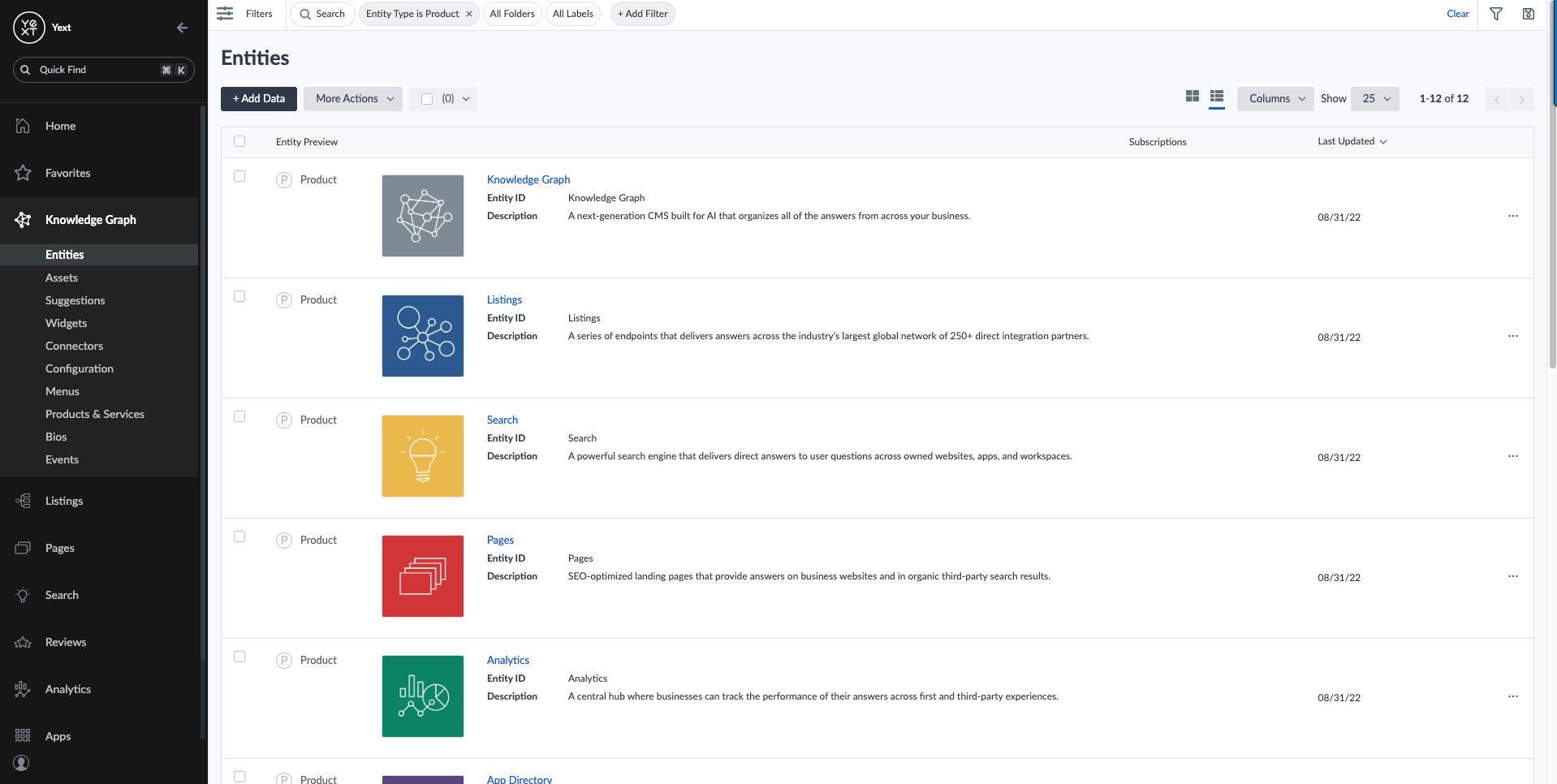
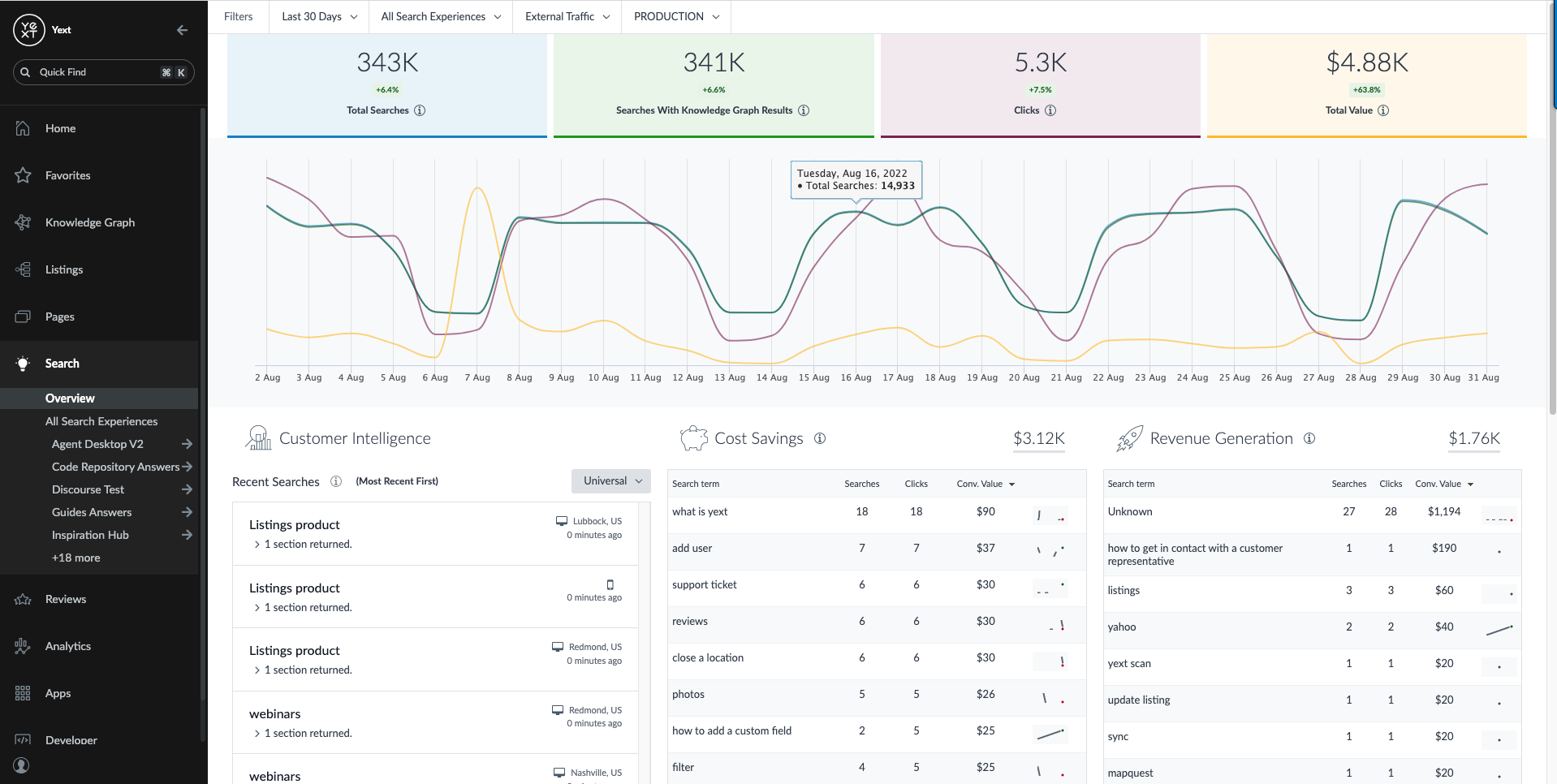
Yext is a digital experience software provider headquartered in New York, New York.
N/A
Pricing
Adobe Experience Manager
Yext
Editions & Modules
No answers on this topic
Offerings
Pricing Offerings
Adobe Experience Manager
Yext
Free Trial
No
Yes
Free/Freemium Version
No
No
Premium Consulting/Integration Services
No
No
Entry-level Setup Fee
No setup fee
Optional
Additional Details
—
The cost of Yext varies depending on a number of factors such as package type, business size, entity count, and more. To create a solution that fits your business goals, please contact us or request a demo.
More Pricing Information
Community Pulse
Adobe Experience Manager
Yext
Considered Both Products
Adobe Experience Manager
Verified User
Anonymous
Chose Adobe Experience Manager
End to end capabilities as well as integrations with upstream and downstream systems to make work flows, easier and faster time to market

SSO is one fits all, so we don't have to have a separate SSO for each application of Adobe The integration with Analytics works perfectly and bring directly value really quickly Target remains more complicated to set up, but can also bring a lot of value once integrated with …
Adobe Experience Manager is what I use most frequently. While the other tools I listed above are important, they are ultimately a secondary tool utilized on a need by need basis where as AEM is what we use daily for content creation, content updates, content optimization, etc.
AEM is comparable to Sitecore and less agile than Bynder, but Adobe products were already being used across the org and adding AEM allowed us to link it all together.
Before Yext, I used Moz Local to manage our business listings. Moz Local had fewer listing platforms included with their service. For example, Moz Local did not include Yahoo, and we had issues with inconsistent Yahoo listings. We ultimately switched to Yext and it's been a …
We initially chose Yext because it provided the greatest control for our multiple listings. Plus, it had access to the most publishers. However, when evaluating Synup we were very impressed. You would not go wrong to choose either!
We use Yext and all the other products mentioned here. Yext overlaps a bit with Brightlocal, but Brightlocal acknowledges Yext and thus makes it easy to avoid duplicated work. Each service provides a unique service that we use with our clients. We have been with Yext since …
Moz Local does not have as good of listings coverage as Yext and their platform does not work as well for at scale changes. Moz Local also does not have the same powered listings partnerships that Yext has for instantaneous changes. For smaller enterprises where there are fewer …
Fazoli's is using Yext for response, generation, publishing, analytics, and the knowledge assistant. We implemented a review response strategy out to all our field users and have seen tremendous success from that program. The proposal from Rio Seo only included review …
I looked at a few other competitors and they were significantly cheaper. But they offered fewer directories and fewer additional services. Yext is always expanding their offerings and the other guys seem to be just focused on the SEO benefits, where I see the logistical, …
We didn't know about BirdEye until after working with Yext. Definitely excited to work with them and see how their solution stacks up. It seems to be Yext but much more robust and hopefully actually functional. The bedside manner at Yext was the most unprofessional I have ever …
We ended up with Yext after 3 years with a smaller organization because we selected Broadly for our overall SEO management software, and Yext was part of the package. Very happy with this additional service.
Moz Local is a primary alternative to this platform. And while it's not nearly as powerful, customizable, or wide-reaching as Yext, its price point is probably more appropriate for smaller businesses/agencies.
Unlike Yext, which is a subscription model, Whitespark allows you to pay once to disseminate your information throughout their network and offers a very reasonable price to send any updates through the network if your NAP data has changed. Yext offers annual agreements and a …
Yext allows us to update information across all platforms and keep visitors up to date with what is happening at our client's hotels. SEMRush and Ahrefs do not have this feature in their software making it necessary to have Yext. The customer service at Yext is also incredibly …
My company initially used Moz Local to manage our online listings and after we had 10 clinics open, we made a change and switched to Yext. Yext is a lot more user friendly and cost effective. You also have the added benefit of working directly with an Account Manager who can …
Yext Knowledge Manager ranks above all other listing management platforms such as MozLocal, Rio SEO, BrightLocal etc with regards to the service they provide. They offer much faster updates, accurate data sync, allow scheduled updates, powerful templates, featured message sync.
I'll answer the second one because I mean, the first one I don't have an issue with. The second scenario is we oftentimes have the need to spin off very small campaign style sites or sites that generate leads but are unbranded and that sort of thing. So that's hard to do in AEM because you have to then create another organization within AEM to do that. And we're talking about sites that are maybe five to 10 pages in size. So we've been investigating Edge, but then that's a different workflow, so we'd have to train people on that. So it would be nice if there was something within the AEM structure that could allow you to do something very similar to Edge, where you make some small micro sites that are not necessarily branded, that you could still host within the platform and not have to retrain everybody on a completely different platform.
Yext is great for bigger clients. If your client has a franchise of any kind, or even multiple locations, that's an ideal use case. For smaller clients, with one location that doesn't change a lot, Yext isn't as viable, and the effort to update maybe ten or fifteen listings would be worth it.
It allows us to scale so that we can make a change on a global footer. And it applies to all of the different property websites. It allows us to set up components and compartmentalize things in a way. The big thing is that it's scalable. And then it also ties into Adobe Analytics and other Adobe products. So we are a complete Adobe shop. Every Adobe product that we can use, we use. I don't think we do it for marketing so much, but for doing target testing and analytics, data scientists are using the same product and so it all speaks.
easier way to make universal changes for multiple websites at a time (ie pushing out a new experience fragment to all as opposed to having to individually add to each site)
easier way to get site images to look and be sized exactly as I want directly from the site page editor
Cost. This platform offers a lot of powerful features, but it has an expensive barrier to entry.
Annual contracts limit flexibility for smaller companies
The biggest drawback is that you need to keep your subscription active or listings/citation data will revert back to what it was pre-Yext implementation
We had and still have a fantastic experience using Adobe CQ. Lots of flexibility, great integration with other Adobe products we already use and a powerful technology make it a great fit for our corporate environment. Also as the community grows, it makes it easier to network with other developers and users to get new ideas on how to continue to get the best out of the software.
Sure there are a few quirks in the interface, but once you learn them, building and editing pages is fast and efficient. Once you have the content and the planned design decided (how the pages will look and which components you will use), page builds and publishing are quick. I was able to build a 10-page specialized site with cards built using the list component in an afternoon
Yext is pretty easy and straightforward to utilize out of the box. While I work for a digital marketing agency, and this is second nature to me at this point, I do believe the average SMB owner with zero digital marketing experience could be a proficient Yext user within 1 hour or so of usage. It's easy
Being part of Adobe Suite means you are already notified when the tool has any outages. However, I have never faced unplanned outages. Whenever you face any issue with the site, it is clearly stated if there were any planned outages and how quickly you will be back to normal. So, I will say that even the outages are planned and managed in a great way like their other services.
With respect to performance, Adobe experience manager is one of the best in the CMS space. We didn't observe frequent slowness on platform, however the systems which are accessing experience manager should be of good specifications without which slowness would be observed. Adobe experience manager works well in integration with other solutions, unless the destination application is designed to trigger frequent calls to AEM.
Adobe Experience Manager, in all its capacity, is a great alternative to any other CMS you are using. It helps in rapid development and makes life easier for maintaining the website for multi-language sites. Technical know-how is eliminated at content authoring. Better documentation in terms of live examples with videos would be appreciated.
We are a larger company with 26 locations, so we may receive additional attention. But they are always quick to answer our calls or emails. I rarely need support as the software delivers as promised. I will say their staff thus far has been very knowledgable about Yext and some lesser-known features. For us, they really understand our needs and why I'd be asking for certain solutions.
Depending on your individual needs, It is really quite simple to create an authoring experience for a website that looks really good. I have been part of many implementations and many teams and have seen many projects that were super successful and others that were not implemented well. AEM has room for a lot of flexibility in the implementation process compared to other CMS like SharePoint
SSO is one fits all, so we don't have to have a separate SSO for each application of Adobe The integration with Analytics works perfectly and bring directly value really quickly Target remains more complicated to set up, but can also bring a lot of value once integrated with the rest of the Adobe platform The fact that the solution is Cloud services is also a big advantage for maintenance
Before Yext, I used Moz Local to manage our business listings. Moz Local had fewer listing platforms included with their service. For example, Moz Local did not include Yahoo, and we had issues with inconsistent Yahoo listings. We ultimately switched to Yext and it's been a good fit for us.
Yext has absolutely strengthened our SEO performance and has driven leads that perform extremely well.
Yext has improved our consultation show rate because all of the clinic information for each of our locations is accurate no matter which website our clients are using to search for the clinic info.
Yext has allowed our organization to ensure the correct phone numbers are listed across the web, which increased the number of inbound leads that come into our Call Center.