Chose Asana
Asana is much better than both of these other options. Timelines and status updates are very integrated into the software and are easy to use.

| Product | Rating | Most Used By | Product Summary | Starting Price |
|---|---|---|---|---|
 Asana | N/A | Asana is a web and mobile project management app. With tasks, projects, conversations, and dashboards, Asana lets an entire team know who's doing what by when, enabling workload balancing. Users can also add integrations for GANTT charts, time tracking and more. | $13.49 per month per user | |
 Pivotal Tracker | N/A | Pivotal Tracker is a project management program primarily for software developers. It is built from the ground up to facilitate the agile development cycle, and is optimized for structuring projects in sprints, or “stories.” The solution is now owned and supported by VMware, and is part of the Pivotal / Tanzu product line up. | N/A |
| Asana | Pivotal Tracker | |||||||||||||||
|---|---|---|---|---|---|---|---|---|---|---|---|---|---|---|---|---|
| Editions & Modules |
| No answers on this topic | ||||||||||||||
| Offerings |
| |||||||||||||||
| Entry-level Setup Fee | Optional | No setup fee | ||||||||||||||
| Additional Details | A discount is offered for annual billing. | — | ||||||||||||||
| More Pricing Information | ||||||||||||||||
| Asana | Pivotal Tracker | |
|---|---|---|
| Considered Both Products |  Asana  Darshan Bhatt UX Designer Chose Asana Asana is better for the teams who seeks strealined, easy to use user interfaces with less complexity . Which makes Asana a go to PMS to get things done rather then spending whole time on understanding about how feature works.  Adam Tuchscherer Sales/Finance Exec Chose Asana Overall for the money Asana brings a lot of value for organizations who want to do more with less and need a task and project management solution as a small company is growing and scaling to get to the next level. In the space when we evaluated didn't find a lot of other …  Thomas Verschoren Senior Solutions Specialist Chose Asana Against Jira it offers a more modern experience with less complex user interfaces. The admin and setup experience is also way faster with less (or no) legacy complexity. Against other modern players like Linear and Basecamp it offers way more integrations so we can pull in data …  Rafiqul Islam Full-stack Software Engineer Chose Asana Asana is a top-tier project management software that helps us organize and track projects from start to finish. It allows us to apply tasks/to-dos to multiple projects without duplication, divide complex projects into smaller tasks, and track project progress. It also helps us …  Ammar Aboalrub Freelancer Chose Asana Since I have tried the two applications and saw their advantages and disadvantages, I see that Asana is much better in terms of dealing with files, ease of use, and the many features and characteristics that it has. Also, I noticed that it does not consume much space on my …  Karuthapandian Muthuraj Marketing Operations Specialist Chose Asana Support and Excellent Design UI.  Brian Keary Owner and CEO Chose Asana Side by side with the other two Asana by far beats Monday.com and is comparable and slightly better than ClickUp. Monday is completely browser-based and is hard to navigate and figure out how to set up. Asana and ClickUp are the exact opposite. Both are easy to set up and …  Chantelle Chase Brand Development & Culture Specialist Chose Asana I like how extensive the capabilities are for Asana. With other softwares it seems there are many things lacking. I feel like Asana is also a very user friendly platform and aesthetically pleasing which is important in a modern office. We have many young people entering our …  Christopher Fazio Director of Sales Chose Asana I love how Asana keeps everything and everyone on task. Great product.  Lee L Kennedy Analytics Director Chose Asana Basecamp was a great tool, but it was paid and things like recurring tasks and opening new projects was a pain. Asana, as a free tool, has been better for our organization as it serves the basic functions very well and is not complicated otherwise. I really like the …  Pankaj Singh Shah Marketing Automation Specialist Chose Asana Just because of improved UI. Rest features are same for us. We used basic features. |  Pivotal Tracker  Angela Goldsmith, PMP Director of Systems Development Chose Pivotal Tracker I have used a number of systems like Pivotal Tracker over the last 15 years. I have had several occasions to use Wrike separate from and alongside Pivotal Tracker. Wrike was more difficult to use and seems to either be locked down by permissions, so I had to "fight" to do my …  Brad Henderson Co-Founder Chose Pivotal Tracker I haven't used dev-specific tools other than Pivotal Tracker but it's useful because it is built for a specific use case. The simplicity of an Asana or Trello is great and they have their advantages, but the additional functionality mentioned was worthwhile and a compelling …  Willian Molinari Backend Engineer Chose Pivotal Tracker We selected Pivotal Tracker because it is highly opinionated about the process. It worked quite well for what we were expecting from it. Other software we tried were much more flexible, so we could implement our own process there. Chose Pivotal Tracker I've used Jira ages ago, and it was still a young product in its initial iterations. The UI was a clunky and was missing a lot of ease with drag and drop for individual stories, uploads, etc. Management of users was useable, but not as ideal as it could be.  Craig Comperatore Project Manager II Chose Pivotal Tracker We selected Pivotal Tracker because of its simple, elegant workflow. This is the ideal; it's where we want to be. So we continue to improve, and as we get better, we get more out of the software. The other software products we evaluated were too complex, and we found that …  Sergio Iacobucci Product Manager Chose Pivotal Tracker I wasn't part of the selection process.  Brian Dunk Director of Technology Chose Pivotal Tracker We have had employees in the past look at Drupal, and other open source project management tools to assist in our needs. Unfortunately each solution took too much time to implement, design and configure that we could not stop the work we were doing for clients to complete a …  Jeffrey Schneider Chief Operating Officer Chose Pivotal Tracker We were using JIRA and found it lacking in their UI and some of their services, especially communication. PT communicates much easier with simple links to tasks for execution and QA review. Basecamp is just really a super note taking and asset depot. I would not consider true …  Kyle Taylor Senior Drupal Developer Chose Pivotal Tracker Compared to other task management tools, Pivotal Tracker has the best blend of functionality and cost. When you need something simpler than Jira, and not solely focused on code or UI related tasks like BugHerd, and have a more direct approach to completing tasks than Trello - I …  Andrew Barnett JavaScript Developer Chose Pivotal Tracker Compared to Rally the tool seems more accessible because or the suite of apps available. It also feels more polished and stable than Rally. It definitely has more tools and features but again it can be overkill for a smaller team or project.  Wesley Wong Senior Product Manager - Mobile Chose Pivotal Tracker Overall I have found that I prefer using Pivotal over all the competitors I've tried. There are certain aspects of the other products which I do like but as a whole Pivotal does a better job. My one request is that I feel it is very much a web app and the other products have … |
| Asana | Pivotal Tracker | |||||||||||||||||||||||||||||||||||||||||||||
|---|---|---|---|---|---|---|---|---|---|---|---|---|---|---|---|---|---|---|---|---|---|---|---|---|---|---|---|---|---|---|---|---|---|---|---|---|---|---|---|---|---|---|---|---|---|---|
| Project Management |
| |||||||||||||||||||||||||||||||||||||||||||||
| Professional Services Automation |
|
| Asana | Pivotal Tracker | |
|---|---|---|
| Small Businesses |  Stackby Score 9.0 out of 10 |  GitLab Score 8.7 out of 10 |
| Medium-sized Companies |  InEight Score 8.3 out of 10 |  Planview AgilePlace Score 9.9 out of 10 |
| Enterprises | InEight Score 8.3 out of 10 | Planview AgilePlace Score 9.9 out of 10 |
| All Alternatives | View all alternatives | View all alternatives |
| Asana | Pivotal Tracker | |
|---|---|---|
| Likelihood to Recommend | 8.4 (0 ratings) | 8.0 (0 ratings) |
| Likelihood to Renew | 9.6 (0 ratings) | 10.0 (0 ratings) |
| Usability | 7.9 (0 ratings) | 6.0 (0 ratings) |
| Availability | 8.4 (0 ratings) | - (0 ratings) |
| Support Rating | 5.0 (0 ratings) | 8.0 (0 ratings) |
| Product Scalability | 8.2 (0 ratings) | - (0 ratings) |
| Asana | Pivotal Tracker | |
|---|---|---|
| Likelihood to Recommend |
 Marina Torttoli Marketing Director |
|
| Pros |
|
Craig Comperatore Project Manager II |
| Cons |
|
 Roy Maultasch Project Manager |
| Likelihood to Renew |
|
|
| Usability |
|
Willian Molinari Backend Engineer |
| Reliability and Availability |
 Ronen Soreq Project Manager | No answers on this topic |
| Support Rating |
 Adam Lumley Director of Marketing & Communications |
Angela Goldsmith, PMP Director of Systems Development |
| Alternatives Considered |
Rafiqul Islam Full-stack Software Engineer |
|
| Scalability |
Ronen Soreq Project Manager | No answers on this topic |
| Return on Investment |
Ammar Aboalrub Freelancer |
Brian Dunk Director of Technology |
| ScreenShots | Asana Screenshots 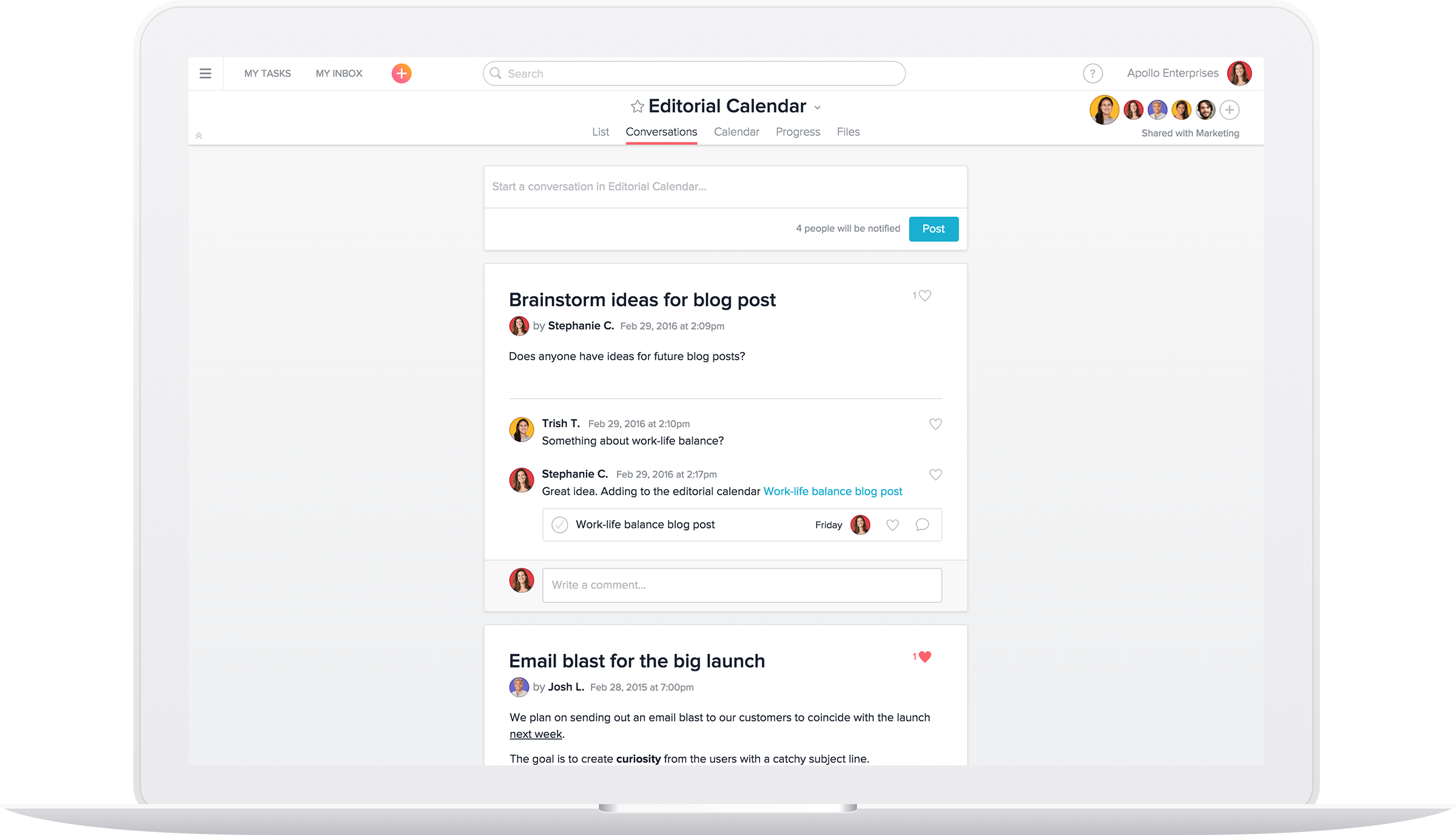     |
