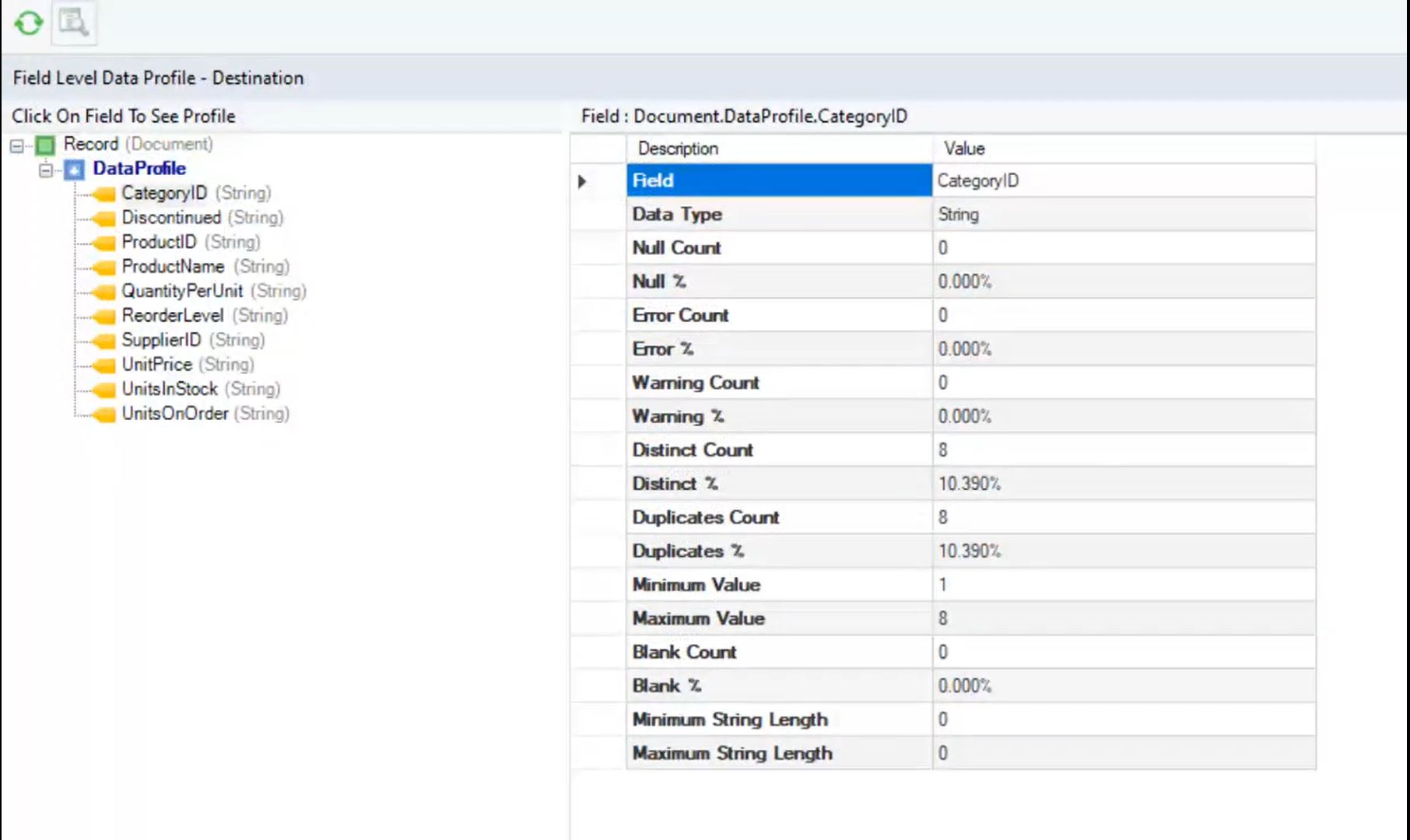
Astera Data Pipeline Builder is a no-code solution for designing and automating data pipelines. It allows users to read and write data across various file formats, databases, and applications. Users can execute ETL and ELT pipelines manually, schedule automated reruns, or integrate them into broader data management processes.
N/A
Matillion
Score 8.0 out of 10
N/A
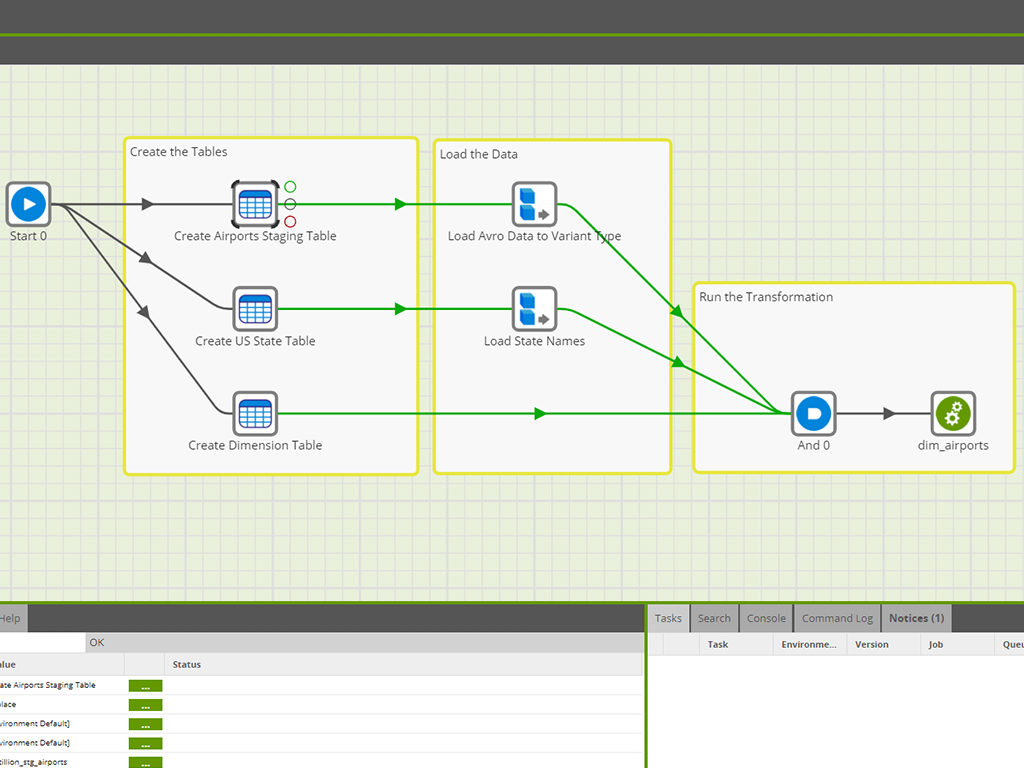
Matillion is a data pipeline platform used to build and manage pipelines. Matillion empowers data teams with no-code and AI capabilities to be more productive, integrating data wherever it lives and delivering data that’s ready for AI and analytics.
$2.50
Pay as you go per user
Pricing
Astera Data Pipeline Builder (Centerprise)
Matillion
Editions & Modules
Centerprise Enterprise
Contact rep
Lifetime License per Seat
Developer: For Individuals
$2.50/credit
Pay as you go per user
Basic
$1000
per month 500 prepaid credits (additional credits: $2.18/credit)
Advanced
$2000
per month 750 prepaid credits (additional credits: $2.73/credit)
Enterprise
Request a Quote
Offerings
Pricing Offerings
Astera Data Pipeline Builder (Centerprise)
Matillion
Free Trial
Yes
Yes
Free/Freemium Version
No
No
Premium Consulting/Integration Services
No
No
Entry-level Setup Fee
No setup fee
No setup fee
Additional Details
Discounts are provided for 10 pack, 20 pack, 50 pack, and enterprise wide Centerprise Professional licenses.
Billed directly via cloud marketplace on an hourly basis, with annual subscriptions available depending on the customer's cloud data warehouse provider.
Astera Centerprise is specific to EDI files. From what I've seen it can be used on EDI files across multiple industries. We use it specifically for healthcare EDI files. We do not create any files using this software because we do not have that need at CCHP, but I know the software could be used for that. CCHP uses the software to correct EDI errors and to import EDI data to our SQL data warehouse. EDI files have a layered structure so they need to be broken down in order to be loaded into the data warehouse. Without this tool we would not be able to import the files. Also, with the layered structure, fields, segments, dependencies and hierarchy, making changes manually is both risky and time consuming. Centerprise reduces the amount of time used to correct files and removes the possibility of creating other errors.
Great: Need to query simpler APIs, or utilize well known services such as GSheets etc.? Matillion has got some of the best and easiest to use connectors out there. Not so great: Do you need have a competent CI/CD flow that you will be able to update / compare from Matillion as well as other sources at the same time? Good luck, you will need to be extra careful, as you might have to have a deeper dive into your servers Terminal each time you have a git conflict.
We have several support calls that have been labeled as to be done in the future. One is the reading of the File Definition in AcuCobol with the sign trailing in a numeric field. The handling of this would help us in several areas but we have been able to develop a work around at this point.
Some of the child/overlap configuration for the "RMD" seems awkward.
Static and monolithic, it will show its limits when running multiple concurrent jobs.
Github and versioning implementation is messy and broken. Don't use it.
There's not way to see/query the system resources, just wait for a server to crash due to out of memory. An admin panel would be appreciated + some env variables with updated info.
API implementation is cumbersome and limited.
There's no concept of hub and worker engine, everything happens of the same server (designing workflows and executing them). Having separate light ETL engines to run job could be better. (sort of docker/kubernetes/lambda functions).
Handling of variables is limited especially for returned values from sub components.
Some components could return more metadata at the end of their execution instead of the standard one.
Billing is badly designed not taking into account that the server is hosted by the client. Expensive.
We had several issue with migration where starting a new instance was required and then migrating the content. It was painful and time consuming also have to deal with support and engineering team on Matillion side.
CDC doesn't work as expected or it is not a mature product yet.
We've been using Astera Centerprise application for the last 6 years and we've already added EDI connect to it. Both applications are working really well for our enterprise needs so far with no issues, so we'll continue renewing the licenses.
Matillion is easy to use and flexible to debug. Performance are good and support is giving us a good service level. There are still some technical points to be developed more (such as SAP extraction). but easy flows are really fast to be developed. We are also using a tool for migration from other tools, and it is useful as Matillion is producing XML code.
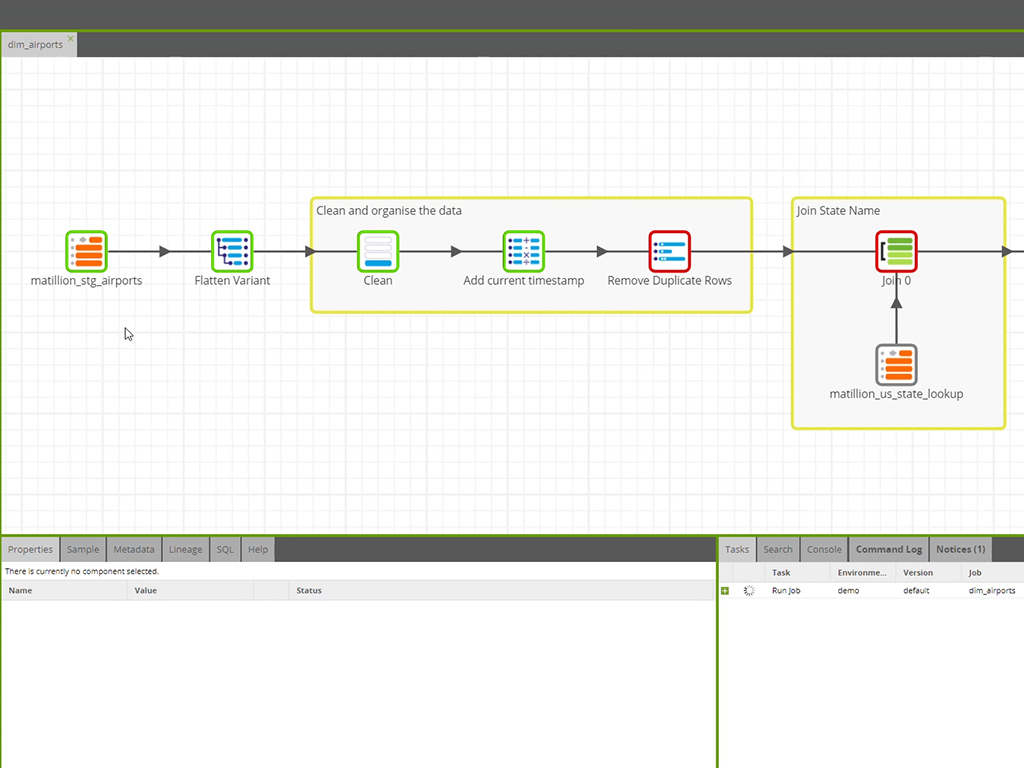
It's very intuitive and visually descriptive. The interface is standard windows drag and drop although cut and paste are not universally available depending upon what function you're trying to do. You see the ETL and what it's doing. You can inspect the data elements the transformations and perform data previews incrementally along the data flow. You actually SEE what the results are and you can make adjustments without black box testing
Easy tasks are really easy, and complex tasks are still possible. With prior knowledge of general data warehousing principles and experience with other data transformation tools, it's straightforward to get familiar with and use Matillion. I initially used minimal external support from a partner for some more complex tasks but very soon could work entirely independently with Matillion.
In most cases Astera is stable. However, our client experiences the error from time to time. Mostly they are related to cdc file and ServerAdminConfig.xml file.
Support is great! No matter if you need technical assistance or you have general questions about the tool - the support is very responsive and provides solutions quickly. They are available via various channels, which makes it very convenient to get in touch with them (Support portal, direct email contact, LinkedIn).
Overall, I've found Matillion to be responsive and considerate. I feel like they value us as a customer even when I know they have customers who spend more on the product than we do. That speaks to a motive higher than money. They want to make a good product and a good experience for their customers. If I have any complaint, it's that support sometimes feels community-oriented. It isn't always immediately clear to me that my support requests are going to a support engineer and not to the community at large. Usually, though, after a bit of conversation, it's clear that Matillion is watching and responding. And responses are generally quick in coming.
Astera support provided us implementation/installation tutorial and we were able to perform all the activities. Also one of the support was there to shadow us to make sure the process was smooth with no issues
We looked at continuing to use SSIS as an alternative. Although we own SSIS as part of our SQL licensing, we found that it takes a much higher skill level to create solutions. It also does not have the ability to parse unstructured data the way that Centerprise Data Integrator can. We also looked at Datawatch Monarch as a possibility but found it over-all to be cost-prohibitive. We also looked at a cheaper alternative called SimX but did not have a strong confidence in the product as we evaluated it. We landed on Centerprise Data Integrator as it met all of our business requirements and we know we could leverage it for many uses across our enterprise.
We selected Matillion primarily because of it's ability to connect to numerous data sources and easily create transformation jobs. While Fivetran does a better job managing and examining deltas, it is not easy to use and is very non user friendly. SSIS was not a good fit for our team and required a significant amount of attention and server management that we did not want to invest in.
I think Astera can do multiple things. However, we are not sure what it can do. We only know the basic features. If they can give us some kind of training, then we maybe able to benefit for it. We are planning to use their Azure connection in the future. If they can provide the training for it, it will be wonderful.
We're using Matillion on EC2 instances, and we have about 20 projects for our clients in the same instance. Sometimes, we're struggling to manage schedules for all projects because thread management is not visible, and we can't see the process at the instance level.
It is tough to say on how Centerprise would have helped us with ROI. Unfortunately our project (after 3 years) was scrapped (put on hold) due to the impromptu purchase of another Crop Insurance company. But with that, Centerprise was huge in getting our warehouse loaded for our BI Team to make important decisions about our policies.
Time savings -- we could custom code nearly everything Matillion does, but it would take days/weeks instead of minutes/hours.
There's a bit of a learning curve to truly unlock Matillion's potential, and that can be frustrating for some new users, but once you get over that curve, the possibilities are endless.
It allows us to centralize the hundreds of way to bring data in, so that even if you have to troubleshoot what someone else wrote, it's easy to jump in and understand what is happening.