
Sherby Gully
Teacher
Chose Blackboard Learn by Anthology
Blackboard is definitely more in touch with older students, particularly high school and college age students.

| Product | Rating | Most Used By | Product Summary | Starting Price |
|---|---|---|---|---|
 Blackboard Learn by Anthology | N/A | Blackboard Inc. is an enterprise learning management systems vendor. Blackboard was founded in 1997 and became a public company in 2004. The company provides education, mobile, communication, and commerce software and related services to clients including education providers, corporations and government organizations. As of December 2010, Blackboard software and services are used by over 9,300 institutions in more than 60 countries. Blackboard Learn is the company's flagship LMS, supporting… | N/A | |
 Moodle | N/A | Moodle is an open source learning management system with hundreds of millions of users around the globe and translated into over 100 languages, used by organizations to support their education and training needs. | N/A |
| Blackboard Learn by Anthology | Moodle | |||||||||||||||
|---|---|---|---|---|---|---|---|---|---|---|---|---|---|---|---|---|
| Editions & Modules | No answers on this topic | No answers on this topic | ||||||||||||||
| Offerings |
| |||||||||||||||
| Entry-level Setup Fee | Optional | Optional | ||||||||||||||
| Additional Details | Must contact vendor for pricing information. | — | ||||||||||||||
| More Pricing Information | ||||||||||||||||
| Blackboard Learn by Anthology | Moodle | |
|---|---|---|
| Considered Both Products |  Blackboard Learn by Anthology Sherby Gully Teacher Chose Blackboard Learn by Anthology Blackboard is definitely more in touch with older students, particularly high school and college age students.  Meena B Information Technology Project Manager Chose Blackboard Learn by Anthology I have not reviewed Brightspace till now but I have heard good things about it from my peers  Craig Smallish Instructor Chose Blackboard Learn by Anthology I did not select Blackboard Learn.  Becca Guler Learning Specialist Chose Blackboard Learn by Anthology Zoom is better equipped for live streaming and recording lectures and tutoring sessions, research interviews, etc. and does allow content files to be attached through live chat function but does NOT have a student management component for grading and instructions or a …  Brandon Cluff Associate Game Designer Chose Blackboard Learn by Anthology I personally prefer Udemy because of its simplicity. Blackboard Learn has more options for how the content can be delivered to its users; Udemy only provides instructors the ability to upload videos and insert multiple choice questions for tests. Ultimately, it depends on the …  Nicolas Hanhan Distance Education Instructional Coordinator Chose Blackboard Learn by Anthology Blackboard Learn is more user-friendly than Moodle. Blackboard offers support to customers which is not available effectively when using open-source learning management systems such as Moodle.  Amy Westby High School Counselor Chose Blackboard Learn by Anthology Blackboard has been good for putting together course work and class discussion, which Google Classroom does not feature and Moodle is too laggy to work well.  Anissa Harris Senior Faculty Chose Blackboard Learn by Anthology I am not a decision-maker about our learning platform but I have used both Canvas and Blackboard Learn for several years. From a teaching perspective, Canvas is SIMPLE and clean for a new user. However, Blackboard offers more options and creativity for integration and exporting …  Rick Lupton Systems Programmer Analyst Chose Blackboard Learn by Anthology Blackboard has a vast training system to allow for supporting the product. While Moodle provides OpenSource code to allow for customization, it requires and investment in technical staff to program the software to do what you want. Blackboard has on-premise and hosted …  Matthew Deakyne Academic Services Manager Chose Blackboard Learn by Anthology We did a formal evaluation of the LMS a few years ago, and selected to remain self-hosted on Blackboard Learn. At the time, we were not ready to upgrade or migrate and it was easier to remain with the system we already had. If we started from scratch - Canvas is the clear …  Mark Fitzgerald Adjunct Professor Chose Blackboard Learn by Anthology It can be configured to do anything you want. It is Blackboard's blessing and curse. I think it has the biggest feature set in the industry. It confuse people and leads to strange UIs. But some organization and working together you can find something that will work well for …  Lori Riegel Alumni Representative Chose Blackboard Learn by Anthology I have used Schoology before, and I think Blackboard Learn has many more features, and is easier to navigate. It is well organized, and easy to customize for each user. Schoology might be better suited for a mobile device, but when the mobile version of Blackboard is not up …  Timothy Sawah IT Project Manager Chose Blackboard Learn by Anthology Blackboard is more expensive than its direct competitors but has better customer support and a wider variety of features. Courses are more structured in blackboard. The graphics are less messy compared to Moodle and Edmodo. Blackboard has more interactive features and the code …  Erica Terry Advising and Admissions Coordinator Chose Blackboard Learn by Anthology I believe that blackboard is more user-friendly than the other modalities I have used and taken online course work in as well. I think it is setup in a logically way, making it easy to navigate. |  Moodle  Pierre Tassel Phd, Researcher Chose Moodle Compared to Google classroom, Moodle is more flexible and more comprehensive. But the interface is a bit outdated and not very mobile-friendly. Additionally, Google classroom has nice integration with other Google's workspace tools. Google lack tools such as CodeRunner to be …  Mehmet Kanat CISO (Chief Information Security Officer) Chose Moodle Excellent community support, it is very affordable and also about costs.  Joe Foran Director Of Information Technology and HIPAA Privacy Officer Chose Moodle Moodle, being open source, is the foundation a lot of other tools like it are based on. It provides almost all of the same functionality and feature set as Google Classtoom, Canvas, etc., although those products are a bit more polished. All can do content delivery, progress …  Philip Mojares Math Teacher Chose Moodle For me, Moodle is more user-friendly because it has simpler graphical user interface and it provides the functionalities that my students and I enjoyed using. Moodle is more interactive as well and it provides efficiency in uploading, downloading, restoring and backing up …  Stacey Broughton Assessment Platform Coordinator Chose Moodle I have used other testing only platforms that have nowhere near as many functions and flexibility as Moodle.  Ramindu Deshapriya Lead Consultant - Technology Chose Moodle Moodle is better in terms of its price point (free) and its management learning curve.  Josh Musson ISR Chose Moodle It is hard to compare them with each other as they are so different. They really can't compare as they are two completely different platforms. But Moodle is great in all aspects, I like Slack for communication as well. But when it comes to tasks, Moodle handles it better … Amy Westby High School Counselor Chose Moodle Moodle is similar to these programs, but it doesn't have all the social interaction several of these other programs have.  Grant Adendorff Human Resources Executive Chose Moodle Moodle is free and open-source, therefore deficient in a meaningful move in the training needle.  Suleman Ahmad Senior Software Developer Chose Moodle We have also developed of our own quiz launcher, but the features/flexibility that Moodle provides us can't be matched.  Christopher Power Virtual Enterprise Coordinator/Educator Chose Moodle Edmodo provides a simple platform but does not provide the depth of assignments that Moodle does. Moodle provides more assignment types, grading, deadlines, and shifting of assignments from one week to the next. Moodle is significantly more advanced in terms of what it can do …  Andrea Samadi Founder Chose Moodle When setting up our LMS in 2014, we started with a product called LearnDash that was not designed for the school market. When we moved to Moodle, we looked at Edmodo and went with Moodle for the cost to launch and get our courses up and running. We are a smaller company were … |
| Blackboard Learn by Anthology | Moodle | ||||||||||||||||||||||||||||||||||||||||||
|---|---|---|---|---|---|---|---|---|---|---|---|---|---|---|---|---|---|---|---|---|---|---|---|---|---|---|---|---|---|---|---|---|---|---|---|---|---|---|---|---|---|---|---|
| Learning Management |
|
| Blackboard Learn by Anthology | Moodle | |
|---|---|---|
| Small Businesses |  iSpring Learn Score 9.6 out of 10 | iSpring Learn Score 9.6 out of 10 |
| Medium-sized Companies |  Schoology Learning Score 9.7 out of 10 | Schoology Learning Score 9.7 out of 10 |
| Enterprises | Schoology Learning Score 9.7 out of 10 | Schoology Learning Score 9.7 out of 10 |
| All Alternatives | View all alternatives | View all alternatives |
| Blackboard Learn by Anthology | Moodle | |
|---|---|---|
| Likelihood to Recommend | 9.9 (0 ratings) | 8.0 (0 ratings) |
| Likelihood to Renew | 4.6 (0 ratings) | 10.0 (0 ratings) |
| Usability | 10.0 (0 ratings) | 8.0 (0 ratings) |
| Availability | - (0 ratings) | 9.0 (0 ratings) |
| Performance | - (0 ratings) | 10.0 (0 ratings) |
| Support Rating | 7.7 (0 ratings) | 7.4 (0 ratings) |
| Online Training | 7.0 (0 ratings) | 6.0 (0 ratings) |
| Implementation Rating | 10.0 (0 ratings) | 9.8 (0 ratings) |
| Ease of integration | - (0 ratings) | 9.0 (0 ratings) |
| Product Scalability | - (0 ratings) | 9.0 (0 ratings) |
| Blackboard Learn by Anthology | Moodle | |
|---|---|---|
| Likelihood to Recommend |
|
|
| Pros |
Anissa Harris Senior Faculty |
 Marianna Rader Assistant Professor of Psychology |
| Cons |
Timothy Sawah IT Project Manager |
|
| Likelihood to Renew |
 James Gurney Research/Teaching Assistant |
 Steve Covello Instructional Designer/Rich Media Specialist |
| Usability |
 Inez Whipple E-Learning Instructional Designer |
 Rebecka Anderson eLearning Specialist |
| Reliability and Availability | No answers on this topic |
 Pamela Akins eLearning Specialist, ITTS |
| Performance | No answers on this topic |
 Helen Ware Director of Electronic Learning |
| Support Rating |
|
Philip Mojares Math Teacher |
| Online Training | No answers on this topic |
 Mike Sebolt Instructional Technology |
| Implementation Rating |
|
|
| Alternatives Considered |
|
Joe Foran Director Of Information Technology and HIPAA Privacy Officer |
| Scalability | No answers on this topic |
Pamela Akins eLearning Specialist, ITTS |
| Return on Investment |
Meena B Information Technology Project Manager |
 Robin Sargent Manager of Learning and Development |
| ScreenShots | Blackboard Learn by Anthology Screenshots    | Moodle Screenshots   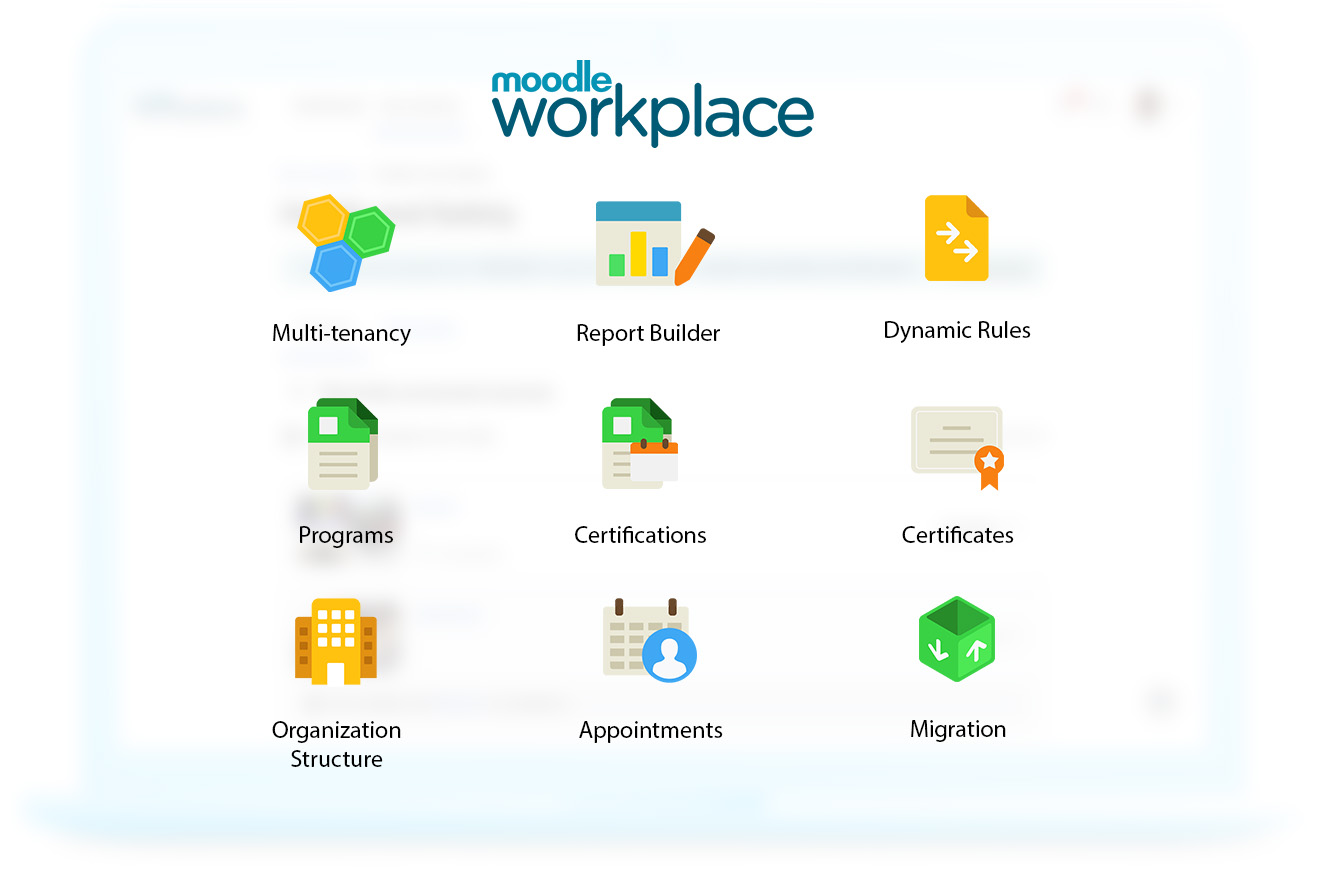   |