Bluebeam Revu is a PDF management, control, and editing tool. It enables collaboration and markup within shared documents across projects’ life cycles and has takeoff and bid creation capabilities.
$349
per seat
On-Screen Takeoff®
Score 7.3 out of 10
N/A
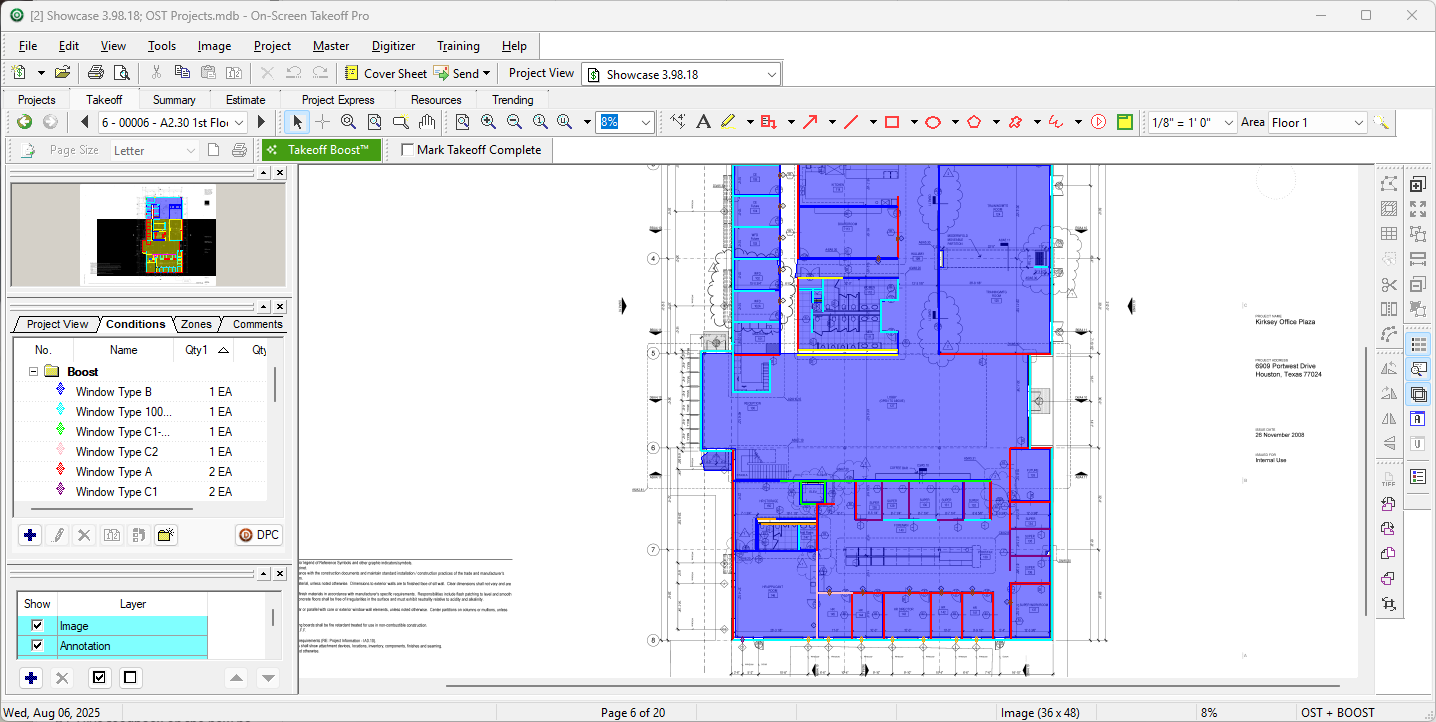
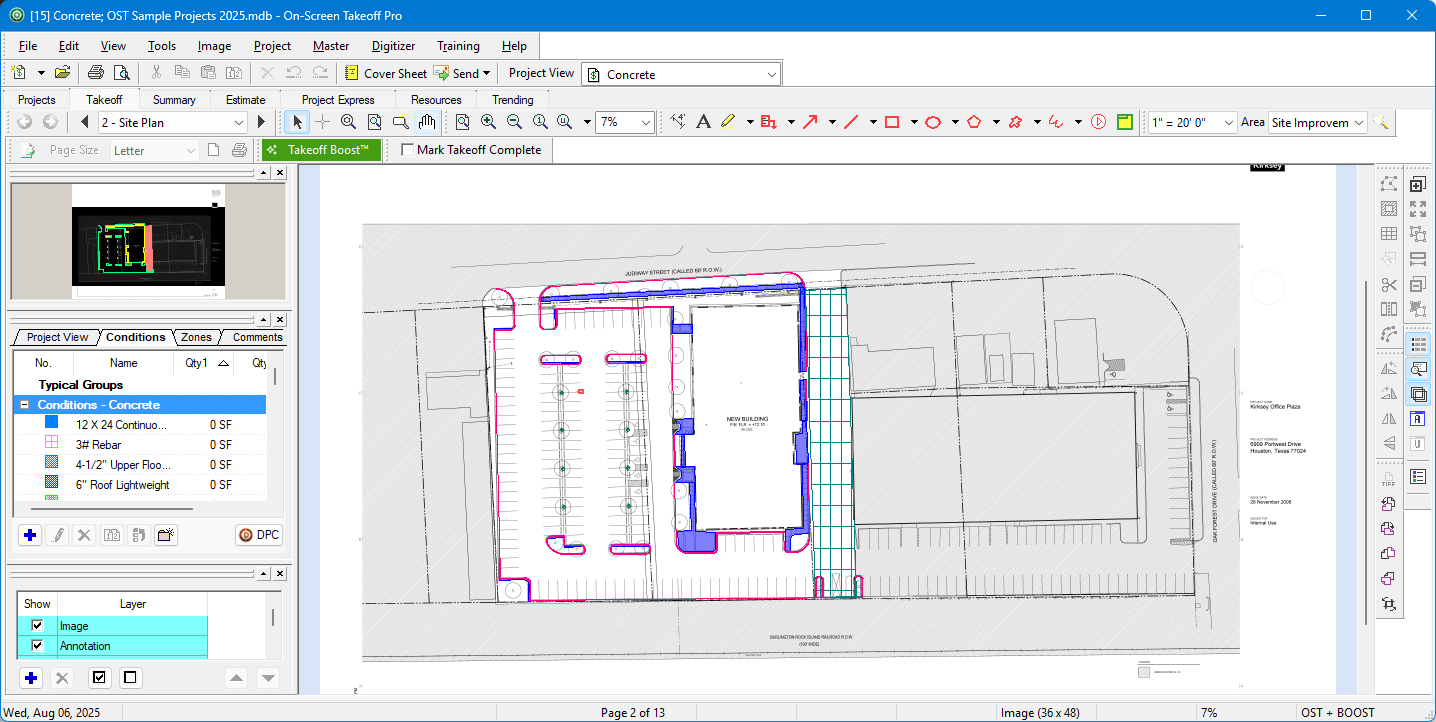
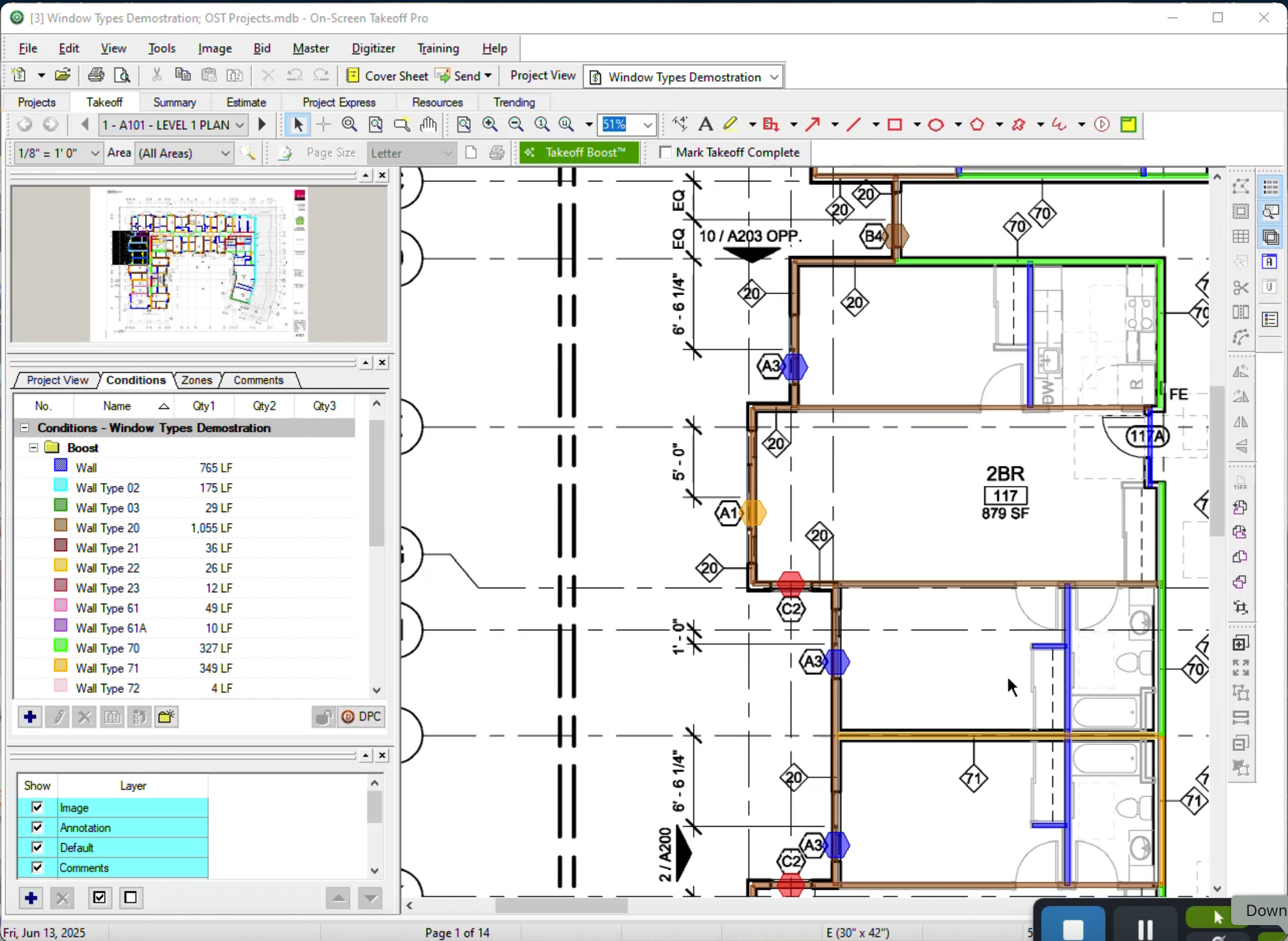
On-Screen Takeoff is a construction takeoff and estimating solution. It is intended to streamline takeoff, RFI, and bidding processes.
N/A
Pricing
Bluebeam
On-Screen Takeoff®
Editions & Modules
Revu Standard
$349
per seat
Revu CAD
$449
per seat
Revu eXtreme
$599
per seat
No answers on this topic
Offerings
Pricing Offerings
Bluebeam
On-Screen Takeoff®
Free Trial
Yes
Yes
Free/Freemium Version
No
No
Premium Consulting/Integration Services
No
No
Entry-level Setup Fee
No setup fee
No setup fee
Additional Details
—
On-Screen Takeoff® pricing varies based on licensing options and specific business needs. The annual subscription plans are designed to scale with project and team size.
Available Subscription Options:
•On-Screen Takeoff
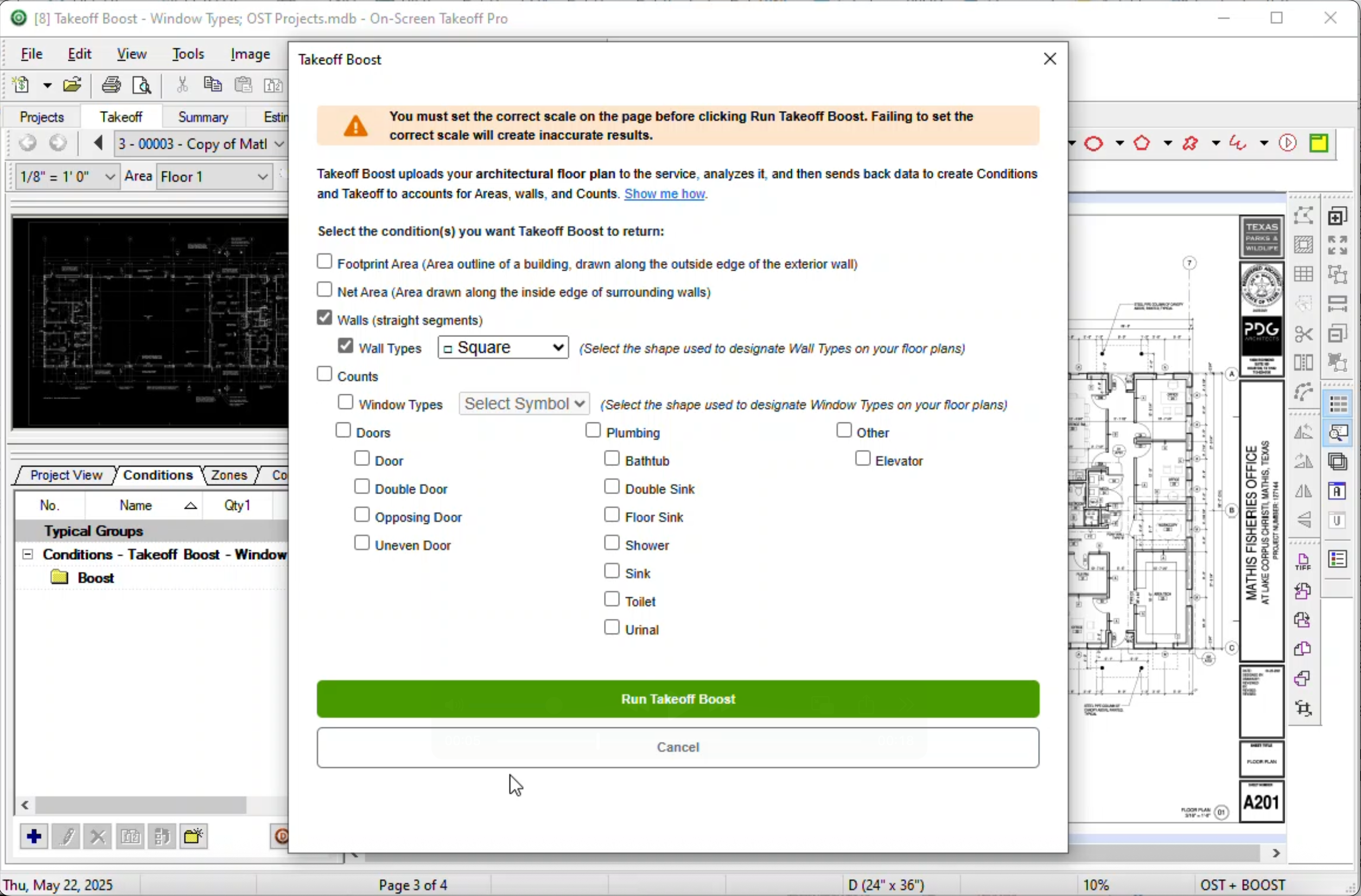
•On-Screen Takeoff with Takeoff Boost™
•On-Screen Takeoff and Quick Bid®
•On-Screen Takeoff with Takeoff Boost and Quick Bid
Each subscription is customized to match the subscriber's workflow requirements. A 14-day free trial is available.
More Pricing Information
Community Pulse
Bluebeam
On-Screen Takeoff®
Considered Both Products
Bluebeam
Verified User
Anonymous
Chose Bluebeam
I believe Bluebeam is actually easier to learn and use versus Adobe Acrobat. With it’s how to videos and great customer support, there’s basically not a problem that cannot be figured out. As far as PDF modification, I believe Bluebeam’s tools and screen configuration is very …
Bluebeam is targeted towards construction professional and offers features and built-in markups that I use everyday. Acrobat is a generic program that requires more training and set-up for use specific to construction and design. Bluebeam was more cost-effective than Acrobat, …
I haven’t spent enough time with Revit to give a full comparison. But three architects I’ve worked with have all said they enjoy both programs and Bluebeam was highly recommended for my needs in the company.
Years ago I used Adobe which was not well suited for CAD drawings. I soon found Bluebeam which at the time was a wonderful game changer. Sadly, my recent experience has caused me to begin searching elsewhere for new software.
Bluebeam I believe is much better then Smartsheets because there are way more features that just make sense and are construction minded. I am able to host and share these documents with other users who do not need to have a Bluebeam license to view or download them from the …
Bluebeam is a more advanced PDF editor and better suited for the engineering and construction industry. It has far more tools and better capabilities for collaborative viewing, marking up, and sharing of documents.
Much better. The features are greater, the layout is better and you can just do so much more. The features alone and what you can do with it makes it worth it. Also, it allows for you to edit and create in a much more user friendly way. All of our engineers love using it …
Bluebeam Revu has essentially replaced Adobe Acrobat as our default PDF viewer and editor, because its robust suite of architecturally-focused tools allow for better review of documents and creation of simple graphic diagrams. The scale and measurement tools are especially …
PDF file sharing is really easy and simple, so users can markup and others can view them in real-time. Also, editing PDF files to crop, batch, remove, or replace pages is really efficient compared to Adobe Acrobat DC. Plus, the licensing fee is pretty small compared to Adobe …
Bluebeam Revu is a no-brainer in the AEC space. Stop wasting money on owning adobe and Revu. Revu can replace all of your Adobe usage. With a good change management process, Revu can meet the needs of your entire organization. The Bluebeam team will be with you every step …
Revu was much easier to use, more cost-effective, and is more generally used in the construction and design industry than Adobe. We found Adobe to be more of a resource hog, as well as being bloated with offers for other Adobe applications, which many times would slow down a …
Bluebeam is a good in-between of Adobe and Photoshop. If you're not looking to do photo editing, but need more capabilities than just line work, Bluebeam is perfect.
I select Bluebeam Revu when I have to as directed by the client or the owner. Otherwise, when the user does not need such a specific or robust piece of software, I usually go to one of the less expensive competitor's PDF editors. They suite our needs just fine and cost half …
Bluebeam definitely blows Adobe out of the water in the basic to the basic comparison. You will have to do more research on how exactly to use all the tools if you have never used the program before such as myself.
Bluebeam Revu has a much more sophisticated interface that allows you to mark up documents in many different ways. It can store tools for standard markup use. It provides digital signatures which can be very useful for many document types. By creating a Revu studio, multiple …
We've used these other products in conjunction with Bluebeam mainly because Bluebeam lacks RFI/COR/PO/Mark-up/revision tracking, and doesn't handle punch lists or tasks.
The newer Adobe interfaces are poor. Adobe does not do as well with drawing markup or takeoff tools. Adobe does seem to render some drawing files more quickly though. Adobe text document markup feels a bit more polished. Bluebeam was selected for better tools specific to …
This is by FAR the most powerful product that I have used. I have not turned back to Adobe for modifying documents since we purchased Bluebeam. I am not sure of the cost of the program, but sure it is worth it to the company. As to doing take-offs, this is a great tool as well …
Procore is excellent for tracking documents and links. Bluebeam is superior at editing, scaling, and marking up documents. You can track projects of any size at a very low price point with Bluebeam.
There is no comparison. The editing tools, batch tools drafting tools, personal environment profiles, settings, printing, calibrating, direct connecting apps that links Bluebeam to AutoCad and Revit. This is an extremely powerful program that is amazingly helpful and I probably …
I have only used On-Screen Takeoff. I have not had the opportunity or desire to use a different product. We also use their sister software called Quick Bid, so we are locked in with the On Center Suite.
Being able to train individuals in a single afternoon on the program and trusting them to get you something usable as soon as possible is quite invaluable. It is also something that I feel is unique to this program. It is just easier.
I think that the simplicity and set up of On-Screen Takeoff makes this an overall better software than Bluebeam or Navisworks. Both of which can be used to create good takeoffs but they are limited in ways that on screen is not so it is a much more versatile take off tool. I …
On-Screen Takeoff is a dedicated program for quantity takeoffs. While other programs have similar capabilities, On-Screen Takeoff is by far the most user-friendly and easiest to integrate with other tools. Being able to copy and paste directly into Excel is a huge boon for our …
On-Screen Takeoff is very easy to learn and very effective at getting the quantities desired. You can set the scale, create groups, layers, typical groups and so much more. It can also be used to produce visual aids for communicating information to individuals that might not be …
I used OST at my previous job. Did a trial with PlanSwift prior to purchasing OST at my new job. Even though they were basically the same, I liked OST much more because I was more familiar with it.
OST simply is a more robust product at the moment. Bluebeam is fine for a simple, quick takeoff but requires a vast amount of effort to layer, perform the calculations you need and (most importantly) secure your takeoff. Bluebeam may head for there in the future, but for right …
OST is still the most efficient and quick way of doing 2D takeoff. The software mentioned above all have their positives and negatives and they all have things which are far superior to OST. But OST really takes the cake when it comes to usability and a simple and useful …
Bluebeam has measuring / take-off capabilities, but it isn't as powerful as On-Screen. Bluebeam is a better version of Adobe that has additional features similar to On-Screen.
As stated before, the mobile application is a great companion to the desktop version. Either one works great in viewing, editing and saving documents. While the measurement tool is handy to have, we have found the precision to be lacking when measuring scaled drawings (construction design drawings). While it is a good rough place to start for measurements, we wouldn't recommend relying on the precision of the measurements taken on something with a very large scale.
If you have several tabs open and you try to drag one out for a side by side view then you do not have all the modification options and you have to combine them back together.
There is a lag time when hitting the print option.
There is also a lag time when opening files, sometimes I think the window is frozen.
I wish the basic version also had basic file editing, as in editing a document as Adobe does.
How documents are uploaded to the program. On-Screen Takeoff will locate the files from whatever path you originally save it to. Therefore, if you move the location of the document, OST will not be able to open your project until the path is redirected.
Taking off curved shapes.
If you could apply a unit cost to a quantity, it would eliminate the need to export takeoff to Excel.
It would be nice to be able to apply a different scale to the same page i.e. if there are two different details on a drawing at two different scales, I have to duplicate the sheet and make sure I make each sheet scale to the specific detail on the sheet.
Bluebeam is a powerful PDF viewer and mark-up tool. We are more familiar with it than Adobe Acrobat Pro or other viewers, and it has more features geared towards construction document managers than Acrobat Pro does.
It provides invaluable communication, organization, and flexibility to generate a project overview both visually and by the numbers. In addition to the overview it makes getting into the project details easy and quick, so our takeoff is accurate and correct every time
I'm constantly finding that Bluebeam Revu does more than I knew it could. And when I find something that it can't do, I've found that Bluebeam truly listens to its user base and will work to incorporate any good suggestion when feasible.
On Screen Takeoff is a valuable tool for what it does. Across the board it can keep track of the critical data and corresponding values without extra legwork. While powerful, it is prone to user error, and the problem can compound quickly if not realized up front. Overall a great project tool, but not without limitations
Its hard for me to give a rating on this one as we rarely have to use the support feature for Bluebeam. However, when we have used it, they have been ultra supportive in helping us get exactly what we needed. I know another engineer was trying to figure out a feature and the rep gave a detailed tutorial on how to complete the task
I have had very few issues with the software which is probably the first sign that there is a good customer support team, since I am sure they are working and fixing problems for everyone when they get a report from somewhere. The few times I have had to reach out to support they have been knowledgeable and on top of helping me quickly get my issues resolved.
Implementation was as simple as setting up the program and creating databases. Everything else was already in use and this was a supplement to the final organization of the system
Bluebeam is a diverse program with many functions and tools, whereas competitive programs only specialize in one or few tasks. Although there are many tools within the program, users can still quickly learn how to use the program to best fit their needs. There is always a help tab for any assistance needed.
OST is still the most efficient and quick way of doing 2D takeoff. The software mentioned above all have their positives and negatives and they all have things which are far superior to OST. But OST really takes the cake when it comes to usability and a simple and useful interface. It's just so easy to create a condition on the fly and start taking something off. When it comes to actual 2D takeoff, OST is by far the easiest and most efficient way of getting the work done.
A major positive aspect is being able to take your computer home without taking the entire set of paper drawings. They have made it so easy to navigate a set of drawings that I can work at home using only the digital drawings.
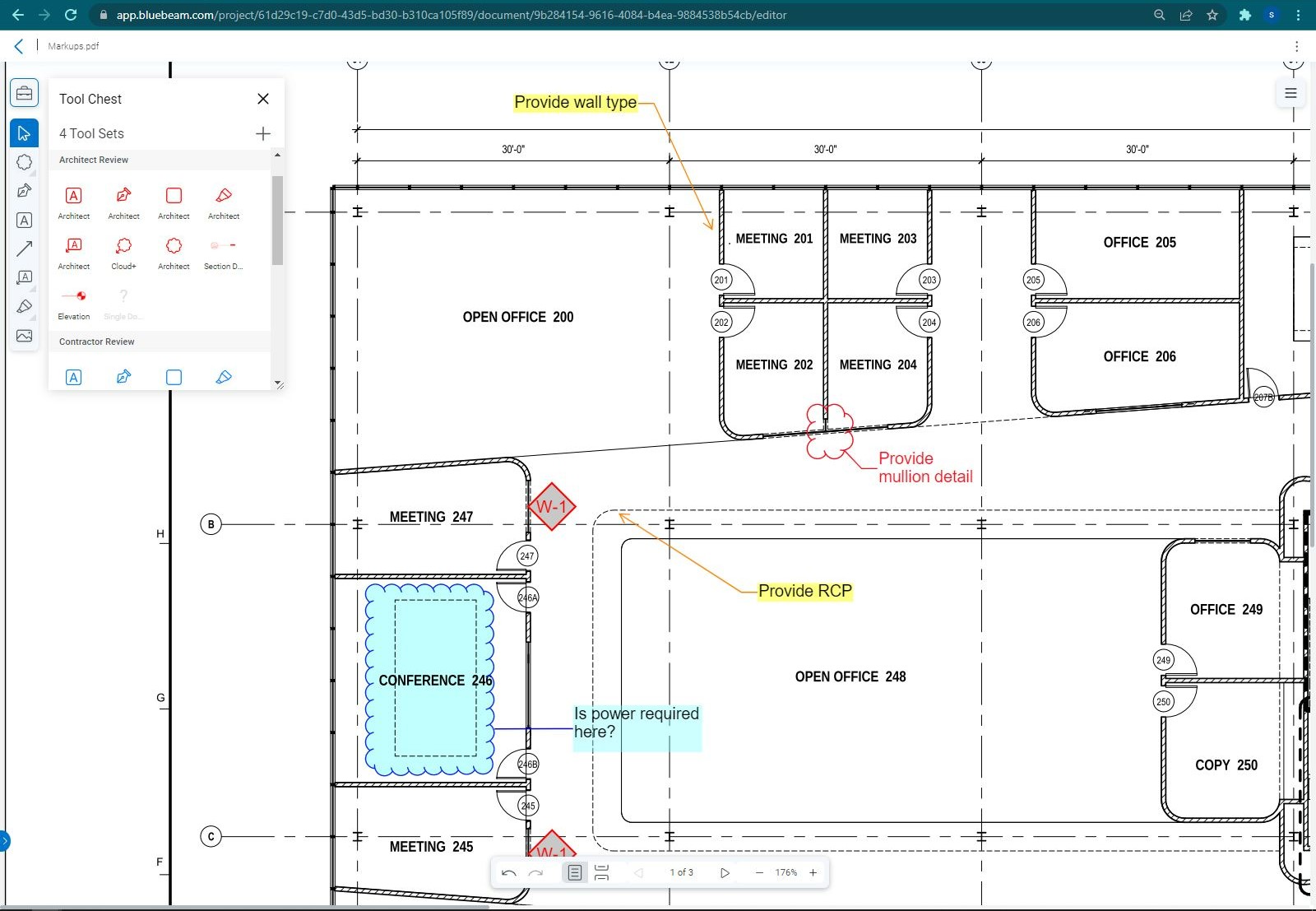
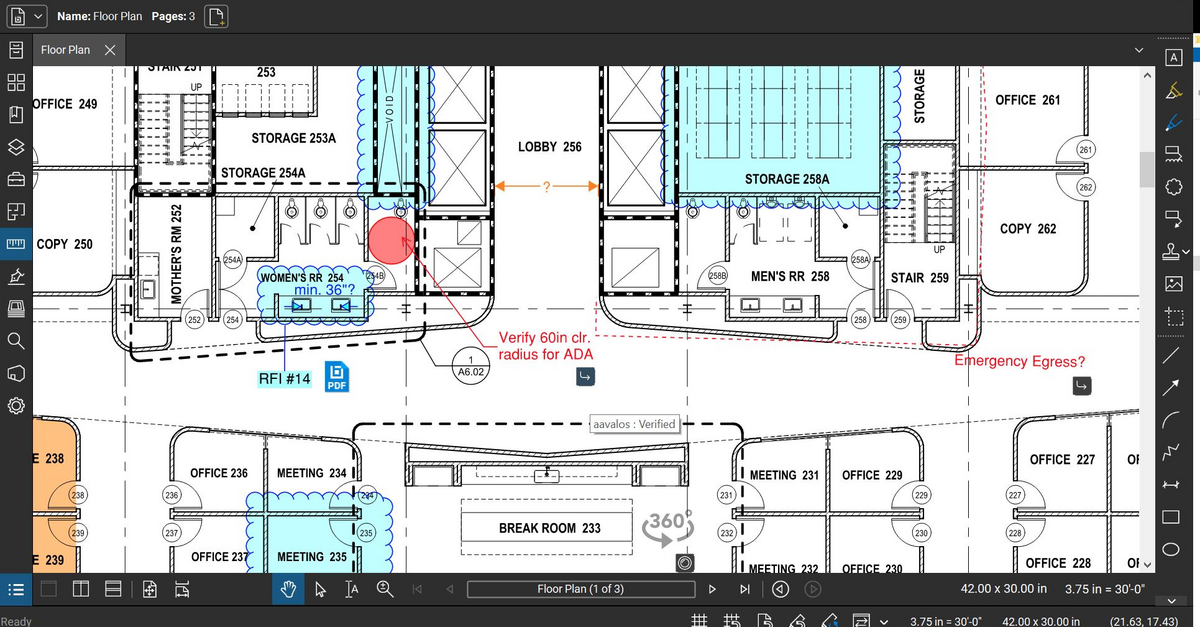
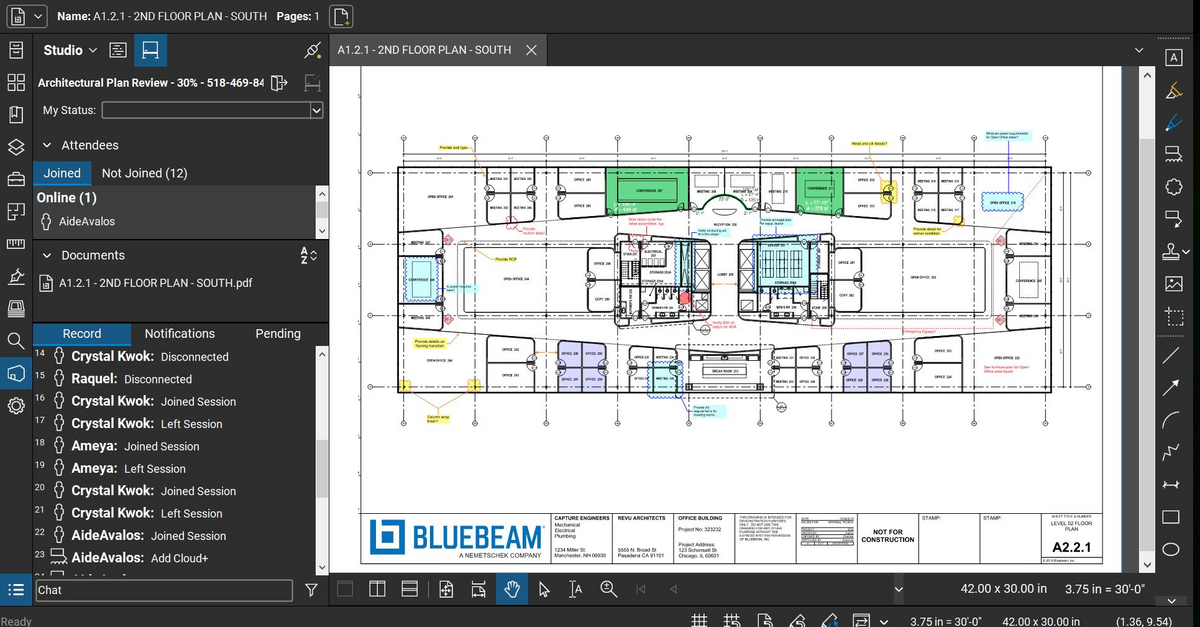
Collaboration with owners and architects has been a great feature. Setting up a Bluebeam studio and having everyone get in and mark things up, then having the architect be able to go in and see what markups have been added, has made the constructability review process much much better.
Even when not working on drawings, Bluebeam is a very good tool for working with standard PDF documents. The markup tools are very easy to use.
The negative aspect is the takeoff function because some people would like estimators to use the Bluebeam takeoff because it would make their job easier down the road; however, the actual act of doing a full scale takeoff in Bluebeam would require much more time.
The main benefit for using this software is that our estimating takeoff productivity has gone way up from where it was before allowing us to compile bids and estimates in a quicker and more accurate way.
The ease of use has allowed us to reduce the time and investment we have had to put into training new hires on the software.