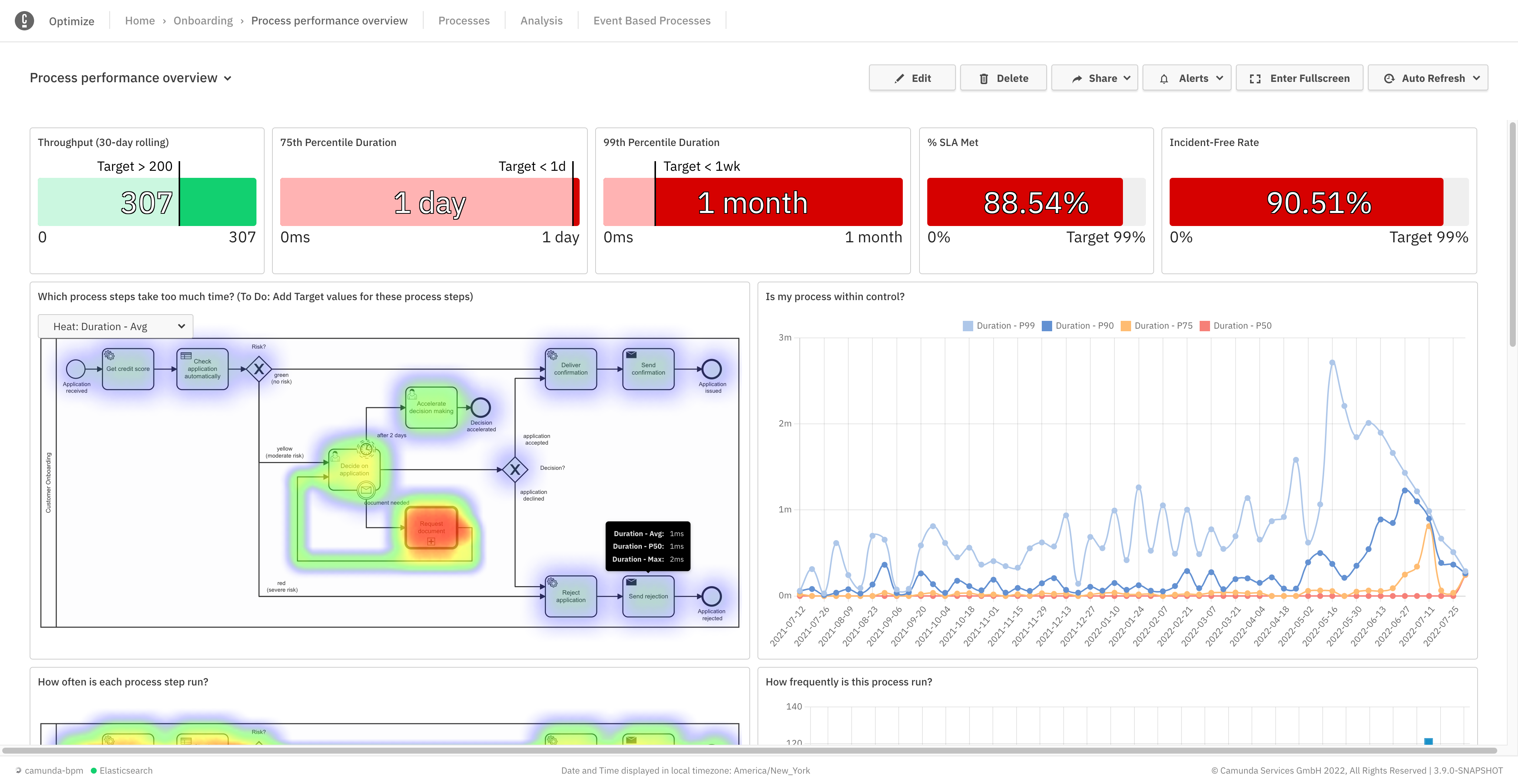
Camunda is a process orchestration tool designed to help organizations design, automate, and improve any process. Built for business and IT collaboration using BPMN and DMN standards, Camunda aims to enable seamless integration across endpoints to transform mission-critical processes.
They're just different products with different target audiences. In different ways, IBM and Pega have offerings that are meant to serve processes in a platform-centric approach to their customers. An emphasis on unified development environments, including forms building, …
Lacks good documentation. Training and documentation is geared towards those who are already technically adept. Does not have as many data integrations as other full fledged products. Paid version of Camunda is not as fully fledged as other products.
Camunda Platform is well suited for scenarios where there are different stages in a business flow and the flow is driven by user action at each stage. For example placing of an order on an ecommerce platform. Depending on whether user was able to make the payment or not the workflow would go to dispatch or retry stage. Now the retry stage would trigger further actions like sending follow up emails etc. Likewise, dispatch stage would have a different set of actions. Since every order is important and we need to know where it stands, using Camunda Platform is imperative. Camunda Platform might not be a right choice where just a one off thing needs to be done. For example, uploading of product information by user or periodic processing of heavy images by a worker. These are all either one step processes or periodic automated processes where we can track the status without using a business modeler like Camunda Platform.
Documentation - It is usually daunting for beginners because of lack of good documentation
Simplified setup on local machine for Camunda Server would help developers test changes quickly
Easier migration from one deployment version of a Camunda process to another deployment version would help in making changes and deploying them faster.
Heap memory management becomes issue at times resulting in stuck processes. This needs to be resolved.