Celonis is a Process Intelligence platform that helps companies improve their operations, customer experience, and sustainability. The company’s technology provides a digital twin of a company’s processes, giving everyone in the organization a common language and the ability to identify and capture value.
N/A
GlobiFlow for Podio
Score 10.0 out of 10
N/A
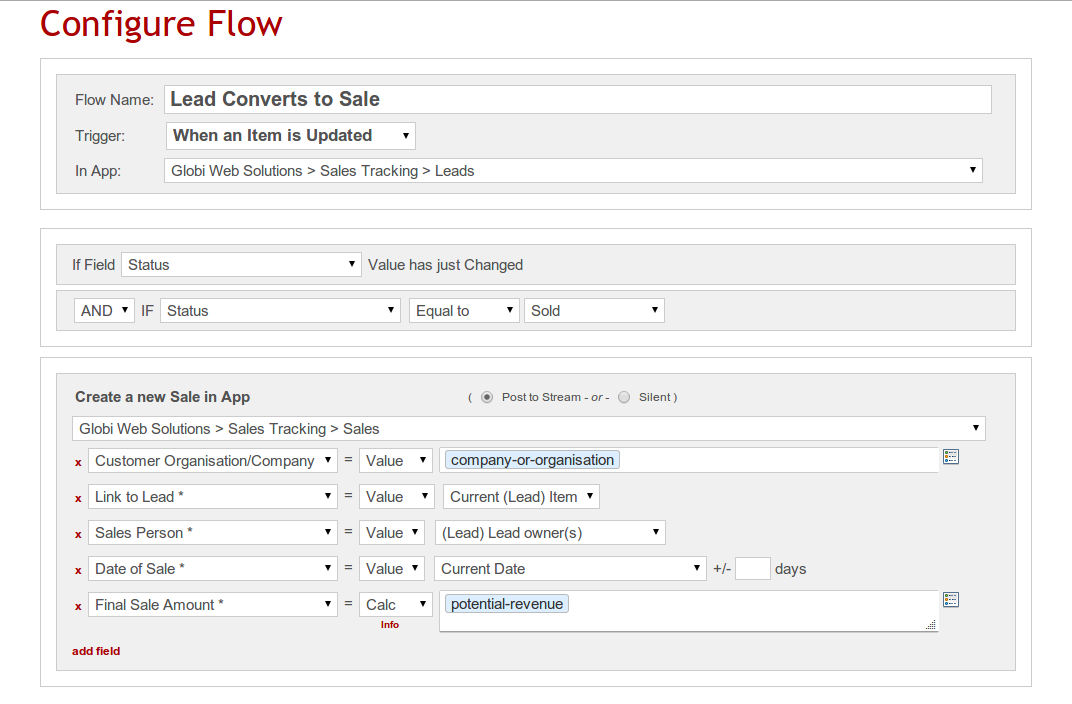
GlobiFlow for Podio is a workflow automation and data visualization solution for Citrix Podio.
N/A
Pricing
Celonis
GlobiFlow for Podio
Editions & Modules
No answers on this topic
No answers on this topic
Offerings
Pricing Offerings
Celonis
GlobiFlow for Podio
Free Trial
No
No
Free/Freemium Version
Yes
No
Premium Consulting/Integration Services
Yes
No
Entry-level Setup Fee
Required
No setup fee
Additional Details
Snap is Celonis' free-to-use, cloud-based process mining solution, with over 3500 registrants and users. It includes most major features of Celonis, including all functionality found in common process mining tools. It also includes pre-built connectors to ServiceNow and pre-built content to get users started quickly on their process mining journey.
I believe that Celonis is a great tool to use in Uniper, as it can integrate data from different sources into a single platform, making interfaces more accurate and facilitating the monitoring of data flow from one source system to another.
GlobiFlow should be considered advanced software for a limited number of employees. If users of GlobiFlow don't work together, they could easily create processes that cancel out other work. GlobiFlow works very well when one person understands the program well and uses it to help coworkers think through processes. The most helpful way we've used it is in automating our hiring process somewhat. Instead of receiving hundreds of emails with job applications, we set up an app in Podio and used Globiflow to notify supervisors when applications were received through our website. As a candidate moves through the hiring process, GlobiFlow processes provide triggers to help us remember what needs to happen at each step along the way by automatically generating tasks, emails, and items in other apps.
GlobiFlow allows one event to prompt a task or notification automatically, which greatly improves workflows and internal communications.
GlobiFlow makes it possible to automate some interactions we have with people outside the agency, for example, responding immediately to an application when it is received, creating a Sharefile folder to collect submitted documents all in one secure location, etc.
GlobiFlow suggests new ways of setting up workflows that makes us think through and improve our processes.
GlobiFlow helps us keep track of events in new and improved ways. For example, when a leave request is approved GlobiFlow automates the process for putting that date on an agency-wide calendar.
GlobiFlow helps us use Podio and Sharefile better so we communicate with employees in other offices and out in the field more effectively.
We had to build a custom dashboard for tracking value realization, as the transformation center was minimal in scope. For a very value-focused company, this area can be improved, which would be incredibly beneficial.
The current licensing model sometimes limits the ambitious value goals, as we can't experiment with building analyses in different areas without a long-term license for that process.
There is a steep learning curve for your typical PC user. I've used GlobiFlow for over a year but there are many things I still don't understand about it. The help pages are somewhat helpful, but there is a whole vocabulary associated with GlobiFlow that is a bit mysterious at the front end.
Any limitations in Podio are repeated in GlobiFlow.
Setting up processes in GlobiFlow is somewhat complicated, which makes it a little tedious when employees change and responsibilities shift, as they often do in a growing organization. Naming your processes well is important so you can go back and find places where changes need to be made.
We have been able to leverage Celonis [greatly] because of the commitment and support we receive from our data scientist. I strongly believe that we would not be able to accomplish this without her assistance. Moreover, when we escalate matters, the product development is engaged and commits resources to make sure our initiatives/business cases are supported.
It is a great tool but also requires a lot of work to get it into a useable fashion. Part of this is on our end as we don't have the dedicated analyst function yet to really become self-sufficient with Celonis. It also uncovers a lot of data issues or at the very least, multiple rounds of development and data validation are required before getting to a position where the business users feel comfortable with the data being reflected. This is fairly normal with any data-related development effort and perhaps not unique to Celonis.
We submit tickets to Celonis through product support. No assistance is generally provided, have to wait and the ticket is then escalated to product support in Germany. Many times we submit the ticket and the support desk asks us the same questions back where they should already have this information.
The major reason to choose Celonis is that it has enhanced decision-making in filtering the candidates. The frontend designer has nice graphics and has well-designed self-service. I particularly enjoy the visual editor, which allows you to create complicated PQL without having to write any code, as well as the numerous filtering choices, including process mining options.
We acquired GlobiFlow at the same time that we GlobiFlow Podio and ShareFile. GlobiFlow helped us use both Podio and ShareFile more efficiently. Podio has an internal automation function that performs some of the same tasks as GlobiFlow but is far more limited, which is why we decided to go ahead and learn how to implement GlobiFlow.
The previous IFRS 9 calculation method was reaching its end of life—Celonis is a direct replacement for us.
When rebuilding our logic from the old system to the new, it gave us a much-needed opportunity to revamp and standardise company codes and, in some cases, even pick up some errors.