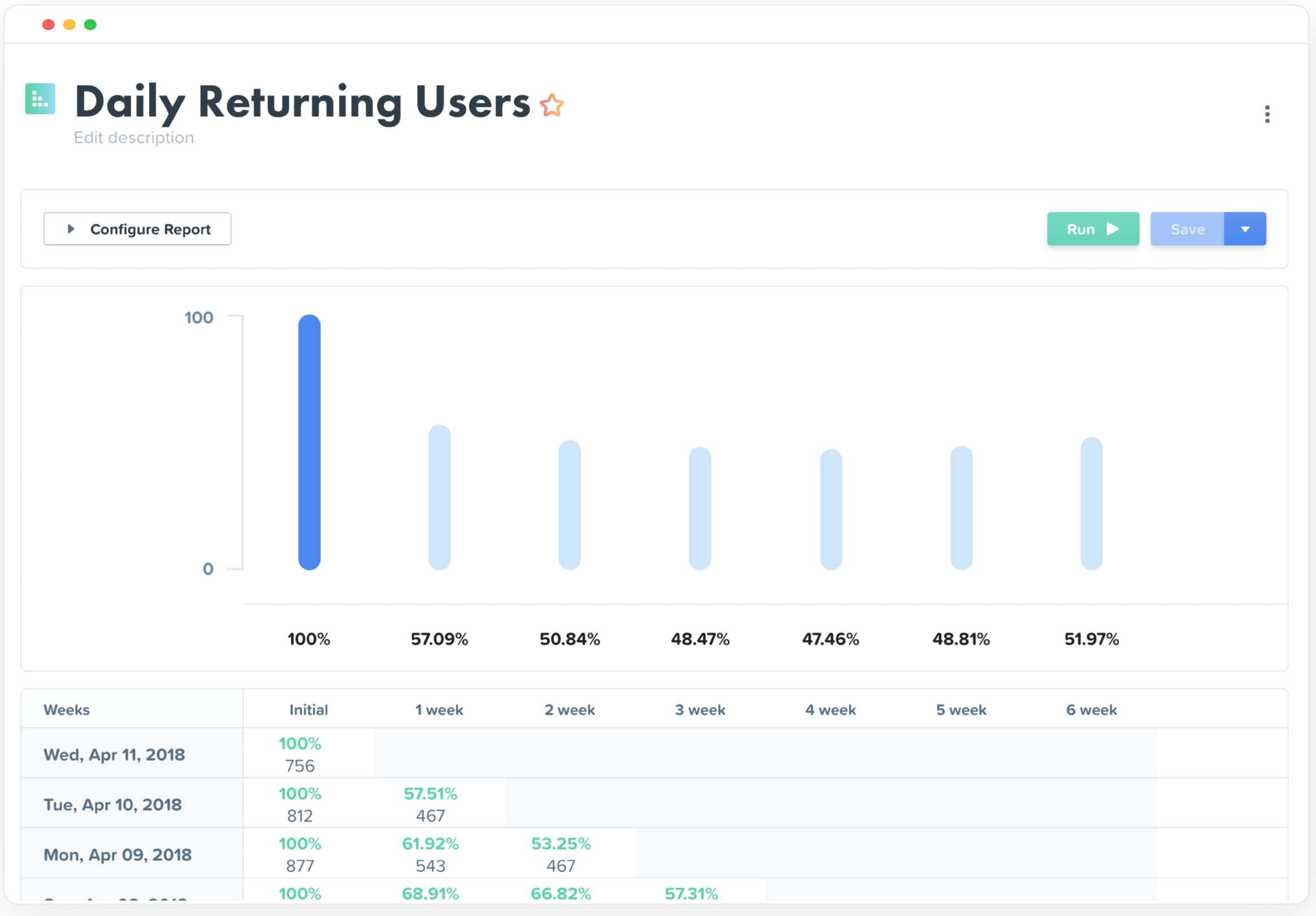
Woopra provides real-time customer analytics. It begins by tracking users across digital touch points (website, mobile app, help desk, marketing automation, etc.) and building a comprehensive behavioral profile for each user. These Customer Profiles are Woopra's building blocks, which are used to generate custom analytics reports, funnel analytics, retention analytics, and more.
Woopra's user interface is far superior than any of the competition. I found other analytics software to be clunky and hard to use. With Woopra, I always know exactly where to go in the app to get the results I'm looking for. This saves me valuable time; in the end time is …
Clicky is a viable alternative to Google Analytics for easy to understand reports for end users. Enterprise users may prefer a more sophisticated platform for measuring their website performance.
We have only used it on web applications so I would recommend it in that case. Deploy has been pretty straightforward. Usage is very intuitive so if you are looking for an analytics product to implement fast and easy (for example for a startup or when starting a project) it is also a good scenario to recommend Woopra. The free tier has been pretty useful to us.
Clicky wins out because it's extremely user-friendly and even a novice can quickly understand how to configure it to get meaningful data.
If you're managing multiple sites, the ease of copying your favorite dashboard views to another site is another big plus.
And the bounce rate metric is different from any other I've seen - really great for tracking blog visitors who may look at a single article before going elsewhere.
In addition to the factors already mentioned, Clicky is constantly being updated to improve functionality for users and the development team is extremely responsive. Recent updates include enhanced support for HTML5 audio and video tracking, additional visitor detail and new comparison trends. In my opinion, Clicky just keeps getting better
We just really like the tool. There are lots of us using it internally... from Product, to marketing, to customer service, to optimization team, to traffic acquisition, to Executives. Really helps us answer questions about how well things are going, and what is not going well.
The UI and reports are great overall. Creating reports just requires a few too many screens and clicks. Also dashboard tiles can't be resized. Both of these are easy items that are being addressed
Compared to other products, the support was a small effort. We only had part time contributions from a product management intern and front end developer.
I have tried a wide range of analytics packages and I've continued to use Clicky because data visualization is clear and it's easy to generate and extract useful reports that I can integrate into wider reporting on website performance. As far as I know, Clicky provides some of the most up-to-date real time data, so that what you see is an accurate reflection of what's happening on your site. While I still use Google Analytics, Clicky is a valuable addition.
Woopra's user interface is far superior than any of the competition. I found other analytics software to be clunky and hard to use. With Woopra, I always know exactly where to go in the app to get the results I'm looking for. This saves me valuable time; in the end time is money
Really helped us begin to segment our users based on their engagement and retention.
Helped increase retention by about 1.5% after about 5 months of implementation (don't shoot the messenger if your team can't implement that quickly).
I felt like it had great potential to create a pipeline between sales and the CSM, but I had trouble getting the sales team to implement it properly as they had their noses deep in calls and emails (they struggle entering notes in SalesForces as well, so it's more a company specific problem).