4Clicks for Federal provides quick access to full line item descriptions, notes, takeoffs, pricing info and more for federal engineers, estimators and facilities professionals. The software also includes RSMeans Data and can directly populate government forms. The platform can also be used to create budgets, all while keeping contracts and documents organized. 4Clicks for Federal is only available for purchase to federal and military professionals or AEC firms with current…
N/A
On-Screen Takeoff®
Score 7.3 out of 10
N/A
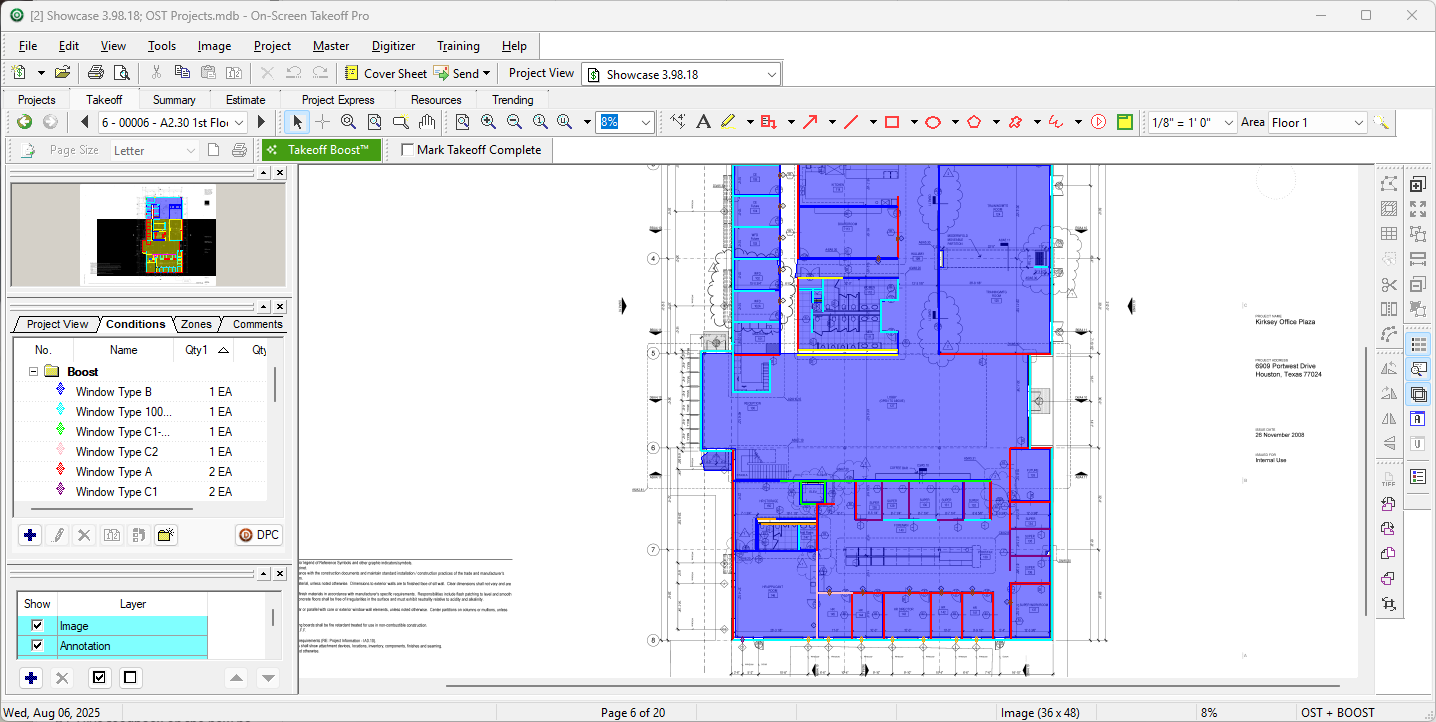
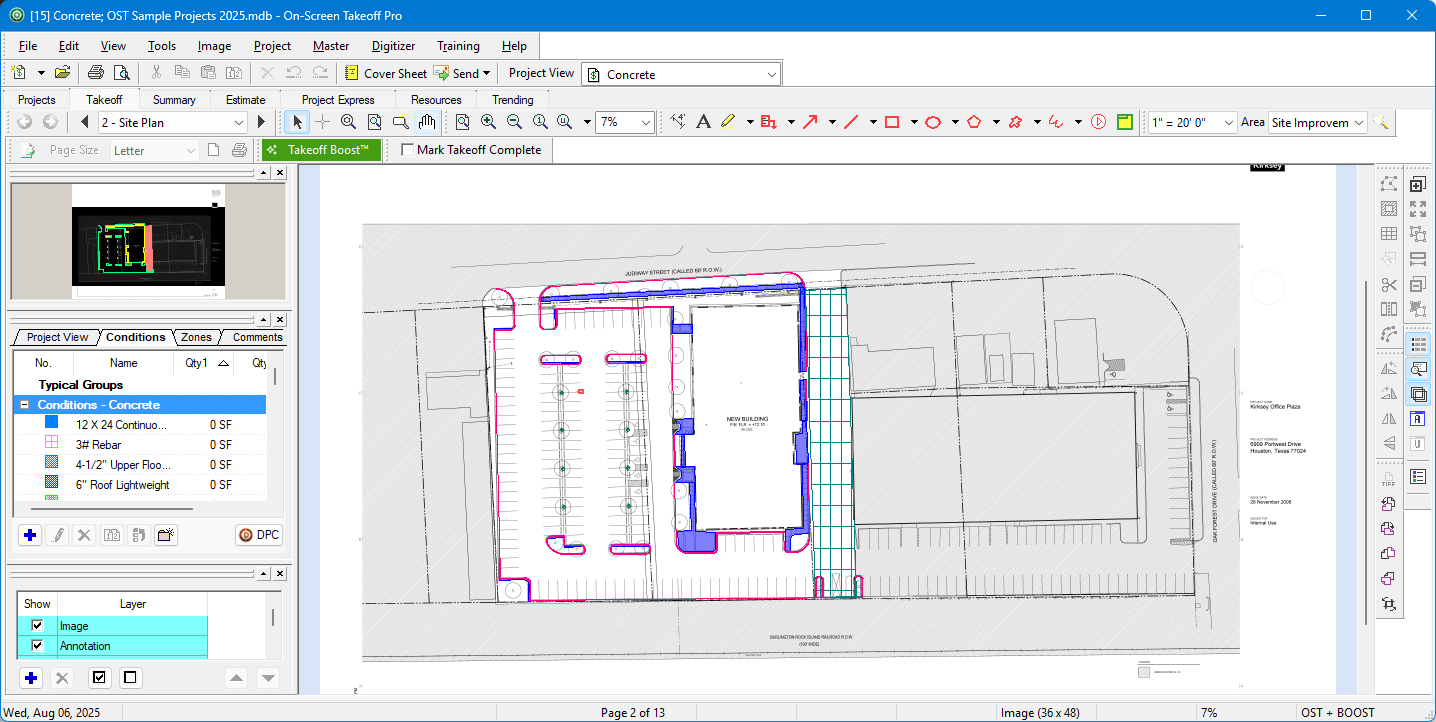
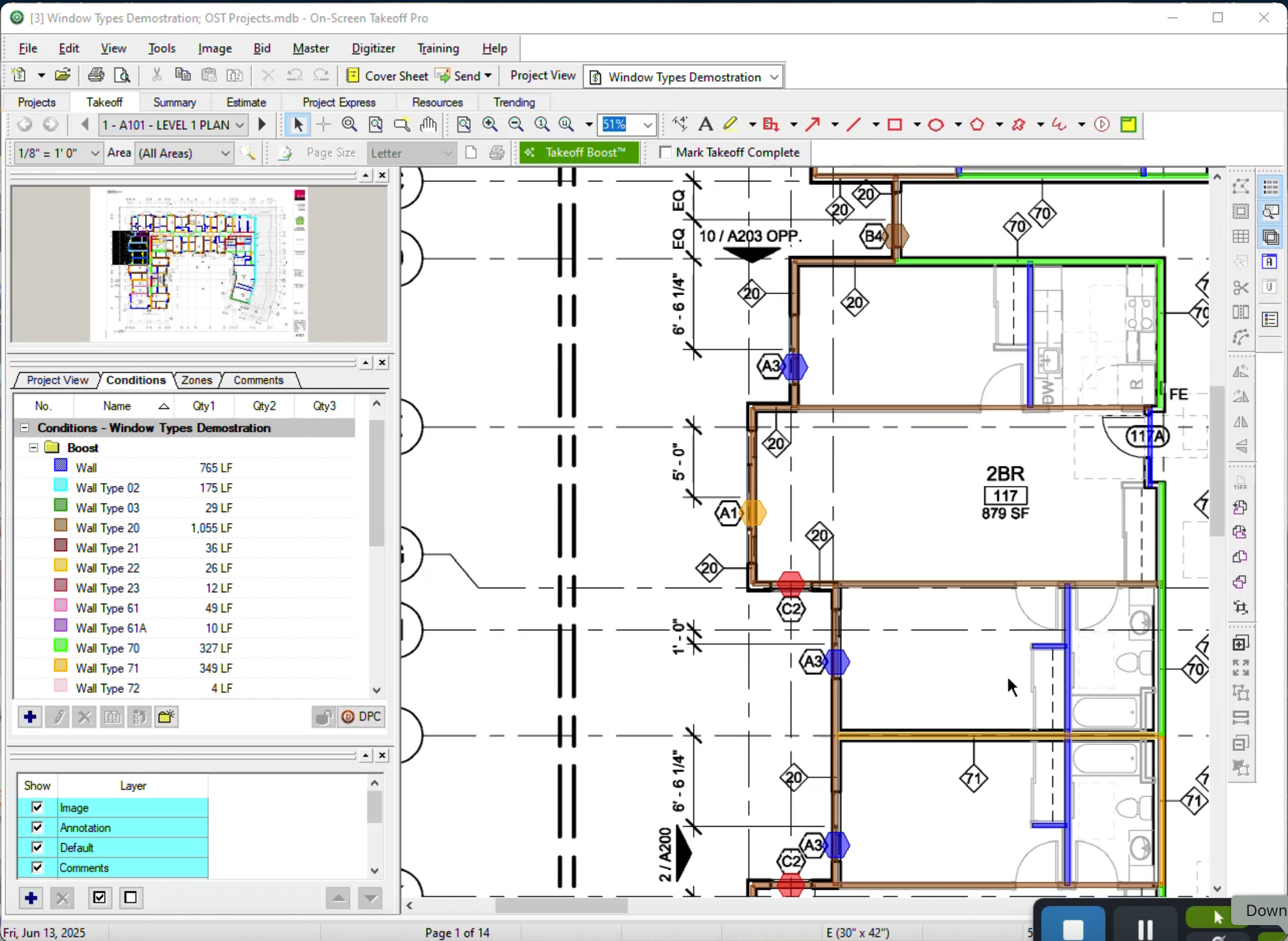
On-Screen Takeoff is a construction takeoff and estimating solution. It is intended to streamline takeoff, RFI, and bidding processes.
N/A
Pricing
4Clicks for Federal
On-Screen Takeoff®
Editions & Modules
No answers on this topic
Offerings
Pricing Offerings
4Clicks for Federal
On-Screen Takeoff®
Free Trial
No
Yes
Free/Freemium Version
No
No
Premium Consulting/Integration Services
No
No
Entry-level Setup Fee
No setup fee
No setup fee
Additional Details
—
On-Screen Takeoff® pricing varies based on licensing options and specific business needs. The annual subscription plans are designed to scale with project and team size.
Available Subscription Options:
•On-Screen Takeoff
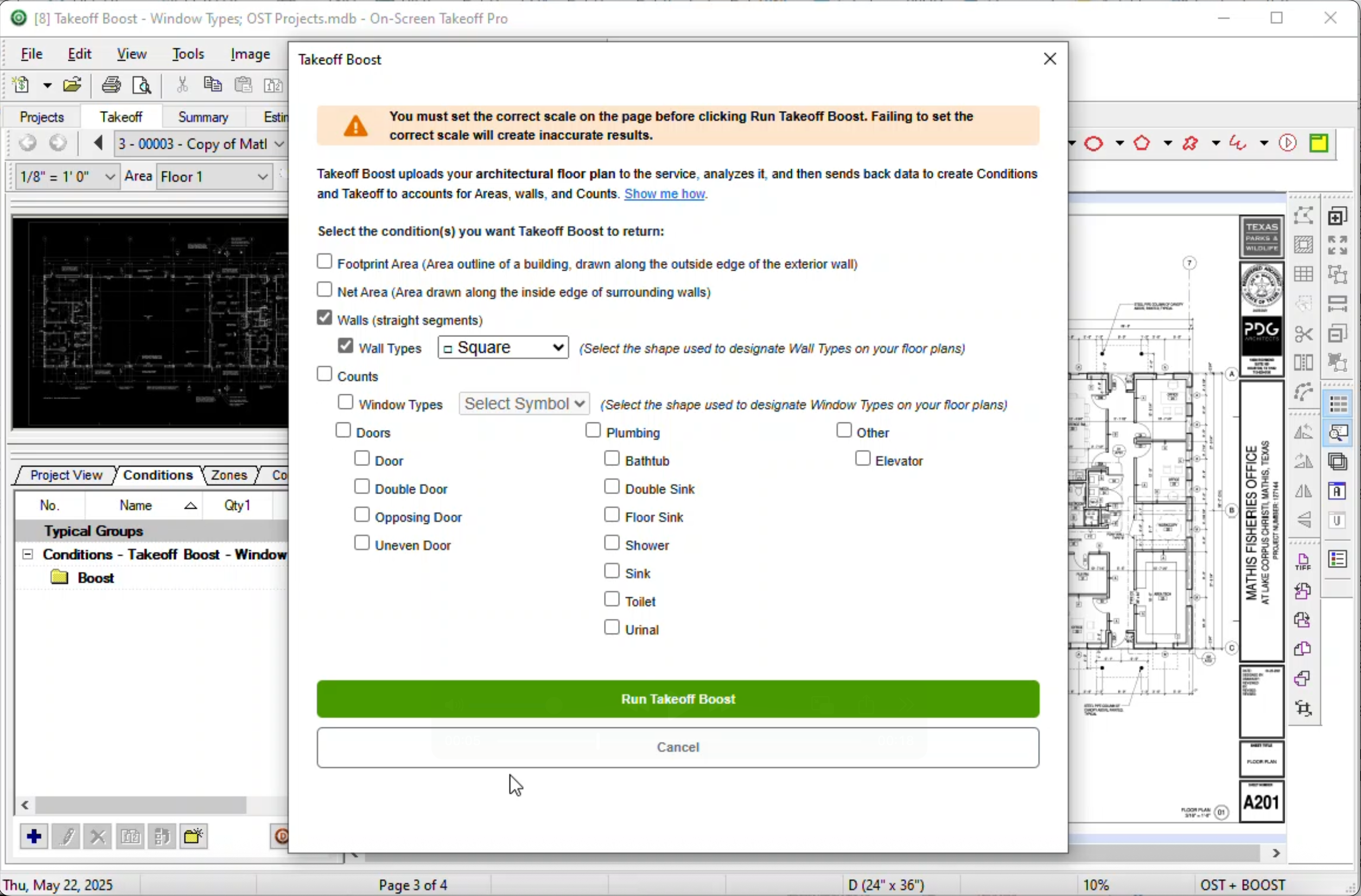
•On-Screen Takeoff with Takeoff Boost™
•On-Screen Takeoff and Quick Bid®
•On-Screen Takeoff with Takeoff Boost and Quick Bid
Each subscription is customized to match the subscriber's workflow requirements. A 14-day free trial is available.
I have only used On-Screen Takeoff. I have not had the opportunity or desire to use a different product. We also use their sister software called Quick Bid, so we are locked in with the On Center Suite.
Being able to train individuals in a single afternoon on the program and trusting them to get you something usable as soon as possible is quite invaluable. It is also something that I feel is unique to this program. It is just easier.
I think that the simplicity and set up of On-Screen Takeoff makes this an overall better software than Bluebeam or Navisworks. Both of which can be used to create good takeoffs but they are limited in ways that on screen is not so it is a much more versatile take off tool. I …
On-Screen Takeoff is a dedicated program for quantity takeoffs. While other programs have similar capabilities, On-Screen Takeoff is by far the most user-friendly and easiest to integrate with other tools. Being able to copy and paste directly into Excel is a huge boon for our …
On-Screen Takeoff is very easy to learn and very effective at getting the quantities desired. You can set the scale, create groups, layers, typical groups and so much more. It can also be used to produce visual aids for communicating information to individuals that might not be …
I used OST at my previous job. Did a trial with PlanSwift prior to purchasing OST at my new job. Even though they were basically the same, I liked OST much more because I was more familiar with it.
OST simply is a more robust product at the moment. Bluebeam is fine for a simple, quick takeoff but requires a vast amount of effort to layer, perform the calculations you need and (most importantly) secure your takeoff. Bluebeam may head for there in the future, but for right …
OST is still the most efficient and quick way of doing 2D takeoff. The software mentioned above all have their positives and negatives and they all have things which are far superior to OST. But OST really takes the cake when it comes to usability and a simple and useful …
Bluebeam has measuring / take-off capabilities, but it isn't as powerful as On-Screen. Bluebeam is a better version of Adobe that has additional features similar to On-Screen.
If you are considering purchasing this (very expensive) software, there is a 100% chance you are doing so because you have been awarded a Government contract that dictates you use 4Clicks Project Estimator. There are plenty of easier to use estimating packages out in the world, but you can't use any of them if you have a contract that requires 4Clicks.
The software feels 20 years old. It has not kept up with modern times, and practically functions like an old DOS program.
Clunky interface, arcane commands.
Even their training info focuses on hotkeys like this is 1995. Even though I am of an age to remember computers in 1995, the younger generations of managers/estimators are not. It is time to bring the software into the new century!
How documents are uploaded to the program. On-Screen Takeoff will locate the files from whatever path you originally save it to. Therefore, if you move the location of the document, OST will not be able to open your project until the path is redirected.
Taking off curved shapes.
If you could apply a unit cost to a quantity, it would eliminate the need to export takeoff to Excel.
It would be nice to be able to apply a different scale to the same page i.e. if there are two different details on a drawing at two different scales, I have to duplicate the sheet and make sure I make each sheet scale to the specific detail on the sheet.
It provides invaluable communication, organization, and flexibility to generate a project overview both visually and by the numbers. In addition to the overview it makes getting into the project details easy and quick, so our takeoff is accurate and correct every time
On Screen Takeoff is a valuable tool for what it does. Across the board it can keep track of the critical data and corresponding values without extra legwork. While powerful, it is prone to user error, and the problem can compound quickly if not realized up front. Overall a great project tool, but not without limitations
I have had very few issues with the software which is probably the first sign that there is a good customer support team, since I am sure they are working and fixing problems for everyone when they get a report from somewhere. The few times I have had to reach out to support they have been knowledgeable and on top of helping me quickly get my issues resolved.
Implementation was as simple as setting up the program and creating databases. Everything else was already in use and this was a supplement to the final organization of the system
OST is still the most efficient and quick way of doing 2D takeoff. The software mentioned above all have their positives and negatives and they all have things which are far superior to OST. But OST really takes the cake when it comes to usability and a simple and useful interface. It's just so easy to create a condition on the fly and start taking something off. When it comes to actual 2D takeoff, OST is by far the easiest and most efficient way of getting the work done.
As stated before, if you are buying this software, it is because you have a contract forcing you to. While it does work, it is clunky, awkward, and very expensive.
The price of the software and databases has always been high, but with the fairly recent acquisition of 4Clicks by Gordion (who also bought RS Means for their databases), there is literally no competition. Prices will continue to be very high, with no check on how high they can go.
Again, can't fault 4Clicks tech support, as I think it is the best in the industry. They know their product and they respond to issues immediately. Considering what we spend a year for this product, however, you would expect nothing less.
The main benefit for using this software is that our estimating takeoff productivity has gone way up from where it was before allowing us to compile bids and estimates in a quicker and more accurate way.
The ease of use has allowed us to reduce the time and investment we have had to put into training new hires on the software.