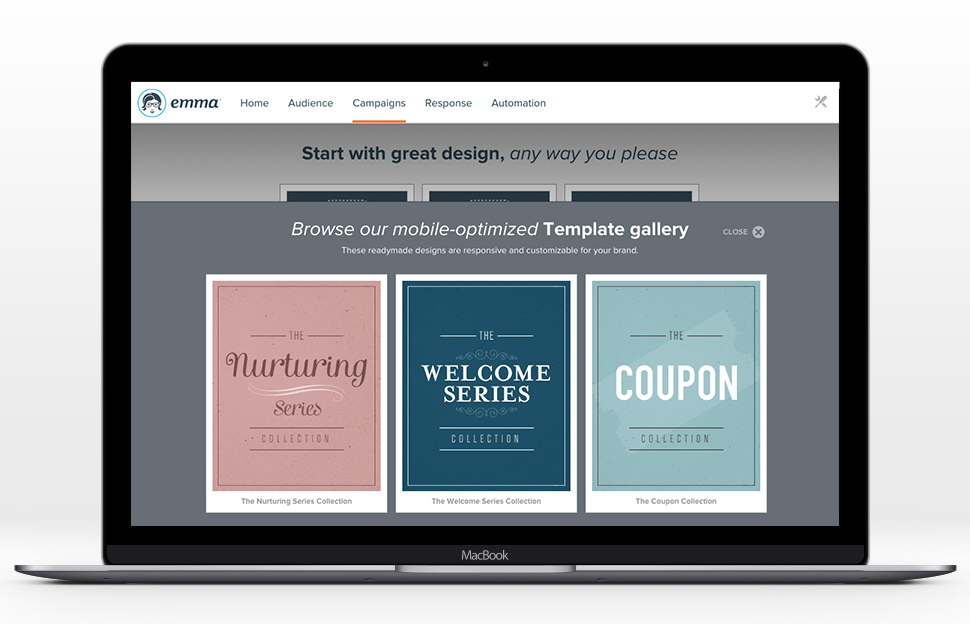
Emma by Marigold is an email marketing solution. Its key features include mobile-ready design templates, email automation, audience segmentation, and dynamic content. The software includes integration with third-party CRM solutions, ecommerce platforms, and social networks.
$500
per year per user
Everest (Return Path + 250ok)
Score 10.0 out of 10
N/A
Everest is an integrated email success platform providing crucial insights and deliverability guidance so users can reach more people, increase engagement, and improve efficiencies of their email programs. Everest helps to improve email deliverability by getting complete visibility into email marketing metrics and sender reputation, understand the audience and deliver content that is timely, personalized, and functions flawlessly on any device, and get a holistic view of a company's…
Emma is a step up from Constant Contact and two steps up from Mailchimp. Emma is affordable and easy to use for all types of companies, but especially for smaller firms and startups. It’s in compliance with SPAM laws, but has an advanced platform to keep your emails from going …
I like Emma much better than MailChimp because of the flexibility and ease of the user interface. I used MailChimp for a previous position and I felt like the home page was definitely more cluttered and it had a clumsier navigation portal. I also think Emma's email design …
Emma had a more robust multi-level account structure which empowered individual locations to participate at the ground-level. Additionally corporate was able to maintain oversight, template creation, marketing automation, and data reporting. The goal is to provide the locations …
I use MailChimp a lot, and while I like it, at the end of the day Emma simply is the most cost-effective. There's not a HUGE learning curve, compared to MailChimp, which is nice, since our non-designers can take a proverbial 'whack' at an email and we can trust that it will get …
Compared to Act-On, Emma is miles above regarding the ease of use and simplification of complex features. Drip campaigns really are a breeze with Emma's intuitive data. You will experience WYSIWYG glitches due to the nature of the program but Emma offers better templates to …
Emma is a good alternative, but I think mailchimp may be a better and more affordable alternative. Especially since mailchimp is continuously releasing new features and improving their product.
MailChimp seems to offer more customizable options than Emma, but Emma is far less buggy. I used Constant Contact while working with another nonprofit organization and did not anything about it.
We moved away from Constant Contact because of the reputation it was starting to get with not auditing its domain and not providing us with the best possible brand reputation and also because we just didn't get the analytics we wanted to improve our process. With Emma, we can …
Emma is the easiest to use platform I've tried so far. It was easy to setup and send the first enewsletter. The functionality is very user friendly and it "makes sense" as you go through to add content and users. It's made being a marketing team of one very efficient.
Mail Chimp: the price was better, but the platform was not predictable. You did not get the same support with mailchimp. Constant Contact: This is an outdated system that does not make it easy to design modern, clean emails and I consider it a dinosaur.
Emma was the perfect solution for what we were looking for due to its easy to use interface, relatively low cost and basic functionality. We were not looking for expensive, complex tools to send out multiple campaigns with various controls and tests. We also were impressed with …
At the time we made the decision to move to Emma, my organization was using both MailChimp and Constant Contact. Emma's drag-and-drop template editor surpassed both, and even editing the pre-made template HTML in Emma was easier. List management was much smoother than the …
We moved from Emma to SendGrid. The deliverability of Emma is lower than Sendgrid and the overall functionality of Sendgrid feels more fit for a digital marketing agency. The number and design of the Emma templates far surpasses that of Sendgrid though. Emma is much more suited …
None of those platform were good for an agency and their clients. Managing multiple email clients in one system isn't something you find everywhere. It's also not easy to pay for the other platforms since they are built for the enterprise and not SMB.
Our internal competitors are the individual email platforms our stores have signed up for. In general, they need to take our HTML and upload it themselves, making Constant Contact and MailChimp very cumbersome. Emma, on the other hand, allows us to take charge of that. Users …
We chose Emma in addition to Sendgrid to protect the integrity of our transactional email deliverability. Emma's delivery rates were good. We later found Mailchimp a bit cheaper and easier to work with in our specific use case but I still think it's worth testing Emma if you're …
MUCH more straightforward and usable, PeopleVine requires someone with a lot more coding knowledge to do simple things like change a font color or hyperlink text and is better used by an agency with extensive access to those experts whereas Emma can be taught to just about …
Emma is night and day difference from Constant Contact in terms of customer support, feature set, and usability. It is so much better and more affordable. Emma is a step down in feature set and functionality from Pardot, Marketo, or Hubspot, but if you are a company that is not …
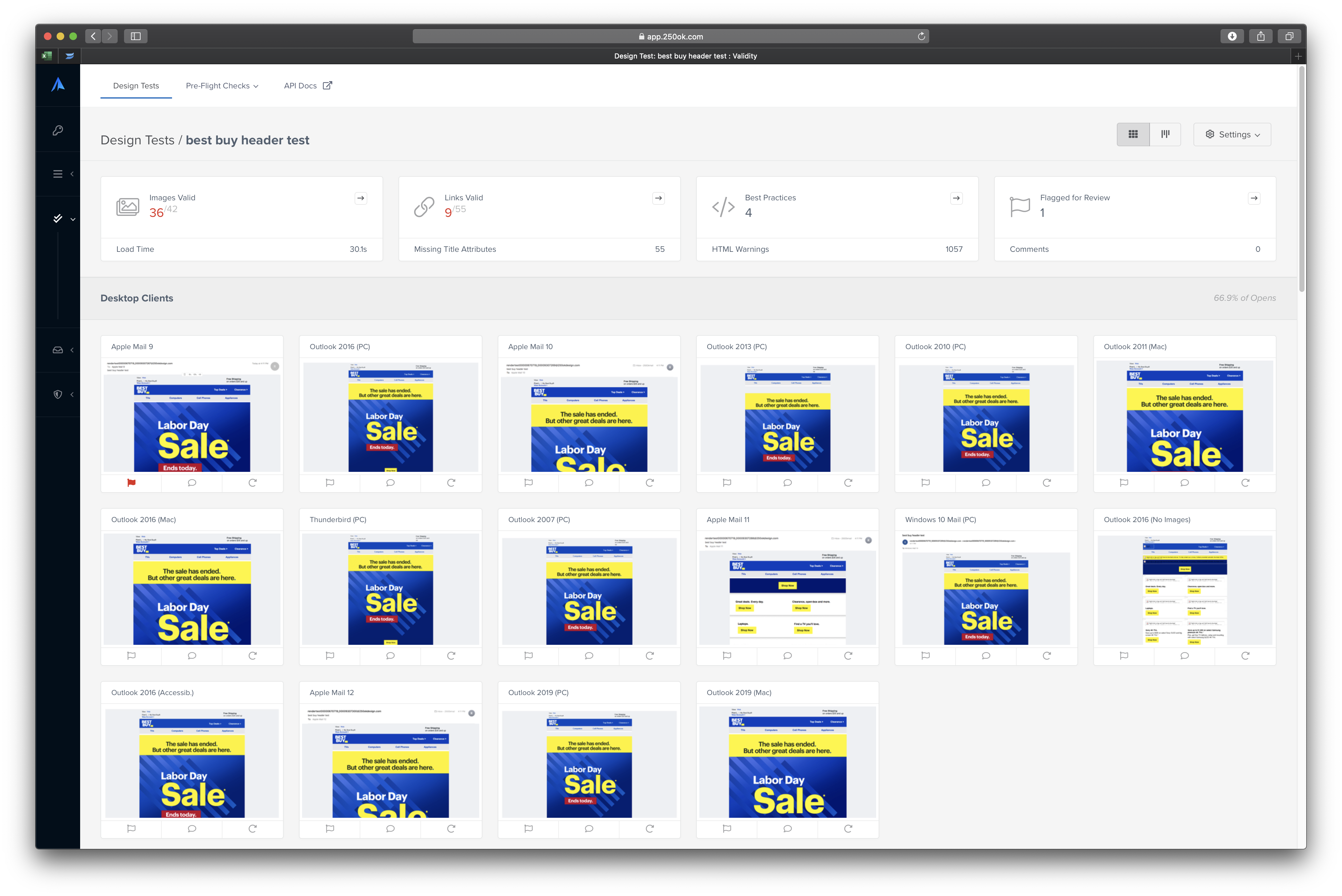
Litmus does a great job of checking for specific things related to design or spam filtering, but the overall comprehensive approach that Everest (Return Path + 250ok) has by implementing seed listing, list validation, and pixel engagement offers a much stronger solution for …
As a long-term Return Path client, we haven't ever used any competitor products as we always felt that what we were using was best-available. So when 250ok and Return Path were combined, the best of both is visible within the new Everest umbrella product, Validity Everest …
We have used both and they're both excellent systems. 250ok has the edge with reporting and function but Return Path has a bit more data when it comes to Sender Score data. Either is a really good system and I'd recommend either for those looking for a toolset to help resolve …
ReturnPath is best in the industry for managing email deliverability. There are other adequate competitive options, but ReturnPath can offer a custom solution for your brands.
Return Path came with our Salesforce Marketing Cloud implementation. We have not seriously looked at additional tools to complement or replace what we're getting through Return Path.
Like I said before, Return Path is really the budget bundle. You get a lot of service for how much you pay. Since I am currently at an early stage startup, we could not afford Litmus, so having Return Path is crucial. The partnership with SalesForce also allowed us to get it at …
After using Litmus for a few years, we enjoyed their feature set but were not pleased with price and feature changes. Email on Acid was a good choice for testing your email templates but didn't have enough features for email deliverability monitoring.
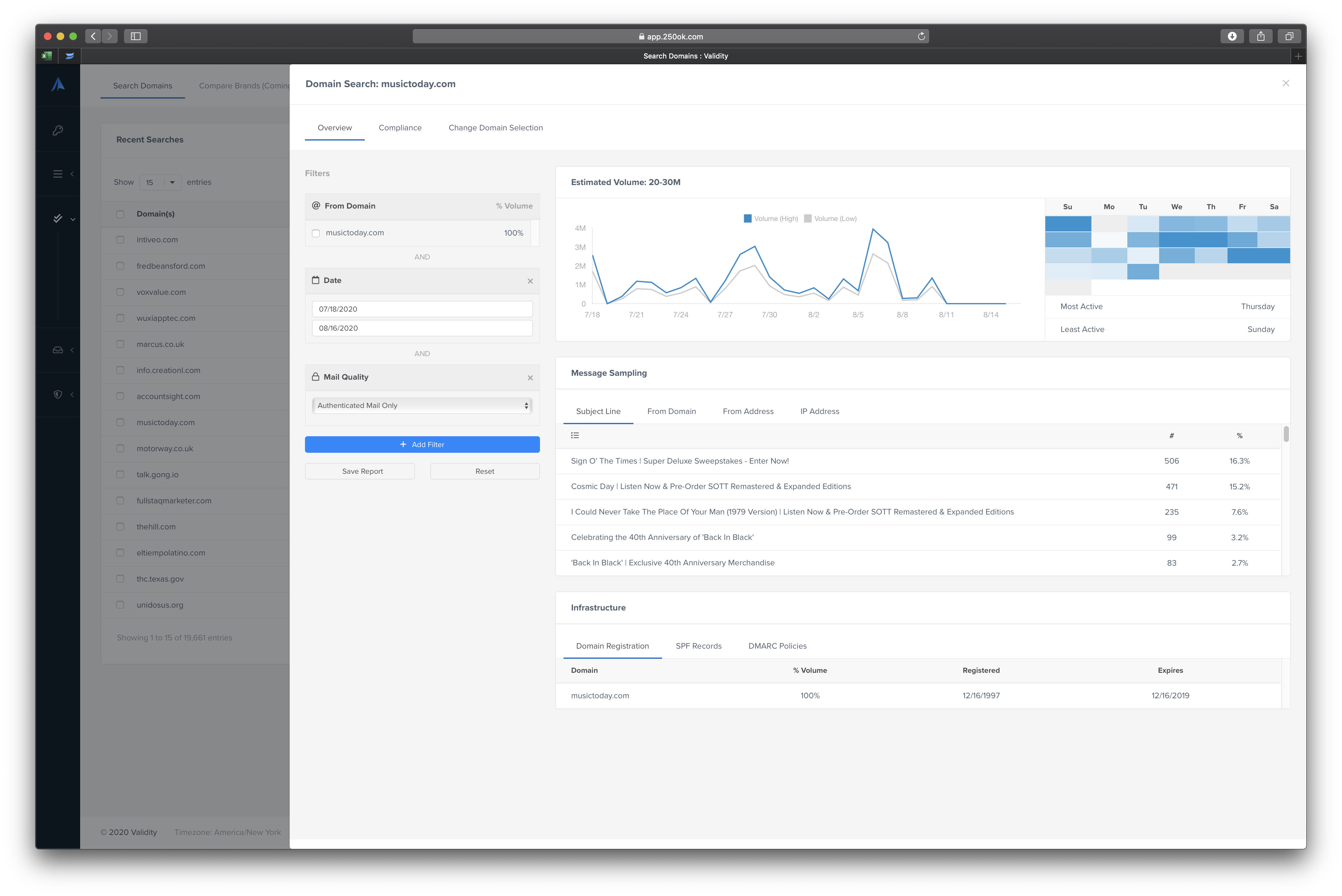
250ok provides much greater insight into email deliverability, compared to email marketing platforms. Typically, email marketing platforms only provide you the following: open rate, clickthrough rate, spam complaints, and bounces. 250ok actually shows you where you're landing …
Return Path and 250ok are meant to do same things but in slightly different ways. Both use seed lists but RP uses panel data while 250ok uses engagement data. RP offers certification and is more expensive while 250ok is more affordable.
Return Path was the first solution that we looked into based on the native integration with Salesforce Marketing Cloud. That was the biggest selling point for us. We didn't do a lot of research on other products but 250ok was one we did look at but ultimately liked Return Path …
When reviewing competitors to do the audit and to give us insight into our deliverability, Return Path seemed to have a more strategic sense of the issue and they were able to dive deep to get to the root cause, whereas some of the competitors where diagnosing on the phone …
I used to host and manage email internally. I moved this into the cloud with an ExactTarget email marketing hub to manage all of the email being sent. The plus for Return Path is that the white listing features offered are not offered by other vendors or not to the same degree …
We looked at 250ok and Pivotal Veracity. Each has their own perks. Return Path has the best inbox monitoring by far but is the most expensive and that isn't even close. 250ok has the best blacklist monitoring capabilities and was the best priced but the inbox monitoring wasn't …
Using Emma for weekly templated email use with minimal changes is awesome. If you want you can create a master and make minor graphic edits quickly and easily from your smartphone. Any edit is possible as long as the artwork is on the online server. Only time I hit a bump in the road is when I was asked to change the style sheet and did not know that the pricing plan I was on did not include this feature. Client had to wait to send new format until Emma performed the requested changes.
Every new or established brand should be using Everest. It doesn't matter what you're trying to say in your emails—if they're not reaching the inbox, no one is listening or reading. Everest gives you the insight you need to understand your inbox placement, reputation and so much more.
Drag and Drop Interface - I love the drag-and-drop interface used to design campaigns. It makes it easy for creative types to get the look they want, and it helps less technically and aesthetically adept users to create campaigns that still look great. After using both Constant Contact and Mailchimp, I think Emma comes out on top in terms of ease of template design.
Master Admin Account - Having a master admin account controlled by one person allows us to deploy brand assets to each sub-account, and we're also able to push out templates for users who aren't ready or don't have the time to design their own.
Dynamic Content - Dynamic content has proven so useful to us, especially in our Admissions Office. Making it possible for regular users to easily create emails using dynamic content is a VERY strong feature that, in my experience, is unique to Emma.
Great Tutorials - Emma does a great job taking care of its users. The support folks are always kind and helpful, but Emma publishes an array of tutorials and resources to help with just about anything its users encounter, from how to use custom merge fields to advice on creating the best campaigns.
Inbox placement data using seed list: It tells you about your inbox placements, spam, missing, and complaints. Very useful data that tells you that you are on the road!
Sender score for all I.Ps: Tells you quickly about your I.P score, helps you work fast as you know everything is fine, saves a lot of time.
Online support: Support from specialist, have an expert to guide in tough times to suggest options or to support your action strategy.
Setup of users - We used to be able to setup a user and send them our own welcome email. Emma has since set up the ability to add users where they send the welcome email. It's a great new feature, but it doesn't always work. We've had some users who never receive these emails and then we need to reach out to support anyway.
The code to set up a configurable email is cumbersome. It's great that it is so customizable, but there is a learning curve.
A good tutorial on how to leverage it would be helpful. Navigating is easy, but there's a lot of information and it takes a while to understand what everything means.
The reporting feature is intimidating, creating anew one isn't as user-friendly as the rest of the interface.
I understand what seeds are, but for new users, a very basic tutorial on what they are and why they are used would be helpful. Right now you have to have a baseline understanding of them before using it.
Easy to use and gets the job done without too many "extras" (ex. we didn't need a full marketing automation platform so Emma had what we needed to send email marketing communications without having to pay for the stuff we didn't need)
Return Path helps us stay ahead of the curve and are a partner in helping us optimize our email program. They also keep us up-to-date on email laws and the changing ecosystem so that we are prepared and ready for changes, whether they're behavioral, legal or technology-driven. I definitely consider Return Path a necessary ingredient to sustaining a healthy email program.
While every WYSIWYG software will experience glitches, Emma handles them well. Keep in mind they rarely happen, but they do, it can be of annoyance. Regardless, Emma allows my organization to create seamless email campaigns using fresh data. Emma makes coming up with strategic decisions very easy. The list segmentation that Emma feature allows us to easily manage a large list without issues. Overall, Emma is extremely usable with nearly no learning curve!
I hate that to get support I have to submit a question to a public forum and wait for a response. I just want the ability for a quick live chat to answer my simple help questions quickly or at the very least submit a ticket via email and get a status update.
Absolutely fantastic support. It runs circles around the competition. They regularly reach out and chat, even if it's just to see if there's any issues we need to discuss. They clearly want the business and don't forget you once you sign the contract which is an issue with other similar services.
I joined my company after the implementation was nearly complete. We used the Return Path tool as we slowly increased our send volume in Marketing Cloud to monitor IP reputation and inbox placement.
Emma had a more robust multi-level account structure which empowered individual locations to participate at the ground-level. Additionally corporate was able to maintain oversight, template creation, marketing automation, and data reporting. The goal is to provide the locations with the ability to send their own marketing messages, saving corporate marketing time, and providing more genuine, locally-focused email campaigns. Emma was very effective at making that happen.
Like I said before, Return Path is really the budget bundle. You get a lot of service for how much you pay. Since I am currently at an early stage startup, we could not afford Litmus, so having Return Path is crucial. The partnership with Salesforce also allowed us to get it at pretty low cost.
Return Path has helped me enable better email delivery for our global partners e.g. some of our applications that send email to consumers in Australia or Europe.
Some of the functions that we utilized with Return Path were proving to be costly based on what the business needs were for us. That is why we cut back on some of the services we utilized.