
Jerry Robinson
Director of IS
Chose Epic
None of our previous products are in the list.

| Product | Rating | Most Used By | Product Summary | Starting Price |
|---|---|---|---|---|
 Epic | N/A | Epic offers a suite of medical practice management and EHR software. | N/A | |
 EHR 24/7 | N/A | Office Ally in Vancouver, Washington offers their suite of interactive asp internet based solutions allowing for patient care from the point of contact in the physician's office to receiving payment from the insurance companies and providing overall care management from the IPAs and Health Plans. For $29.95 per month/provider, Office Ally offers EHR 24/7, an Electronic Health Records Program designed to allow healthcare providers to spend more time with patients and less time on paperwork. | N/A |
| Epic | EHR 24/7 by Office Ally | |||||||||||||||
|---|---|---|---|---|---|---|---|---|---|---|---|---|---|---|---|---|
| Editions & Modules | No answers on this topic | No answers on this topic | ||||||||||||||
| Offerings |
| |||||||||||||||
| Entry-level Setup Fee | No setup fee | No setup fee | ||||||||||||||
| Additional Details | — | — | ||||||||||||||
| More Pricing Information | ||||||||||||||||
| Epic | EHR 24/7 by Office Ally | |
|---|---|---|
| Considered Both Products |  Epic Jerry Robinson Director of IS Chose Epic None of our previous products are in the list.  Chandan Singh Team Lead - Medical Scribe Process Chose Epic Epic gives extensive customization options in terms of utility and view. I have found this to be highly useful and efficient EHR as compared to other EHRs we use in our organization.  Caitlynn Dickerson Administrative Coordinator Chose Epic Epic has extensive features, options, customization and is truly a robust EMR software. As a user I can tell there has been much thought and effort into creating this software and they are constantly updating the technology to keep it user friendly. Epic can do more than any … |  EHR 24/7 |
| Epic | EHR 24/7 by Office Ally | |||||||||||||||||||||||||||||||||
|---|---|---|---|---|---|---|---|---|---|---|---|---|---|---|---|---|---|---|---|---|---|---|---|---|---|---|---|---|---|---|---|---|---|---|
| Billing and Claims Management |
| |||||||||||||||||||||||||||||||||
| Patient Scheduling |
| |||||||||||||||||||||||||||||||||
| Electronic Medical Records |
| |||||||||||||||||||||||||||||||||
| Medical Security and Privacy |
| |||||||||||||||||||||||||||||||||
| Workflow and Scale |
|
| Epic | EHR 24/7 by Office Ally | |
|---|---|---|
| Small Businesses |  athenaClinicals Score 9.6 out of 10 | athenaClinicals Score 9.6 out of 10 |
| Medium-sized Companies |  CareLogic EHR Score 10.0 out of 10 | CareLogic EHR Score 10.0 out of 10 |
| Enterprises |  eClinicalWorks Score 9.9 out of 10 | Epic Score 9.5 out of 10 |
| All Alternatives | View all alternatives | View all alternatives |
| Epic | EHR 24/7 by Office Ally | |
|---|---|---|
| Likelihood to Recommend | 10.0 (0 ratings) | 9.0 (0 ratings) |
| Usability | 9.0 (0 ratings) | - (0 ratings) |
| Support Rating | 9.4 (0 ratings) | 6.0 (0 ratings) |
| Epic | EHR 24/7 by Office Ally | |
|---|---|---|
| Likelihood to Recommend |
|
|
| Pros |
Caitlynn Dickerson Administrative Coordinator |
|
| Cons |
|
|
| Likelihood to Renew |
Jerry Robinson Director of IS | No answers on this topic |
| Usability |
| No answers on this topic |
| Support Rating |
|
|
| In-Person Training |
Jerry Robinson Director of IS | No answers on this topic |
| Online Training |
Jerry Robinson Director of IS | No answers on this topic |
| Implementation Rating |
Jerry Robinson Director of IS | No answers on this topic |
| Alternatives Considered |
|
|
| Return on Investment |
|
|
| ScreenShots | EHR 24/7 Screenshots  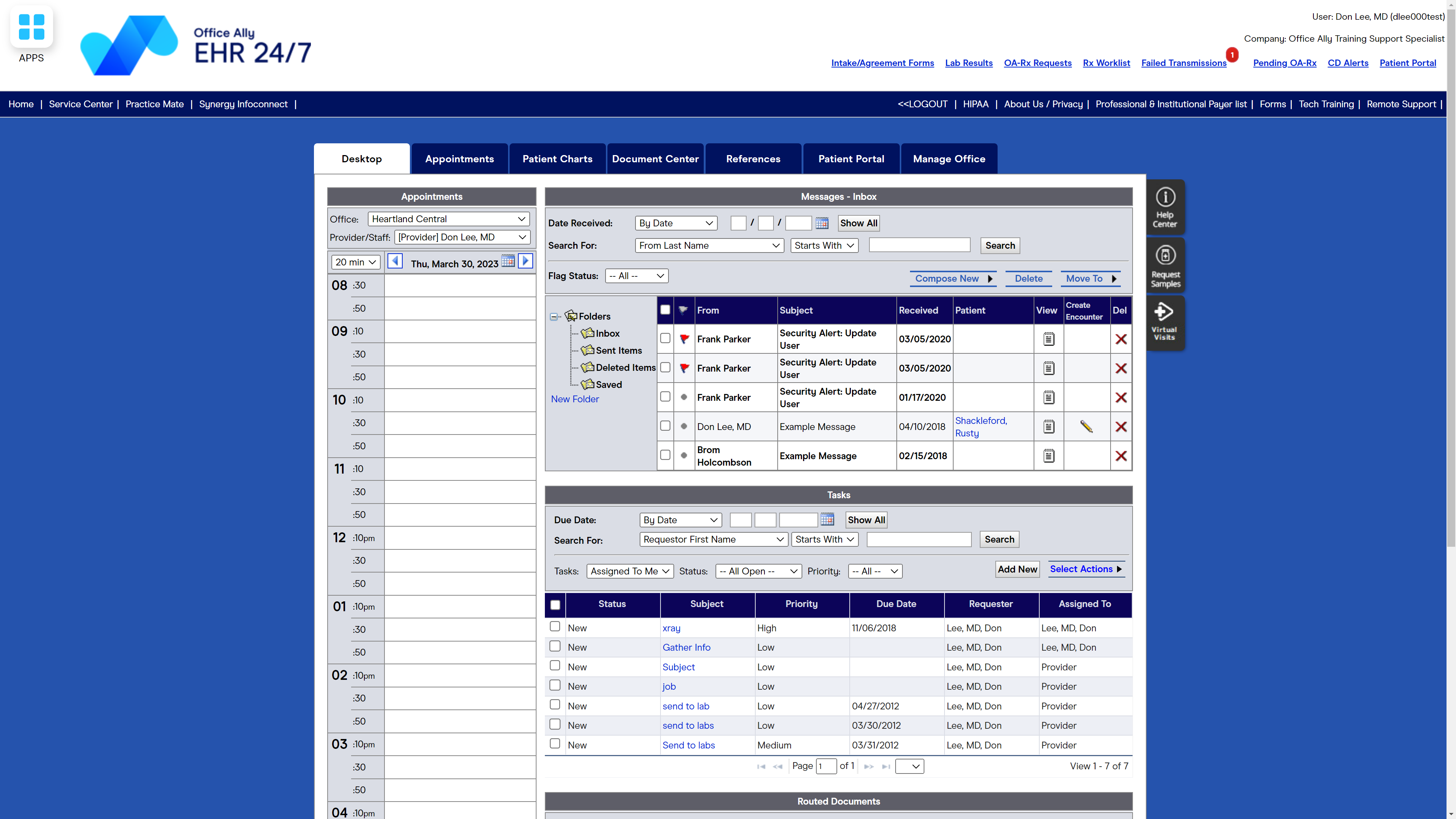    |