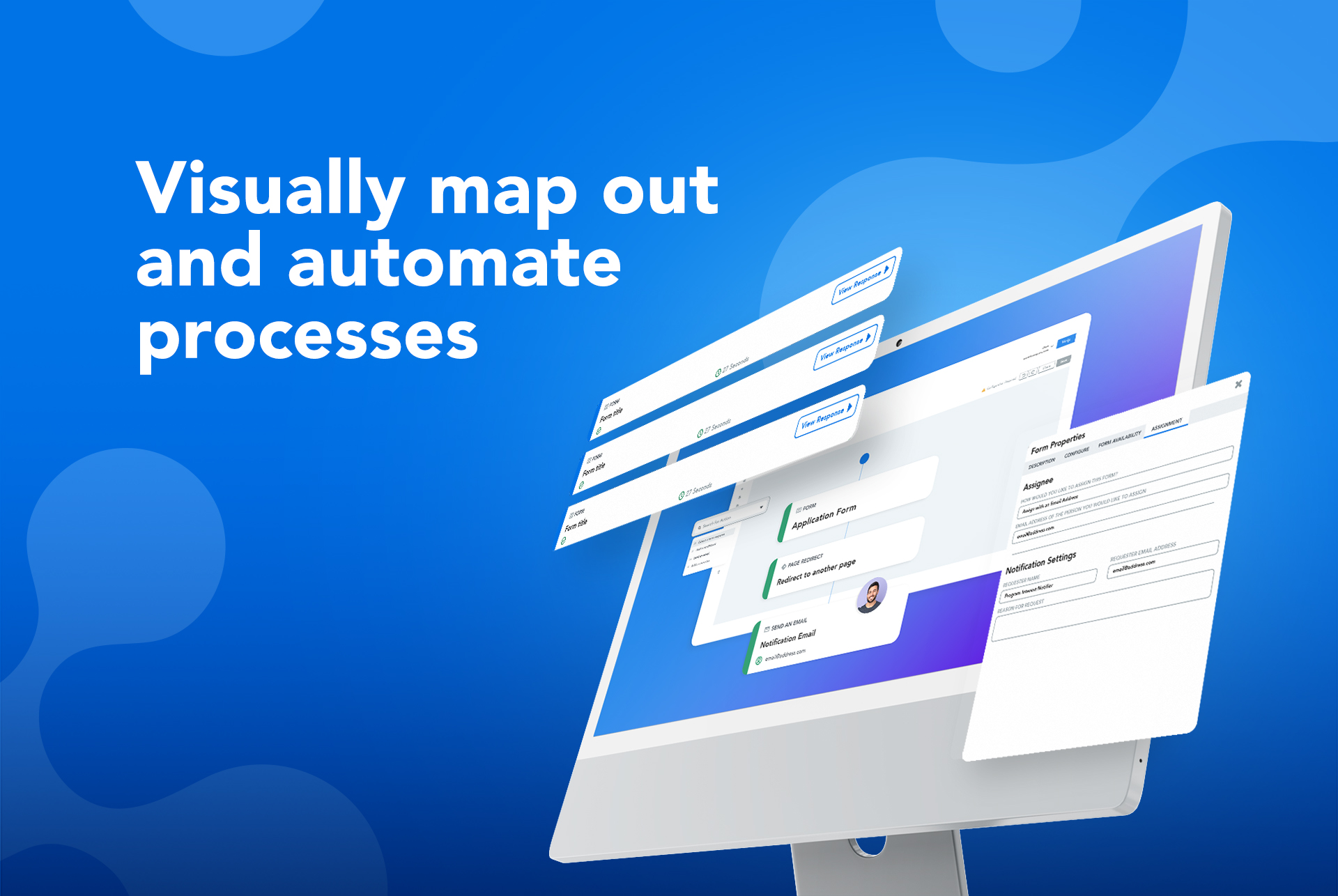
The FormAssembly Data Collection Platform helps organizations collect, connect, and protect data. It features a no-code form builder that simplifies the process of collecting data in the most complex environments. Multi-stage workflows automate manual processes and business-critical integrations – including Salesforce, Google, and Microsoft – provide a connected data ecosystem that ensures data is where it’s needed, when it’s needed. Its operational standards, combined with…
N/A
GetFeedback
Score 6.9 out of 10
N/A
GetFeedback from Momentive is a customer feedback solution designed to be easy-to-use, and measure the voice of the customer so companies can take action and provide an exceptional experience.
Form Assembly allows for advanced data mapping, pre-filling forms with Salesforce data, and working with custom objects. FormAssembly excels in Salesforce Integration, as it is highly specialized and deeply integrated. Often considered the industry leader for Salesforce forms, …
FormAssembly has superior Salesforce configuration settings, but JotForm offers a much greater variety of systems integrations. We don't really use reports or workflows in FormAssembly, but the Jotform Report Builder is frustrating at best. Workflows feel comparable from my …
It is easier to design a form through Formassembly and integrate the results with Salesforce. When compared with docomotion, Formassembly is user-friendly. Additionally, the new feature in Formassembly that allows for designing signatures is beneficial.
Our website couldn’t handle self-hosting Formidable Forms as a plug-in on our website and would frequently crash. Titan Forms had poor communication and was difficult to schedule customer service. Formstack was self-hosted on our Salesforce, but was overpriced for our use case …
TargetX Forms is another option that I have. We decided to continue using FormAssembly due to the lack of features and flexibility available in TargetX Forms.
We have only used FormAssembly, once we were made aware of it by a consultant a few years ago. I checked the vendor recommendations against the Salesforce forums to see if it was recommended there and it was, plus I read the user-reviews on the AppExchange page. Once I got …
When we were researching options 2 years ago, FormAssembly beat other form tools hands down based on Salesforce integration features. The ability to declaratively set up prefill and post-submission data connectors supporting complex hierarchical data relationships was huge …
We considered a few others - Jot, conga, etc. We landed on FormAssembly mainly for the SalesForce integration. It's just so clean, and you get SO MANY options. The way that you can automatically create cases/leads (and do so conditionally) was huge for our support team. We've …
I think that FormAssembly does a good job of integrating with multiple platforms, making it appropriate for any use. I think that it is a little less user-friendly than WooBox, however.
The big differentiator for me with FormAssembly has always been the Salesforce integration. I have yet to find an alternative form builder that makes building integrations with Salesforce any easier than FormAssembly. I like the look and feel of Typeform forms better than …
We evaluated FormSpring, and Caspio among the products we were interested in. Considering that FormAssembly was available in an on-site version went a long way towards our decision, but frankly, it was just an easier product to use at a very reasonable price for what has the …
I was not the key decision maker in purchasing this product; I only provide administrator and user support for the product. FormAssembly works fairly well for our needs as an organization and we have not explored any other products for our business needs. If considering similar …
Banking Officer, Client Experience Process Coordinator
Chose GetFeedback
Google forms was very basic and didn't offer the same branding options as GetFeedback. GetFeedback gave us the ability to create a survey and have it look like our company. Google forms just always looked like Google forms. It wasn't individualized enough for our liking. …
Satmetrix actually replaced GetFeedback, by SurveyMonkey at my previous company with a lot of objection from myself. The rationale was: wanted quicker survey deployment and better analytics, neither of which was solved by bringing in Satmetrix as the issues were architectural …
GetFeedback has a professional appearance and dynamic content UI that is more trustworthy than other solutions. Additionally, the transitions and branding of GetFeedback are user-friendly on any device making survey response easy to manage. Finally, Salesforce integration is …
The only other product we have used recently is SurveyMonkey. GetFeedback has better UI, is easier to use, integrates much better with Salesforce, has better logic/workflow, and is better in almost every way. But SurveyMonkey excels at crowdsourcing data and reaching audiences …
It definitely has more functions than the other tools out there. I'd recommend them over most any other survey tool besides perhaps some epic one that costs thousands. For the low-cost survey option, this seems to be the best I've seen in the market so far to this date, so yeah.
We've actually selected both. FormAssembly gives us much more flexibility from a Salesforce integration perspective...but we like the look and feel of GetFeedback better so we tend to use that when the integration isn't as important.
Senior Analyst, Renewals and Customer Success Operations
Chose GetFeedback
We used to use the survey tool that was part of Gainsight, but it didn't allow for extensive customization or branding. Other departments have used surveymonkey but there were gaps with customization and importing the data into SFDC or the data warehouse.
At the time of our evaluation we found that the integration with our CRM just wasn't there. The pricing and the ability to customize the templates made the choice to select GetFeedback easy.
FormAssembly has been an essential tool to have in our back pocket. It's best when you need a form quickly and can compromise on some of the dynamic elements that would be possible in Visualforce. It serves a particularly critical need when skilled developers are at a premium, but clever admins are available.
It is great to standardize under a single survey tool. Because it integrates so well into Salesforce it is very useful if your business lives and breathes in SFDC. It's helpful if you have a lot of surveys you are sending at different points in the customer lifecycle. You will need to have your own email delivery tool to really take advantage of when you are engaging a customer.
SalesForce integration is really nice. You can map to specific fields with form values, or you can use detailed formulas. You can also choose to bypass assignment rules on a per-form basis, and create customized logic for when cases are created, when leads are created/merged, etc. It's very robust.
Form creation in general is very simple. They've gotten good over the years of creating an intuitive, drag and drop interface that's quick to edit. I like that you can also assign values to fields so conditional form building gets easy.
I like that you can customize how responses are viewed in the response window. Choose what columns show up so you can find records with ease, and with just one glance. OR you can download everything to excel in a snap too.
The information coming from Salesforce to use in the choices for an answer does not always appear as needed. (API vs name).
Ability for Admins to see and edit every user's forms. This would be useful in the event that someone is no longer with the institution.
When a form is cloned, it would be nice if the connector were also cloned but not active. This would allow us to verify and turn on without having to rebuild everything.
Survey submissions can notify only one email address so if you need individual responses to go to another individual you have to either set-up Salesforce workflows/email alerts or auto-forward rules in the email inbox
Salesforce integration and sync is great and usually reliable but occasional record ID changes cause a failure in a survey response to sync to Salesforce. GetFeedback has no way to notify the administrator of the record's failure to sync.
Easier to sync all data to Salesforce and do survey reporting within Salesforce than within the GetFeedback user interface
One major point for us is our migration to a completely Microsoft infrastructure. IN addition to that, the afore mentioned need to ingest external data resources means that we do have our eyes open toward the landscape so that we can fill these needs. This in no way indicates a move away from FormAssembly: their support is first rate, and so far the product has always stood up to the tests we've put it through.
Given how many sophisticated features appear in the form builder itself, the back-end management can feel strikingly skimpy at times. More dynamic or visually appealing confirmation messages/email notifications would realign these with the existing capabilities of the forms themselves. This is a small issue though because data capture is our primary priority in form fills and it is always excellent in Salesforce!
It is incredibly straightforward to use. Setup time is hours to days. When it is up and running, you can forget it exists. The Lightning Platform integration then starts to provide many options around creative use of the tools. It becomes more about where you can extend to your hearts content. Lightning App developers will have a great time here.
While it's not a true development package and misses some features like ingestion of external data for lists, etc... the product is fast, stable, easy to use, and will suit the needs of anyone needing online form functionality with SalesForce and other connectors available for your marketing needs.
The few times, and I mean few, I have had to reach out to the support staff they were very helpful. I was also lucky enough to meet the developer at a users' conference. His willingness to hear what I had to say was impressive. After understanding his background coming from the CRM world I knew that he knew what we as users needed in the way of integration.
Form Assembly allows for advanced data mapping, pre-filling forms with Salesforce data, and working with custom objects. FormAssembly excels in Salesforce Integration, as it is highly specialized and deeply integrated. Often considered the industry leader for Salesforce forms, Formstack has strong integration, but may not offer the same level of granular control as FormAssembly.
Satmetrix actually replaced GetFeedback, by SurveyMonkey at my previous company with a lot of objection from myself. The rationale was: wanted quicker survey deployment and better analytics, neither of which was solved by bringing in Satmetrix as the issues were architectural around the self-built IP and NOT GetFeedback, which did precisely what it could with the data it had. Much like other NICE products I have encountered, the synergy with Salesforce is labored and incredibly challenging to get up and running. There was a lot of heavy lifting to get the two platforms to work with each other and the sentiment that I got from Satmetrix was that it wanted to be the centre of the CX world and would be much happier if Salesforce didn't exist. This is great if you a company that is solely marketeers but terrible if you want to leverage and use the multifaceted capabilities of CX strategies.
Our response rate for our lead qualifying survey has been hovering around 55%. That doesn't mean that they complete the entire thing, but at least we are getting some answers back. It also allows us to weed out any leads that are outside of our scope of work. The survey when answered in its entirety gets a lead 13 steps down our customer journey map.
The automation of sending out the recruiting survey has allowed our recruiting manager to focus on qualified applicants and has completely eliminated the duplicate data entry of key information that the hiring managers required for determining if a candidate should be scheduled for a phone interview. Over the past year of using this survey we received 145 survey back. That is 145 manual emails that no longer had to be sent out by staff. You do the math on that time savings.
The new hire training feedback has allowed internal trainers to understand how to better tailor each session to on-board future employees in a more effective manner. With over 33 different training modules you can imagine how intensive our on-boarding process can be and if we can understand what works and what doesn't this only adds to the effectiveness of each trainer.