Chose Gainsight PX
Unfortunately, I haven't used any other product like Gainsight PX so will move to the next question.

| Product | Rating | Most Used By | Product Summary | Starting Price |
|---|---|---|---|---|
 Gainsight PX | N/A | For SaaS products, Gainsight's product experience software enables companies to track every step of their user's journey and fully understand how they're interacting with a product over time. | $0 100 or less MAUs (Monthly Active Users) | |
 Roadmunk | N/A | Roadmunk is a roadmap visualization platform that is designed to enable product managers and their teams to communicate the strategic roadmap throughout their organization. The vendor says product leaders can easily input milestones, roadmap data and create unlimited pivots in real time. The vendor says it has differentiated itself through intuitive user-centric design, seamless manipulation of roadmap views and enterprise data security. Since late 2021, Roadmunk is part of Tempo. | $19 per seat |
| Gainsight PX | Roadmunk | |||||||||||||||
|---|---|---|---|---|---|---|---|---|---|---|---|---|---|---|---|---|
| Editions & Modules |
|
| ||||||||||||||
| Offerings |
| |||||||||||||||
| Entry-level Setup Fee | No setup fee | No setup fee | ||||||||||||||
| Additional Details | — | Ready to roadmap? All our plans start with a free 14-day trial. | ||||||||||||||
| More Pricing Information | ||||||||||||||||
| Gainsight PX | Roadmunk | |
|---|---|---|
| Considered Both Products |  Gainsight PX  Bob Osborn Director of Product Management Chose Gainsight PX We leaned towards Gainsight PX because of the tight integration with Gainsight. Implementations were somewhat similar but the ease of mapping for all features and modules was superior for PX.  David Jensen Operations Manager, Customer Success Chose Gainsight PX Churnzero is similar in its NPS and walk-through abilities as is user IQ but neither fits in the exact same category. Px is unique to anything I've used for the data extraction it offers. It's not a CS tool like those I mentioned but it is easily the best in terms of tracking …  Michael Wohlwend Senior Information Developer, User Assistance Chose Gainsight PX HelpHero is a very flexible and powerful walkthrough tool. We've used it alongside PX. We still use PX for most customer messages, CES surveys, and in-app badges. I also evaluated Pendo, WalkMe, and a few other DAPs.  Justin Miller Director of Customer Success Chose Gainsight PX We chose Gainsight PX over Pendo because of the connector with Gainsight CS for the Customer Success Team.  Helene Tapper Customer Success Manager Chose Gainsight PX I have not used a different product as hands-on as Gainsight PC.  Igor Kranjčec Product Marketing Manager for Growth Chose Gainsight PX The main reason is that Gainsight PX offers a perfect combo - analytics and customer engagement. That allows us to make the engagement contextual, based on real-time analytics results.  Julie Pinto Support Manager Chose Gainsight PX WalkMe: while the in-app engagements were powerful, there was no email capability, and the analytics were an afterthought (rather than a core part of the solution). WhatFix: the concept was great; the in-app engagements could be made into documentation and videos. However, we … |  Roadmunk  Matei Dăian Senior Technical Product Manager Chose Roadmunk Much easier to use Roadmunk than PowerPoint. The template is already set and the box heights are fixed. Having less flexibility is actually useful here, since you don’t have to build everything from scratch, you can just focus on the insights. The Gantt chart functionality in …  Rob Harol Sr. Director, Emerging Products at Swagbucks, a Prodege Company Chose Roadmunk To be quite transparent, Roadmunk was the cheaper option. However, it also provided a ready-to-use solution for the team that required little to no training to get up and running. It provided the needed results almost from Day 1. Aha! had the more robust feature set and the …  Aaron Hall, PMP Director, Project Services Chose Roadmunk Simple effectiveness (that was not PowerPoint). |
| Gainsight PX | Roadmunk | |
|---|---|---|
| Small Businesses |  Fullstory Score 9.1 out of 10 |  Craft.io Score 8.3 out of 10 |
| Medium-sized Companies |  Whatfix Score 8.2 out of 10 |  ProductPlan Score 9.5 out of 10 |
| Enterprises | Whatfix Score 8.2 out of 10 |  Miro Score 9.2 out of 10 |
| All Alternatives | View all alternatives | View all alternatives |
| Gainsight PX | Roadmunk | |
|---|---|---|
| Likelihood to Recommend | 8.0 (0 ratings) | 9.0 (0 ratings) |
| Likelihood to Renew | 8.2 (0 ratings) | - (0 ratings) |
| Usability | 8.0 (0 ratings) | 8.0 (0 ratings) |
| Support Rating | 7.3 (0 ratings) | 10.0 (0 ratings) |
| Ease of integration | 7.7 (0 ratings) | - (0 ratings) |
| Gainsight PX | Roadmunk | |
|---|---|---|
| Likelihood to Recommend |
|
|
| Pros |
Michael Wohlwend Senior Information Developer, User Assistance |
Rob Harol Sr. Director, Emerging Products at Swagbucks, a Prodege Company |
| Cons |
 Oded Wilder Head of Client Success |
Matei Dăian Senior Technical Product Manager |
| Likelihood to Renew |
Helene Tapper Customer Success Manager | No answers on this topic |
| Usability |
|
|
| Support Rating |
Bob Osborn Director of Product Management |
Aaron Hall, PMP Director, Project Services |
| Alternatives Considered |
|
|
| Return on Investment |
|
|
| ScreenShots | Gainsight PX Screenshots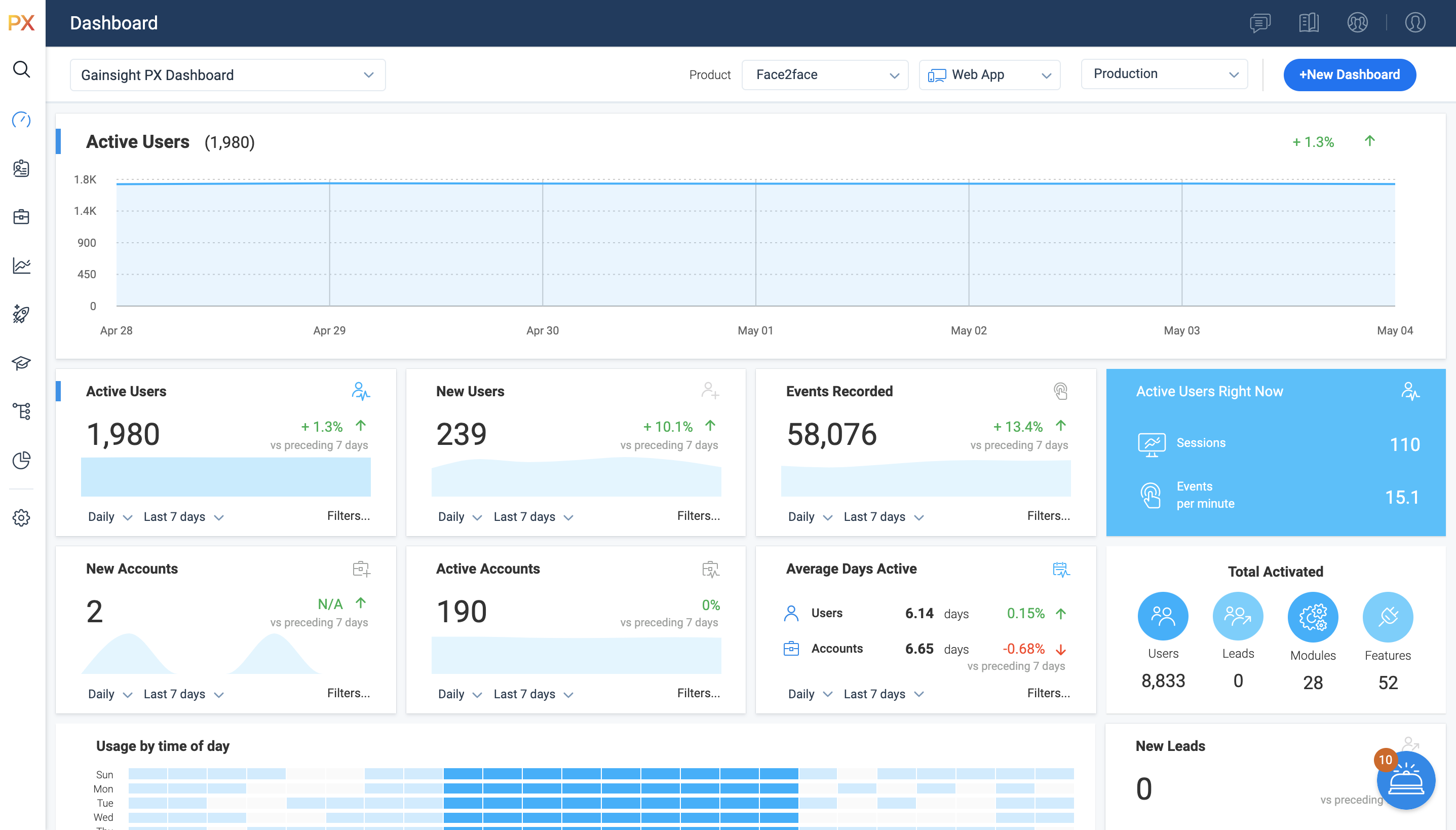      | Roadmunk Screenshots 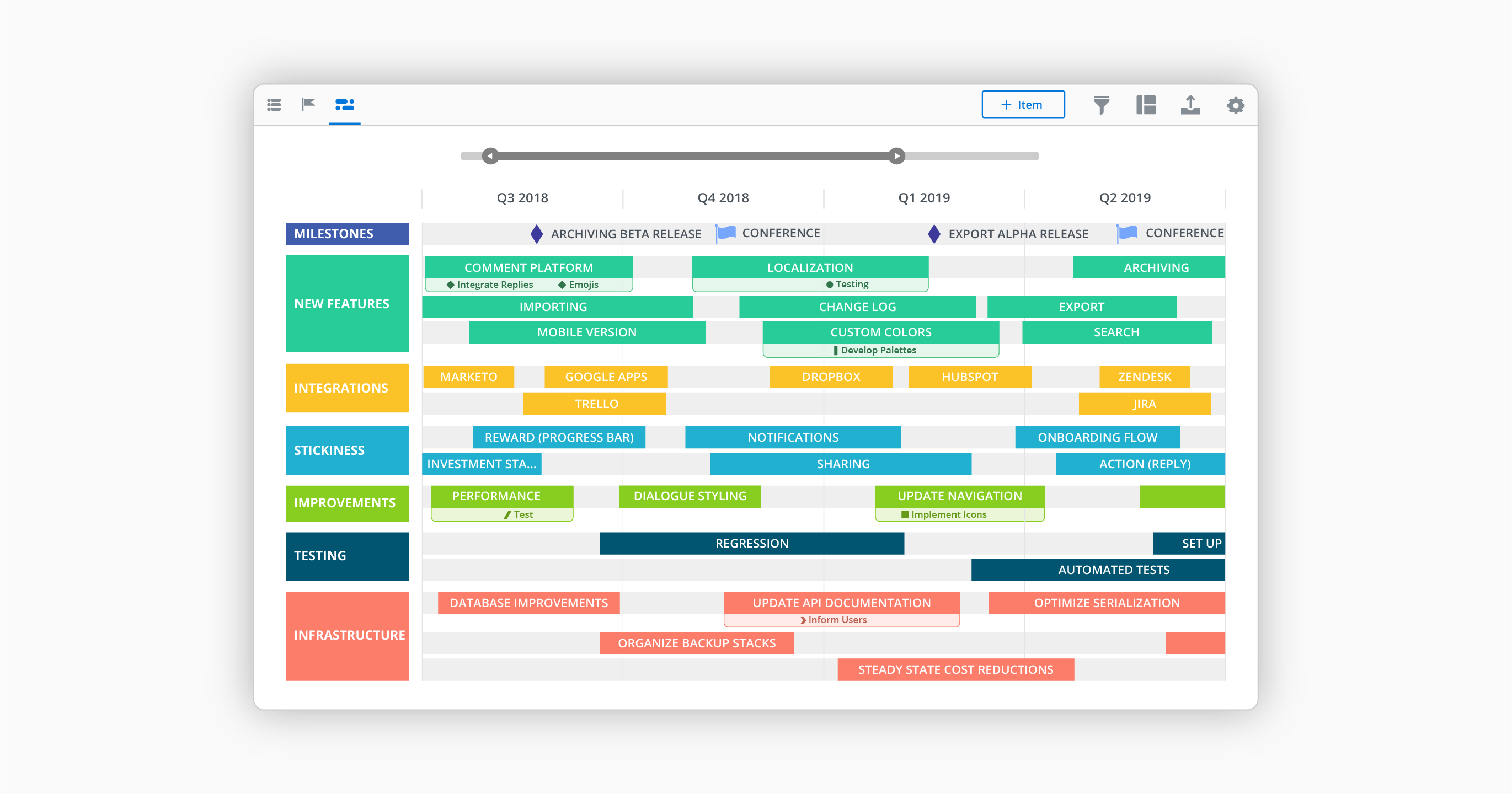     |