Replacing DoubleClick, Google Campaign Manager 360 is a web-based ad management system for advertisers and agencies, used to manage digital campaigns across websites and mobile. This includes features for ad serving, targeting, verification, and reporting.
N/A
Terminus ABM Platform
Score 8.0 out of 10
Mid-Size Companies (51-1,000 employees)
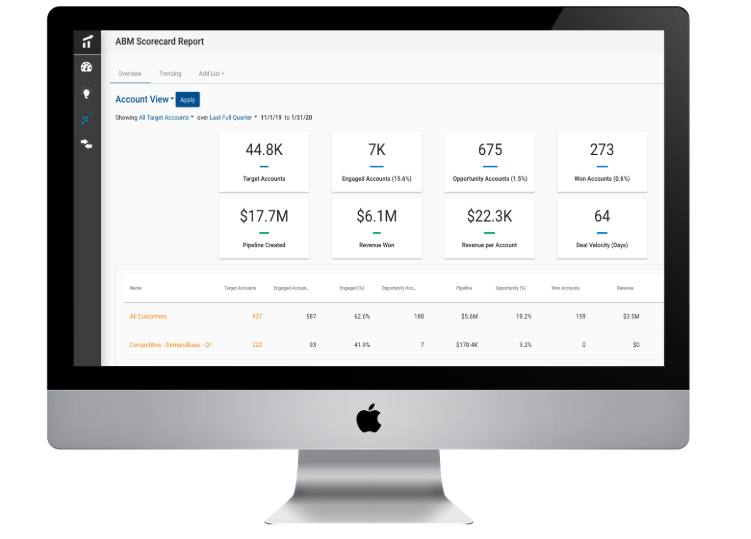
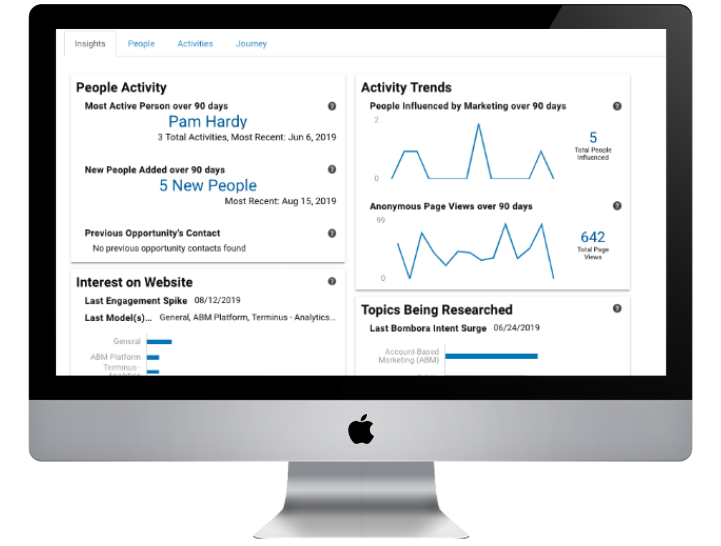
Supporting B2B strategies, the Terminus platform offers tactical playbooks that help teams meet accounts throughout their entire lifecycle. It is a platform rooted in first-party data that surrounds buyers with engaging digital experiences from account acquisition to expansion and renewal. The Terminus engine is built to drive ROI, minimize fraud, prioritize brand safety, and turn intent into relevant, actionable insight for GTM teams. Key benefits of Terminus: - Relevant…
N/A
Pricing
Google Campaign Manager 360
Terminus ABM Platform
Editions & Modules
No answers on this topic
No answers on this topic
Offerings
Pricing Offerings
Google Campaign Manager 360
Terminus ABM Platform
Free Trial
No
No
Free/Freemium Version
No
No
Premium Consulting/Integration Services
No
No
Entry-level Setup Fee
No setup fee
Required
Additional Details
—
—
More Pricing Information
Community Pulse
Google Campaign Manager 360
Terminus ABM Platform
Features
Google Campaign Manager 360
Terminus ABM Platform
Ad Network Integration
Comparison of Ad Network Integration features of Product A and Product B
Google Campaign Manager 360
9.0
Ratings
20% above category average
Terminus ABM Platform
-
Ratings
Data Transfer
9.00 Ratings
00 Ratings
DSP integration
9.00 Ratings
00 Ratings
Ad Campaigns
Comparison of Ad Campaigns features of Product A and Product B
Google Campaign Manager 360
8.8
Ratings
13% above category average
Terminus ABM Platform
-
Ratings
Ad campaign creation
8.00 Ratings
00 Ratings
Ad deployment
10.00 Ratings
00 Ratings
Display advertising
10.00 Ratings
00 Ratings
Ad display and retargeting segmentation
9.00 Ratings
00 Ratings
Sequence targeting
7.00 Ratings
00 Ratings
Ad Reporting & Analytics
Comparison of Ad Reporting & Analytics features of Product A and Product B
I feel pretty neutral about Google Marketing Platform. For the longest time, my company wasn't using it because each of the features (Data Studio, Analytics, etc.) could be accessed separately. In fact, most of the time, I don't even go into Google Marketing Platform because it's easier to directly navigate to the individual platforms. There are very few features about GMP that can only be accessed from the GMP UI. The Integrations Center is probably the main feature I utilize from the GMP UI, which allows me to see a summary of the integrations I have in place across all my client properties and accounts.
I really love working with the team. If you are looking to get more targeted in your advertising approach, leverage intent data & have your sales team utilize this data for a more personalized experience - that is the best-case scenario. You do need to invest quite a bit into your advertising to be able to gather data & see [the] influence, so if your AOV would be impacted drastically by this cost, I would not recommend using the advertising experiences and chat experiences until you can invest more.
Setting up tracking URLs is very easy and it also helps us identify if any errors have occurred with it. This allows us track all types of conversions to the most granular level.
Accessing all accounts from Double Click significantly reduces the hours we spend on reporting. Any level of detail could be easily pulled out from the reporting tab.
A very big strength of Double Click is that it's integrated with other publishers, too, besides AdWords.
Event Announcements. We use Sigstr to promote hosted and co-hosted events. Email recipients can click on the Sigstr to register for the event itself. By promoting events through Sigstr we have been able to increase event registration and attendance.
Content Sharing. New blog post, webinar, presentation, infographic... you name it, you can use Sigstr to promote it. Furthermore, you can personalize the content to target different audiences based of the sender group. Example: customer content Sigstr belongs to support, while marketing new business content belongs to sales.
Announcements. Product enhancements, Company news etc. You can use Sigstr to promote general announcements relevant to the audience.
The process for on-boarding new users can be difficult if they do not already have a Gmail or Gmail-linked account.
Difficult to troubleshoot technical issues (with the platform, with tags, etc.) because of the lack of customer support. Unclear if the agency has a dedicated team or individual to assist, and often have to deal with out-sourced support teams.
They recently purchased some new solutions that are being integrated into the platform so once that is completed it will be a much more robust solution.
I think updating what is considered high value vs brand awareness on the spike report could be a little more seamless.
For Salesforce integration, Terminus information unfortunately doesn't pull in historically, it just shows what has happened since the integration started. I think it's unfortunate because that historical data tells us a lot.
Due to its adapting behavior with industry ad formats and seamless integration with publishers and DSP's, I don't see myself moving away from DCM. As we see the display advertising is getting more programatic and automated due to the rise of DSP and concept of RTB, Double Click has evolved with new advanced best practices
Terminus is a turn-key partner in the B2B Account-Based Marketing space. Their model is flexible and efficient which in turn provides effective results. Their sales staff is great and never tries to up-sell, but rather coach and educate our teams to be better at our jobs. It has been great to collaborate
The Doubleclick interface is easy and simple to get a hang of. The options are slightly limited compared to other DSPs. But, for a simple campaign, this is a great DSP to move forward with. They have a ton of data and can plug into a lot of different partners
They do not have strong support team. It is tough to get answer when I need it. They always refer you to an online guide and not an actual person. If so, the person is based out of an offshore team in India and does not know the specific client goals .
DoubleClick is slightly better to manage, especially in the sense of its user interface, which isn't super easy to navigate, but compared to Marin, is a lot easier. It also has a much easier process in terms of uploading ads to engines such as AdWords and Bing. I also find it easier to investigate the attribution tools in DoubleClick compared to Marin.
It's a great all-around platform. With each of these ABM vendors, you have to pay for all the bells and whistles they offer. Terminus ABM Platform "base" packages include everything you need to get started and you can add on bits and pieces like chat, email or personalization as your organization continues to mature through their ABM journey.
DS3 has improved ROI considerably due to its ability to make the work of a team of digital marketers to go further and improving internal efficiency.
There is a notable improvement in account performance for those integrated with DoubleClick as opposed to not, with better tracking, new bid strategy options, and a more responsive interface.
The additional fee on top of media spend is a considerable expense for a large advertiser, but the necessity of a product/solution such as this means that there is always likely to be some comparative cost.
It's EXTREMELY hard to assess total ROI with display advertising unless you're getting clicks on your ads. Even then you probably want additional tracking metrics such as Google Analytics, form fills, etc.
Our sales guys like the engagement spike reports, which can be useful for prompting them to reach out to their contacts.