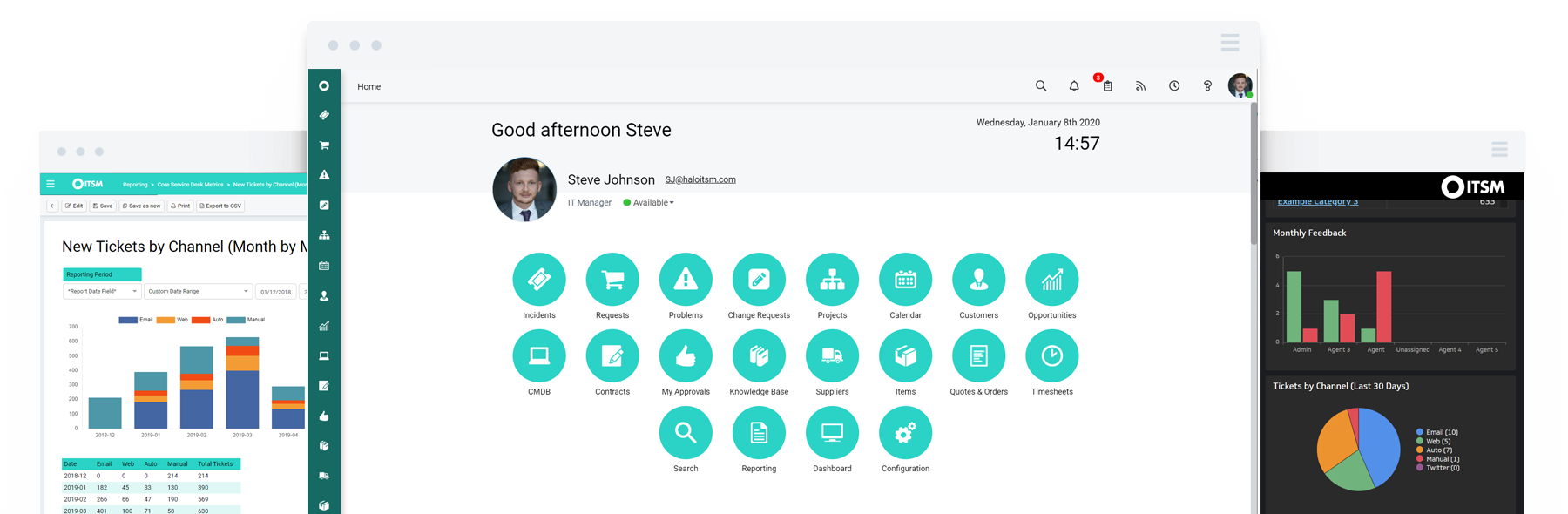
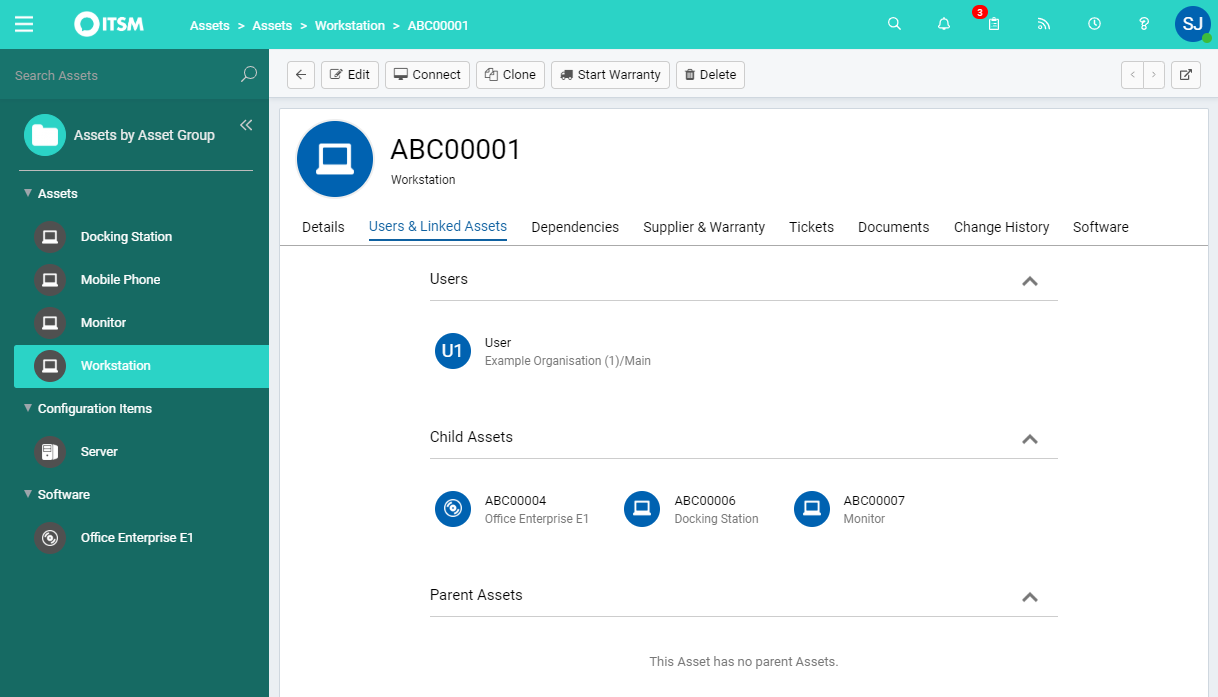
HaloITSM provides ITIL aligned help desk software that can be installed on premise or in the cloud. Boasting over 25 years of experience, HaloITSM has been developed to offer a feature rich application whilst maintaining a simple to use interface. Features include: Incident Management, Problem Management, Change Management, Asset Management, Service Catalogue, Telephony Integration, as well as the best of breed mobile apps. The vendor describes the following five differentiators: 1.…
$49
per month per user
Microsoft System Center
Score 9.0 out of 10
N/A
Microsoft System Center Suite is a family of IT management software for network monitoring, updating and patching, endpoint protection with anti-malware, data protection and backup, ITIL- structured IT service management, remote administration and more.
It is available in two editions: standard and datacenter. Datacenter provides unlimited virtualization for high density private clouds, while standard is for lightly or non-virtualized private cloud workloads.
$1,323
Pricing
HaloITSM
Microsoft System Center
Editions & Modules
On Premise
$49
per month per user
Cloud
$49
per month per user
Standard Edition
$1323
Datacenter Edition
$3607
Offerings
Pricing Offerings
HaloITSM
Microsoft System Center
Free Trial
Yes
No
Free/Freemium Version
No
No
Premium Consulting/Integration Services
No
No
Entry-level Setup Fee
Optional
No setup fee
Additional Details
There is 15% discount for all charities, educational institutions and non-profit organisations.
—
More Pricing Information
Community Pulse
HaloITSM
Microsoft System Center
Features
HaloITSM
Microsoft System Center
Incident and problem management
Comparison of Incident and problem management features of Product A and Product B
HaloITSM
8.4
Ratings
3% above category average
Microsoft System Center
-
Ratings
Organize and prioritize service tickets
8.60 Ratings
00 Ratings
Expert directory
8.50 Ratings
00 Ratings
Service restoration
8.70 Ratings
00 Ratings
Self-service tools
8.60 Ratings
00 Ratings
Subscription-based notifications
8.60 Ratings
00 Ratings
ITSM collaboration and documentation
8.30 Ratings
00 Ratings
ITSM reports and dashboards
7.70 Ratings
00 Ratings
ITSM asset management
Comparison of ITSM asset management features of Product A and Product B
HaloITSM
7.9
Ratings
4% below category average
Microsoft System Center
-
Ratings
Configuration mangement
8.00 Ratings
00 Ratings
Asset management dashboard
7.70 Ratings
00 Ratings
Policy and contract enforcement
8.00 Ratings
00 Ratings
Change management
Comparison of Change management features of Product A and Product B
HALO is very much suited to the IT Support Desk environment and works very well. It offers all the functionality that is required to run a service plus much more. I can't really comment on the other modules yet as we haven't really fully utilised them, but hopefully will in the future.
We used a product before that was designed to prevent users making changes and saving files to the desktop computer. This required a renewal of the license. By using SCCM in our environment we were able to discontinue using that product because SCCM allows us to completely restore a machine back to the original configuration. We have taught our users to save their individual work on either a network drive or a cloud drive. By doing this, if we do a re-image of their machine they have lost no data, and it makes for a faster resolution. In some instances having a computer in our SCCM environment it can become cumbersome when creating new users for very specific purposes. It can be done by creating new organizational units and applying new policies but when in a pinch it can be frustrating. For the most part we have tried to make "new" purpose images and groups to at least accommodate a quick install.
The ticketing structure (allowing us to add custom fields and tables) and the process are quick, clean, and easy to adapt to our changing needs. Change requests are processed within a few hours (complex ones take longer, purely for testing), however, the whole solution is geared to customization and the more you work with it the more you get out of it
SLA's
Detailed SLAs for each part of the business, with multiple tiers, time frames, reporting, and alerting options - a different config for every team configured with a few simple clicks
Time Management
Excellent granular reporting that lets you drill in, both from a business perspective as to how many hours are being spent on different activities and from a support perspective, where are your teams spending their team.
Reporting
Excellent set of customizable reports (hundreds of them) along with a reporting tool (For which a little SQL does go a long way) and for those fiddly reports, free support is only a call away.
Role Assignments
Simple role assignments that make updating changes to teams and departments the work of minutes rather than days. Easy to apply and each person can have multiple roles. Simple but powerful and very sleek.
Provides our users the ability to deploy and manage our own datacenter based on defined software with understandable solutions for storage, compute, networking and security.
We are able to update at once all the computers from all departments without having to install the OS on every computer.
It allows us to have everything in one place for database management and datacenter inspection as well.
Needs web based storefront for requesting new software
Needs ability to manage the packaging work flow better
Sometimes is slow to download and there is no indication the entire catalog is being loaded, resulting in confused users not being able to find common software in the available list.
No matter our issues with the software, its ability to centrally manage systems, patch, image, and remote help users has far exceeded our timeliness to help staff. Its ability to keep current, enable us to keep the network secure, and standardize our end-user experience has saved us many hours, dollars, and time every day.
I've made overall positive experiences with the Halo support. The only thing to increase would be some follow ups on feature requests. If someone would reach out to me, telling me wheter or not my feature request will be considered in future updates or not.
If I had to dislike something about the system it would be how much it changes once you upgrade. This could be more of a problem of mine since I get used to one way and don't like it when it changes so much. I am enjoying the newest update, but it is a mess when you are actually going through the upgrades.
Based on our requirements, this is how we scored them. Halo - 78, ServiceNow - 77, Ivanti - 67, Jira - 57, Freshservice - 41. This was based purely on our requirements and whether additional modules required additional licences.
None. We are a Microsoft business, and this is THE tool for imaging, packaging, remote support, and antivirus management. Microsoft's tool is the best for managing its software, systems, and antivirus clients. I will say that Microsoft Intune, the cloud platform, can be used for those with heavy 365 usage, but for us, that does not meet our current company needs.
It enabled us to allow our Service Desk Staff to work from home during COVID and this has continued ever since.
We have halved our average resolution time.
Some of the automation processes, when implemented alongside the MS Power Platform, have saved approximately 30 hours a month. This includes times when customers were unable to access the system until they had been trained. This is now automated via Halo and they get sent to on-demand training, instead of waiting up to 3 weeks for the next scheduled session.
We have been able to automate our patch management, firmware and other security concerns.
We have a standardized "image" ensuring our setup is consistent across the enterprise. This alone has saved us in time to support and time to understand how to use our desktops.