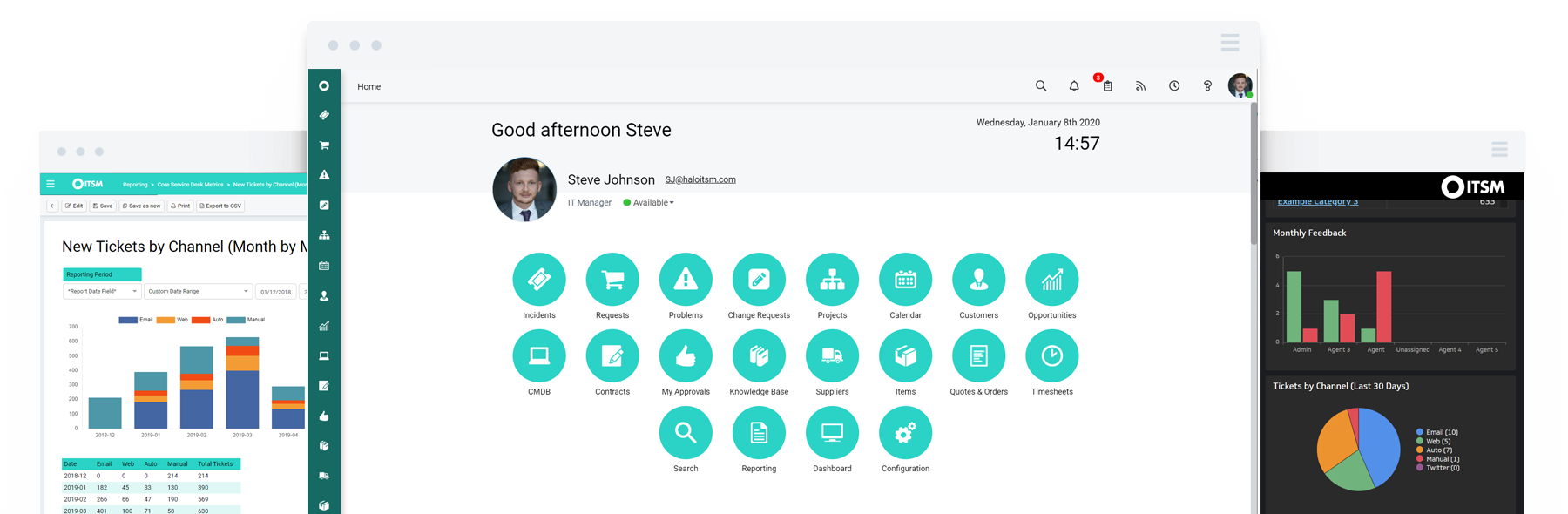
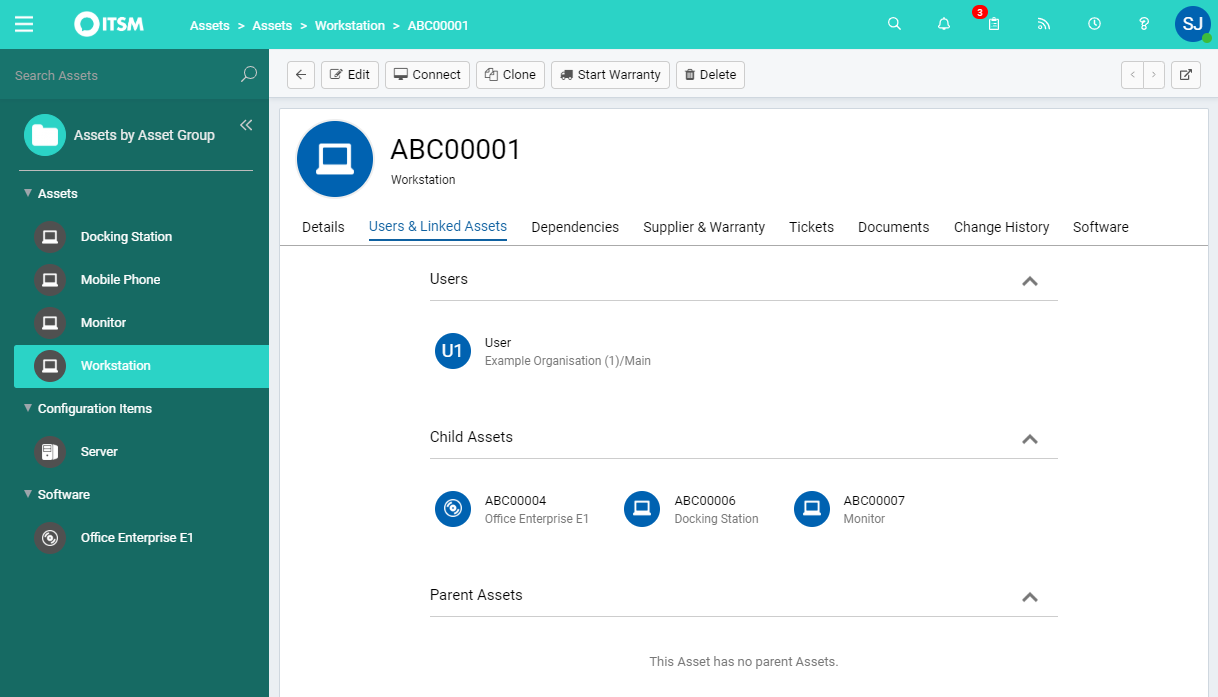
HaloITSM provides ITIL aligned help desk software that can be installed on premise or in the cloud. Boasting over 25 years of experience, HaloITSM has been developed to offer a feature rich application whilst maintaining a simple to use interface. Features include: Incident Management, Problem Management, Change Management, Asset Management, Service Catalogue, Telephony Integration, as well as the best of breed mobile apps. The vendor describes the following five differentiators: 1.…
$49
per month per user
ManageEngine ServiceDesk Plus
Score 9.2 out of 10
N/A
ServiceDesk Plus is free help desk software from ManageEngine, a division of Zoho Corporation.
$10
Starting Price Per Month
Pricing
HaloITSM
ManageEngine ServiceDesk Plus
Editions & Modules
On Premise
$49
per month per user
Cloud
$49
per month per user
Standard
$10.00
Starting Price Per Month
Professional
$21.00
Starting Price Per Month
Enterprise
$50.00
Starting Price Per Month
Offerings
Pricing Offerings
HaloITSM
ManageEngine ServiceDesk Plus
Free Trial
Yes
Yes
Free/Freemium Version
No
Yes
Premium Consulting/Integration Services
No
No
Entry-level Setup Fee
Optional
No setup fee
Additional Details
There is 15% discount for all charities, educational institutions and non-profit organisations.
HaloITSM offered the highest level of functionality, available as standard, at our price level. Halo support during our trial period was second to none and unrestricted. We had a list of deciding factors covering the most important areas of functionality and HaloITSM covered …
Simply better. Each system has its merits, however, HaloITSM simply does everything in one neat package. no hidden costs fully sorted and without the constant frustrations of other systems. Simple, elegant, efficient, and maps to our processes NOT the other way around - the way …
This sits head and shoulders above anything I've used before. The degree of customization (whilst sometimes challenging to realize) is second to none. We have encountered relatively few issues/faults with Halo and the support for any such problems is generally excellent.
[HalolTSM is] easier to configure, [more flexible] with workflows, [has] APIs and customizable fields, [and] additional licenses [do] not require system file updates and service restarts.
HALO is very much suited to the IT Support Desk environment and works very well. It offers all the functionality that is required to run a service plus much more. I can't really comment on the other modules yet as we haven't really fully utilised them, but hopefully will in the future.
The amount of additional functionality is great too - we originally went in expecting to use it for just a helpdesk but eventually it evolved into change management and asset tracking.
We also started using the invoicing addon which helped massively and allowed us to track items from point of purchase to decommission.
The ticketing structure (allowing us to add custom fields and tables) and the process are quick, clean, and easy to adapt to our changing needs. Change requests are processed within a few hours (complex ones take longer, purely for testing), however, the whole solution is geared to customization and the more you work with it the more you get out of it
SLA's
Detailed SLAs for each part of the business, with multiple tiers, time frames, reporting, and alerting options - a different config for every team configured with a few simple clicks
Time Management
Excellent granular reporting that lets you drill in, both from a business perspective as to how many hours are being spent on different activities and from a support perspective, where are your teams spending their team.
Reporting
Excellent set of customizable reports (hundreds of them) along with a reporting tool (For which a little SQL does go a long way) and for those fiddly reports, free support is only a call away.
Role Assignments
Simple role assignments that make updating changes to teams and departments the work of minutes rather than days. Easy to apply and each person can have multiple roles. Simple but powerful and very sleek.
When trying to select the top row ticket, you have to be careful not to select all tickets. Happened to us twice and we assigned all open tickets to one technician. Took a few minutes to correct.
Site is sometimes a bit sluggish to respond. Don't know if that is an issue with our network infrastructure or the program itself, though.
When users send emails to the help desk, we sometimes experience delays until the tickets appear on the site for the technicians.
we are looking at other tools like Zendesk which may replace ServiceDesk. We are currently evaluating both tools to see which one would serve our needs better
It is still very cumbersome, lots of data entry on the back end to build how we want it but it is still not completely user friendly. Many functions still dont work and contacting someone for help isnt always easy or we get told solutions for issues we have just arent built yet.
I've made overall positive experiences with the Halo support. The only thing to increase would be some follow ups on feature requests. If someone would reach out to me, telling me wheter or not my feature request will be considered in future updates or not.
Our network administrator usually gets a good response when contacting ManageEngine ServiceDesk Plus customer service. They are quick to respond and so far have been able to eliminate most of our issues. We have been through several upgrades of the software over the years and have no issues to report in regards to customer service.
Based on our requirements, this is how we scored them. Halo - 78, ServiceNow - 77, Ivanti - 67, Jira - 57, Freshservice - 41. This was based purely on our requirements and whether additional modules required additional licences.
No contest. Remedyforce required a full time investment to understand the use of cryptically named variables, so all changes needed to be made by a specially trained administrator. Remedy had terrible problem handing capability. ServiceDesk Plus is a polar opposite - most customization is done using plain English and simple screens.
It enabled us to allow our Service Desk Staff to work from home during COVID and this has continued ever since.
We have halved our average resolution time.
Some of the automation processes, when implemented alongside the MS Power Platform, have saved approximately 30 hours a month. This includes times when customers were unable to access the system until they had been trained. This is now automated via Halo and they get sent to on-demand training, instead of waiting up to 3 weeks for the next scheduled session.
It has provided better visibility to upper management in terms of the scale of the workload of the IT department
It has allowed licensed software to be tracked more efficiently, allowing redundant license to be reclaimed, rather than additional ones being purchased
It has fulfilled the requirements for multiple audits, including Microsoft audits, as it allows the assets and their software to be tracked