HubSpot’s CRM enables growth-minded businesses to optimize their relationships with leads and customers. Through harnessing the power of carefully crafted sales, marketing, customer service, content management, and operations tools, the software aims to make it easy to unify team strategy and drive conversion. Additionally, the software allows users to connect with over 875 integration apps, APIs, and solutions partners to create a customizable user experience that suits the way teams work.…
$0
Per Month [Unlimited Users]
Kintone
Score 7.4 out of 10
N/A
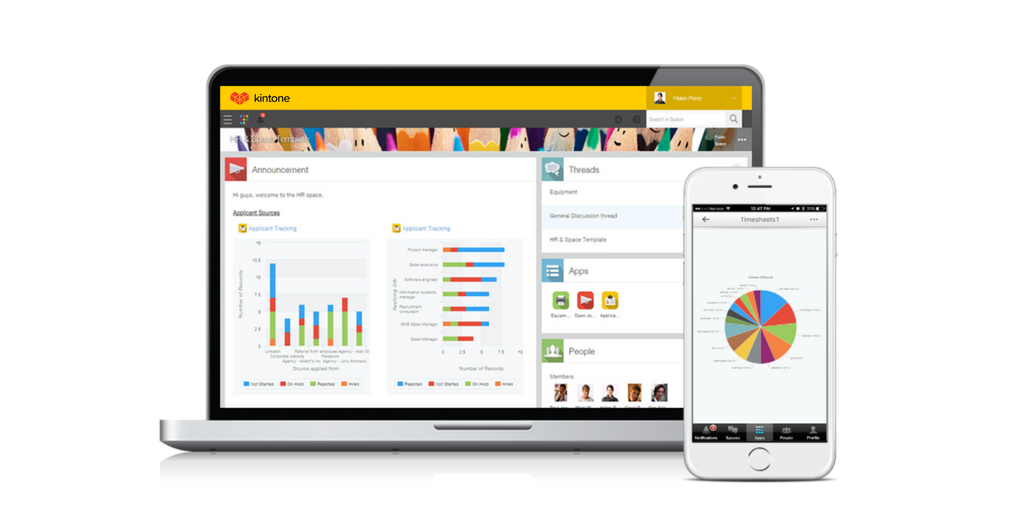
Kintone is a customizable digital workplace platform that lets the user manage data, tasks, and communication in one central place. Over 30,000 customers use Kintone’s no-code platform with more than 1.5 million database and workflow applications custom built for their businesses. The no-code drag-and-drop interface can be used to create custom database applications. Whether it’s sales leads, customer quotes, or inventory management, it can be organized in Kintone and viewed from the…
$24
per month per user
Pricing
HubSpot CRM
Kintone
Editions & Modules
Free Forever
$0
Per Month [Unlimited Users]
CRM Bundle
$50
per month
Professional Subscription
$24
per month per user
Offerings
Pricing Offerings
HubSpot CRM
Kintone
Free Trial
Yes
Yes
Free/Freemium Version
Yes
No
Premium Consulting/Integration Services
No
No
Entry-level Setup Fee
No setup fee
Optional
Additional Details
—
All subscriptions have a minimum requirement of 5 users.
We use Apollo.io, but that's just for some sales automation. Mostly, HubSpot CRM has everything that a not-so-power user of a particular stream would ask for. You cannot go wrong with HubSpot CRM, and a very easy decision unless somebody has very specific requirements. As a …
I have worked for companies that used Pipedrive and Zoho CRM Plus, but despite their differences in features, I find these tools to be the same. Zoho CRM Plus is excellent software to keep clients' information in the same location, but it is too costly if you ask me. Pipedrive …
We liked the automated marketing that is available in HubSpot CRM compared to other products. It's also very easy to create reporting and view pipelines for different teams.
We've been using Hubspot for years and don't foresee making any changes away from it. It has been fully integrated into how our business operates. We ultimately selected HubSpot CRM because it had all the features and functions that our marketing, sales, and operations teams …
I used Salesforce in a previous company. It was way more complex, especially because we would receive bugs and error messages that would prevent us from fixing the issue when it was urgent, as it would cause a contract not to be sent, for example. We had a customized version …
HubSpot CRM has closed the gap and stacks up to staple CRM's like Sales Force. They've made themselves more appealing by lowering the entry-cost to get started.
HubSpot CRM definitely has the most features and is built for enterprise clients. We have been testing some other CRMs. They often have limited functionality but for a cheaper price ex. Attio.
Better in almost every way for a small business - more straightforward, more functionality out of the box, really easy to understand, and get support too.
HubSpot is easier to navigate, work in, and export data compared to these other software. Its integration with Zapier, Slack, and Chargebee has revolutionized the relationship between our sales and CS teams, making information extremely easy to find. These other platforms I …
I think SFDC does some things better than HS but overall comparable. ChurnZero literally serves a different purpose, but I will say that Company/ Contact management and reporting are much easier in CZ.
I prefer use of Monday overall and we have since transitioned to Monday for many of our teams. I think Monday has a more intuitive interface and better customization. Training is inferior to HubSpot, but customer support is superior. Monday, frankly looks cooler.
HubSpot CRM has its own strengths and is well suited for companies in the Series A/Series B range. I have used other tools which are highly customizable but when the use-cases are particularly unique and custom.
We felt that HubSpot CRM served us better when we were still a start up, and tailors also very well to scale ups. We felt Monday was a tool more for start ups that wanted a CRM and project management tool at the same time, which wasn't what we were looking for. Salesforce CRM …
We selected HubSpot CRM because it was so many tools in one and felt like the right sized platform for my agency (we are small, just a few folks). The academy and self serve option made onboarding feel easier than I thought. The other tools are mainly email providers, we …
HubSpot CRM works 'by itself', if you add different components to the suite, like Marketing, for example, you won't lose data or need to check the quality of syncs, APIs or webhooks. It's all native, all in one.
We use/used Active Campaign in one of our companies and in our current company we are using High Level. The main reason we use a combination of the two is due to the budget constraints. High Level is far more affordable, provides many if not all of the same features as …
Salesforce is the leading legacy (and modern) provider for a reason, but it should be clearly mentioned that is so admin-heavy that it is sometimes just very burdensome to work with them. Basically, you need an entire team of employees work full-time with Salesforce just to …
In our company, we previously used various CRMs that often had shortcomings and failed us at critical moments. Since adopting HubSpot CRM, we've noticed significant improvements, as it allows us to segment our databases, properly qualify leads, and generate reports and insights …
HubSpot CRM allows you to create much more complex and sophisticated workflows than most competitors that I have used. At the same time, it does the basics very well if all you want to do is create a list of contacts, send them emails, and measure your email deliverability and …
HubSpot CRM is just a very attractive well organized platform that is constantly evolving and had it not been for the cost and contract terms it would be a top recommendation.
Microsoft Dynamics is not very flexible in connecting with other apps or with other ideas and processes. Salesforce is definitely too costly and also the customer service is not working well. HubSpot is doing much better on that, and overall, it's the solution that has from our …
We tested Pipedrive with the free 30-day trial. We did not like the standard layout. It was not customizable to our liking, and it could not perform the functions we were looking for in our daily business workflow.
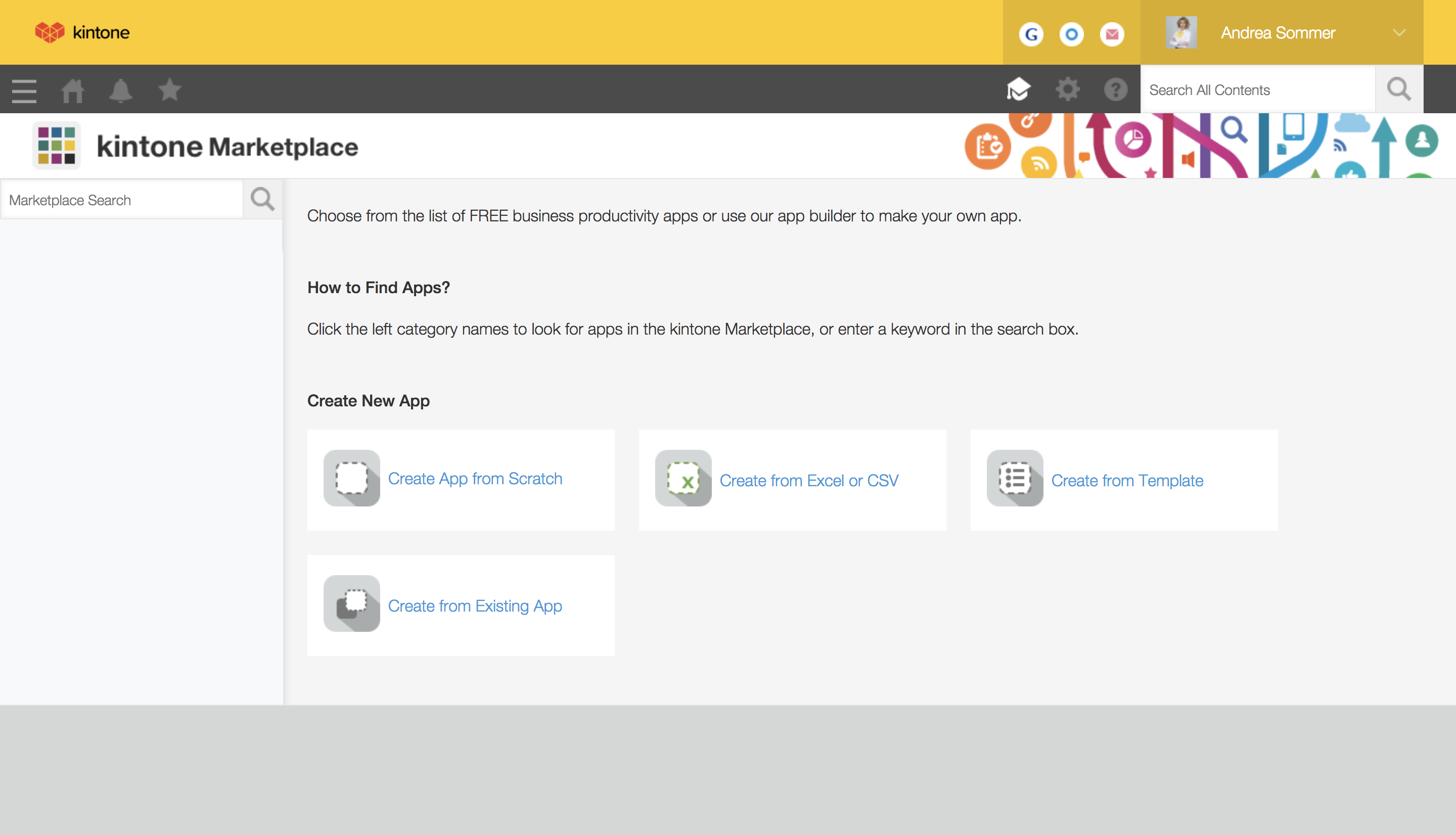
We transferred our data records from google sheets to Kintone. While they aren't very comparable, the amount of tools and analysis that Kintone allowed us to do were far superior to Google Sheets.
Again, I came along after the implementation of Kintone. Kintone does provide plenty of customization and personalization within the program without the ability to code HTML.
Kintone is the easiest product to create from and the cost is the lowest I believe. In addition, reconfigurability and extendability are great. If you look for a low code tool, you can try Kintone. But as same as another low code tool, don't expect too much.
It's more flexible and better looking than its competitors. But the main reason is that after extensive searches for a product that would support our requirements, Kintone was the only one that claimed to be able to do so. After building the project, it works as expected. We …
Kintone is the best value for the dollar amount. It is also based on JavaScript (as far as the more in-depth customizations go) so you don’t have to learn a new language. Quickbase was extremely expensive for what it offered and FileMaker Pro required learning their custom …
We spent 6 months working with programmers and customer service representatives from ActiveCampaign to try to customize ActiveCampaign for our needs. ActiveCampaign employees finally told us that our use-case was too complicated for their system since it was not designed to do …
Kintone won out based on a few factors. MS Access can be a good alternative, but you can have trouble with sharing the data when needed. We like the mobile app that Kintone provides as well. Compared to Trello, the price of Kintone was better, considering the differences in …
These systems have always lacked customization which is really where Kintone shines. That being said, Salesforce did allow a certain level of customization on a more grand scale for a giant company I worked. for.
Salesforce was very difficult to navigate and I couldn't figure out how to use it. Their interface is not very user-friendly. I contacted someone for help and they gave me a very typical business presentation, which was not useful. I figured out how to use Kintone immediately, …
Monday.com — I used this in my previous job and loved it for tracking stages and tasks (and I color-code everything), but at the time it was more clunky on raw data. It may have improved in this since then? Kintone is strong on data and I still color-code everything! …
Kintone allowed me to test its product more fully than other platforms. Scalable pricing was an incentive, as was the ability to create apps to perform diverse functions, like scheduling and project management. Kintone's help documentation enabled me to really play around with …
We selected Kintone because it was the best combination of price and function. We needed something that could grow and scale with the organization, and that included looking at future prices. We didn't want to invest in something if we would be priced out five new users later. …
Kintone is much more customizable and user-friendly than Access. We also have experience with Service Point - Kintone is again, much more customizable. We would love a two-way interface between Kintone and Service ice Point. That would be a tremendous bonus for capturing & …
Microsoft Dynamics frequently updates to change layout, functionality, etc. Things then get hard to relearn where everything is and what functions have been added, lost, or replaced. It also didn't add much flexibility to customize.
Caseworthy is a very large extensive database that is excellent. However, Kintone is affordable for our small non-profit (with only one employee). We would be swimming in the complexity of Caseworthy.
Most of our clients are either government institutions or Education sector clients, such as universities, colleges, Coaching Institutes, and Competitive boards. We store their data in a single place. That means we can keep our one client's data in one place without any confusion. Our data is always clear and understandable while it is in HubSpot CRM.
Kintone is great if you want a software that will help you in managing your data, and keep track of which tasks are assigned to whom. It also helps to streamline communication and information in one central place. However, it is not for you if you are looking for something complex that has to manage a lot of data.
The ability to create marketing campaigns and have control over when to stop and when to send the next according to your cadence design is excellent. However the ability to see the performance and the history for each prospect is so simple and so accessible - I kicked myself for not getting it sooner.
Having one place to create companies and contacts as well as score leads and track all contract products means we don't have to miss any renewals.
The Deal tracker gives us the ability to track multiple pipelines as well as team and individual metrics like average sale, percentage of goal, contribution to team effort which when mixed with an activity tracker means the team stays lean and mean to crush all goals.
The real time chat feature means prospects can navigate to our landing page for info about us, levels of product availability, pricing and begin a quick chat with members of the sales and support team.
Intel features along with lead scoring, SEO integration, podcasts and white papers all combine to be the most comprehensive CRM you could need.
I feel that Kintone is not well enough known yet. This means that other apps/APIs are not necessarily easy to connect with Kintone. Yes, you can use Zapier though for interfacing with other apps.
It would be great if it could give more customized options to change the look and format of certain things. You can make price quote apps, for example, but have to rely on 3rd party apps or programming skills to customize the look and fields.
If you make a table as an input field, it cannot connect to other internal Kintone apps for lookups and such.
I think there is more potential to make more customized data graphs.
To be honest there are some barriers due to which we are unable to use Hubspot at it's full potentials. The region that we work in has some restrictions that don't allow us to make calls or text which leaves us to just Email to the client.
I still think that there's a room for Kintone's future, and high expectations for them in additional features and innovative tools and supports. Truly hope that they will support email features, and standardized supports for various plug-ins with the 3rd party software and apps. In the meantime, we will have to consider our ways of doing our work in all aspects
Once you are set up with HubSpot CRM, it becomes difficult to use any other tool, as it integrates you into the workflow and makes it a habit to log in to HubSpot to identify tasks for the day. The overall ease of use is also a brilliant factor in using HubSpot. They push you towards deal closure and revenue generation.
Kintone is agile app and most of the time we can easily come up with new apps. However, there should be more feature-based drag and drop and or a visual-based usability, as we all want to minimize the number of clicks and dropdown menu selections as much as possible. Thanks.
Because when I needed help HubSpot responded immediately and provided me with the information I needed which enabled me to realize that HubSpot was even more customizable and easier to use than I thought! And I already thought HubSpot was very user friendly and easy to use, and then Support showed me how to manipulate the settings, columns and the appearance of the tool.
The support from Kintone has been excellent. On numerous occasions, customer service representatives have proactively reached out to us to see if we needed help with anything. They also scheduled Zoom calls one month after we went live to go over any questions we had. Additionally, they assigned a local account representative to check in on us periodically to provide any necessary help.
If you've had any prior experience with cloud based marketing automation or group communication tools, you can do the implementation without paid outside support. Though getting to a SLA (service level agreement) would be best achieved with the help of a third party who can facilitate
Everyone has their own tastes of things and way they want to work. Asking them to adapt to the changes with the new tools or apps is always difficult. We would want to start with a very small but best example within the organization, which in our case was that the employees will not be bothered by the bosses by being asked to find the documents, status of the progresses, or major things/requests/projects.
Our team and senior managers deemed these products worth reviewing and requested that every team assess them, enabling our company to make an informed decision about the software to purchase. Everybody checked, and a survey was conducted among all those employees. We received the most votes for HubSpot CRM, as most employees preferred it.
Kintone is the easiest product to create from and the cost is the lowest I believe. In addition, reconfigurability and extendability are great. If you look for a low code tool, you can try Kintone. But as same as another low code tool, don't expect too much.
Gave a ton of visibility into user and sales funnel.
Able to get back to new signups or inbound leads much faster, sometimes within minutes. We have a Slack integration that's super helpful.
Saved hours each week that were earlier spent digging through emails or spreadsheets for context; meetings are a lot shorter because it is super easy to go through the created reports.