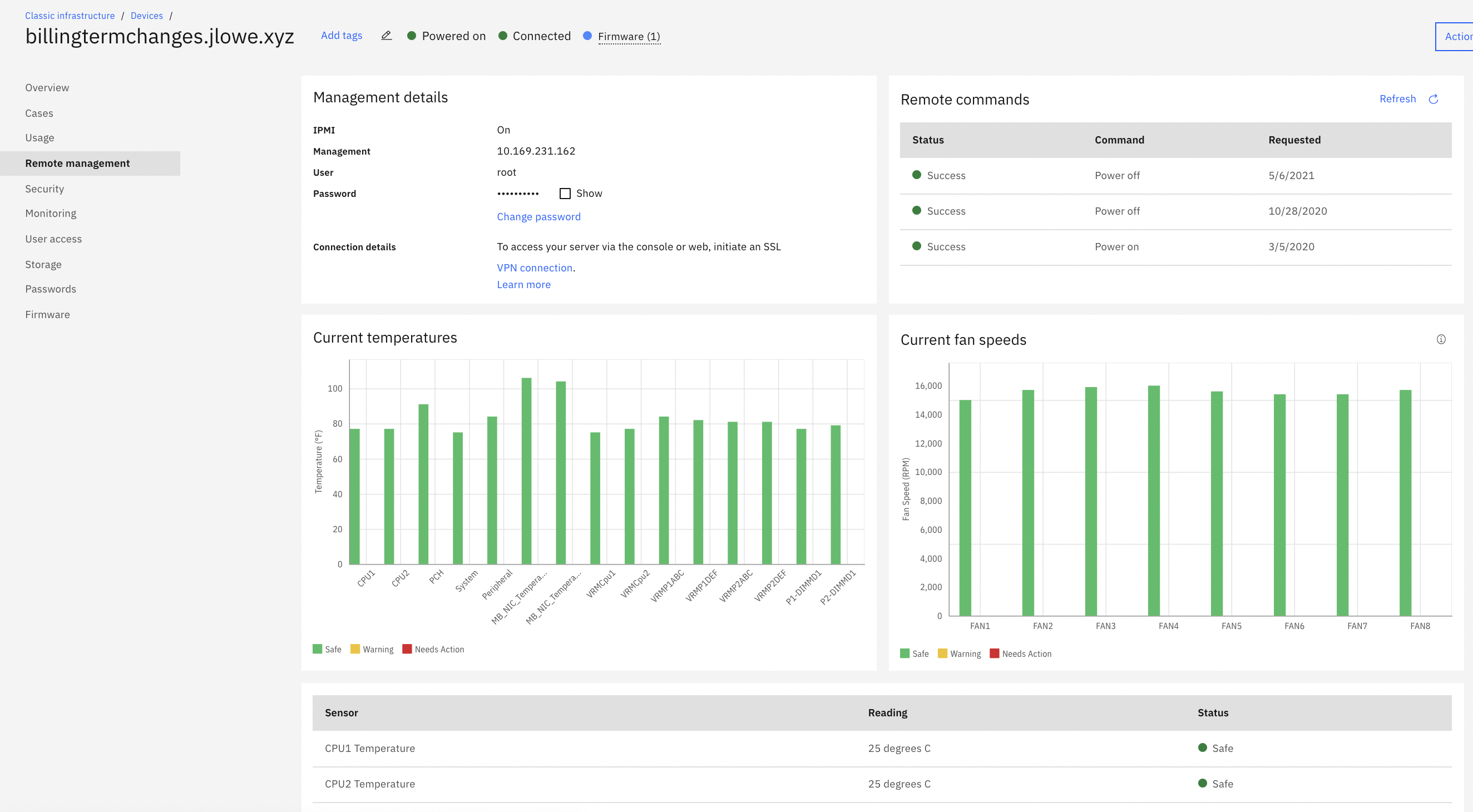
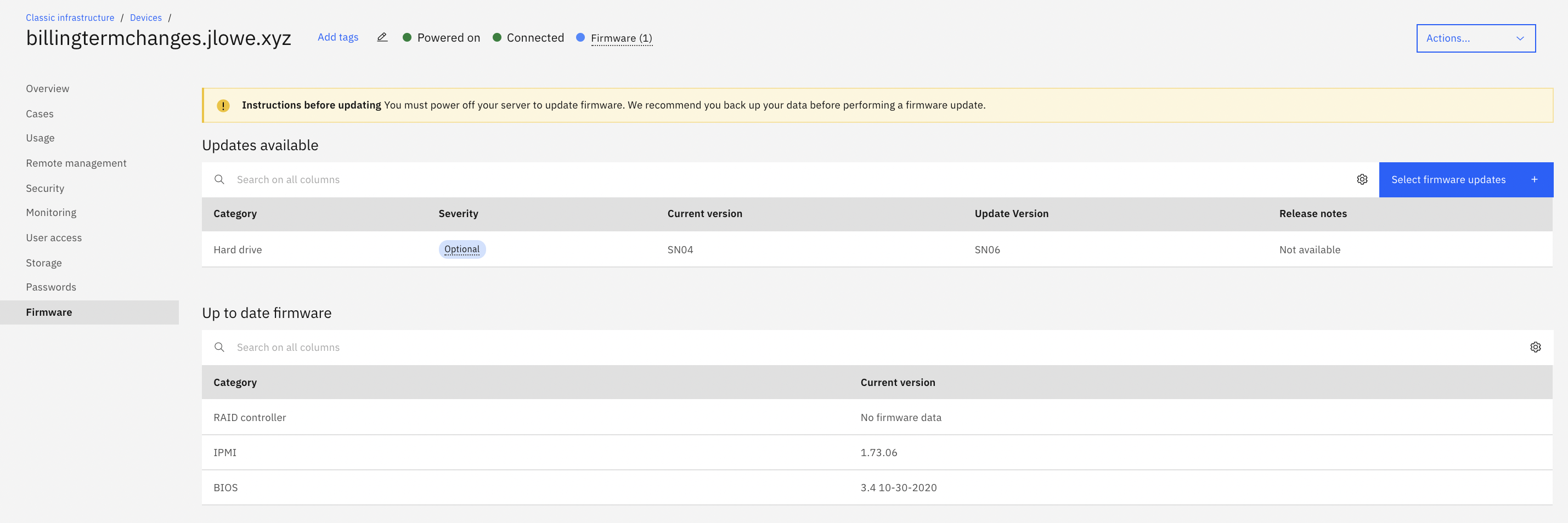
IBM Cloud bare metal servers are cloud servers configurable in hourly/monthly options, on-demand, from any location—with a selection of standard features and services for small businesses and enterprise demands. Users can customize RAM and SSDs with 11M+ configurations from which to choose.
$0.51
per hour
Vultr
Score 6.9 out of 10
N/A
Vultr is an independent cloud computing platform on a mission to provide businesses and developers around the world with unrivaled ease of use, price-to-performance, and global reach.
$1
per month
Pricing
IBM Cloud Bare Metal Servers
Vultr
Editions & Modules
IBM Cloud Bare Metal Servers
starting at $0.51
per hour
IBM Cloud Bare Metal Servers
starting at $241.00
per month
Block Storage
$1
per month
Cloud Compute
$2.50
per month
Object Storage
$5
per month
Kubernetes Engine
$10
per month
Load Balancers
$10
per month
Managed Databases
$15
per month
Optimized Cloud Compute
$28
per month
Cloud GPU
$90
per month
Bare Metal
$120
per month
Offerings
Pricing Offerings
IBM Cloud Bare Metal Servers
Vultr
Free Trial
Yes
No
Free/Freemium Version
Yes
No
Premium Consulting/Integration Services
No
No
Entry-level Setup Fee
Optional
No setup fee
Additional Details
IBM Bare Metal Servers offer a choice between hourly or monthly pre-configured servers or can be customized with single to quad processing solutions. Bare metal servers are available worldwide and with no monthly contracts. Amonthly bare metal server built to spec can be ordered and made available in two to four hours—with 500 GB/month outbound bandwidth included. An hourly bare metal server can be ordered, and it is made ready for in 20 to 30 minutes. Public outbound bandwidth is charged per gigabyte.
Pricing is based on specifications chosen in each product category. Bandwidth is also included up to a certain amount per month.
IBM Cloud Virtual Private Cloud features are easy on customizing and the capability to manage all project data types is effective. Creating reliable reports and secure data transfer through Cloud service is amazing. The product Automation tools are stable, capacity planning …
IBM Cloud Bare Metal Servers is more effective and the capabilities for networking and servers performance management is more productive. Through IBM Cloud Bare Metal Servers tools the multiple project data management and data transfer across entire Cloud service is more secure …
Well As we use other IBM Cloud services it is easier for us to implement the services from the same and easier and also implementing VPC, we have found it to be highly secure and cost-effective also.
Configured file systems on bare metal servers and was able to increase the size whenever required. Can limit the costs initially to understand the application demand and need. Later, have the flexibility to increase the size of the file system as the application grows bigger …
The Best part of this IBM Cloud Bare Metal Servers is performance and a very highly usable part is Security stuff. everyone needs to secure their data and work with a smoothly running app. for this reason I select this server rather than another one. I will use it in feature …
I considered AWS EC2, but found the difference in operating costs compared to IBM Cloud Bare Metal Servers to be too great. It is the data transfer fee.AWS EC2: 0 cost for upload, pay-as-you-go for download IBMCloud Bare Metarl Servers: no cost for both upload and downloadIn …
In fact, we have the same functionality on both. Brazil Azure and AWS had started offering those options before IBM, so IBM was [at a] disadvantage, now both are tied.
IBM brings the full suite, and coupled with Bare Metal, developing within the IBM / Softlayer SDK's and keeping smtp mail delivery, CDN, data block/object storage all from one place is simple. We were also evaluating DNS via Cloudflare before we departed IBM Cloud services.
IBM Cloud Bare Metal Servers is in every case better compared to the next seller items that are accessible in the market. This item gives us quick execution with bunches of safety and different highlights. No vacation and incredible specialized help are benefits of this item.
We had considered AWS EC2. They offer similar functions we require. But we feel IBM is better due to the version changes that they implement and the security features.
I would say that they are comparable in alot of ways and work about the same. Most cloud vendors today don't have alot of differentiations for the tasks that I perform on a daily basis.
AWS and Google are also providing very similar solutions but when we take a closer look at our needs and the pricing model each of the providers have, it is quite obvious for us to choose IBM.
We vetted various competitors of IBM to gain better insight into our purchases. Again, this for most part depends on your organization, but IBM's advanced analytics platform is on par with most of the bigger platforms. They have developments that ease the speed of development …
I selected IBM Cloud Virtual Private Cloud (VPC) because of 5 points that I thought and was proven correct based on my experience using the service. First is security which I strongly talked about all throughout my review. Secondly is agility. The third is Isolation. Fourth is …
The AWS Bare Metal is a non-starter. $5000 for a "weaker" server than IBM offers and way, way, more configuration. GCP is still on-boarding their bare-metal solutions. The other places, such as digital ocean or rackspace tend to be pricier and you get less power. The only other …
Vultr comes in at the lower end of the spectrum in terms of the breadth of the services they provide compared to the larger vendors, but they are consistently demonstrating their commitment to growing their service offering and platform features. We selected Vultr because of …
Vultr has a greater offering of servers whilst staying reasonably priced compared to some of the larger infrastructure providers. They may not have all the services as some of the other providers but they don't need it when they can do what they do with the services they provide.
Vultr has better support and competitive pricing. The network is solid and globally deployed. IP reputation is clean, and security is tight. Ease of use and documentation is really good. User experience has been the best I ever experienced. Low stress, reliable …
The performance beats upcloud. The only thing I really liked about upcloud better was the backup offerings. They had more flexible backup plans, but I love the every other night plan on Vultr as well.
CloudCo was not listed. In comparison, the pricing of the competition is in a place where I wouldn't retain any margin for smaller customers, that's why I use Vultr for those. Vultr's self serve interface and UI is much better and more customizable for the general architect. If …
Vultr has been a more cost effective solution in some areas. Compared to AWS EC2, Vultr has been a lot more cost effective for our environment. Vultr has the right vCPU, RAM, and storage for our needs. In the object storage space, Vultr has not been the best fit for our …
Vultr offers the same services as all the major cloud providers however Vulr offers a clear pricing modeling with no hidden fees. This has been incisive in deciding which provider to go with. I have never encountered any downtime with their services Technically, Vultr has the …
From the perspective of the above, Vultr provides the best balance of cost vs. performance for us. Cloudways stacks a large fee for each VPS you spin up, and this quickly escalates. Linode comes closest (at least when I used it a few years ago) to Vultr, and 3 years ago this …
Vultr is much easier to get started with, less things to configure, a simpler interface. To deploy and manage a server is much easier. I am sure for a production SaaS app there are features in AWS and Azure that are needed, but for dev/test environment, I prefer Vultr.
Vultr is a dream to use after coming from AWS - the products are intuitively named, don't require gaining a certification to use, and have better documentation. Vultr's documentation is a little less comprehensive and organized than google cloud's; however, its pricing and …
Linode: Similar pricing, changed our business over to Vultr to save credit card fees by using Crypto. Digital Ocean: Fast and reliable, same pricing didn't stay because the payment methods (Similar case to Linode) Hetzner: Good pricing, good reputation, limited locations.
IBM Cloud Bare Metal servers are best suited if you are looking for an alternative for adding computing resources to your organization's IT domain. The costs of owning and maintaining a physical resource in the organization are far more than renting computing resources on the cloud. The bare-metal servers allow you to utilize the entire server for your organization's requirements.
Vultr is well suited for South African based organisations as they have a presence here. It makes dev servers for WordPress more feasible. Having to wait on roundtrips from EU or US slow things down.
Ease of setting up new servers, with clear information on what you are getting for what you pay, makes it so easy to spin up just what you need. With a large range of specifications it means you can find that sweet spot of cost vs. performance.
Performance - the servers perform really well, even under stress. We have some long build processes running concurrently, and the server [can] serve other applications without any problems.
Secure - for the most part, the servers are very secure and IBM provides many tools to help [make] sure the servers stay that way.
Highly Available - while we have experienced various downtimes and outages with other IBM Cloud offerings, so far, we have not experienced any with [IBM Cloud] Bare Metal Servers.
the ability of increasing a specific configuration without the need of upgrading the whole plan, for example i might need to add more memory but i'm satisfied with my current processors and hard disk capacity (or vise versa)
Solving the problems of taking an image to the server if the server capacity (hard disk) is bigger than 1TB (which i'm currently facing a big problem because of that)
Due to cloud computing taking over the market, I have moved to cloud computing. It is so much easier upgrading or downsizing a virtual server on the cloud vs bare metal. I find it way more convenient on cloud computing. The provisioning takes way too long for bare metal servers.
We’ve been extremely satisfied with the service for many years. After trying other providers, we’ve found nothing that matches the reliability and performance—so we’re not likely to switch anytime soon.
easy to use and configure. great bang for the buck. I need an affordable solution to host in the cloud data from systems installed at our client's site with the ability to drill down and change the configuration remotely. Vultr enabled us to do that in an efficient and affordable way.
Great responsiveness and detailed know-how from the team. Self Explanatory and good resources on the Web to resolve issues. Good communication on issues via email. Good response times on issues which arise and where we have received support from the IBM support team. We believe that IBM is a great Partner to base our IT applications and we believe that a critical infrastructure like a cloud backend will be well served if we continue to base it on IBM.
The implementation of this software took place as we planned. The performance time taken for full functionality was very reliable with positive results. The customer support team was the best team I have ever met in my career experience. They are always with timely responses when reached to offer any help.
Configured file systems on bare metal servers and was able to increase the size whenever required. Can limit the costs initially to understand the application demand and need. Later, have the flexibility to increase the size of the file system as the application grows bigger and bigger without any hassle.
Vultr has better support and competitive pricing. The network is solid and globally deployed. IP reputation is clean, and security is tight. Ease of use and documentation is really good. User experience has been the best I ever experienced. Low stress, reliable hosting I would recommend to anyone. It helped me easily scale and expand my business.
[I feel] IBM caused significant damages to their acknowledged "gross negligence." [...] [In my opinion,] holding customers/data hostage to limit gross negligence is an extremely poor practice.
[With my experiences,] our investment was a tremendous loss in time & resources. Their lack of support, [in my opinion,] has caused us to pivot our entire business model and revenue stream. Our product re-launch has been setback by ~18 months due to damages caused by [in my experience, to be] IBM's gross negligence.