IBM Cloud Databases vs. Snowflake

Overview
ProductRatingMost Used ByProduct SummaryStarting Price
IBM Cloud Databases
Score 8.6 out of 10
N/A
IBM Cloud Databases are open source data stores for enterprise application development. Built on a Kubernetes foundation, they offer a database platform for serverless applications. They are designed to scale storage and compute resources seamlessly without being constrained by the limits of a single server. Natively integrated and available in the IBM Cloud console, these databases are now available through a consistent consumption, pricing, and interaction model. They aim to provide a cohesive…N/A
Snowflake
Score 8.9 out of 10
N/A
The Snowflake Cloud Data Platform is the eponymous data warehouse with, from the company in San Mateo, a cloud and SQL based DW that aims to allow users to unify, integrate, analyze, and share previously siloed data in secure, governed, and compliant ways. With it, users can securely access the Data Cloud to share live data with customers and business partners, and connect with other organizations doing business as data consumers, data providers, and data service providers.N/A
Pricing
IBM Cloud DatabasesSnowflake
Editions & Modules
No answers on this topic
Offerings
Pricing Offerings
IBM Cloud DatabasesSnowflake
Free Trial
NoYes
Free/Freemium Version
NoNo
Premium Consulting/Integration Services
NoNo
Entry-level Setup FeeNo setup feeNo setup fee
Additional Details
More Pricing Information
Community Pulse
IBM Cloud DatabasesSnowflake
Considered Both Products
IBM Cloud Databases
Chose IBM Cloud Databases
N/A for other services, but used IBM because of reputation as it is an industry giant who has been a big player in the IT industry for years.

Chose IBM Cloud Databases
a powerful storm disrupted power supplies and network connections to the data center hosting our critical databases. Despite the external factors causing widespread service disruptions, IBM Cloud Databases demonstrated its exceptional reliability. The auto-failover feature …
Chose IBM Cloud Databases
UI is easier to use and flexible. AWS EBS is very simple to use and do upgrades and monitor the upgrades easily. I also recommend IBM to implement these.
Chose IBM Cloud Databases
The reason why I choose IBM Cloud Databases is that the IBM cloud toolset is already being used in other functions of the company and by using IBM Cloud Databases, the other cloud tools are better embedded and integrated. If the company is set to use amazon tools, I would go …
Chose IBM Cloud Databases
IBM cloud database has a lot of features than amazon dynamodb. This is my personal opinion. But I can't say amazon dynamodb is a bad one. But IBM cloud database has a lot of securities and file storage and backup features than amazon dynamodb. But both are good in their own …
Chose IBM Cloud Databases
I have used Amazon DynamoDm and compared to IBM Compose, I would say IBM Compose is affordable, easy to use and very fast as well. I would opt IBM Cloud Databases given the two choices
Chose IBM Cloud Databases
No I haven't yet used other ones more so can't make a judgement
Chose IBM Cloud Databases
We started with IBM Compose, which later got merged into and became IBM Cloud Databases.
Chose IBM Cloud Databases
they do a great job at handling our business needs. we like what they offer and how they respond to questions we provide. they do a lot of great things that help our business thrive and stay ahead. we are grateful for how this compnay has responded to our unique requests and …
Chose IBM Cloud Databases
We already had existing contracts with IBM and Microsoft, so those made the most sense to verify. Both are good options for data storage. Since much of our existing Dbs are IBM related, we stuck with IBM cloud dbs, just so that the SQL code would port well. Additionally, we …
Chose IBM Cloud Databases
The kubernete service is the front end for the transactions of our core systems and our cloud databases (Postgres and DB2) are the persistence storage.

It is very similar to the way on which we operated before except that we don't have to worry about high availability, backups …
Chose IBM Cloud Databases
AWS RDS & Oracle OCI. AWS RDS has a wider range of databases but at a higher cost.
IBM Compose has fewer databases but is perfect for data related solutions like data warehousing (IBM Db2 AI enabled Warehouse is a GREAT product!)
Chose IBM Cloud Databases
Cloudant is HIPAA compliant and replicated out of the box. We recommend use of Cloudant vs Mongodb for that purpose. We use Redis only as a session cache.
Chose IBM Cloud Databases
We are still evaluating the differences between IBM Cloud Databases and AWS Postgres instances.
Chose IBM Cloud Databases
We have Cassandra database that is currently not available as part of IBM Cloud Databases. We ended up using classic infrastructure IaaS to host our Cassandra server.
Chose IBM Cloud Databases
I did compare IBM Compose for PostgreSQL with PostgreSQL offerings available from Amazon and Google. IBM Compose was judged easier to provision and maintain.

I'm pleased with the additional more granular provisioning flexibility and more favorable cost structure that has come …
Chose IBM Cloud Databases
Solr was not available on Compose and had to be hosted internally
Chose IBM Cloud Databases
While at the time, Amazon RDS did/does not create Mongo databases, I was able to set up many with PostgreSQL databases with the same ease as IBM Compose. However, IBM compose does seem to offer a more intuitive application control panel. Amazon RDS costs run on a server …
Chose IBM Cloud Databases
We selected Compose because we initially thought that they would provide great support, and that they would bring encryption at rest within months. That has not materialized yet.

We also thought that the cost, while far from being the lowest, was reasonable.
Chose IBM Cloud Databases
I've tried Amazon DynamoDB and Heroku Postgres, but Compose was much much easier and faster to set up, and also has more DB alternatives.
Chose IBM Cloud Databases
Aiven backup options are very limited (you can't download backups and you don't have an API) and their dashboard is incomplete and without an optimal design; but they accept way more data centers, and they have more pricing options.
Snowflake
Chose Snowflake
Snowflake provides various features, such as integration with Python using Snowpark. The reporting feature that caters to your small reporting needs is Snowsight. The Snowflake data marketplace is where you can get multiple data for free and even some of the data which you can …
Chose Snowflake
These are comparable products that can make sense depending on the specific needs of your organization. All are certainly serviceable and have varying pros and cons. Snowflake seems to provide the greatest degree of flexibility and easy scalability as new data gets brought into …
Chose Snowflake
Snowflake stacks up well against many of the other players in the space. We used Teradata before and it seems to perform better.
Chose Snowflake
We needed scalability and a new way of organizing our data; Snowflake allowed us to have a clearer view of our data warehouses and schemas. Snowflake is also way superior in terms of speed and quick insights from the raw data you query, which is very valuable to us.
Chose Snowflake
Snowflake has an attractive pricing model with auto-suspend and auto-resume and pay per use. AWS Redshift requires higher administrative efforts to maintain and scale the platform whereas with Snowflake those admin tasks are not needed or automatically taken care of.
Chose Snowflake
Cloud -Native architecture, Separation of Storage and Compute provides flexibility, Scalable Compute, Cost and Data Security
Chose Snowflake
We had a MS SQL server with over 2 TB of ram & 51 processors that we were using, that could no longer handle our workload. Snowflake can handle 3 times that workload with ease and efficiency.
Chose Snowflake
Snowflake is much faster and easier to write queries and pull data. But the visualization part of Snowflake is not as good as them. Also, Snowflake only supports SQL queries but not python or other languages. So basically Snowflake is the expert in its field but not suitable …
Chose Snowflake
We particularly liked Snowflake's security model as well as its unique storage (whereby everything is essentially a pointer to immutable micro-partitions, which is the key behind its zero-copy cloning, its secure sharing, its time travel, etc.). and also how it separates …
Chose Snowflake
While Snowflake is more open to cloud eco system, SAP integrated well with SAP eco system products like SAP ECC or SAP S/4. So for people who have invested heavily in SAP eco system including SAP ECC or S/4, it makes sense to go with SAP DWC which is also evolving very rapidly. …
Chose Snowflake
In my opinion, the other tools have similar and some different features; however, when I ran proof of technologies between Synapse and Snowflake. Snowflake did things better or just had functionality that the other tools did not. One that stuck out at the time was scale up …
Chose Snowflake
Each of the other solutions were cloud vendor specific, Snowflake can ride on either Amazon Web Services, Microsoft Azure, or Google Cloud. The fact that they are ANSI-sql compliant and have an effective means of offloading data makes them portable and easy to sell to teams …
Chose Snowflake
Azure and Snowflake compared very similarly, but Snowflake provided more options to integrate and connect with tools/companies that were not partners. It seemed to be a more flexible environment. The barrier for entry on Oracle and Google we just too complicated. In particular, …
Chose Snowflake
I have had the experience of using one more database management system at my previous workplace. What Snowflake provides is better user-friendly consoles, suggestions while writing a query, ease of access to connect to various BI platforms to analyze, [and a] more robust system …
Chose Snowflake
Snowflake has won the match because it is giving an excellent performance with its efficient features and reliable results. This is a totally secure program for our precious and important data.
Chose Snowflake
Our initial data warehousing solution was Treasure Data. We had issues with the costly pricing model, which would be exhorbitant if we want to hold our data in memory and query using Presto. As a result, some heavy lifting was done in Hive (managed by Treasure Data); …
Chose Snowflake
Snowflake beats these other products in every category it was rated against
Chose Snowflake
In my experience running the data management practice at InterWorks, we believe that cloud data warehouse products will eventually serve the majority of data warehousing use cases and power data analytics at most companies. Of this cohort, we believe that Snowflake is the best …
Chose Snowflake
Redshift compute and storage can be scaled up/down together (though they added some features recently, they don't quite add up). I haven't tried Avalanche or Firebolt but would love to in the near future, due to their pedigree or revolutionary billing methods.
Chose Snowflake
- Cost was the main aspect on the decision.
- Performance was in par or better compared to other tools in the market.
- Snowflake in my opinion stacks better than other tools I have used in the past.
Chose Snowflake
Accommodates future data types such as JSON and XML. Scalability is another advantage. Pay per use is beneficial for organizations like yours. Direct connectors with AWS help us to go with it. No limit on user creation and clone data not eating up extra disk space are a few …
Chose Snowflake
Since we switch from amazon redshift to Snowflake, we found Snowflake is much better than redshift in many ways, including the data integrate and data pull. However, comparing directly pull data from amazon s3, Snowflake is quite slow in terms of data pull speed and the more …
Chose Snowflake
Compared to Amazon Redshift, Snowflake is slightly easier and faster to achieve ROI but based on the user's perspective, the two tools have very little difference since both are leveraging SQL to pull data from AWS S3. Snowflake is also working with Microsoft Azure but it is …
Chose Snowflake
Our issue with Redshift was that it was very expensive. On top of that, queries were still slow and if we used more of Redshift's memory, then it would have cost even more. Snowflake is not cheap, but less costly for us. Plus, the performance was much better. Also, we got to …
Chose Snowflake
Snowflake is a lot faster, feels more lightweight, and is overall easier for our BI team to manage and grant warehouse accesses.
Features
IBM Cloud DatabasesSnowflake
Database-as-a-Service
Comparison of Database-as-a-Service features of Product A and Product B
IBM Cloud Databases
7.0
Ratings
21% below category average
Snowflake
-
Ratings
Automatic software patching8.50 Ratings00 Ratings
Database scalability8.50 Ratings00 Ratings
Automated backups6.80 Ratings00 Ratings
Database security provisions8.70 Ratings00 Ratings
Monitoring and metrics4.20 Ratings00 Ratings
Automatic host deployment5.20 Ratings00 Ratings
Best Alternatives
IBM Cloud DatabasesSnowflake
Small Businesses
IBM Cloudant
IBM Cloudant
Score 7.4 out of 10
Google BigQuery
Google BigQuery
Score 8.5 out of 10
Medium-sized Companies
IBM Cloudant
IBM Cloudant
Score 7.4 out of 10
Google BigQuery
Google BigQuery
Score 8.5 out of 10
Enterprises
IBM Cloudant
IBM Cloudant
Score 7.4 out of 10
Google BigQuery
Google BigQuery
Score 8.5 out of 10
All AlternativesView all alternativesView all alternatives
User Ratings
IBM Cloud DatabasesSnowflake
Likelihood to Recommend
8.1
(0 ratings)
9.2
(0 ratings)
Likelihood to Renew
8.0
(0 ratings)
10.0
(0 ratings)
Usability
7.0
(0 ratings)
9.3
(0 ratings)
Support Rating
1.0
(0 ratings)
9.9
(0 ratings)
User Testimonials
IBM Cloud DatabasesSnowflake
Likelihood to Recommend
Less Appropriate Scenario: 1) Small Scale or Low Budget Projects 2) Organizations with limited expertise in cloud technologies may find the learning curve steep, especially if they are not familiar with the IBM Cloud platform 3) If database requirements are highly dynamic and change frequently, the comprehensive features and management provided by IBM Cloud Databases might be overkill. A more flexible, self-managed solution could be preferable for adapting to rapid changes.
Read full review
If you need a quick query, snowflake is the way to go. It's super simple and scalable; we were struggling before with Azure, and with Snowflake, everything runs smoothly, and we have more control over our schemas and warehouses. Snowflake, in my opinion, is the next step when you want to scale your business and manage data. If your company is still small, there may be cheaper options.
Read full review
Pros
  • The ease of setup was effortless. For anyone with development experience, a few simple questions such as name and login data will get you set up.
  • The web application to manage cluster settings, billing settings and even introspect the data was simple and most importantly worked all the time. This can not always be said for web interfaces of other products.
Read full review
  • Snowflake scales appropriately allowing you to manage expense for peak and off peak times for pulling and data retrieval and data centric processing jobs
  • Snowflake offers a marketplace solution that allows you to sell and subscribe to different data sources
  • Snowflake manages concurrency better in our trials than other premium competitors
  • Snowflake has little to no setup and ramp up time
  • Snowflake offers online training for various employee types
Read full review
Cons
  • Better cost reports, before just increasing to another tier, thus increasing the price. This is critical for early stage startups, where budget is tight.
  • Add more data center options. As a comparison, a similar service, Aiven.io has dozen more options than Compose (basically all big cloud providers). We moved from AWS to Digital Ocean, which made us stop using Compose, since Compose forces us to be either on IBM or AWS.
Read full review
  • Add constraints for views and not just for tables
  • Do not force customers to renew for same or higher amount to avoid loosing unused credits. Already paid credits should not expire (at least within a reasonable time frame), independent of renewal deal size.
Read full review
Likelihood to Renew
I am very fond of the features and reliability of the compose DaaS, however I could switch if I find same qualities for lower price.
Read full review
SnowFlake is very cost effective and we also like the fact we can stop, start and spin up additional processing engines as we need to. We also like the fact that it's easy to connect our SQL IDEs to Snowflake and write our queries in the environment that we are used to
Read full review
Usability
IBM Cloud Databases' pricing structure is easy to understand, and if you choose the right product, you can operate your system at minimal cost. Although there is ample documentation available, there doesn't seem to be a user community running on it, so specific usage know-how and troubleshooting can sometimes take longer than expected.
Read full review
The interface is similar to other SQL query systems I've used and is fairly easy to use. My only complaint is the syntax issues. Another thing is that the error messages are not always the easiest thing to understand, especially when you incorporate temp tables. Some of that is to be expected with any new database.
Read full review
Support Rating
Support is helpful enough, but we haven't always had questions answered in a satisfactory manner. At one time we realized that Compose had stopped taking database snapshots on its two-per-day schedule, and had in fact not taken one for many days. Support recognized the problem and it was fixed, but the lack of proactive checks and the inability to share exactly what happened has caused us to look elsewhere for production work loads
Read full review
We have had terrific experiences with Snowflake support. They have drilled into queries and given us tremendous detail and helpful answers. In one case they even figured out how a particular product was interacting with Snowflake, via its queries, and gave us detail to go back to that product's vendor because the Snowflake support team identified a fault in its operation. We got it solved without lots of back-and-forth or finger-pointing because the Snowflake team gave such detailed information.
Read full review
Alternatives Considered
The reason why I choose IBM Cloud Databases is that the IBM cloud toolset is already being used in other functions of the company and by using IBM Cloud Databases, the other cloud tools are better embedded and integrated. If the company is set to use amazon tools, I would go for rds.
Read full review
Snowflake provides various features, such as integration with Python using Snowpark. The reporting feature that caters to your small reporting needs is Snowsight. The Snowflake data marketplace is where you can get multiple data for free and even some of the data which you can buy according to your needs. And the integration options with various tools like Sigma are add-ons.
Read full review
Return on Investment
  • Prove use cases prior to administering entire platform, obtain ROI faster
  • Able to achieve the technological components of our advanced analytics team without full scale purchase of AI platform
  • Developed several studies to prove out cloud Db value, speed to deploy
Read full review
  • With separate compute and storage feature, the queries get executed quickly and it improves our overall productivity.
  • Earlier we were using a different product for analytical purposes, but with Snowflake's in-built analytical feature we are now able to save money.
  • Snowflake is cost efficient, features like auto suspend for compute resources helped to control the costs.
Read full review
ScreenShots

Snowflake Screenshots

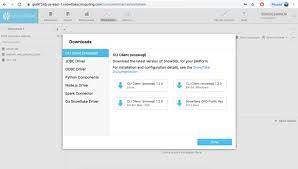
Screenshot of Snowflake Installation