The Informatica® Intelligent Data Management Cloud™ (IDMC) is designed to help businesses efficiently handle the complex challenges of dispersed and fragmented data to innovate with their data on virtually any platform, any cloud, multi-cloud and multi-hybrid.
N/A
Qlik Replicate
Score 8.4 out of 10
N/A
Qlik Replicate enables organizations to accelerate data real-time replication, ingestion and streaming via change data capture, across a wide range of heterogeneous databases, data warehouses and data lake platforms.
N/A
Pricing
Informatica Intelligent Data Management Cloud
Qlik Replicate
Editions & Modules
No answers on this topic
Offerings
Pricing Offerings
Informatica Intelligent Data Management Cloud
Qlik Replicate
Free Trial
No
Yes
Free/Freemium Version
No
No
Premium Consulting/Integration Services
No
No
Entry-level Setup Fee
No setup fee
Required
Additional Details
—
—
More Pricing Information
Community Pulse
Informatica Intelligent Data Management Cloud
Qlik Replicate
Considered Both Products
Informatica Intelligent Data Management Cloud
Verified User
Anonymous
Chose Informatica Intelligent Data Management Cloud
Below are my comment based on 2+ year of experience in Informatica Cloud
Chose Informatica Intelligent Data Management Cloud
First, the wizard is easy to use making the learning curve for simple ETL tasks nice. Second, since Informatica is mature there are a good variety of connectors available. Finally, we have driven some fairly complex ETL solutions using only the cloud.
Chose Informatica Intelligent Data Management Cloud
We were originally given Informatica Cloud as a bundled piece of software with the Salesforce implementation company we signed up for so we didn't do a lot of detailed searching for competitors. Since then we have seen it go against Mulesoft Anypoint and Zapier. Both were good, …
Chose Informatica Intelligent Data Management Cloud
Informatica is a proven name in this space, and while Cloud does not have all the exotic features that Powercenter has, it is fast and light, working well for a very agile team that cannot always wait for the dedicated Informatica developer to fully build out an integration. …
Chose Informatica Intelligent Data Management Cloud
Having used SQL Server Integration Services (SSIS) in the past, Informatica Cloud was a huge-step up in functionality, usability and performance. Hands-down, Informatica Cloud is a much more robust product overall. While SSIS is well-suited for specific instances (i.e. SQL …
Chose Informatica Intelligent Data Management Cloud
We had years of experience with Informatica PowerCenter, but opted to leverage Informatica Cloud primarily due to the package's integrations with SaaS providers.
Chose Informatica Intelligent Data Management Cloud
Informatica Cloud (IC) and Dataloader are similar products, and we actually use both. IC is a much better tool for automating and standardizing data imports, but Dataloader is much better suited for ad-hoc data imports.
Chose Informatica Intelligent Data Management Cloud
The major reason in selecting Informatica Cloud Data Integration over the others was because of
1) Non-Complex Integrations
2) Cost factors for Licensing
I found this as my lifesaver in terms of its efficacy and approachable to scale the streaming data from our ecommerce platform and analytics of data made much easier than compared to others. As it's partners with azure and other platforms which made our applications faster to …
We tried to use Oracle GoldenGate for our Oracle source replication needs but, had too many issues with a number of our tables due to churn or size. Qlik Replicate had no issues. And, we can tune our tasks to not impact the source systems we are pulling from.
Director -Enterprise Architect and Technology Strategist
Chose Qlik Replicate
Great tool for data replication solution for Oracle/SQLServers/etc. Real easy to get it set up and start realizing business value. Getting the PoC accomplished in a short window. Product costing and easy to start small and scale as needed. It helped cover most of our ask …
Qlik Replicate / Attunity was able to be put on our server behind our firewall where with Fivetran would have required. Fivetran would also have required a different SQL server CDC setup. HVR was just as powerful if not more but was more costly and the user interface was not …
Qlik Replicate was more manageable, very intuitive and easy to understand than the other products like Striim. The learning curve is less with Qlik Replicate and the connectors for various sources was easier to plug and play.
The biggest advantage of Replicate in comparison to Fivetran is that we can run the application on-prem. This allows us to configure it precisely how we desire, avoid opening additional ports in our firewall, and monitor its resource consumption directly. That level of …
We replaced IBM’s Change Data Delivery software (Change Data capture specifically for Netezza) because it had a bad user interface, it was difficult to set up, and it was very hard to troubleshoot errors. We selected Qlik Replicate (then called Attunity CDC) because it has a …
Attunity: Easy interface, relatively easy monitoring, zos support, budget friendly. we choose Attunity. At the same time we use AWS DMS for DB2, sqlserver -> aws services replications (cheaper). However because AWS DMS does not support db2 zos we use Attunity for db2 zos …
Simple to do one-to-one copy and very reliable, as other tools a little complex in setting up the pipelines and scheduling parts. Very simple to connect to the SFTP locations and easy to download them as well.
You need to have expertise knowledge to design and develop data using visual studio. But you can design a data flow with minimum experience. In addition to that QLIK has a better performance. It enables you to replicate a large volume of data with minimum latency. The …
We helped attunity (prior owners if replicate) build out new features and worked through bugs with them. Their product was not great when we originally started but there were no other solutions in the market except for Golden Gate which had a hefty price tag associated with it.
Qlik Replicate's power is in its simple 1:1 copying of database tables and architecture and maintaining a near real-time copy of that database. Talend and SSIS are different tools and more for custom ETL's that require various steps to connect to SFTP or download files. …
We tried MIMIX, SQL SSIS and Veeam but our team found Qlik Replicate had an advantage over all these three in terms of speed, UI, and ease of maintenance.
Sr. Technical Services Manager / Infrastructure Team
Chose Qlik Replicate
I have not evaluated any other competing products. Qlik Replicate was the first product we selected for the data lake three years ago, and we have stayed with it ever since.
Informatica Cloud is an excellent tool for freeing up trapped data in your internal systems and exporting it into a cloud data warehouse or SQL container. Especially if you have any internal SQL query generators that allow you to copy and paste into the Source setup. For example, we use Business Objects internally, and you can build out the query you need inside the firewall with that, then paste it into the query within Informatica Cloud while establishing the Source connection. This way you are not writing all your source parameters by hand, cutting new jobs setup time by 50%. Where Cloud will not suit you well is if you need significant visibility to the health of the system from a tracking, monitoring or error handling standpoint. Cloud will tell you it failed, maybe give you an example error, but has no further troubleshooting or diagnostic assistance to offer.
Qlik Replicate works very well with relational data platforms, both on premise and in the cloud, for example Oracle, SQL Server, PostgreSQL, MySQL and others, it also works very well with DB2. If the data source is MongoDB, it is more complicated and currently there is no possibility of sending data to MongoDB.
Informatica Cloud is a great tool for automating data imports. Raw data files can be scheduled to run at designated times, and using pre-built mappings ensures that the data goes into the system accurately each time.
It is also a great tool for converting raw data into specific formatting. For example, configuring the mapping so that the first letter of a first, middle or last name is always capitalized.
Additionally, Informatica Cloud has a built-in field-matching tool so that records that already exist are updated rather than having duplicates created.
Qlik Replicate brought a great experience with respect to the ease of implementation and great UI. We had a software that was a blackbox for the team and was very hard to maintain. Qlik Replicate implementation helped us avoid dependency on one resource.
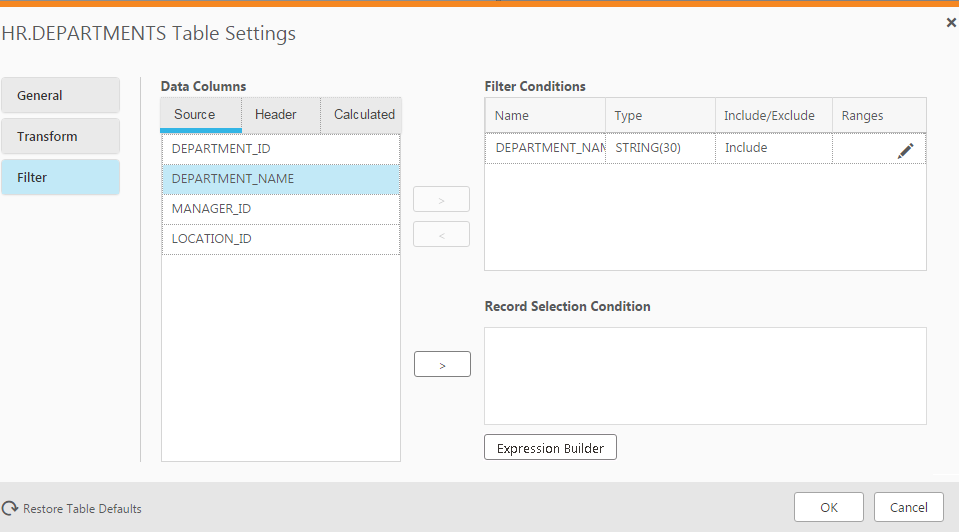
Global transformation and in-built functions are what I like in our project.
You can customize the conversion/transformation using a JSON file generated by Qlik Replicate, and it is very convenient.
The base Replicate web GUI is lacking. If you have dozens or more tasks, it's hard to get a sense of how they're performing. Enterprise Manager solves all of these problems but is a separate install.
The support portal is extremely difficult to navigate. It's hard to track down exactly what you're looking for.
It would be helpful to have better documentation and example queries for the tables in the Enterprise Manager analytics database.
Destination databases that don't support common DDL commands behave unpredictably. And the replication of schema changes isn't consistent.
The availability of the replicated data in disparate environments has is now crucial. Replacing a product like Qlik Replicate would require significant time, investments, and work. In addition, Qlik Replicate is reasonably reliable with few failures.
We now have greater business flexibility and scalability, and our big data integration projects have a quick rate of growth, which has been profitable for us. Independent of the sources involved, maintaining data consistency between sources is easy. One of my favorite features is the way it lets owners of the source system start and stop processes from updating their system windows.
I've never had trouble getting into contact with Informatica's support for technical help. I give it a nine because it does pretty well for mid to enterprise-scale workflows.
The issue I've had is that Qlik does an awful job of keeping their customers informed when new versions of the software are available. We found that we were using a version that was no longer supported and could never get help. When it came time to get us upgraded so that we were on a current version, no one knew how to help get us to where we needed to be. We had to purchased professional services time and even then I was basically on my own to get everything built out and set up. Qlik needs to be more proactive with communicating about new releases and how to get your version upgraded in the most secure, safe way possible.
Follow the directions from the Qlik documentation. They are pretty straight forward and easy enough to follow. If you follow these, then you are not likely to have issues on implementation.
Having used SQL Server Integration Services (SSIS) in the past, Informatica Cloud was a huge-step up in functionality, usability and performance. Hands-down, Informatica Cloud is a much more robust product overall. While SSIS is well-suited for specific instances (i.e. SQL Server-specific implementations), Informatica Cloud is a much better product as an overall integration/transformation tool.
Great tool for data replication solution for Oracle/SQLServers/etc. Real easy to get it set up and start realizing business value. Getting the PoC accomplished in a short window. Product costing and easy to start small and scale as needed. It helped cover most of our ask compared to other solutions.
Getting data out of various systems such as Salesforce.com or FTP and consolidating it into tables in one central database.
Having the ability to run data transformation tasks (the equivalent of batch jobs in SF or stored procedures in SQL) on a schedule without consuming those resources on the target or source systems.
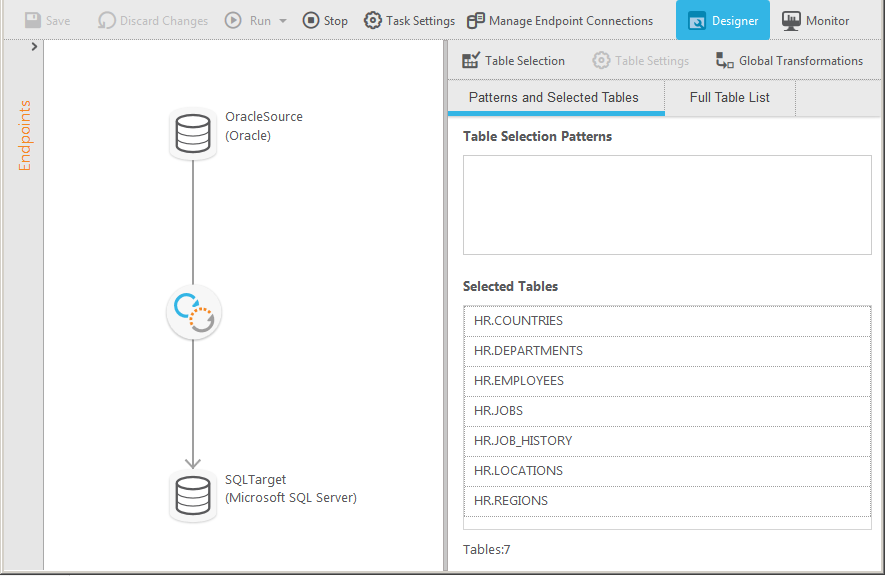
Prior to using Qlik Replicate, we used an ETL solution to copy data from the Oracle ERP system to the Microsoft SQL Server BI system at a 15-minute interval. It was very tedious to maintain. Qlik Replicate is much easier to use and we replicate data near real-time now.