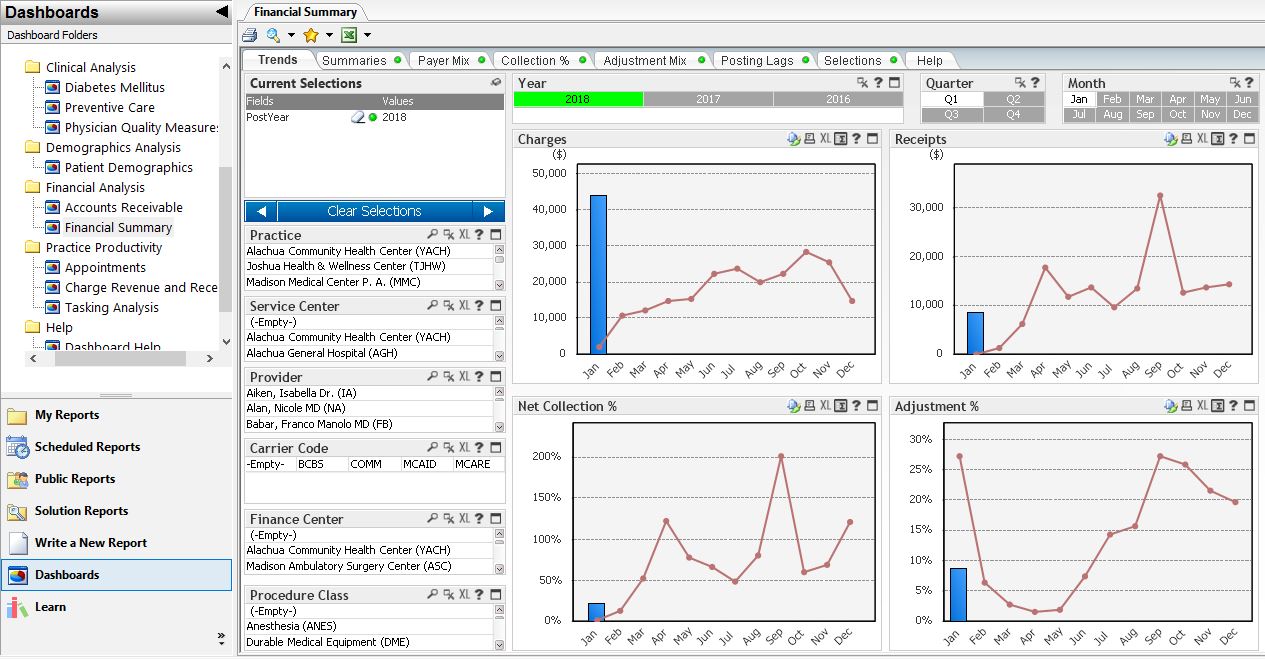
Intergy offers ambulatory practices a specialty-focused EHR and practice management solution. With Intergy’s tools, users can manage chronic conditions, capture payer incentives, and thrive in the world of value-based care. The ONC-certified solution has consolidated functionality that simplifies notation, automates tasks, and streamlines workflows. The Intergy ecosystem of products also includes telehealth, remote patient monitoring, chronic care management, patient portal, patient…
N/A
EHR 24/7
Score 5.5 out of 10
N/A
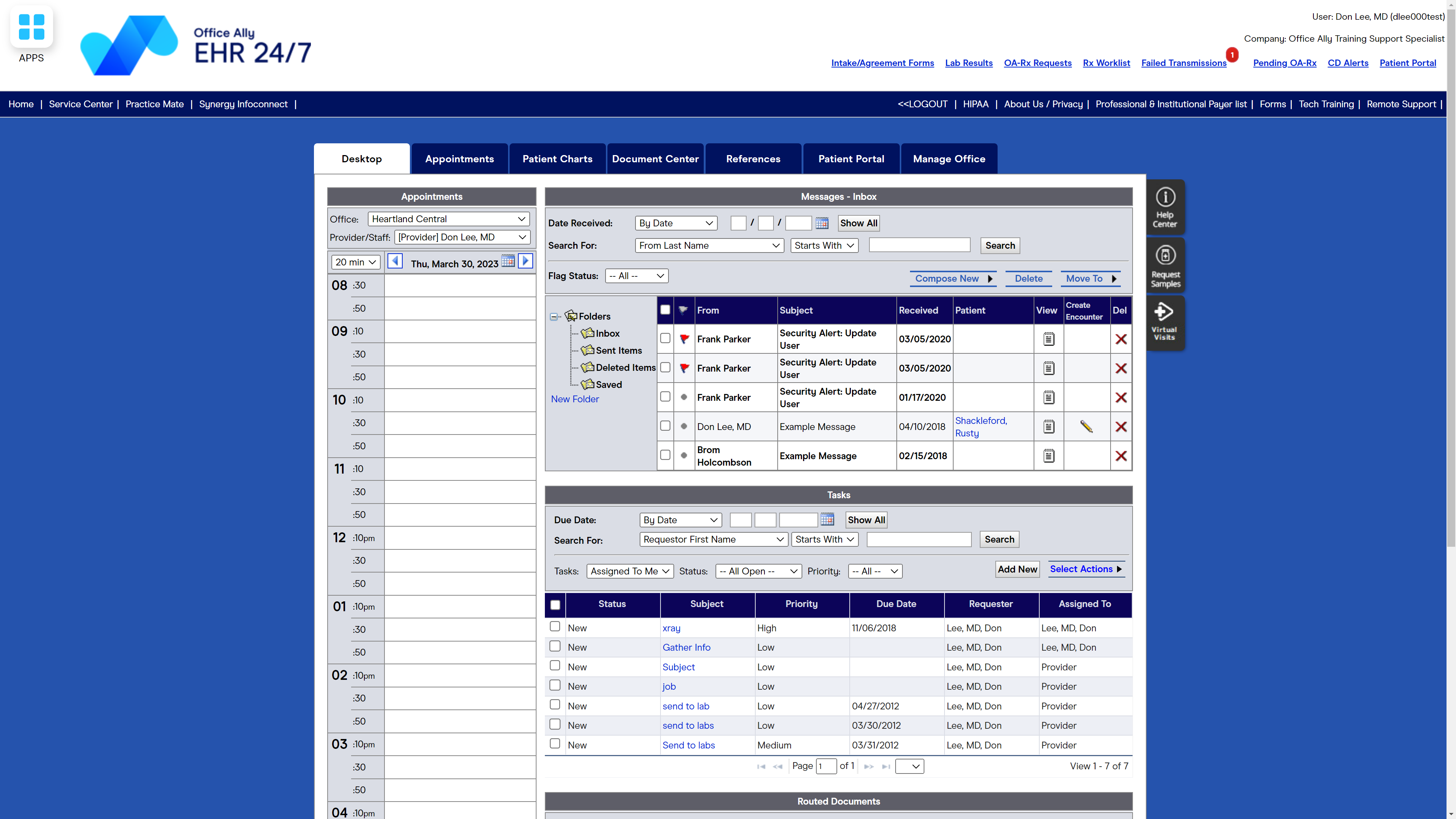
Office Ally in Vancouver, Washington offers their suite of interactive asp internet based solutions allowing for patient care from the point of contact in the physician's office to receiving payment from the insurance companies and providing overall care management from the IPAs and Health Plans. For $29.95 per month/provider, Office Ally offers EHR 24/7, an Electronic Health Records Program designed to allow healthcare providers to spend more time with patients and less time on paperwork.
N/A
Pricing
Intergy EHR
EHR 24/7 by Office Ally
Editions & Modules
No answers on this topic
No answers on this topic
Offerings
Pricing Offerings
Intergy EHR
EHR 24/7
Free Trial
No
No
Free/Freemium Version
No
No
Premium Consulting/Integration Services
No
No
Entry-level Setup Fee
No setup fee
No setup fee
Additional Details
—
—
More Pricing Information
Community Pulse
Intergy EHR
EHR 24/7 by Office Ally
Considered Both Products
Intergy EHR
Verified User
Anonymous
Chose Intergy EHR
I do really like the easy-to-navigate design of Intergy. I also love the support tickets and the really quick responses. I also, again, love the customizable features each user can set to benefit them specifically. This has been really helpful to set up and onboard our new …
Intergy is definitely not at the same level as Epic or Cerner. In Epic if you dream it - you can build it. It is definitely not something I can do within Intergy.
Other systems we have reviewed had some fancier features, but lacked the reporting needs of practices we have worked with. Being able to dig into all of the financial and clinical data to a very deep level was what made Intergy the best choice. The financial flexibility could …
My doctors liked Intergy better. Athena is great for the front staff and the nurses. In Intergy, those staff members have more to do, and it's less automated. That being said, I would rather the doctors be happy and the staff do more tasks.
One of the most compelling features of Athena, in my opinion, is the investment and commitment to pushing boundaries with product development. This presents a downfall, however, in that constant changes to the software can frustrate users and waste time relearning the platform. …
Medical Manager as a product was tried and true. It did not provide an easy interface. When a user who is not tech savvy started to use it was a big learning curve. One thing about Intergy was that it has a more intuitive interface, you get to use the mouse and make selections …
As a clinic, we briefly looked at switching to the Athena suite, but ultimately decided against it because of the relationship we have with our billing department. While Athena, from the surface, appears to be a no-brainer, as a clinic we were not ready to take on the whole …
I am not the office manager so I cannot tell why she chose to use Intergy EHR. I personally like Intergy EHR because it allows me to use it with Intergy EMR and track patients very fast and it saves the office a lot of time. If something goes wrong, someone can just call …
We moved from Intergy to athenaCollector and athenaClinicals. Athena is cloud-based, meaning we can access it from any location that has internet. My staff misses the ease of scheduling in Intergy, but the accountability of users' productivity is amazing. We had more control …
Intergy was already selected when I became employed with the office. I much prefer EPIC, but I also realize EPIC is geared towards a much larger facility then what we have.
I used to use Best Notes. Best Notes was difficult to navigate and very inflexible. We used it in the early time of EHR/EMR, so that the software was not very useful. When I changed to Office Ally, we are so delighted to change it because again it is easily to navigate the …
It worked quite well in the dermatology/plastic surgery clinic. In fact, until I moved into the administrative/finance department of this neurosurgery clinic, I had no complaints whatsoever about Intergy. The process for end users is very intuitive and free-flowing. On the management side of things, however, it's difficult to track or prove audit trails.
Smaller doctor or dental offices would be fine using Office Ally for patient visits and appointments; it's easy to use and learn, and I'm able to handle most needs with it. For a larger practice, there are better, more technologically advanced software products that would offer more streamlined and professional statements, schedules, and accounting needs.
Health Reminders- for different patient needs or preventive care/screenings. For example patients who have a diagnosis of Diabetes- their health reminders will show if they need an A1c, foot exam, eye exam, etc. and when it was last performed
Orders Tracking- This helps nursing staff make notes on referrals or orders and they are able to look at the order tracking section for all patients and filter it by provider, order type, status, etc. to know what needs to be followed up on or what has been completed and so forth...
Tasks- This is a nice feature that has many different options for use. It can be used internally to send a quick message to another user, a phone message, billing message, and any task gives you the option to make it "patient related" if necessary. It can be used by the providers when they make an order they can then send it to the nurse to complete. Lots of different ways for Tasks to be used
There needs to be a way to print patient visit summaries for a date range vs printing one summary for each appointment, one at a time.
It would be helpful if the top row of the calendar, showing doctors/practitioners names, would remain on the screen when scrolling to the end of the day. Appointments get scheduled under the wrong doctor at times because the names disappear and columns get confused.
There should be a way to view/print/download what has been paid, per patient, to the office in one place vs searching for payments under the Accounting Tab and payments tracked under Patient visits.
Usually they are very helpful. I would prefer they do some of the actual changes I am requesting instead of having me do the work. I feel that they could walk you through it, instead of letting you figure out the desired results on your own.
I haven't had to call too many times to get help with Office Ally but when I have had to call, I haven't always had the best customer service. It seems that I am bugging the person I reach when I call for technical support because I'm usually reminded that there are videos to watch for technical support help. On the flip side, there have been times that I called for help and was treated how you assume you'll be treated when you call for help - with grace, dignity, professionalism, and respect.
I am not the office manager so I cannot tell why she chose to use Intergy EHR. I personally like Intergy EHR because it allows me to use it with Intergy EMR and track patients very fast and it saves the office a lot of time. If something goes wrong, someone can just call customer service and they are glad to help.
I used to use Best Notes. Best Notes was difficult to navigate and very inflexible. We used it in the early time of EHR/EMR, so that the software was not very useful. When I changed to Office Ally, we are so delighted to change it because again it is easily to navigate the software. There is minimum of learning curve than other software.
We are able to have appointments clearly scheduled weeks and months ahead of time so we save money by knowing when to have doctors come in or work elsewhere - we aren't having to pay a doctor to be here when there aren't patients scheduled.
We are able to pay doctors based on the number of office visits they have had with patients vs having to pay a base salary for a doctor even if they did not see any patients.