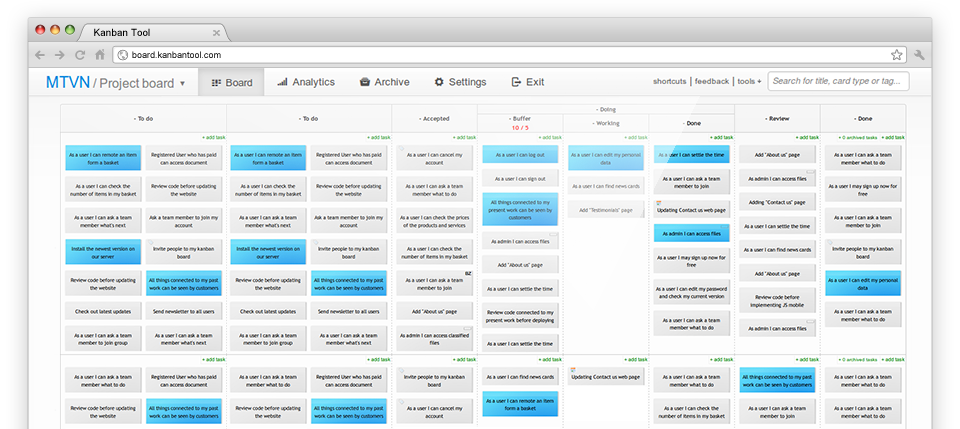
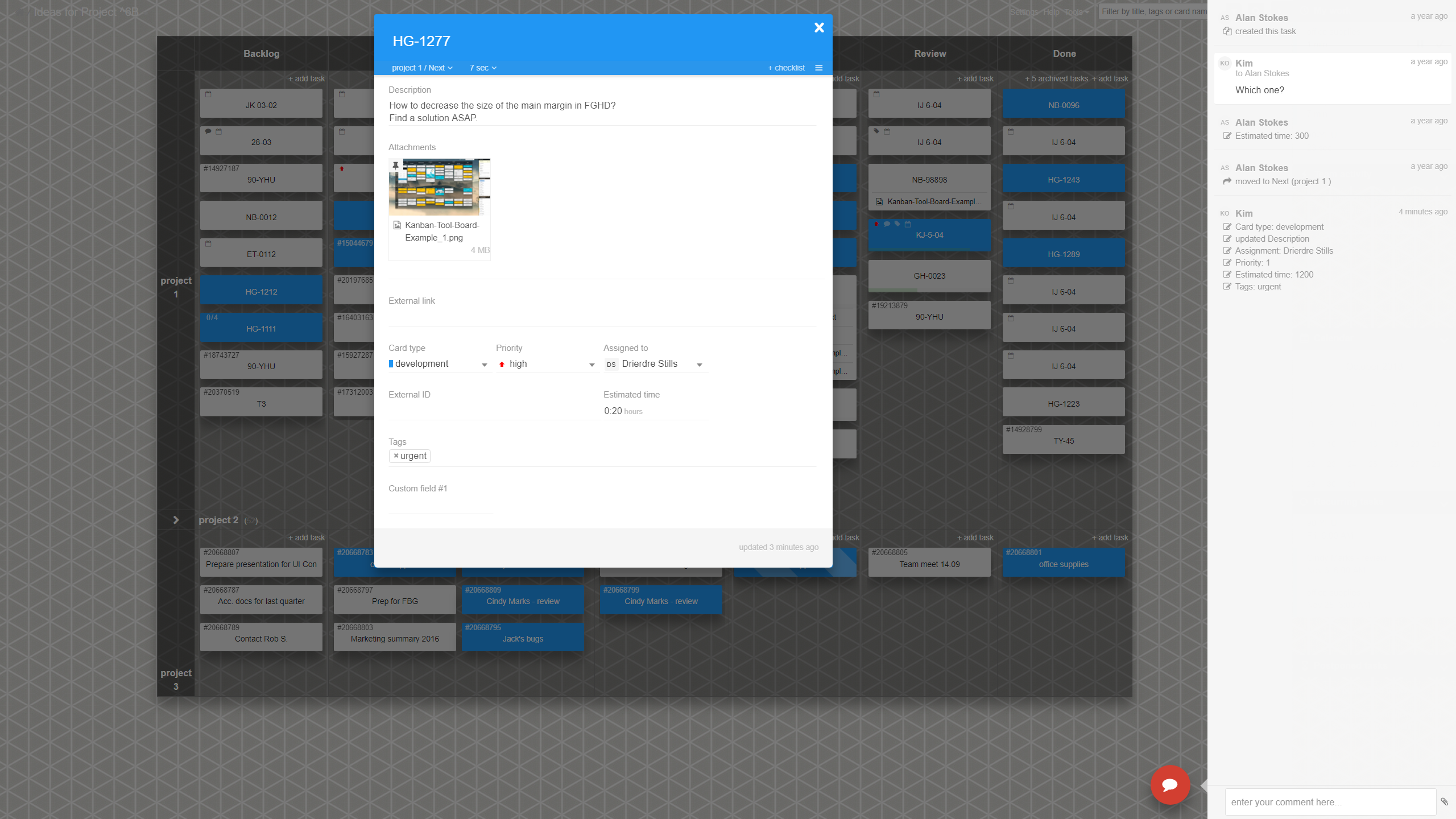
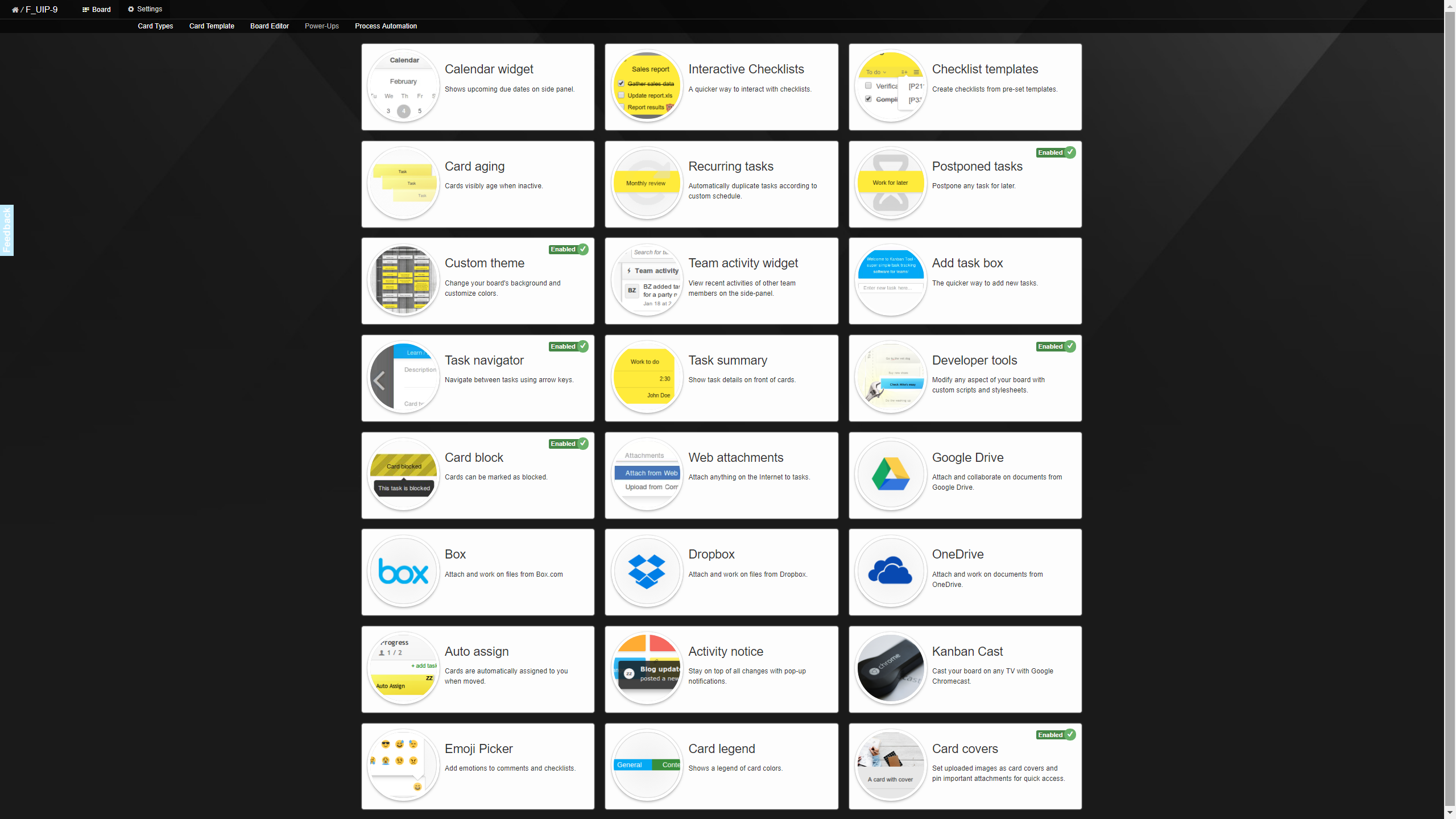
Kanban Tool is a visual project management application based on Kanban that helps companies visualize workflow, track project progress, analyze and improve business processes. Some key features include: time tracking and time reports, real-time collaboration and Kaban analytics.
$6
per month per user
Microsoft Planner
Score 7.6 out of 10
N/A
Microsoft Planner is presented as a solution to organize teamwork with intuitive, collaborative, visual task management. With it, users can create Kanban boards using task cards with files, checklists, and labels. Users can collaborate in Planner and Microsoft Teams and check visual status charts—all in the Microsoft cloud.
N/A
Pricing
Kanban Tool
Microsoft Planner
Editions & Modules
Kanban Tool Team
$6
per month per user
Kanban Tool Enterprise
$11
per month per user
Kanban Tool On-Site Team
$720
per year per 10-user pack
Kanban Tool On-Site Enterprise
$1,320
per year per 10-user pack
No answers on this topic
Offerings
Pricing Offerings
Kanban Tool
Microsoft Planner
Free Trial
Yes
No
Free/Freemium Version
Yes
No
Premium Consulting/Integration Services
No
No
Entry-level Setup Fee
No setup fee
No setup fee
Additional Details
—
—
More Pricing Information
Community Pulse
Kanban Tool
Microsoft Planner
Features
Kanban Tool
Microsoft Planner
Project Management
Comparison of Project Management features of Product A and Product B
Kanban Tool
6.3
Ratings
19% below category average
Microsoft Planner
-
Ratings
Task Management
8.50 Ratings
00 Ratings
Resource Management
6.40 Ratings
00 Ratings
Gantt Charts
1.00 Ratings
00 Ratings
Scheduling
6.10 Ratings
00 Ratings
Workflow Automation
7.30 Ratings
00 Ratings
Team Collaboration
6.10 Ratings
00 Ratings
Support for Agile Methodology
7.30 Ratings
00 Ratings
Support for Waterfall Methodology
3.90 Ratings
00 Ratings
Document Management
6.40 Ratings
00 Ratings
Email integration
7.30 Ratings
00 Ratings
Mobile Access
8.50 Ratings
00 Ratings
Timesheet Tracking
8.00 Ratings
00 Ratings
Change request and Case Management
8.20 Ratings
00 Ratings
Budget and Expense Management
3.00 Ratings
00 Ratings
Professional Services Automation
Comparison of Professional Services Automation features of Product A and Product B
Most users looking at Kanban Tool will ultimately have a process that they work through. This is a great tool and very flexible for any business. Take your time to really review your process and the stages of the process. Kanban Tool will make it clear visually so you can see bottlenecks and areas to improve. I think this tool can be adapted to any company or process.
Microsoft Planner is a user-friendly visual tool for organizing tasks and workflows. It’s great for team collaboration, integrates seamlessly with Microsoft 365 tools like Teams and Outlook, and offers flexibility for projects of all sizes. Additionally, it provides mobile and web access for seamless productivity on the go. That’s a big plus right there.
Kanban does not show the task or story clearly. You have to open the project separately to view the details of the project.
Kanban gives a higher level project management view but it lacks customization and personal settings features.
I would like to see Kanban provide mobile access to their tool, data, and board. This would be very useful for all companies and provide an increase in efficiency and productivity.
It is a very useful tool that brings teams in sync with one another. The integration with other Microsoft products makes it an obvious choice because you don't have to purchase a license for a completely different tool that doesn't have cross-functional capabilities with the software you already use on a daily basis.
The integration with Teams is well suited. This works wonderful for my company. Our team can easily prioritize tasks based on their importance. It help our team identify and reduce inefficiencies in workflow. With great visibility in data our team can make informed decisions. Ensuring clear accountability and responsibility of team members
The tool is easy to use, but it is just as easy to set up. No specific skills are required, but its usefulness in our work is immediately apparent. Colors are very helpful in creating a clear interface and providing a very precise overview of the tasks to be performed.
Kanban is superior to Scrum and AGILE because it can visually organize all your projects and data into one board. Kanban integrates with JIRA which digs deeper into the project data when it is needed. By integrating Kanban with JIRA, you don't need any other tool for project management that is effective for both the business and the development teams. Kanban is recommended for any user groups who wish to increase their efficiency to deliver products, transparency for all users and on-time productivity.
Our organization chose MS Planner because it is an included tool in the MS Suite, and since we are unfortunately replacing our current and much better project management tool due to a consolidation of the tech stack. However, it doesn't appear that any of the teams using the current program intend to use MS Planner due to its poor functionality. We will likely be pivoting to Jira instead.
Saved over $1000 each year by not having to purchase a third party tool for our content planning
Not sure that I can provide a hard number to this, but having the oversight to see when something is coming due and making sure everything gets executed in time