Chose Kibo eCommerce
Shopify, Adobe Commerce (Magento Commerce), Squarespace and BigCommerce

| Product | Rating | Most Used By | Product Summary | Starting Price |
|---|---|---|---|---|
 Kibo eCommerce | N/A | Kibo Software offers Kibo eCommerce (formerly Mozu), designed to support retailers with online offer creation and deployment, content publishing and landing pages, and many tools and widgets out of the box with a retail-oriented ecommerce solution. Mozu was acquired by Kibo Software from Volusion in October 2016. | N/A | |
 Spryker Cloud Commerce OS | N/A | Spryker Cloud Commerce OS is a modular Commerce System that enables B2B, B2C, and Marketplace business models through any customer interface, touchpoint, and device. Boasting extensibility, best-in-class performance, and fast time-to-market, the vendor states Spryker is trusted by brands such as TOYOTA, HILTI, and TomTailor. The Spryker Cloud Commerce OS NOW version has been specifically developed for manufacturers and brands who want to reach customers directly online. | $900,000 12-month contract |
| Kibo eCommerce | Spryker Cloud Commerce OS | |||||||||||||||
|---|---|---|---|---|---|---|---|---|---|---|---|---|---|---|---|---|
| Editions & Modules | No answers on this topic |
| ||||||||||||||
| Offerings |
| |||||||||||||||
| Entry-level Setup Fee | No setup fee | Required | ||||||||||||||
| Additional Details | — | Pricing is based on the duration and terms of your contract with the vendor. This entitles you to a specified quantity of use for the contract duration. If you choose not to renew or replace your contract before it ends, access to these entitlements will expire. | ||||||||||||||
| More Pricing Information | ||||||||||||||||
| Kibo eCommerce | Spryker Cloud Commerce OS | |
|---|---|---|
| Considered Both Products |  Kibo eCommerce  Tim Lavinder Director of Digital Strategy Chose Kibo eCommerce We had a very strong list of products we were considering. And all had their own strengths. But the two things that lead us to choose Kibo over all of these other platforms was the pricing capabilities in Kibo, their ability to manage distributed inventory, and the powerful …  Brandon Finch Vice President of Global eBusiness Chose Kibo eCommerce We had a custom, in-house ecommerce website before moving to Kibo. It was brittle, slow, and wasn't going to scale nearly well enough or fast enough to keep up with our requirements.  Mickey Luongo Vice President Chose Kibo eCommerce Mozu has more robust product management tools than volusion but is worse when it comes to order management. It is still missing simple features that any platform should have on day one. They have ignored requests for improvements. |  Spryker Cloud Commerce OS  Shaya Pourmirza Head Of Ecommerce & Data Engineering Chose Spryker Cloud Commerce OS Headless was the winning factor  Thomas Heissler Director Business Development Chose Spryker Cloud Commerce OS Spryker is much more modular and can be adapted more individually to the requirements.  Matteo Ender Mitglied der Geschäftsführung & Co-Founder Chose Spryker Cloud Commerce OS
 Torsten Wolff Team Lead / Senior Project Manager / Partner Manager Chose Spryker Cloud Commerce OS
 Tim Schestag E-Commerce Consultant Chose Spryker Cloud Commerce OS commercetools  Thomas Schiller Senior Consultant Chose Spryker Cloud Commerce OS Spryker is more flexible and stable in real complex business processes.  Magdalena Kim Novak Consultant Digital Transformation Chose Spryker Cloud Commerce OS Easier user experience for business users of CMS, faster implementation and better suited for MVP approach, TTTM and go-to-market.  Thomas Kafurke Expert Project Manager, Team Lead Chose Spryker Cloud Commerce OS Spryker as a PaaS solution allows individualization on code and project level. Developers enjoy working with Spryker due to its modular structure as it is easy to learn, code and customize.  Khong Thanh Phong Full Stack Developer Chose Spryker Cloud Commerce OS We chose Spyker because Spryker provided exactly what we needed. A complete system that fully meets our business. Good support comes from Spyker's side  Marco Kaiser Senior Software Engineer Chose Spryker Cloud Commerce OS Spryker is a PHP and open-source stack-based solution, it's more a component framework, and not a traditional software product. You build your own custom solution based on best practices.  Günther Kapfer Head of Digital Transformation & E-Commerce Chose Spryker Cloud Commerce OS None.  Torben Hauffe Head Of International Sales Chose Spryker Cloud Commerce OS There is Hybris and salesforce which I was thinking to choose as an opportunity. The selection goes to Spryker Cloud Commerce OS, cause it brings in all the most value for us as an agency and much more for our customers. All in all, Spryker Cloud Commerce OS has everything that …  Andreas Saks Junior Software Developer Chose Spryker Cloud Commerce OS Spryker offers the customizability of Symfony but adds predeveloped features and an infrastructure that is more suited for e-commerce projects. Because of it's structure and used patterns the code can be understood between multiple developers and even different companies that …  Hieu Le Technical Architect Chose Spryker Cloud Commerce OS Spryker is more advanced and allow more customization. The storefront is already fast in Spryker default implementation without any special settings. Spryker Commerce OS also fit better with complex business requirements and have a clearer approach to connect with third-party … |
| Kibo eCommerce | Spryker Cloud Commerce OS | ||||||||||||||||||||||||||||||
|---|---|---|---|---|---|---|---|---|---|---|---|---|---|---|---|---|---|---|---|---|---|---|---|---|---|---|---|---|---|---|---|
| Online Storefront |
| ||||||||||||||||||||||||||||||
| Online Shopping Cart |
| ||||||||||||||||||||||||||||||
| Online Payment System |
| ||||||||||||||||||||||||||||||
| eCommerce Marketing |
| ||||||||||||||||||||||||||||||
| eCommerce Business Management |
|
| Kibo eCommerce | Spryker Cloud Commerce OS | |
|---|---|---|
| Small Businesses |  Ecwid by Lightspeed Score 10.0 out of 10 | Ecwid by Lightspeed Score 10.0 out of 10 |
| Medium-sized Companies |  Shopify Plus Score 9.0 out of 10 | Shopify Plus Score 9.0 out of 10 |
| Enterprises |  IBM Digital Commerce Score 9.0 out of 10 | IBM Digital Commerce Score 9.0 out of 10 |
| All Alternatives | View all alternatives | View all alternatives |
| Kibo eCommerce | Spryker Cloud Commerce OS | |
|---|---|---|
| Likelihood to Recommend | 7.9 (0 ratings) | 8.2 (0 ratings) |
| Usability | - (0 ratings) | 6.0 (0 ratings) |
| Support Rating | 1.0 (0 ratings) | 5.9 (0 ratings) |
| Implementation Rating | 1.0 (0 ratings) | - (0 ratings) |
| Kibo eCommerce | Spryker Cloud Commerce OS | |
|---|---|---|
| Likelihood to Recommend |
Mickey Luongo Vice President |
Tim Schestag E-Commerce Consultant |
| Pros |
|
 Moritz Jung Head of Development Partners |
| Cons |
Tim Lavinder Director of Digital Strategy |
Hieu Le Technical Architect |
| Usability | No answers on this topic |
 Saulius Lazaravičius Delivery Lead |
| Support Rating |
Mickey Luongo Vice President |
|
| Implementation Rating |
Mickey Luongo Vice President | No answers on this topic |
| Alternatives Considered |
Brandon Finch Vice President of Global eBusiness |
|
| Return on Investment |
|
|
| ScreenShots | Kibo eCommerce Screenshots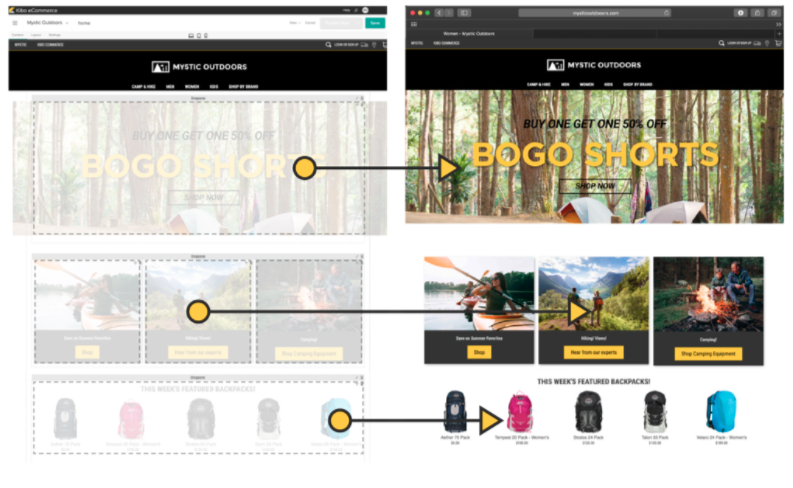  | Spryker Cloud Commerce OS Screenshots   |