LocaliQ is a marketing platform that helps businesses attract and retain ideal customers with a suite of AI lead management and digital agents, marketing automation, omnichannel campaign management, advanced reporting, and expert-led services.
N/A
Salesforce Marketing Cloud
Score 8.1 out of 10
N/A
Marketing Cloud is an AI-powered, cloud-based digital marketing platform within the Salesforce Customer 360 ecosystem. Marketers can segment their audience, deliver personalized messages, track campaign performance, engage leads and accounts, and optimize strategies based on real-time insights.
$1,250
per month
Pricing
LocaliQ
Salesforce Marketing Cloud
Editions & Modules
No answers on this topic
Account Engagement
$1,250
per month
Engagement
$1,250
per month
Intelligence
$3,000
per month
Loyalty Management
$20,000
per month
Personalization
$100,000
per year
Data Cloud for Marketing
$108,000
per year
Offerings
Pricing Offerings
LocaliQ
Salesforce Marketing Cloud
Free Trial
Yes
Yes
Free/Freemium Version
Yes
No
Premium Consulting/Integration Services
No
No
Entry-level Setup Fee
Optional
No setup fee
Additional Details
LocaliQ offers both self-serve and premium solutions.
LocaliQ’s free, self-serve experience provides access to Free Website Grader, Free Inbound Call Recorder, Chatbot (free and $9.99/month options available), Scheduling Technology (free and $9.99/month options available), and Listings solutions ($9.99/month and $14.99/month options available).
For LocaliQ's premium solutions, users are partnered with a LocaliQ expert to create the best marketing plan for their businesses that utilizes a full suite of marketing products.
LocaliQ is more economical that marketing agencies we've used in the past. Our dollar goes farther. We've also used services from phonebook providers that were getting into the online advertising field. At the time, it was just being introduced so the reps knowledge on the …
LocaliQ was chosen for its comprehensive marketing capabilities, combining localized targeting, digital and print ads, and automated optimizations. While other platforms excel in specialized areas, LocaliQ provided a well-rounded solution tailored to our company goals of …
We chose LocaliQ above a few other sites because they appeared to be the most professional and have the most knowledgable team. They worked with other businesses in our industry and we felt comfortable experimenting with their services. They provided a professional presentation …
I have investigated national services like American Eagle and also small market locally owned business like Red Shoes. Each year, I look into at least one other service provider to evaluate our service value. So far, no other company has come close to providing an all around …
I did not investigate other platforms. My org has had a relationship with LocaliQ prior to my arrival, so I continued that partnership. I guess it's worth adding, we comparison shopped with two other local agencies but the pricing was much better with LocaliQ.
I prefer the personal relationships that have developed over the years working with LocaliQ. I like that I have a contact person that I can communicate with directly as opposed to a chat or support ticket.
It was a disaster of a launch, and we quickly ended it. I hope it has got better, and we will, at some point, start a new chatbot with one of our existing relationships.
When we review different companies to use for the next year, LocaliQ always stands out against the rest due to the amount we get for the amount of money we spend.
I haven't used any competitors listed, but I am familiar with GTMA and have worked with them. Their advertising strategies have been more robust, and I prefer their Google ads and Facebook ads methods over ReachLocals. I like ReachLocals basic report functionality over GTMA's. …
We used Demandforce prior to moving to ThriveHive. I believe that ThriveHive is just a better overall value in terms of pricing, services and of course the personal guidance you get by having a dedicated coach.
While WordPress provides you with the opportunity to build a custom website, it stops there. ThriveHive has a strong small business marketing suite of products that are integrated into a WordPress-based website while also making it easy for the user to make quick and easy edits …
I have worked with all three providers across different businesses and seen the benefit of each one in different ways. It is good that Salesforce Marketing Cloud connects well with salesforce as a sales management CRM. Hubspot is a lot. more user friendly of an interface and …
I find the data stored in the database is very much cleansed and hence the overall decision making process improves. Also the customised emails, digital marketing features stacks the Salesforce Marketing Cloud way above others
We use Salesforce Marketing Cloud for lead management, generating reports, tracking customer and dealer information, inputting orders, and more. I prefer HubSpot for email marketing and automation because it is easier to use and the emails are designed much better. We …
I think that all of the marketing platforms I have evaluated and used in the past serve different markets and purposes. Salesforce Marketing Cloud was more palatable to our team because of our existing tech stack where we had Salesforce CRM already deployed and in use. Compared …
Hubspot is more user friendly, more intuitive, and has functionality built in from the start that allows you to get things off the ground faster than SFMC. I use SFMC because that is the current platform at my employer.
Mailchimp is great for simple email use. It's straightforward and great for beginners in the email space. It does not offer nearly as much in the way of complexity as Salesforce Marketing Cloud does, so is limited with what it can do. Salesforce Marketing Cloud is much more …
It has more features and a fuller capacity for all things marketing. Pardot was clunky and lacked a good email builder. It wasn't my choice to select this software, but I see its value, and the team has benefitted from it. We hope they continue to improve functionality and …
Salesforce Marketing Cloud is a more comprehensive product than HubSpot Marketing Cloud. It integrates better with multiple channels, is a powerful audience builder, and is an efficient AI. However, Salesforce Marketing Cloud is also more expensive and requires Salesforce.com …
Salesforce Marketing Cloud stands out for its comprehensive features, scalability, and seamless integration capabilities. Compared to other platforms, its unified suite of tools for email, social media, mobile, and advertising enables streamlined cross-channel campaign …
Not to sound like I am completely against Salesforce Marketing Cloud, I believe HubSpot has worked alot on their marketing platform to simplify the interface along with keeping the rich functions a marketing platform would want. Campaign monitor is a bit more basic, but perfect …
My previous organization used Pardot and also Mailchimp. Salesforce Marketing Cloud is more powerful than both of those tools and integrates more deeply with Salesforce CRM.
Overall, 80 percent of the features and boiler plate and standard across all these tools. Salesforce leads in integrations and global scalability. But lacks in User interface and ease of use.
Salesforce Marketing Cloud offers many opportunities for personalization and supports big data integration. It features powerful tools like SQL for data and AMPscript for email creation. If someone wants to master the platform, it might require some initial learning, which I …
We use these both in conjunction together now rather than rivals as the data that can be held in both does differ slightly and one platform email maker is slightly better so we do a lot of the creative in one platform and then have it link in and have all the data flow into the …
Salesforce Marketing Cloud is intuitive and does what it needs to do. The functions are easy to find, and the automation options work smoothly. You find an intuitive workspace in both HubSpot and Marketo Engage, and the options in these programs look similar to Salesforce Sales …
Pardot has a tighter integration with Salesforce CRM compared to Marketo. This allows for more seamless data transfer. MCAE has a slightly more user-friendly interface compared to Marketo, which can make it easier for non-technical users to navigate. From the cost perspective, …
Both products have a very similar approach on the Engagment part. At least at the time we used Hootsuite, it didn't had integration with Instagram, so that was a big win when we changed to Social Studio. Also, the automation tools of Social Studio were a great diferential in …
Salesforce Marketing Cloud stacks up well against Adobe Campaign and Sendinblue. I found it to be a more robust and feature-rich platform than Adobe Campaign and Sendinblue.
Salesforce is faster and has better and more logical visualisation. Salesforce is evolving and has more relevant products from one vendor. Salesforce proved its course to AI supported user activity. AI module exists in Salesforce Marketing Cloud Interaction Studio, sure will …
The breadth of the services and features Salesforce Marketing Cloud Interaction Studio offers stacks up against its competitors and makes it an ideal choice. The future scope of Salesforce Marketing Cloud Interaction Studio is more impressive than its alternatives and the past …
LocaliQ is phenomenal at s multichannel marketing approach. It is incredibly effective and efficient to run all of these simultaneous campaigns through one company. As a small nonprofit, we would not have been able to have the reach LocaliQ gave us if we had opted to use multiple companies. It would have been too much for our staff to handle.
At least for us, what we noticed is the best use case is that it replaces the use of cloud teams, which has a more complex platform to navigate; since we are already using Salesforce, it was just more straightforward to allow the teams to continue to do that as opposed to giving them a new system. This also works for us because they are both selling the same product in different ways. Any team collaboration is where this product shines.
ThriveHive is a smaller marketing team dedicated to helping small to medium sized businesses perfect their marketing messages. ThriveHive is particularity good at understanding how Google, and other search engines work, and have been instrumental in helping my company to grow and evolve.
With ThriveHive, you get a dedicated coach who is matched to your type of business. This experience with similar businesses gives your coach a better understanding of your business and the challenges your company faces.
My coach is very good at responding to my needs within 1 to 2 business days. Email contacts are fluent and as often as I need, to discuss ideas or questions. I can only speak of my relationship with my coach, and I am very pleased.
I feel that ThriveHive makes every effort to take excellent care of their clients, and makes you feel like you are their most important customer. I definitely believe that this is one of ThriveHives' greatest assets.
The email content editor could use some additional bells and whistles, it cannot handle some more advanced functions, but for the basics it is more than adequate.
Options for website creation are a bit limited and the turnaround time can be a bit lengthy at times because of the volume they do.
Tracked phone lines can be a bit pricey, but not exorbitant.
We are happy with Pardot. It has made our jobs easier and installed some reporting functions that have increased our ROI with the company. We have worked hard to set-up the functions in Pardot and it has taken time, but paid off.
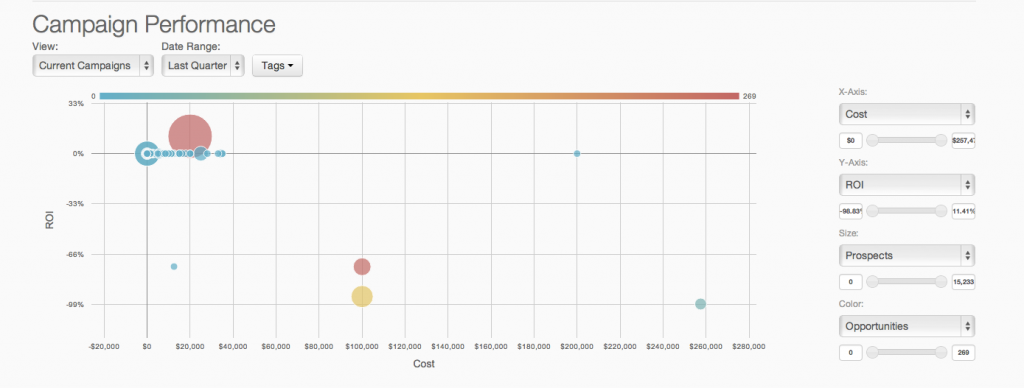
Overall usability pretty good. If we would have gotten better return on our advertising dollar I would have continued with them - their dashboard was very easy to use and the recaps they provided were helpful. They try to put data in bite-sized pieces for the client that are understandable (unlike google's reporting page itself which can be a bit difficult to understand at times). Their team was friendly, semi-responsive, and provided explanations when requested
You won't find another solution that has as many features as Salesforce Marketing Cloud Interaction Studio. We all know Salesforce, we all know how big they are and it's not for nothing... Their tools do most of the things you want, need and even imagine. Using it is complicated, but the usability is infinite.
Upgrades and timing of the upgrades were communicated well and planned during off hours for our work. If we did have a campaign scheduled during that time, it would kick-off after the system was back active. There were a few unplanned system down times, but it was a rare occurrence and those times were also short in duration.
Though the make up of MA apps is not built this way today, it would be nice to see them become more real-time. The integration between Salesforce and Pardot is not a true real-time integration. If I modify something in Salesforce, those changes are not automatically reflected in Pardot immediately. There is a delay of about 15 minutes before the systems sync. This delay, although not long, is less than ideal We would love the systems to be integrated real time such that changes are propagated from one system to the other immediately.
They are really responsive and more than not solve the problem or give you insight to how you can manage the solution yourself. I do find however sometimes a long delay on the more complex issues when they need to loop in other departments. but overall a good experience with support
Training program is not very well established. There is very little documentations. More often than not it's in-person training. I wish there were more video tutorials so that somebody can learn the system quickly. Their documentation is very much like an RFP. Long and very technichal. They should definitly improve on this area.
Pardot's online training touches on all topics briefly and vaguely without much indepth exploration into how a final outcome could look, such as Nurturing Campaigns, Email templates, landing page templates, etc... The only true way to uncover Pardot's full capabilities is to have Front End design and coding experience. Without this key skill set, I would not recommend Pardot to another business.
From an IT perspective, once you set up the Javascript beacon and start collecting data there is a waiting game. During this time you can start labeling your site actions which can be labor intensive for a single person, but you don't really have the final end-users on the platform yet. We did a lot of training so users were experienced, but it wasn't until they had their first tasks to accomplish that they started using the system and had questions. I'd recommend setting up some immediate goals for an end-user to start segmenting for the purpose of displaying message campaigns so you can jump start end-user action.
LocaliQ is more economical that marketing agencies we've used in the past. Our dollar goes farther. We've also used services from phonebook providers that were getting into the online advertising field. At the time, it was just being introduced so the reps knowledge on the topic was quiet limited.
We use Salesforce Marketing Cloud for lead management, generating reports, tracking customer and dealer information, inputting orders, and more. I prefer HubSpot for email marketing and automation because it is easier to use and the emails are designed much better. We currently use Salesforce and HubSpot, and we are very happy to have both, as they have different pros/cons.
As mentioned prior, their ability to utilize and maximize our resources so that we receive the best results on all avenues of marketing and advertising. We see better lead generation, brand recognition and top of mind awareness due to LocaliQ efforts
Salesforce Marketing Cloud does a great job at what it is designed to do. There are several SaaS products in the Marketing Automation arena and SFMC is one of the top providers. There are several things it does well, such as email marketing and automation, leads generation/segmentation/qualification, and reporting/analytics. There are a few areas of improvement when it comes to the product and they surround legacy systems and architecture, outdated UI/UX, as well as targeting data in the activity logs for reporting and segmentation.