Logi Info (or the Logi Analytics Platform) is a developer-grade analytics platform designed for application teams needing to rapidly build, deploy, and maintain mission-critical applications. Logi serves the embedded model, so companies increase the
likelihood of building valuable, long lasting applications. The vendor focuses on enriching embedded analytics
capabilities so that their customers' applications become more valuable, faster. According to the vendor, Logi allows customers to…
N/A
QlikView
Score 7.2 out of 10
N/A
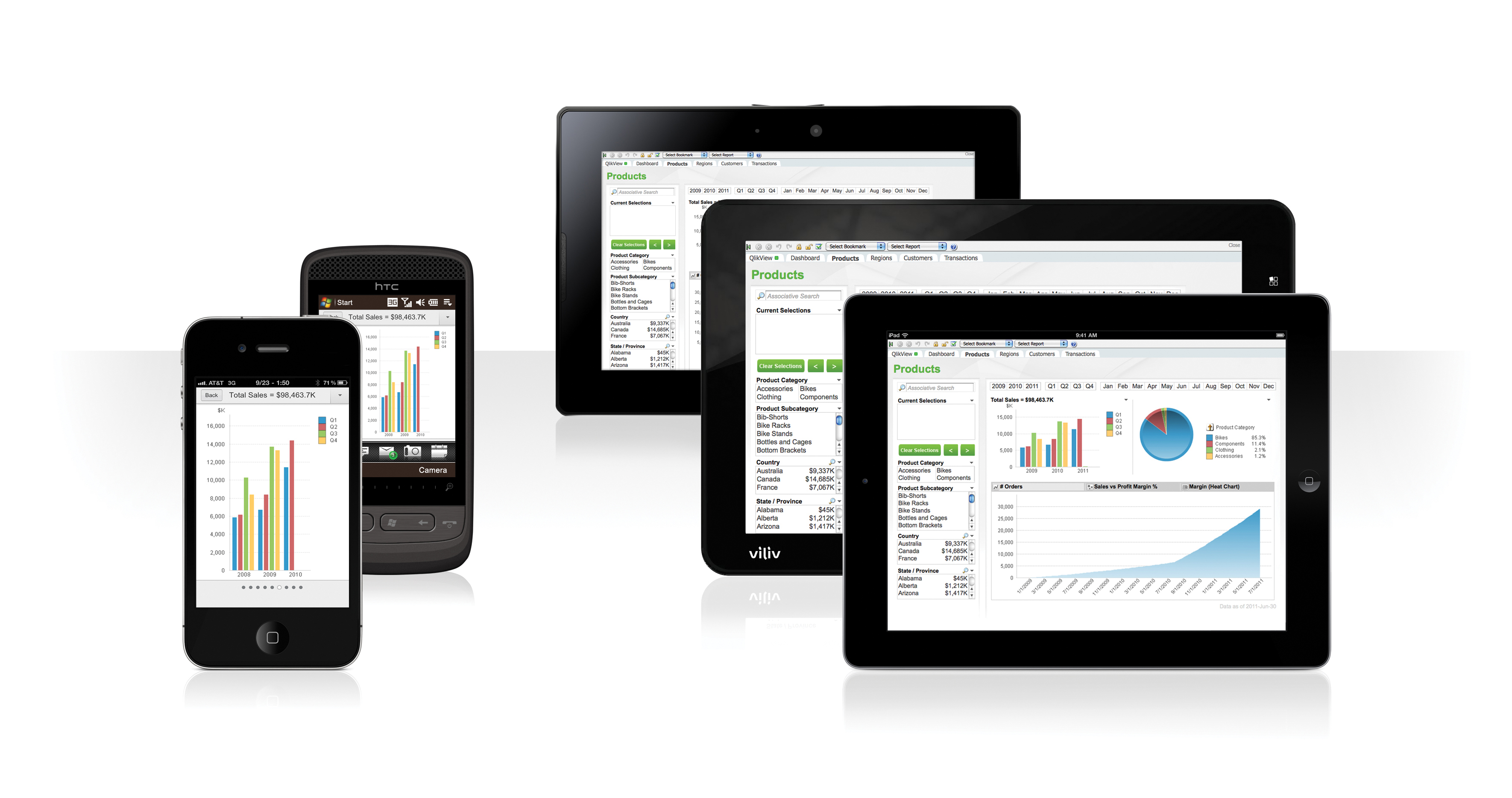
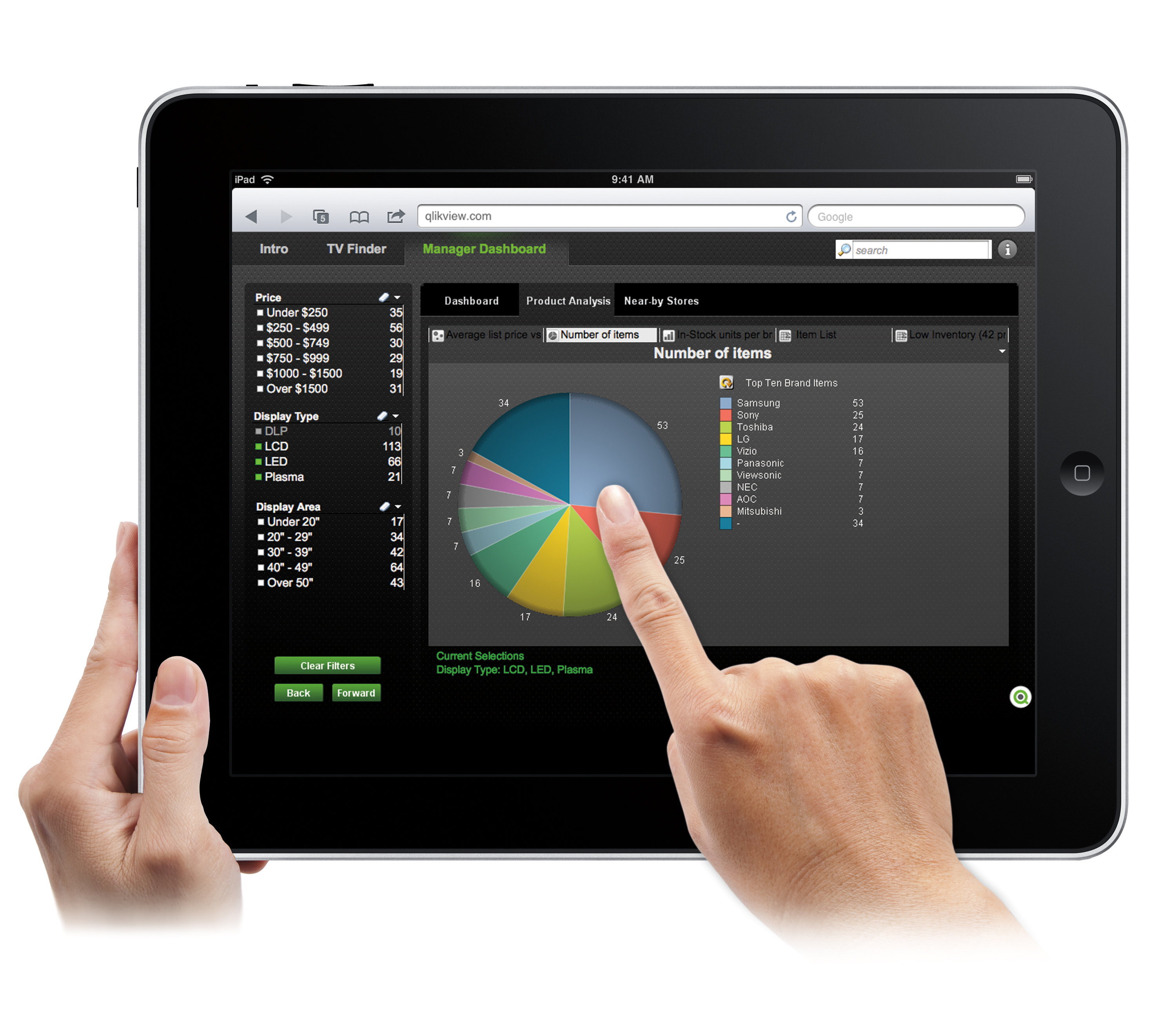
QlikView® is Qlik®’s original BI offering designed primarily for shared business intelligence reports and data visualizations. It offers guided exploration and discovery, collaborative analytics for sharing insight, and agile development and deployment.
N/A
Pricing
Logi Info
QlikView
Editions & Modules
No answers on this topic
QlikView
Custom
per user
Offerings
Pricing Offerings
Logi Info
QlikView
Free Trial
Yes
Yes
Free/Freemium Version
No
No
Premium Consulting/Integration Services
No
No
Entry-level Setup Fee
No setup fee
Optional
Additional Details
Logi's pricing was developed with software vendors in mind and as such, we offer flexible, custom pricing aligned with your go-to-market approach and long-term growth plans. Our pricing objective is to ensure our partners can rapidly scale their analytics.
On an perpetual license basis, based on server plus number of users.
Contact vendor for pricing.
To be honest, Logi Info (Logi Analytics Platform) is the weakest of all these products BUT it can offer value if you have a team of web developers who want to add BI widgets, vs. having a BI team who are focused on making great visualisations. Our company made the decision …
Easy console and a well-defined large number of prebuilt data models made this product easy for business customers to produce really quick and useful insights in a very short time. Quick and fast data insights outcome in the well-defined data model with minimal support from …
Logi Info was easy to integrate to our product and it's OEM model was very cost effective. Hence, having a cost effective platform was our primary choice. Logi Info is also easy to use if I make a comparison specifically with Tableau. Also, Logi Info offers better visualization …
Logi Analytics easily outperformed all of the software that we considered with regard to scalability, flexibility, cost, support, and overall architecture.
It can be embedded on top of a website for direct analysis. I feel this is a way faster and a better solution. This is like an integrated solution. That's why the firm selected Logi Analytics for quick insights on customer behavior and data.
I believe that LOGI is a better tool than SAP's Business Objects. I say this because LOGI has provided the customer support to help figure out how to use the tool to jump through hoops, and I did not have a similar support system to use SAP's Business Objects. I just wish LOGI …
iDashboards couldn't handle large amounts of data and didn't allow for any customization. Also, you had to purchase a license for every user which didn't work for our mode. Dundas couldn't connect to AS400 and it wasn't always intuitive. I struggled with trying to figure out …
We needed to be able to deploy in a Linux environment which ruled out some other vendors. Ultimately we determined the deployment, ease of use, and licensing all favored Logi Analytics above the others.
We also utilize Power BI. Power BI is very powerful and integrates well with Office 365/SharePoint. There are many connection points between all MS family products. It doesn't play as nice with other competitors. We've hosted Logi panel/reports on SharePoint that talk to …
We use SAP as well as Logi. SAP is an expensive solution, and a hard learning curve. Cognos is a good product, but again, expensive. We did not implement Cognos due to the price.
We test drove a lot of the big hitters, Pentaho, Sisense, Tableau, Jasper, Spago, Birt, Knime, Power BI and while most of them did a lot of things very well, but none did exactly what we were looking for without a lot of downsides (more developers, bolting on extra modules …
It has been a while since we ran our evaluations, but I recall presenting the feature set for Logi with some samples created in-house against some from other vendors. Not only was Logi Info easier to learn and use out of the box, but the pricing for our use case was so …
Logi info gives you way more flexibility when creating custom reports. You can better include different sources and integrate multiple variables in a unique way that Power BI doesn't quite offer. I do think power BI is quicker to learn and easier to use, but in the end Logi …
Logi gave us the flexibility we needed to meet the configurable nature of our product and for the need to create custom reports. Other products did not allow flexbility to generate reports via script as was one of our primary requirements.
QlikView, Tableau, and SiSense are all very good BI tools for analysis and reporting. Tableau was better at intuitively matching fields of disparate data and more visually appealing, but I think QlikView is faster. Tableau was also easier for someone to use to build and …
I think it all comes down to personal preference and integration compatibility with the existing systems in the organization. However, I would argue that Qlik and PowerBI are the top-tier available solutions due to robust features and capabilities, and I would put solutions …
With QlikView and Qlik Sense the users can answer their own questions more interactively. They also can build their own visualizations without waiting [for] someone from IT to create a new report. The users can navigate through the data finding out relevant information. Through …
We have not necessarily used any direct competitors to QlikView, but we have used other analysis and reporting software that has worked better for us because of the type of data that we are analyzing. There are also cheaper options out there that are definitely better.
When integrating the tool years ago, we looked at other options including the out of the box reporting features from our current ERP software, The user interface and report-ability was very difficult to use and scale across may different business models in our group. We also …
There are more than 1700 partners in the world that could implement a QlikView solution, and these associates tend to have a long and close relationship with the customer, and ultimately lead up to understanding the customer's needs at 100%. Also, the software is very scalable …
MS Power BI and other BI tools have similar functions to QlikView and some of them also have much cheaper price. However, the strength of QlikView is that it is much easier to use and to learn. If you need to train a new person to learn the tool, it costs around 1-2 days.
QlikView has its own data warehouse, which is the most important reason why would I choose QlikView over any other tools. Apart from that, the feature options are good for the ones who know the tool well but created a steeper learning curve in the beginning. Once you went …
Qlik was less intuitive than Paxata, but less expensive than either MicroStrategy or PowerBI. Qlik has enough breadth to accommodate most use cases without breaking the bank.
It is inexpensive and cost prohibited software. Has alot of canned reports that you would need and doesn't request much development work. Widely adopted as an industry leader and works well with many of the top data source applications. Very easy to use and intuitive in the …
We use it as a part of our Office 365 tool. With that tool, we do not have an option to download the reports and send them to customers, but with Qlikview we can.
QlikView is very similar to Tableau. However, I believe it is a cheaper solution, and that is why our company has chosen QlikView. It has been able to handle large, large amounts of data sets, and has been pretty agile for our business needs.
My use of Cognos was as an embedded BI tool inside of a cloud HCM. At the time, you could not marry up data from other external sources with that version. QlikView makes it easy to connect data from multiple sources. As a BI tool I do prefer the Cognos set up, but that's more …
Data Quality Management Software Development Manager
Chose QlikView
QlikView was already chosen and implemented before I started [to work here], but it is very easy to learn (for me) and I started to solve problems within a day or two.
Product Specialist - Walls Product Line Management
Chose QlikView
While I may have to export the data, I was doing so anyway to get it into excel to drive better visualizations of the data. When I discovered PowerBI and all it had available I no longer had a need for QlikView.
The first thing we liked about QlikView was the price. For a small amount per user, I can have a very useful software to manage the whole data set our company uses. The Tableau desktop has very high pricing for the software, and for just one user, not the whole organization. …
Qlikview is more outdated compared to Qlik Sense. Qlik Sense puts more of the power onto the users to create their own dashboards while QlikView tends to be managed by BI teams.
The pricing of Logi (per server core) is highly attractive for internal-facing use as we can control/predict how many visits we will get to our internal Logi webserver. The fact that the only license required is on the server means that all of our staff can use Logi Info-presented content without restrictions. The option of OEM licensing is also attractive and presents many future options, but will require much more licensing as the webserver will require more cores to handle the level of traffic demanded by OEM usage.
Sales data validations have helped manage our justifications in the past, especially with regard to new product development and new business introduction. It has also been helpful in identifying trends with business impact and direction specific to quarter and monthly sales from ERP data as well as decisions to purchase equipment of staffing based on run rates and product demand.
One thing that can get out of hand is data output - if you aren't careful in your query, you may be overloaded with data dumps and drown in the amount of info you have to filter through. This is a user caution, not a comment on the software itself.
Flexibility and easy standup. Users can choose to create their own Logi application or do a "quick standup" by using design straight out of the box. Due to varied customer requirements, Logi allows the developer to address all needs.
Great design studio. The studio provided with Logi to create and maintain your Logi app gives a lot of detail and examples to guide you along the way. The tool even includes some additional tools for the layman to assist with deployment or wizards to help you create more complex type reports that otherwise would require more detailed technical knowledge to create. Of course, you can still do anything you want by hand if that is what you prefer!
Documentation. Logi's developer portal provides plenty of documentation and examples to get users going. Need to create a custom template that builds from a table rather than being hard-coded? Search the documentation and you will find examples to piece together to form your solution!
Support. Logi used to provide EXCELLENT support. However, they've changed their support model and no longer provide excellent help. I used to get problems resolved within 15-30 minutes. Now, it has gone down to 48 hour response time just to answer a simple question. In-depth questions can go on for days or weeks.
Based upon the change in support, and the fact that we pay for 'unlimited phone support' in our annual contract, we are moving away from using LOGI as a tool for the future.
Learning CSS and Javascript would make you a better LOGI developer.
We found that QlikView can be a bit slow in supporting some forms of encryption. It is web-based and we needed to upgrade all of our server to not support the older SSL and TLS 1 protocols, only support TLS 1.2 and TLS 1.3. However, QlikView could not run with TLS 1.2 and TLS 1.3. We had to wait over six months to get a version that would handle the newer TLS versions.
There are so many options with QlikView that you can get lost when developing a visualization. There are still items I have not yet figured out, such as labeling a graph with the name of a selected detail item.
QlikView works by pulling the data it is going to use for visualization into its database. I am a security reviewer and I need to make certain that PII and PHI is not pulled by QlikView for a visualization, otherwise this could become a reportable indecent.
Logi Info is a very outdated, archaic product that tries to build .NET / Java web apps using an obscure XML-based markup language to implement BI widgets, with a lot of extra CSS/JavaScript needed on your own to make it do the best things. There are many other better tools. It is not a BI tool, and as a web development tool it's not great either. I'd recommend getting some good third-party .NET BI library if you want your web devs to make the reports, otherwise use a proper BI tool like Power BI or Tableau, or even Logi Composer (formerly ZoomData before Logi acquired it.)
Ease of use, ability to load from pretty much any data source. today I created an application that loaded time sheets from excel that are not in a table format. With Qlik's "enable transformation steps" I was able to automate loads of multiple spreadsheets and multiple tabs easily. Could not do that with any other tool.
I am giving 9 rating because the Logi Info still needs to improve on the tutorials part and make it easy for the beginners. Otherwise, it's a very good analytics tool which offers more than 20 types of visualization. It's predictive analysis feature and easy to embed with technologies make it stand out in the market.
I do think there is a steep learning curve to the program and that it requires a high level of experience or a data scientist background to fully take advantage and implement dashboards, and users will require ongoing training to maximize ROI, but it is absolutely worth it considering the impact it can make on an organization.
The support process is bit slow and has a good scope improvement but overall it's good as team is very supportive. They generally take 1-2 days time to respond emails sent to them but some times a delay is also expected. Overall, I did not face any major issues using the service.
The documentation presented by QlikView is very clear and exact. This makes the process of implementation more easy. If any questions arise while creating the reports it is very easy to access the QlikView documents through the internet. QlikView also has a Qlik Community, full of different questions and answers. This helps a lot to resolve issues even without contacting the support team.
My team attended, but I cannot myself rate, but I think it was good as they've successfully launched a training program at our company themselves for users. It was 3-4 day training.
Training was as expected. The demo environments tend to be more fully featured that our own environment, but the training was clear and well delivered.
It has taken some time to get used to Qlikview and the backend team behind it. From understanding the new regulations on using less images and also pushing for more tools (such as full compatibility on desktop, laptop, ipad, phone). We were given training on this and have helpful tips to find analytics behind Qlikview but it is very much also a learn as you implement system.
We test drove a lot of the big hitters, Pentaho, Sisense, Tableau, Jasper, Spago, Birt, Knime, Power BI and while most of them did a lot of things very well, but none did exactly what we were looking for without a lot of downsides (more developers, bolting on extra modules etc). Logi also was ultra competitive on pricing structure and they truly wanted to partner with us as much as we want to partner with them.
With QlikView and Qlik Sense the users can answer their own questions more interactively. They also can build their own visualizations without waiting [for] someone from IT to create a new report. The users can navigate through the data finding out relevant information. Through QlikView color code, users can get aware of the relationship between the different data points.
By embedding Logi in our solution and using the Logi Self-Service Module we can provide this flexibility to our users without requiring custom development work for each new request.
We succeeded in developing embedded self-service analytics at scale with a combination of Logi analytics as front-end and a Cassandra data lake with Spark aggregation algorithms as back-end.
We analyze the insurance industry and need to replicate different data formats across hundreds of databases to support multi-tenant (customer) BI reports and "ad hoc" data review on millions or hundreds of millions of records per customer.
Speed to market is the really big thing. You can attach to multiple data sources quickly and build a consumable model for a dashboard. It doesn’t require IT talent to build. We have built more dashboards and added more users in the last year, then in our entire history. I was at a company of 30k+ employees before, and we didn't have near this level of BI adoption.
As a result, we are seeing benefits across business function. For example, within sales, our pipeline has much more visibility. It allows for much faster decisions on things like quotas. One of our biggest power users is in sales ops. She feels her dashboards load 10x faster than our previous tool and she can make changes on the fly.