Microsoft Dynamics 365 is a CRM providing sales, marketing, and service functionality. It is offered as SaaS and on-premise. Dynamics 365 is part of the larger Dynamics suite of business intelligence and ERP products.
N/A
Salesmate
Score 10.0 out of 10
Mid-Size Companies (51-1,000 employees)
Salesmate is a single platform that helps create personalized experiences across marketing, sales, and service touchpoints across all channels – email, text, chat, web, calls, and eCommerce. It is designed to enable users to generate more leads, close more deals, and build lasting customer relationships. It replaces many disjointed systems to save users time and money. Salesmate offers businesses: …
$29
per month per user
Pricing
Microsoft Dynamics 365
Salesmate
Editions & Modules
No answers on this topic
Basic
$29
per month per user
Pro
$49
per month per user
Business
$79
per month per user
Enterprise
Custom
Offerings
Pricing Offerings
Microsoft Dynamics 365
Salesmate
Free Trial
Yes
Yes
Free/Freemium Version
No
No
Premium Consulting/Integration Services
No
No
Entry-level Setup Fee
No setup fee
Optional
Additional Details
—
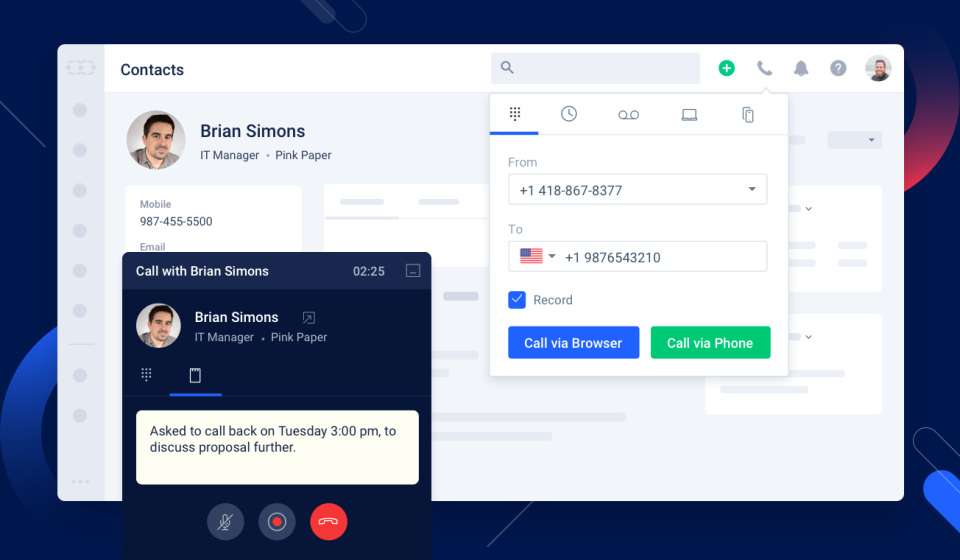
We offer built-in calling:
Starting at $1.10 per month for your phone line & pay as you go credits
Based on user experience, I would like to recommend this software to my friends or colleagues on the AP Handling. I like AP recording the most because it makes my work easy. I have been using this for the past 2 years, and it's one of the best for this task. Easy to use and user-friendly.
Salesmate gives us everything we need as a small business, with a clear interface, and can adapt to any business. If I was being ultra picky, I would perhaps suggest the ability to remove or hide certain modules not applicable to our niche, e.g., we are a B2C business, so the company module is not really useable for us, but this is not a negative by any means.
Some useful out-of-the-box features, like mass uploads of Leads from trade shows or when qualifying a Lead, CRM automatically creates the Opportunity, Contact, and Account for you, etc.
Really powerful customizations through the user interface to improve user experience. Things like Business Rules, for example, if Field A = 1, then Field B = 2 and Field C = 2, if Field A = 2, then Field B and Field C don't apply, so automatically hide them.
Or other functionality that improves user experience, like Business Process Flows. These walk users step by step through our business process, helping them know when certain actions should take place, and at what point other data is now required. We've used this extensively with our Lead to Opportunity to Quote to Order process, helping users understand the business process each step of the way.
Customizations built on top of the platform now called model-driven PowerApps. You can have connections to "typical" data, like Accounts, Contacts, or Opportunities, for example, but then connect that data to custom entities, records that only apply to your specific business. This is all done through the user interface and allows you to customize and automate specific line-of-business applications for your specific needs.
Behind the scenes, D365 CE is built on SQL. So the data conforms to industry standards and makes it much easier to interact with. Your developers and IT team will thank you.
Microsoft Dynamics 365 storage & license cost can prohibit some large deployments or even cost-sensitive small projects from using the platform (although I'm certain most deployments would realize a positive ROI if implemented correctly with process automation).
The cost and licensing document for Dynamics 365 is 61 pages and will take a rocket scientist to understand it. It's better to just have your Microsoft help estimate the cost if they are willing to help you that.
The documentation on how to first fully understand the Out of the Box default solution and settings is lacking or even non-existing. This has the potential to derail Dynamic 365 launches and implementations from the gitgo. Want to use an out of the box entity?.. well it's probably related to 5 other entities that require configuration and full understanding of it to successful implement. And you ask where is the laymen guide or instructions?... User groups and forums. In Summary, Microsoft can up its game in deployment training and supporting documentation.
Microsoft needs to incentivize more external platforms to build app connectors for easy integration, such as ZenDesk, Slack, Tableau, etc. Even the current connector apps such as Salesforce, MailChimp, Docusign are useless or don't work at all.
Several limitations inhibit successful Dynamics 365 deployments such as: limited number of Rollup field calculations (summarizing fields on child/related records), limited number rows that can exported to Excel via advanced find, Dynamics 365 files, log and database storage size limit is extremely small and will always require purchasing additional storage (for Online deployments).
New user buy-in or acceptance or system platform changes can be difficult if a solid change management plan isn't enacted.
Don't expect much help from Microsoft on implementation or solutions unless it's a technical flaw with the platform. Microsoft relies on their MVP partner network to consult for implementations at a hefty cost. Hiring a knowledgeable and savvy Dynamics 365 System Administrator can reduce the need for consultant support; of course, this is dependant upon many many variables.
The search feature can be buggy and does not allow for highlighted text to be typed on. You must clear the box or hit backspace before typing. The only app in my life that does this.
The dashboard button is pointless if it still makes you choose between legacy or classic.
CRM has allowed us to keep all of our data in one place that is easy for all users within the company to view. I came into the company after they had been using CRM for about 4 years. They have all said that since we have used this it has helped us control work processes better, it has allowed us to be able to track things so much better, and has been something that has helped unite many processes that used to be all over the place. We are currently using CRM 4.0 and are planning on upgrading in the next 18 months to the 2011 version. Support for 4.0 is almost all but dried up. Understandably so. Some of the customization we have done, and a plugins we use, are now contained within the 2011 version so we are looking forward to that upgrade. We use an email marketing company as well, and they primarily support the 2011 version, but their product connects and is integrated within CRM. This is a great benefit as well so that all of our marketing information can be contained in one location.
Very happy with the customer service and the overall functionality of the program. With new features always being launched and discussed I'm looking fwd to growing with them
The platform offers a comprehensive suite of features that cater to various business needs, but its complexity can be a barrier for new users. While the interface is visually appealing, navigation can be cumbersome, and some users may find it challenging to access certain functionalities without adequate training.
The platform is incredibly robust while maintaining a clean appearance. This allows you to see exactly what you need at any given time without being overwhelmed. The ability to customize your dashboard easily allows you to see the information that is most relevant to your operations and needs.
Our partner, Ledgeview Partners has been FANTASTIC to work with. They are always timely in their response and have taken time to understand our business and our specific needs. We've made a lot of advanced customizations and they have been a great help in making those updates.
Fantastic - always reply in a reasonable amount of time, usually with a simple fix. The support website is very handy, but often you will likely have 'niche' questions - to which the team are all to happy to help with. For larger issues, we have had to lodge tickets with tech, but to date, every issue we have had has been resolved. Very happy with the support and service.
We used a data warehouse to house our data, and our IT team and implementation vendor worked diligently ahead of time to construct idea implementation plans. Out of millions of records- we had less than a dozen errors, which is remarkable. My major insight is simply having a group of completely devoted individuals working towards your goal who fully understand the desired outcome. Focused resources for implementation season are critical to success.
Microsoft Dynamics 365 is much more robust, with more customizable features, such as user-specific settings and customer customization options. The system is easy to us,e and all modules can be customized to the exact need of the user. The standard version includes everything you need for a small business that is starting out. Additional features can be added as needed.
I was using the free version of Hubspot, which was extremely limiting. If I wanted to go ahead and unlock a simple feature, which every other CRM offered, my price would shoot up to hundreds of dollars a month for no reason, as they force you to unlock “all the features” not just the ones you need. Salesmate is much better, as you can choose which features you want, and don’t want.
If you know your stuff, this product does just fine. They are always adapting (aren't they all, always?), so expect it to grow and for you to grow with it.
Don't expect new employees, or places with high turnover, to ease into this product quickly, or even on a moderate time table.