Miro empowers cross-functional teams to flow from early discovery through final delivery on a shared, AI-first canvas. With the canvas as the prompt, Miro’s AI capabilities keep teams in the flow of work, and scale shifts in ways of working.
$0
Deltek TrafficLIVE
Score 4.0 out of 10
N/A
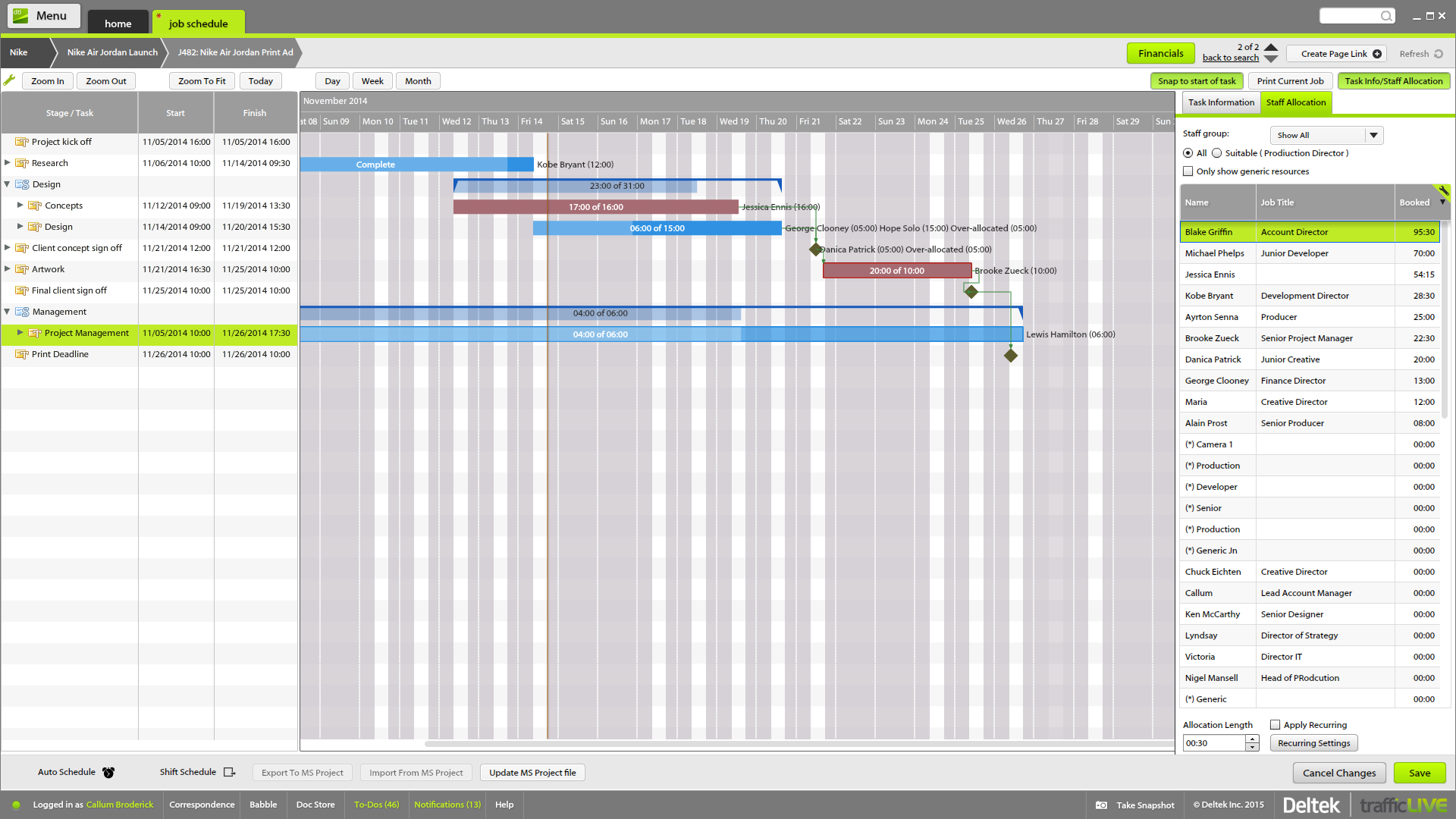
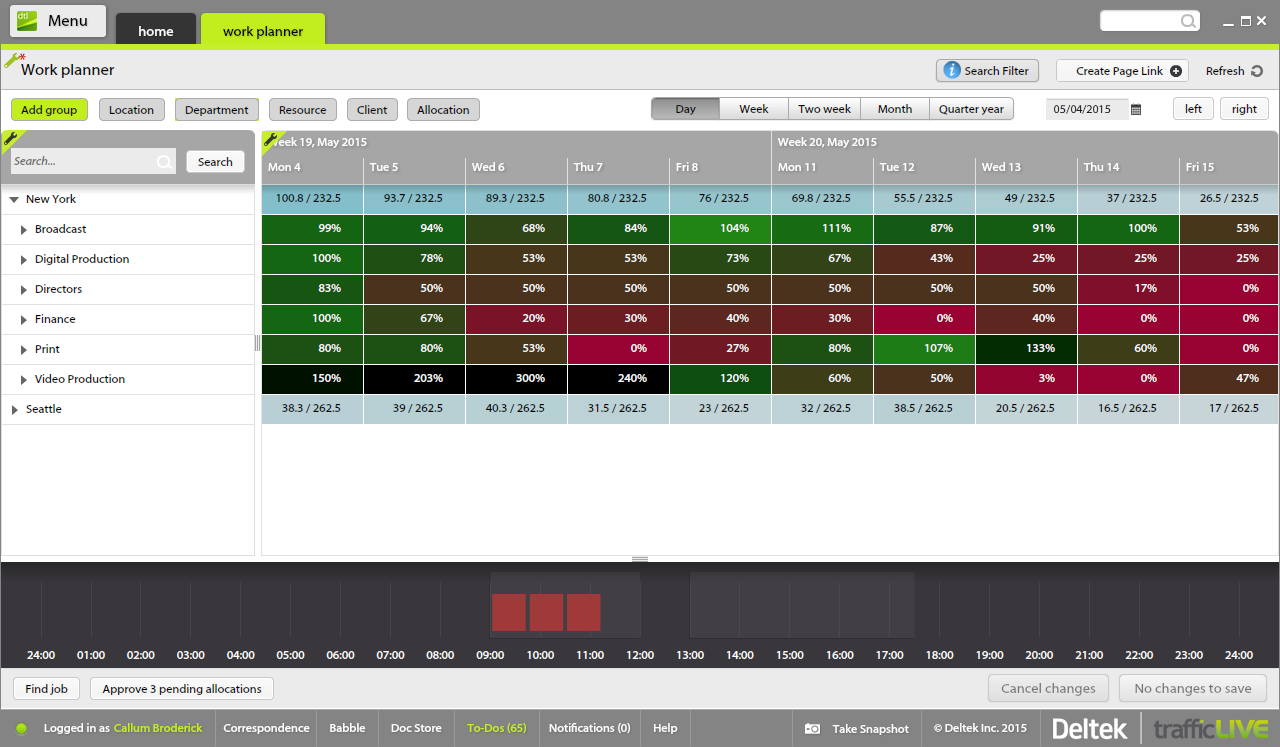
Deltek’s TrafficLIVE is a cloud-based agency management
software solution. The vendor says that the solution provides unmatched
visibility into an agency’s entire business; improves business processes and
drives efficiency that sets an agency up for success and increased
profitability. TrafficLIVE is designed to help agencies to be more connected,
productive and profitable. The vendor says that with TrafficLIVE agencies can start:
Attacking
Over…
N/A
Pricing
Miro
Deltek TrafficLIVE
Editions & Modules
1. Free - To discover what Miro can do. Always free
$0
2. Starter - Unlimited and private boards with essential features
$8
per month (billed annually) per user
3. Business - Scales collaboration with advanced features and security
$16
per month (billed annually) per user
4. Enterprise - For work across the entire organization, with support, security and control, to scale
contact sales
annual billing per user
No answers on this topic
Offerings
Pricing Offerings
Miro
Deltek TrafficLIVE
Free Trial
Yes
No
Free/Freemium Version
Yes
No
Premium Consulting/Integration Services
No
No
Entry-level Setup Fee
Optional
Required
Additional Details
Monthly billing also available at $10 per month for the Starter plan, or $20 for the Business plan.
TrafficLIVE offers solutions for small to large agencies. Our prices range based on number of users and requirements.
I remember a project where all our different teams were involved in it. I created a board with timelines, KPIs, and customer journey stages, and each team added their input live. We were all able to work together in real time, view the entire project, and leave comments without switching apps, which is why it worked fantastically for us. Everyone benefited from the hours of time it saved, and we made a good profit on that project, for which I was named employee of the month.
On a scale between 1-10, I would score Deltek TrafficLIVE as a 4 in terms of recommendations. This is due to the fact that as a Finance Analyst, I found it a very difficult system to use when all I could get from the system was raw data. It was almost impossible to create reports within the system. It was good, however, for users to input their time.
The time sheet area is really good - it's easy to drag and drop and fill in time sheets with allocated tasks quickly, which makes it more likely that people will actually do it!
It's invaluable to be able to see the time spent on different tasks across a job - both for keeping track of ongoing projects, but also to plan resourcing and costs for the next time.
It's useful to be able to mark parts of a job as 'complete' before the full job is finished - this makes it easier to track which tasks still have to be finished, and makes sure that people are tracking time to the correct task within the job.
Job templates are very useful to make sure the same set of tasks is added to each job automatically.
When using the find functionality to locate an item in a Miro board, I do not like that it keeps my previous searched term. Other programs, like Excel, do this but they have it so that you can easily overwrite the previously-searched term.
It would be helpful if you could search by a particular frame, instead of the entire board. For our quarterly backlog review, we often have items that carry over, so there are duplicates on the board. Being able to search by a frame would make this easier.
Understanding who can access a board is not always clear to me.
One of the main features I would like to see added is another permissions option that allows Studio/Traffic Managers to the see the 'blue' time added that currently only the user can see when they have added their actual hourly time. This would give the option to view quickly the progress of a job, and to see if its still live or completed. There is the option to look at the 'weekly timesheet' but this in my opinion is not nearly as user friendly as being able to look at a glance each calendar.
It would be hugely beneficial if along the grey bar on the bottom of the homepage another notification is added that a job had been added to Deltek TrafficLIVE. A simple number would alert you that a new job has been added and needs your immediate attention.
The job search has been conveyed to me by a number of users as not working efficiently enough. If you have the job number then it works perfectly but if you try to locate a job by the account managers name or project name it will not reliably respond in your search.
I have advocate for the renew of Miro quite few times, however, it is not under my control as the decision is made in another team with their own budget. I would buy for my own entrepreneur projects (1-2 members) as I do know the value and work there 100%. So, I would pay out of my own pocket to get the value. However, If I wouldn't know the value it provides, it would be hard to decide with the current freemium features
The platform is flexible, easy to use, and simple because Miro is a great visualization tool that makes it easy to collaborate on creating charts. It helps in creating workflows and other designs easily and securely. It supports integrations with major cloud storage solutions and office suites. On top of that, it provides a decent free plan, which is sufficient for basic usage.
I only give a 9/10 because of the speed at which it loads. I have never experienced issues with Miro logging me out early, or some other technical issue causing the program to crash, or even it just loading in perpetuity without ever actually coming up (unlike other programs such as SFDC). It take a minute for all of my boards to come up after I click on it in my favorites, but besides that, it's all good.
Sometimes it gets quite slow and there is a correlation between this and the size of the board. Hence we are trying to segment the boards based on product stages or projects so that the size doesn't go big. When you go from discovery to delivery on a simple board, it will get large and difficult to load, even crash or go white screen
We have never reached out to or contacted support because Miro's platform has been incredibly intuitive and user-friendly. The comprehensive resources available, such as tutorials, documentation, and community forums, have provided all the guidance we needed. The seamless integration with our existing tools and the reliability of the platform have ensured that we rarely encounter issues that require external assistance. This self-sufficiency has allowed us to focus more on our projects and collaboration without interruptions. Overall, our experience with Miro has been smooth and efficient, eliminating the need for additional support
There was a series of webinars which Miro hosted with our organization that went over the basics, then progressively became more advanced with additional sections. The instructors were knowledgeable, and provided examples throughout the sessions, as well as answered peoples' questions. There was ample time and experience on the calls to cover a range of topics. The instructors were also very friendly and sociable, as well as honest. Of course Miro isn't a "God-tool" that does absolutely everything, but the instructors were aware and emphasized the strengths where Miro had them and sincerely accepted feedback.
Easy to learn, Miro has a series of videos on YouTube that effectively taught this program to my team members and me. The program is drag-and-drop and works excellently. People pick up on how to use it efficiently, and it's great for organizing ideas more freely. This product is more challenging for some older audiences who are not accustomed to using a touchpad, but for most, it was very easy to use.
Miro is the more collaborative option, offering the ability for many individuals to work on the same item real-time. Though it does create some duplicate entry, we've found this added cost is minimal compared to the opportunity cost of lost collaboration.
Synergist - does the same thing, but the interface was far more complicated to use. Looked like a bit of a nightmare to use. Didn't get too far reviewing this one. Was too concerned about on boarding with our workforce.
Paprika - saw a demo, looked 'OK', heard bad reviews from friends in the same industry. Appeared to be plagued with the same issues as Synergistic. Paint to use.
Streamtime - Tested this thoroughly. Loved the interface, and very nearly bought this software over TrafficLIVE for that very reason. In the end it did not allow us to separate time into distinct categories such as 'estimated', 'quoted', 'scheduled', and 'actual'. In Streamtime, if you stretched the time next to a task, it seemed to also adjust the estimate as well. In contrast, Traffic separated time into these dimensions for every task, resulting in a far more useful data set for reporting.
Finally, Traffic was cloud based, which meant that I didn't need the added hassle of hosting and maintenance. In my opinion, Streamtime is suited to a smaller business, maybe 5-20 employees. It might have improved now but it's been two years since I reviewed it.
Miro is great for scaling. In every department and subdivision across my entire organization, there is someone using it. From Sales to marketing, to manufacturing and operations; and even in legal and finance, there isn't a process or a department that is not using Miro, and if they aren't, they're missing out! Even at the highest to the lowest levels of the organization, it is essential for virtual collaboration.
We use Deltek TrafficLive in an in-house studio environment, so we don't use all of its features. However, we couldn't function as efficiently without it.