Chose N-able N-sight RMM
Economical pricing, scalability from a small start, ease of setup were major factors in choosing N-able RMM over other platforms.

| Product | Rating | Most Used By | Product Summary | Starting Price |
|---|---|---|---|---|
 N-able N-sight RMM | N/A | SolarWinds Remote Monitoring & Management (RMM) is a cloud-based system monitoring offering for Managed Service Providers. It provides a full monitoring and management suite, including automation and threat detection capabilities, and can integrate with other SolarWinds products. | N/A | |
 Progress WhatsUp Gold | Mid-Size Companies (51-1,000 employees) | WhatsUp Gold developed by Ipswitch (acquired by Progress Software May 2019) offers network performance monitoring and mapping. It supports core monitoring features, including automated workflows and network capacity planning, and monitors across hybrid environments. | N/A |
| N-able N-sight RMM | Progress WhatsUp Gold | |||||||||||||||
|---|---|---|---|---|---|---|---|---|---|---|---|---|---|---|---|---|
| Editions & Modules | No answers on this topic | No answers on this topic | ||||||||||||||
| Offerings |
| |||||||||||||||
| Entry-level Setup Fee | No setup fee | Optional | ||||||||||||||
| Additional Details | — | — | ||||||||||||||
| More Pricing Information | ||||||||||||||||
| N-able N-sight RMM | Progress WhatsUp Gold | |
|---|---|---|
| Considered Both Products |  N-able N-sight RMM  Michael Hannagan Support Team Leader & 3rd Line Support Consultant Chose N-able N-sight RMM Single pane of glass for the majority of applications from Web Protect to Patch Management and Antivirus.  Eric King Owner Chose N-able N-sight RMM SolarWinds seems a much cleaner and easier to administer solution.  T.J. Young Account Manager Chose N-able N-sight RMM We have been very pleased with our transition, primarily because of cost.  Kyle Forward Technical Analyst Chose N-able N-sight RMM SolarWinds offers more customization out of the box and allows us to build the monitoring environment to the specifications we require. We are not locked into a specific tool set with no customization options.  Les Klassen Hamm Owner Chose N-able N-sight RMM SolarWinds provided the easiest entry into the RMM game, requiring a smaller upfront commitment, great tools, and the best early experience with sales reps, engineers, and onboarding.  Stephen Widjaja IT Consultant Chose N-able N-sight RMM We moved away from Kaseya to Max Focus, which later became SolarWinds. At the time we were having lots of issues using Kaseya, with failed alerting as well as reporting. SolarWinds (Max Focus) addressed our issues. As a small MSP, the dashboard panel is intuitive, allowing the …  Adrian Takacs Infrastructure Engineer Chose N-able N-sight RMM Labtech didn't offer as many tools as SW RMM at the time I was using it. LogMeIn is one of the worst tools I had to use, I got feed-up with the fact that I always had to provide a username and password to connect to a PC. TeamViewer is not quite the product SW RMM is.  Michael Gombosi Network Engineer I Chose N-able N-sight RMM They're all apart of the same family and work with one another to give you the best awareness possible.  Tyler Despain Help Desk Manager Chose N-able N-sight RMM I haven't uaed any other remote monitoring software. RMM was the only one at the company we used.  Steve Putnam Senior Cloud Services Architect and Engineer Chose N-able N-sight RMM Solarwinds (at the time Maxfocus) was a better value proposition then the other products evaluated. The low per unit cost and entry point allowed us to gradually add additional features. The installation process was very easy, as is adding new devices. We have very few …  Derek Schroeder Service Manager Chose N-able N-sight RMM Solarwinds RMM is a superior product to Kaseya, although they are extremely similar. ConnectWise Automate is an extremely powerful software which does a better job of handling scripting and third party application updates. It also provides a few more options when it comes to …  Dave Gillam President & CEO Chose N-able N-sight RMM Best overall feature set, longevity in market, pricing model. |  Progress WhatsUp Gold  Joshua Van Camp Network Administration Supervisor Chose Progress WhatsUp Gold Progress WhatsUp Gold (formerly Ipswitch WhatsUp Gold) is more network focused than some of the other products we looked at, which had basic capabilities but were not as strong on the reporting or programmatic resolution of issues. Progress WhatsUp Gold (formerly Ipswitch …  Shahab Razak Senior Network Architect Chose Progress WhatsUp Gold The network monitoring tools and suites are abundant and you must be very thorough when evaluating the plethora of solutions out there. SNMP MIBs make it easy to gather information and discover your network, so you should concentrate on usability features, reporting, and …  John Glenn Network Operations Manager Chose Progress WhatsUp Gold It's just more affordable and offers more flexibility than PagerDuty.  Michael Singh NOC Engineer 3, Enterprise Managed Services Chose Progress WhatsUp Gold For the sake of simplicity, WhatsUp Gold is better. It is cheaper and more cost-effective for what we need. I am sure it will scale up easily in the future if that growth comes.  Alex Leung Information Technology Manager Chose Progress WhatsUp Gold WhatsUp Gold is an industry leading product providing excellent monitoring and reporting capabilities for systems and resources that allow us as the customer to work proactively before system outages occur, which minimizes potential downtime  Victor Adebayo IT Support Executive Chose Progress WhatsUp Gold WhatsUp Gold gives you a much better in-depth analysis and understanding of both your network and endpoint devices but the emphasis should be laid more on report generation. WhatsUp Gold has the ability to generate a report (e.g device uptime, bandwidth utilization, device …  Gary Lamontagne Network and Systems Administrator Chose Progress WhatsUp Gold WhatsUp Gold was much easier to install and setup. I ran into many issues installing Spiceworks, and had such a learning curve. I'm not an expert in Linux and that is the platform that it installed on. I'm very comfortable in a Windows environment, and Whatsup Gold installs on … |
| N-able N-sight RMM | Progress WhatsUp Gold | |||||||||
|---|---|---|---|---|---|---|---|---|---|---|
| Monitoring Tasks |
| |||||||||
| Management Tasks |
|
| N-able N-sight RMM | Progress WhatsUp Gold | |
|---|---|---|
| Small Businesses |  Panda Systems Management Score 9.8 out of 10 |  NinjaOne Score 9.0 out of 10 |
| Medium-sized Companies |  Action1 Score 9.5 out of 10 |  Intermapper Score 8.4 out of 10 |
| Enterprises |  TeamViewer Score 8.5 out of 10 |  Cisco Meraki Dashboard Score 9.3 out of 10 |
| All Alternatives | View all alternatives | View all alternatives |
| N-able N-sight RMM | Progress WhatsUp Gold | |
|---|---|---|
| Likelihood to Recommend | 6.2 (0 ratings) | 8.3 (0 ratings) |
| Usability | 9.3 (0 ratings) | - (0 ratings) |
| Support Rating | 7.4 (0 ratings) | 4.2 (0 ratings) |
| N-able N-sight RMM | Progress WhatsUp Gold | |
|---|---|---|
| Likelihood to Recommend |
|
|
| Pros |
Michael Gombosi Network Engineer I |
John Glenn Network Operations Manager |
| Cons |
|
|
| Usability |
| No answers on this topic |
| Support Rating |
|
|
| Alternatives Considered |
|
Victor Adebayo IT Support Executive |
| Return on Investment |
|
|
| ScreenShots | N-able N-sight RMM Screenshots | Progress WhatsUp Gold Screenshots  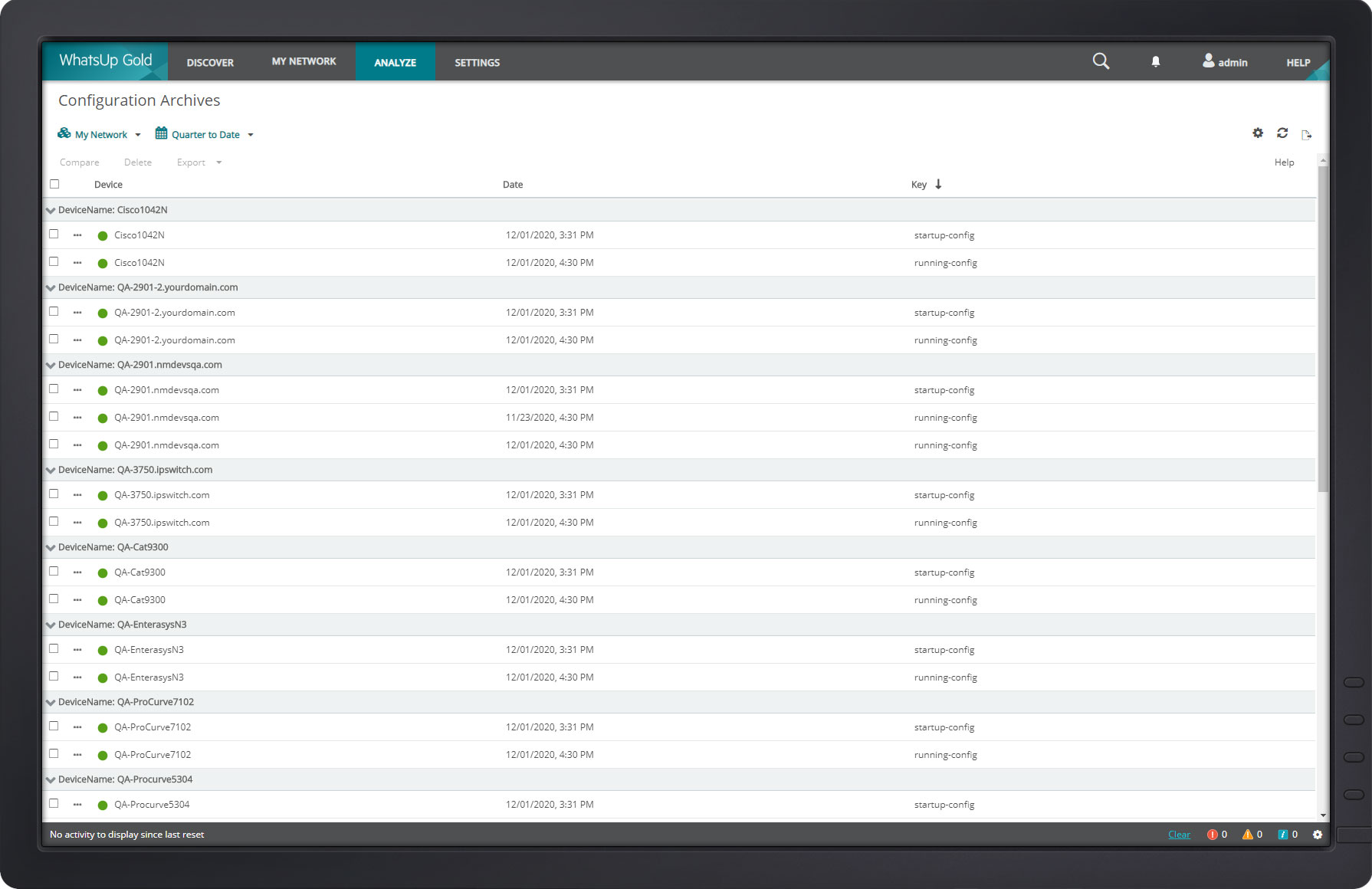  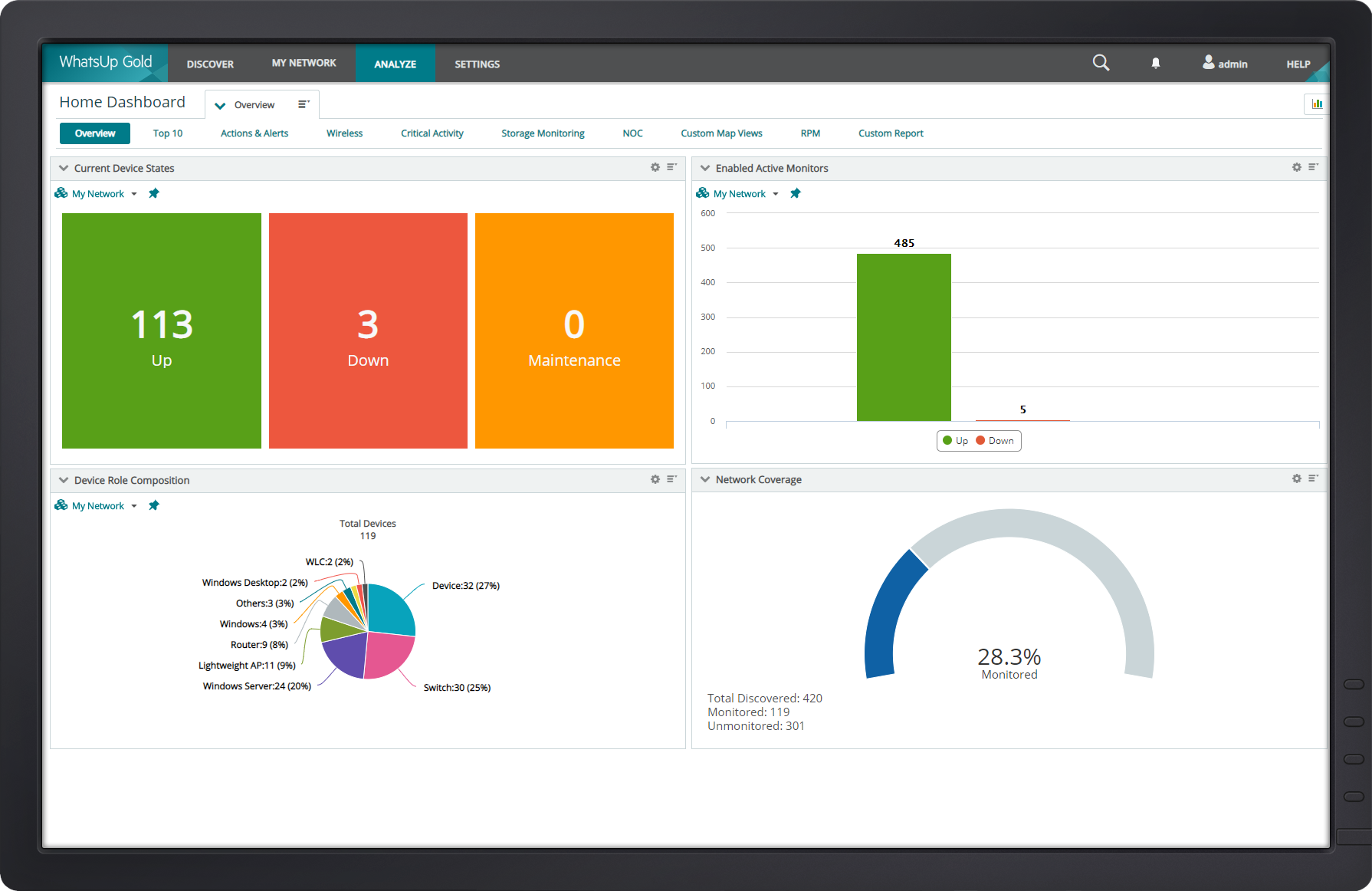  |