OpenText Network Node Manager i is a network management platform acquired by Micro Focus from Hewlett-Packard Enterprise, and now supported by OpenText.
N/A
Progress WhatsUp Gold
Score 7.2 out of 10
Mid-Size Companies (51-1,000 employees)
WhatsUp Gold developed by Ipswitch (acquired by Progress Software May 2019) offers network performance monitoring and mapping. It supports core monitoring features, including automated workflows and network capacity planning, and monitors across hybrid environments.
[Micro Focus Network Node Manager i (formerly HP Network Node Manager)] is like you implement it, setup monitoring and alerting and forget it forever until any major activity is there and that is possible because of the product's stability. Another reason for product stability is less features as compared to other vendor tools and its own inbuilt database.
[Progress WhatsUp Gold (formerly Ipswitch WhatsUp Gold)] is good for what it is. An inexpensive but accurate monitor for alerting on systems and services. However, it is time consuming to configure, The GUI leaves a lot to be desired and the formatting for txt alerts stinks (I just use it now as an alert to check my email to view the actual alert.)
While it does require a whole server with IIS and a SQL db it is low impact on resources but still quick to respond.
Great for quick notifications about a server going above a configured resource threshold. We don't have to look at every server's resource utilization individually anymore.
Quick and easy to setup a service up or down notification.
Most customers would like to see NNM get away from using some Java applets.
In environments where we see more than 10 different network device vendors in production, we see issues with L2 mapping. Different vendors use different L2 protocols. This can cause an issue with L2 discovery and mapping.
While it is easy to get up and running, I know I could utilize the software better if I had some formal training on it. There are a wealth of features available, but I don't have time to learn them all in depth.
The training classes offered are very expensive. I'd love it if IPSwitch offered some kind of reasonably priced training options.
NNMi's user interface is described as well-designed and intuitive, making it easy for users to navigate and perform tasks quickly, thereby enhancing the overall user experience. The system offers a powerful network discovery mechanism that maps out your network's physical and virtual topology, enabling you to visualize connections between devices and identify potential issues. Fault monitoring is at its best. NNMi provides a unified environment for viewing faults, availability, and performance data, consolidating essential information into a single platform.
Support is long and arduous and often are unable to help resolve the issue. We often have to do escalations or duty manager to get things moved. Even with a technical account manager, we do not see much improvement from a support point of view. This is an area where Micro Focus has a lot of improvement to do.
NNMi is best suited for enterprise-grade, large to very large infrastructure. You have fewer servers to install the product and manage all your devices through a single server, which also enhances ease of use.
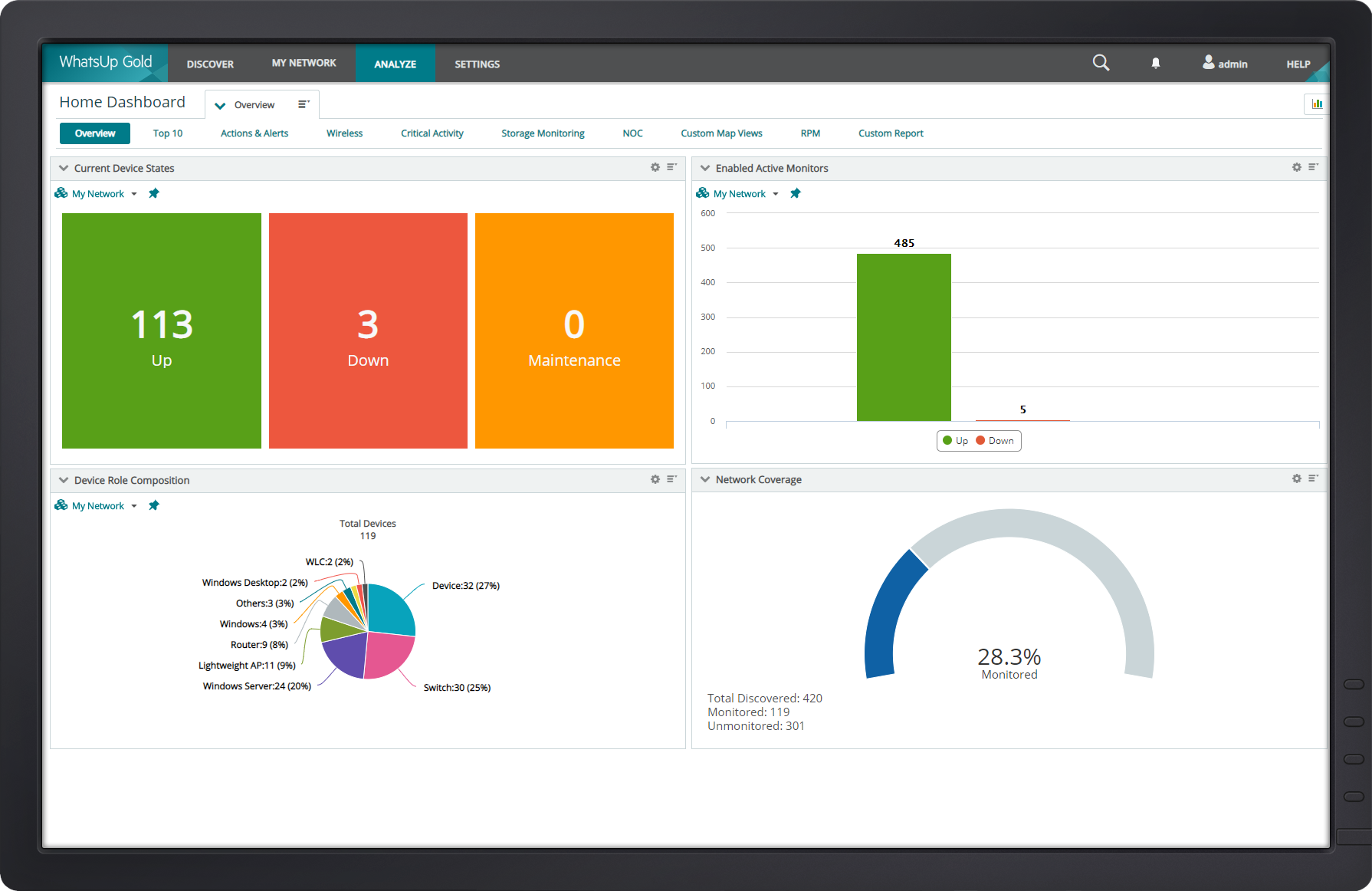
WhatsUp Gold gives you a much better in-depth analysis and understanding of both your network and endpoint devices but the emphasis should be laid more on report generation. WhatsUp Gold has the ability to generate a report (e.g device uptime, bandwidth utilization, device health etc) and track events that took place even as low as 5 minutes ago.
As I mentioned earlier, the monitoring of the external environment and uptime is a necessity. An hour down is a 1% loss of revenue per day which may not sound like much but in a million dollar company, that 1% is a huge chunk.
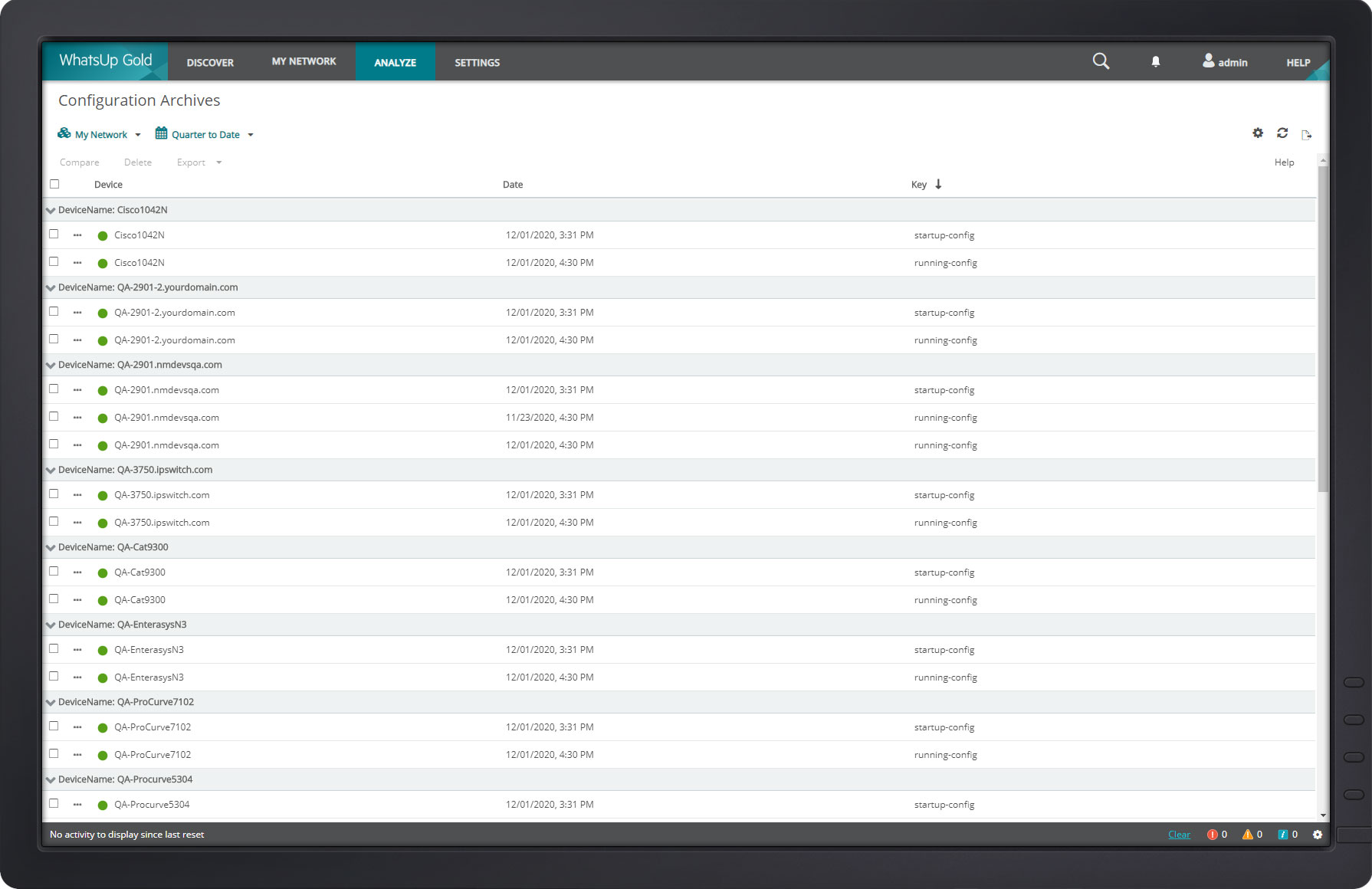
The backup configuration has been very handy in turn around time for failed equipment. I did have a homegrown way of backing up configurations but had to check daily and verify every backup. This becomes very time consuming and a waste of company time.
Only negative is the mapping. In the Cisco world CDP is a great way to map connections and they don't seem to do it that way.