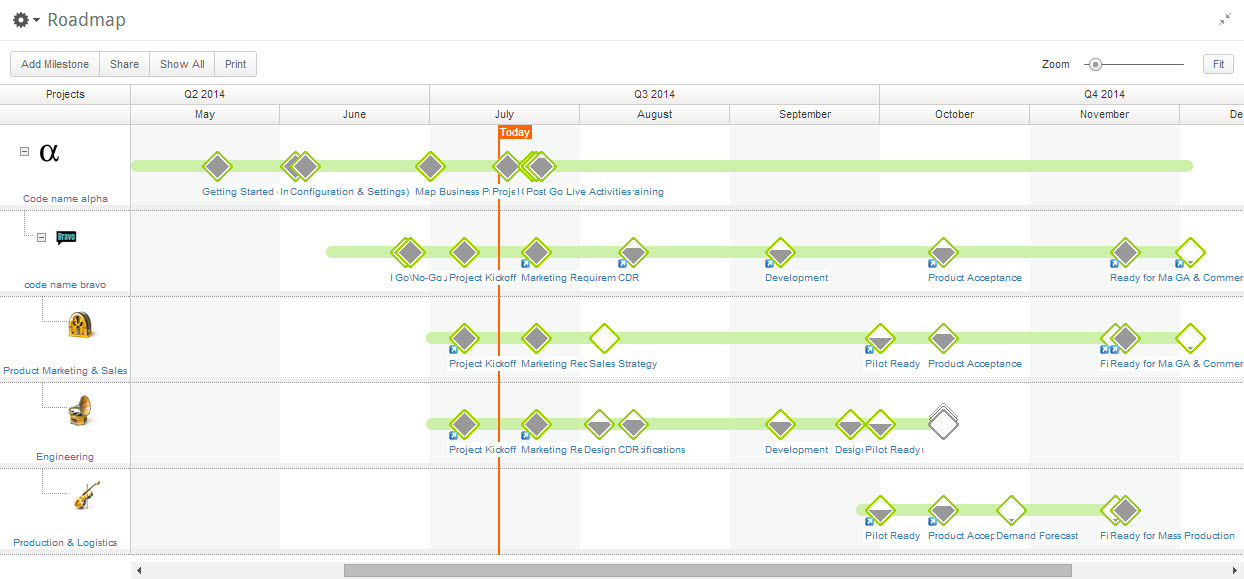
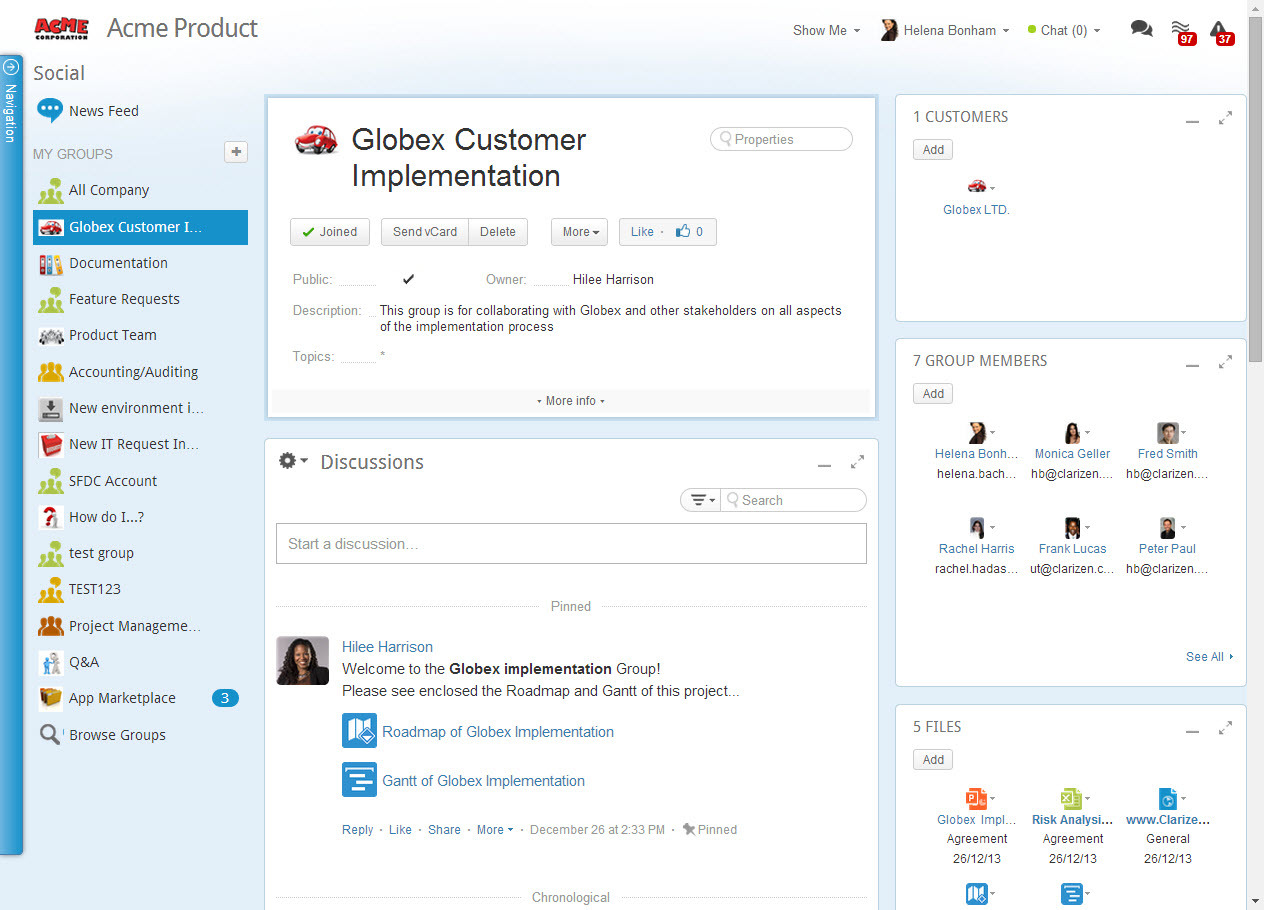
Planview AdaptiveWork is a web-based collaborative work management software. Planview AdaptiveWork enables users to connect employees and partners and create documents, reports and specialized workflow automation. Planview AdaptiveWork is designed to work across multiple teams to enable cross-company task, project, and resource management.
N/A
Wrike
Score 8.3 out of 10
Mid-Size Companies (51-1,000 employees)
Wrike is a project management and collaboration software. This solution connects tasks, discussions, and emails to the user’s project plan. Wrike is optimized for agile workflows and aims to help resolve data silos, poor visibility into work status, and missed deadlines and project failures.
$0
per month per user
Pricing
Planview AdaptiveWork
Wrike
Editions & Modules
No answers on this topic
Wrike Free
$0
per month per user
Wrike Team
$10
per month (billed annually) per user (2-15 users)
Wrike Business
$25
per month (billed annually) per user (5-200 users)
Wrike Enterprise
Request a quote
per month per user
Pinnacle
Request a quote
per month per user
Offerings
Pricing Offerings
Planview AdaptiveWork
Wrike
Free Trial
Yes
Yes
Free/Freemium Version
No
Yes
Premium Consulting/Integration Services
No
No
Entry-level Setup Fee
Optional
No setup fee
Additional Details
—
Every premium plan begins with a 14-day trial period.
More Pricing Information
Community Pulse
Planview AdaptiveWork
Wrike
Considered Both Products
Planview AdaptiveWork
Verified User
Anonymous
Chose Planview AdaptiveWork
It's about the same. It should be noted that Planview AdaptiveWork was not our first choice. We selected Planview PPM Pro & ProjectPlace based on capabilities and roadmap. There were roadmap items that were going to solve several business problems and allow us to leverage …
Planview AdaptiveWork is able to handle the volume of resourcing that we do as well as forecasting out multiple years where other systems were not able to do so.
I like that Planview AdaptiveWork is the full gamot for project, program and portfolio management. Building project plans, tracking tasks risks and issues, and being able to roll all of it up into comprehensive reports and dashboards is awesome. All of the new integrations …
We felt that Planview AdaptiveWork had the most potential to grow into the system and really liked that we could add on other Planview products if needed in the future. The system also felt more approachable for colleagues who might be less familiar with project, program, and …
We also evaluated Kantana. Ultimately decided on Planview AdaptiveWork because of cost, ease of GUI, ease of configuration, reporting capabilities and integration capabilities.
Planview AdaptiveWork was the right size, at the right price point that fit our customization and integration flexibility. It is intuitive to use but allowed us to add complexity as our needs grew
We moved from ConnectWise Manage to Planview AdaptiveWork. AdaptiveWork is so much more user friendly. Reporting is so much easier. Capacity planner is better.
As an IT professional in the field for over 15 years I have used multiple platforms to track projects and migrate resource data for analysis as well as creating dashboards for better leadership visualization. Planview is one of the best ones I have used as it has a lot of …
Planview Clarizen empowers us to spend less time aggregating on and more time acting on the data get a clear picture of the current and future requirements and visualize the portfolio and pivot quickly with changing business needs. Great product that empowers teams to reach …
Clarizen has a cleaner, easier-to-use UI than both Wrike and Microsoft Project in my opinion. Clarizen is overall pretty intuitive and you can use it on a daily basis to manage your projects without it taking up an exorbitant amount of time. Although I would say Wrike is …
It stacks up well to many other products. It is lightweight and intuitive to use. However, if you are a heavy Project user, or are considering a Project at the enterprise level, this might not be as sophisticated/ heavyweight as those kinds of products. However, for all but …
We are working on a Fixed work basis and have been using Clarizen for quite a long time. Clarizen helped us to track our project, requests, and billing in one shot, so we planned to stay with Clarizen.
Clarizen's ease of use, ease of setup, out-of-the-box delivery, project management, and time management were the factors for choosing Clarizen. All were good products but we are happy to have selected Clarizen.
As mentioned earlier in this review, in the end, Clarizen did not have the full functionality that our resource management team needed to do their jobs. Instead, we went with a more robust time tracking program that also included PTO accrual/tracking and expense reports …
We've looked at tools to replace Clarizen, but we have customized Clarizen so much it would be difficult to transition to a new platform. Some of the features we appreciated in other tools we have looked at are built-in BI tools, improved financial reporting for projects, and …
I think Wrike is comparable against these competitors - it reminds me of Trello the most in terms of interface. I did not personally select Wrike, I am a user, not the purchase decision maker.
I like Wrike best. I liked Asana, but I think it got too pricey for the features that we wanted out of it. Notion was fine, but I think its ability to integrate with the rest of our tech stack proved difficult. Trello was fine, it was early in my career and I remember its ease …
I'm in the process of evaluating ClickUp, and so far, it seems far more robust in the areas that matter (integrations, automation, speed, ease of use) where it could apply to small and medium orgs. I have another call with ClickUp and if their pricing holds, we may end up …
Jira is really geared towards IT organizations. It is far more complex to use so it has a steeper learning curve, but once you get the hang of it, it does have more customization capabilities and it offers more functionalities, such as extra fields, types of graphs, etc.... …
Wrike provides multiple use cases on managing workflow through the various range of functionalities provided. Trello more so provides a straight forward way to obtain a full scope view of projects, but Wrike is more comprehensive in managing all stages.
We use both Wrike and Smartsheet to satisfy our necessities. Smartsheet gives us a platform to input more information, while in Wrike we stablish contact with our customers for proofing before product development; information that goes directly into our Smartsheet once the …
ClickUp and Wrike look very different - when I think of Wrike, I think of larger tasks, but ClickUp I used for smaller lists & used the calendar view more.
Great for large project and/or complex projects. However there can be a learning curve. I would possibly choose a different platform if I am working with non-techy team members.
Wrike is better than both as it allows for greater visibility and is more similar to an excel based system, which i think has a much better initial understanding of all users.
Wrike has been a helpful benchmark of industry standard. Many people who have used other similar platforms have been able to easily transition to Wrike.
I have used inhouse project management tool in my previous company. It was very slow compared to Wrike, visualisation is better in Wrike, they did not have customised template increasing repetitive work, the tool used in previous company was very slow as it takes like a lot of …
Figma is similar in many regards from the ways I've used it. Wrike is far superior to Workamajig in terms of visual language and ease of use; however, Workamajig seems to be more robust for the expansive needs of an agency.
Wrike has a much deeper feature set than Trello, though does cost significantly more. Azure Devops is better suited to developer workflows out of the box but overall, I would be inclined to use Wrike due to the simpler UX/UI.
Wrike always works - it's always up-to-date, never down, and our one source of truth. I wish the mobile version of Wrike was more usable, but that's the only thing where Wrike may not be the front runner.
In my opinion, Wrike is very similar to Asana (Asana has Wrike beat when it comes to completing tasks. Who doesn't enjoy seeing a rainbow unicorn fly across the screen when marking a task complete). Jira is also very similar but a bit more robust as it integrates with Aha for …
I've been an AdaptiveWork (Clarizen) admin for the past 14 years, so I've seen much improvement since I started working with the product. I'm very happy we can utilize the hybrid mode by using the cards, I think this was long overdue but it works very well.
Negotiations often involve long timelines and multiple rounds of discussion. Wrike allows us to assign clear ownership, track due dates, and monitor progress so that nothing stalls or gets lost. Redlines, proposals, and finalized agreements can be stored and shared within Wrike, reducing reliance on scattered email chains and ensuring everyone is working from the most current version.
Many ways to acclimate to the system; documentation, videos, community, and contacts.
Planview provides scalable customization options tailored to the unique needs of each business unit or department. Easily add or remove fields in the system. As the admin, it was easy to learn how to configure.
Offers flexibility to adapt to existing systems and align with organizational workflows and processes. There are multiple ways to customize each part of the system to meet our needs.
different views to accommodate different users workflow
predecessors and successors to tie tasks together and adjust dates as a group
Being able to see other people's workloads so when I am planning my projects for the upcoming quarter, I can set a project delivery date that is better suited to workload and is more realistic
Planview AdaptiveWork's ability to create relations between work estimates, resources, and time is one of its strengths but also one of its drawbacks. The average user is a little less considerate of the way these things interact with each and the automatic way in which Planview AdaptiveWork will affect one or the other can occasionally create a confusing scenario if the user is unaware of how changing one will affect the other
For example, let's say we are onboarding a new client. There are certain tasks that need to be done. It would be great to be able to create a new project and have certain tasks preloaded.
Importing.
Importing may seem easy, but there is so much nuance to it. The fact that you need to make sure the parent task comes before child tasks is very difficult to do without the help of AI. Also, I am not sure it is possible if you have a thousand tasks to import, to make sure that you have a folder structure and parent/child tasks.
I also find that the documentation is lacking and the 2 import methods lacking as well.
Customize my inbox. When I log into Wrike, my Inbox is the first thing I see, but this doesn't show the full picture of what I want it.
I give my renewal of this product a 9. It's only because we never know what product may come out next and how other factors in our office political environment may cause impact upon this. If I always had my way, this is what we'd settle on as our de facto project management system.
I wish that Wrike had more drag and drop functionality that would be connected to assignee and also I wish that the finish date of a task would update to the date where you checked completed. It does not do that. Also finishing a task doesn't move the start date of the next task it "protects your time in that way", but our management team wants us to quickly see what we have down the pipeline rather than having to scroll down the list of upcoming tasks.
It is easy to configure, intuitive. The customization process is in some ways better than Salesforce.com. It has a great UI. It does however depend on how it's implemented.
The design of it is generally fine, however the ability to data upload people from a spreadsheet is an obvious miss.
I love the way task management is designed within Wrike. The full overview, followed by sequential updates, really works for us - this way, we don't need to go into individual people's work subtasks to find what's happening with a project. That's very useful from a project management perspective. The to-do feature also lets everyone access info in one place.
Sometimes it is slow when everyone is entering their time on Fridays or Mondays but other than that we rarely see downtime and maintenance notifications are well in advance.
Over two years of (almost) daily usage without outages. Don't remember any errors. I give it 9 only because some Wrike plugins (for online document edit) are based on NPAPI architecture. These types of plugins are being phased out in new browsers, and NPAPI plugins are disabled by default in recent versions of Chrome so you have to do some browser adjustments when you switch browsers or move to another computer.
Most Ancillary Pages: Quick to Reasonable (By "ancillary" I mean lesser used/master data maintenance pages - e.g. People, Customers, Individual Tasks, Milestones, etc.)
Work Plan (with 100 sub items): Reasonable to Slow
Wrike tasks loads fine, but I hate clicking files and wait for a bit of time since it is powerpoint or word, Wrike assumes I want to open those on Wrike. My suggestion is to link it to office 365 so we do not need Wrike based decoder for PPTX and DOCX
It's a good experience overall. Clarizen was useful when needed. It's mostly needed for advice on how to do more sophisticated actions or how to change something that was set up administratively. It's seldom used otherwise. The product consistently works, the documentation is acceptable, and the generally intuitive product is easy enough for most staff to pick up without much issue.
We've had so many questions during the establishment of Wrike for our team, and the Wrike support team has exceeded our expectations. Our team is naturally curious, and the Wrike support team has always been willing to hold conversations about how we can make an idea work, to show us hidden features that delight us, and to help us plan ways to build out projects efficiently. They meet our questions with multiple solutions and best practices
• We worked with a Project Manager on their side. He was very good about developing a project plan to hit our goal. I think we had weekly or twice weekly calls – very steady cadence over 3 month period. • Their PM skills were great – kept us on task. For the last week, they sent 2 people on site and they did training for power users. After that a couple of them revisited here
It's easy to access and frequently offered. Often I'm amongst only a few people on the call and get virtually individual attention. I also learn and share with the other attendees and we can see how we've each solved similar challenges.
I love the Wrike training options. Wrike Discover has tons of courses, learning plans, certifications, etc. This is an area where Wrike definitely shines! I wish these resources were more in your face for new people, because it seems like a lot of coworkers didn't know all of this training was available to them.
We have been able to implement AdaptiveWork pretty easily but it requires updating of resource availability and continuous training as roles change and new people join the company. Other documentation is used such as spreadsheets for longer range planning and project approval
There are a lot of bells and whistles in Wrike, and not all of it is easy or intuitive to understand once it's plopped in your lap. It's easier when there are a few choice people who understand Wrike as a platform and articulate it in such a way where it makes it easy to pass it along to others in the group
Planview AdaptiveWork was the right size, at the right price point that fit our customization and integration flexibility. It is intuitive to use but allowed us to add complexity as our needs grew
Jira did not at all help us get our work done as content creators. I think that was because Jira wasn't quite right for our uses. Wrike fits our needs so much better. I can't tell you enough the relief I felt when we adopted Wrike and I never had to use Jira again.
Wrike has significantly enhanced our workflow and productivity, ensuring accuracy and efficiency meet high standards. Our work now reflects professionalism and top quality. Other departments have taken notice of how organized we are thanks to Wrike, and we take great pride in our work—all made possible by this platform
Planview AdaptiveWork allows us to report out on the status of our real estate projects on a regular basis. We have internal objectives that need to be met for on-time delivery and Planview AdaptiveWork provides us the data to be able to show how the teams are tracking on delivery.
Wrike has improved our resource management significantly.
Wrike has improved the request intake process for us.
One negative impact of using Wrike is that we had to include Workato for some customised automations, which were not supported by Unito, but this can be on a need-to basis.